 Fairhaven Siding
 Exterior Work Built for Sudden Valley's Wooded, Lakeside Setting
Sudden Valley sits in a forested, hilly stretch of Whatcom County near Lake Whatcom, and homes here face a different exterior environment than a house on an open lot closer to the water in downtown Fairhaven. Heavy tree canopy, filtered sun, and the humidity that comes off a large freshwater lake all combine to keep exterior surfaces damp longer than homes in more exposed parts of the county. Add in the driving rain and salt-tinged marine air that reaches inland from Bellingham Bay during winter storms, and you get an exterior envelope that's under near-constant moisture pressure for much of the year.
Fairhaven Siding Company works throughout Whatcom County, and Sudden Valley is one of the areas where we see the clearest case for choosing exterior materials deliberately rather than defaulting to whatever's cheapest or fastest to install. Shaded, tree-lined properties are exactly where the wrong siding, roofing, or trim choices show problems first — and where the right ones hold up longest.
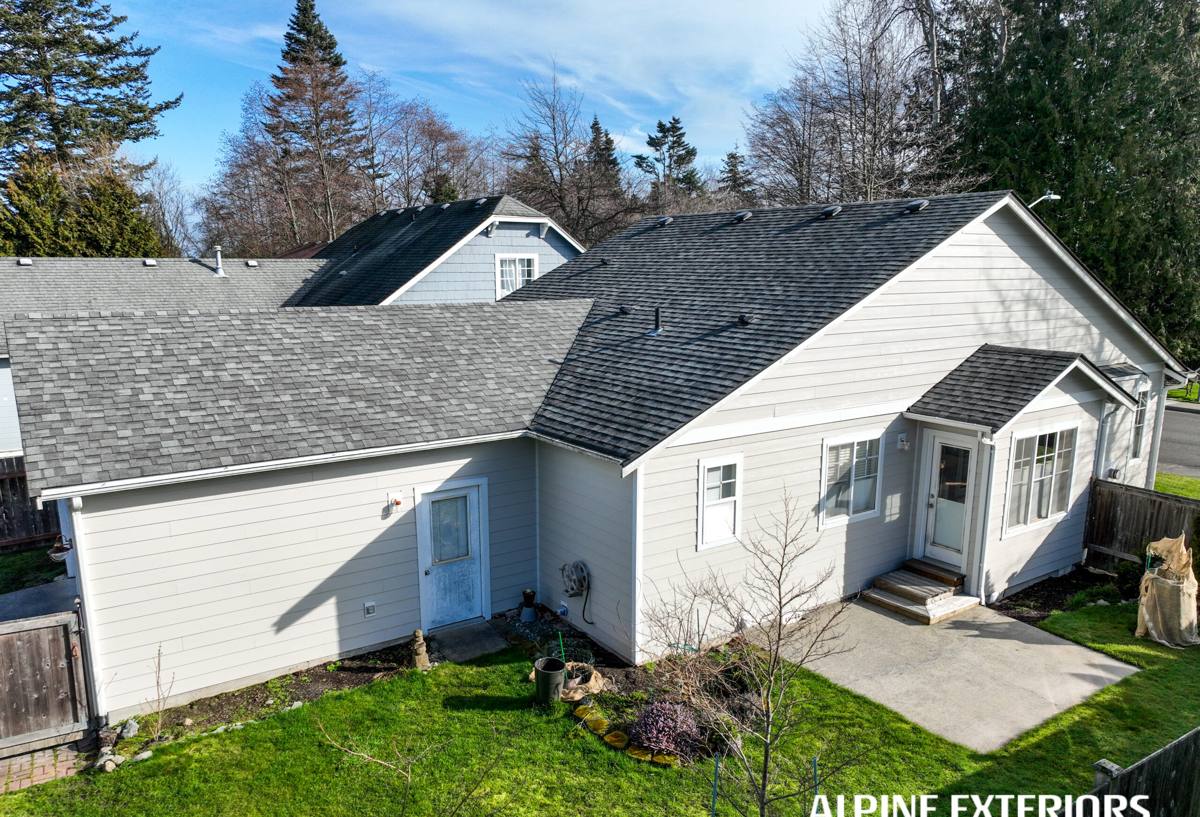
What Sudden Valley's Climate Actually Does to a House
Shade and Moisture Retention
A house tucked under fir and cedar cover doesn't dry out the same way a house in the open does. Morning dew and rain can sit on siding, trim, and roofing for hours longer in shaded spots. That extended wet time is the single biggest factor in moss, algae, and mildew growth on exterior surfaces — and it's a much bigger factor in Sudden Valley than in more open Fairhaven neighborhoods.
Moss Season
Whatcom County's moss season runs long — realistically fall through spring, and in the shadiest lots, nearly year-round. Moss doesn't just look bad; it holds moisture against whatever it's growing on, and on wood-based products or aging vinyl, that trapped moisture is what eventually causes rot, delamination, or panel failure. Roofs, deck boards, and siding all need to be evaluated for how they handle sustained moss exposure, not just how they look on install day.
Salt Air, Even Inland
Sudden Valley is set back from the coast, but marine air still moves through the county on winter weather systems, and homes throughout the area pick up some exposure to salt-laden moisture. It's a smaller factor here than for waterfront Fairhaven homes, but it still contributes to accelerated corrosion on fasteners, flashing, and unprotected metal components over time.
Driving Rain and Wind-Driven Water
Storms coming off the Pacific and funneling through the county bring rain that doesn't just fall straight down — it drives sideways into wall assemblies, especially on exposed gable ends and around window and door openings. Proper flashing, house wrap detailing, and siding installation matter as much as the material itself.
How Materials Respond to These Conditions
| Condition | What It Stresses | Why It Matters in Sudden Valley |
|---|---|---|
| Extended shade/damp | Paint film, seams, wood fibers | Tree cover keeps surfaces wet longer than open lots |
| Moss and algae growth | Surface coatings, panel joints | Long moss season traps moisture against the wall or roof |
| Wind-driven rain | Flashing, seams, window/door transitions | Hillside and treeline exposure varies lot to lot |
| Freeze-thaw cycling | Caulk joints, fastener seals | Elevation and lake proximity add cooler overnight temps |
Siding: Why We Only Install James Hardie
Fairhaven Siding Company installs James Hardie fiber cement siding exclusively. We don't install vinyl, LP SmartSide, Cemplank, Allura, or primed wood species like spruce or cedar, and in a setting like Sudden Valley that decision is easy to explain.
The Products We Don't Install, and Why
- Vinyl siding expands and contracts with temperature swings, and its seams and J-channels give moss and moisture more opportunity to collect in a shaded, humid environment like this.
- LP SmartSide and other engineered wood products are wood-based at their core. Any breach in the factory coating exposes wood fiber to moisture, and in a lot with limited sun exposure, that moisture doesn't get a chance to dry out quickly.
- Cemplank and Allura are also fiber cement, and they're reasonable products in general terms — but we've standardized on one system so every installer on our crew knows the fastening pattern, joint treatment, and finish specs cold, rather than switching between manufacturer requirements job to job.
- Primed spruce or cedar requires a maintenance commitment — regular repainting and caulk inspection — that's a lot to ask of a homeowner whose siding sits under tree cover and stays damp more of the year than average.
Why James Hardie Fits This Environment
James Hardie fiber cement is non-combustible and doesn't rot, swell, or support moss growth the way wood-based products can. The ColorPlus factory finish is baked on under controlled conditions and holds color and adhesion far better than field-applied paint on a house that rarely gets full sun to help cure and dry a fresh coat. Hardie's HZ5 product line is engineered for the kind of freeze-thaw and moisture cycling that Pacific Northwest winters produce, which lines up with what a Sudden Valley lot actually experiences. The transferable warranty also matters to buyers if a home in the neighborhood changes hands — it's one less unknown for whoever inspects the exterior next.
Installation Details That Matter Here Specifically
On shaded, moisture-heavy lots we pay close attention to rainscreen or drainage-gap detailing behind the siding, correct flashing at every window and door, and proper fastener spacing per Hardie's published specs. Getting these details right is what actually determines how the siding performs over 20-plus years — the product only performs as well as the installation behind it.
Roofing for a Shaded, Moss-Prone Lot
Roofs in Sudden Valley deal with the same shade and moisture exposure as the walls below them, often worse, since roofs face the sky directly and collect falling debris from surrounding trees. We look at underlayment quality, ventilation, and flashing detail around every penetration, plus valley and edge treatment where moss and debris tend to collect and hold water. A well-ventilated attic space also helps a roof dry out faster from the underside, which matters when the top side rarely gets a full day of direct sun.
Windows: Sealing Out Wind-Driven Rain
Older or poorly installed windows are one of the most common points of water intrusion we find on Whatcom County homes, and hillside, tree-exposed lots see more wind-driven rain hitting window assemblies than sheltered ones. We install and flash windows with attention to the full opening — head flashing, sill pan, and proper integration with the surrounding wall assembly — not just the window unit itself. Upgrading windows on an older Sudden Valley home is also a straightforward way to cut down on condensation and drafts that shaded, cooler lots tend to make more noticeable.
Decks: Built to Handle Shade and Moss
A deck under tree cover holds moisture longer than one in the open, and that means more moss, more slip risk, and faster wear on the wrong decking material. We build and repair decks with attention to proper board spacing for drainage, ledger flashing to keep water out of the house structure, and fastening details that hold up under repeated wet-dry cycling. For homeowners weighing composite against wood decking, the shade factor in a neighborhood like this is worth discussing directly with your installer, since it changes the maintenance math.
Signs It's Time to Have Your Exterior Looked At
- Moss or dark streaking building up on siding, especially on the north or shaded side of the house
- Soft spots, bubbling, or peeling paint on wood trim or siding panels
- Water stains on interior ceilings near roof valleys or window headers
- Visible gaps or cracked caulk around window and door trim
- Deck boards that stay damp for days after rain or feel spongy underfoot
- Granule buildup in gutters, a sign of aging roofing material
Why a Local Crew Matters in a Neighborhood Like This
Sudden Valley isn't a typical flat, open-lot subdivision — grades vary, tree cover varies house to house, and access can be tighter than on a standard city block. A crew that works across Whatcom County regularly, rather than one dispatched from out of the area, knows how to plan around those site conditions and how the local climate actually behaves lot by lot. That local knowledge shows up in smaller decisions during the job: where to prioritize drainage detailing, which sides of the house need extra flashing attention, and how to sequence work around the region's weather rather than fighting it.
If you're noticing moss buildup, aging siding, or water issues on a Sudden Valley property, we're happy to take a look and walk you through your options with no pressure. Reach out for a free estimate using the form below.