 Fairhaven Siding
 Siding Built for Birchwood's Coastal Exposure
Birchwood sits close enough to the water and the weather patterns that roll through Whatcom County that homes here take a different kind of beating than houses twenty miles inland. Salt-laden air, long stretches of driving rain off the Sound, and a moss season that seems to start earlier and last longer every year all work on exterior siding in ways that homeowners don't always notice until the damage is already done. We've installed and repaired siding across Fairhaven and the surrounding neighborhoods long enough to know what Birchwood homes specifically need, and it starts with choosing a material that can actually take the exposure.
This page walks through what we see on Birchwood homes, how we approach siding, roofing, window, and deck work in this specific area, and why we install James Hardie fiber cement siding exclusively rather than offering a menu of cheaper alternatives.
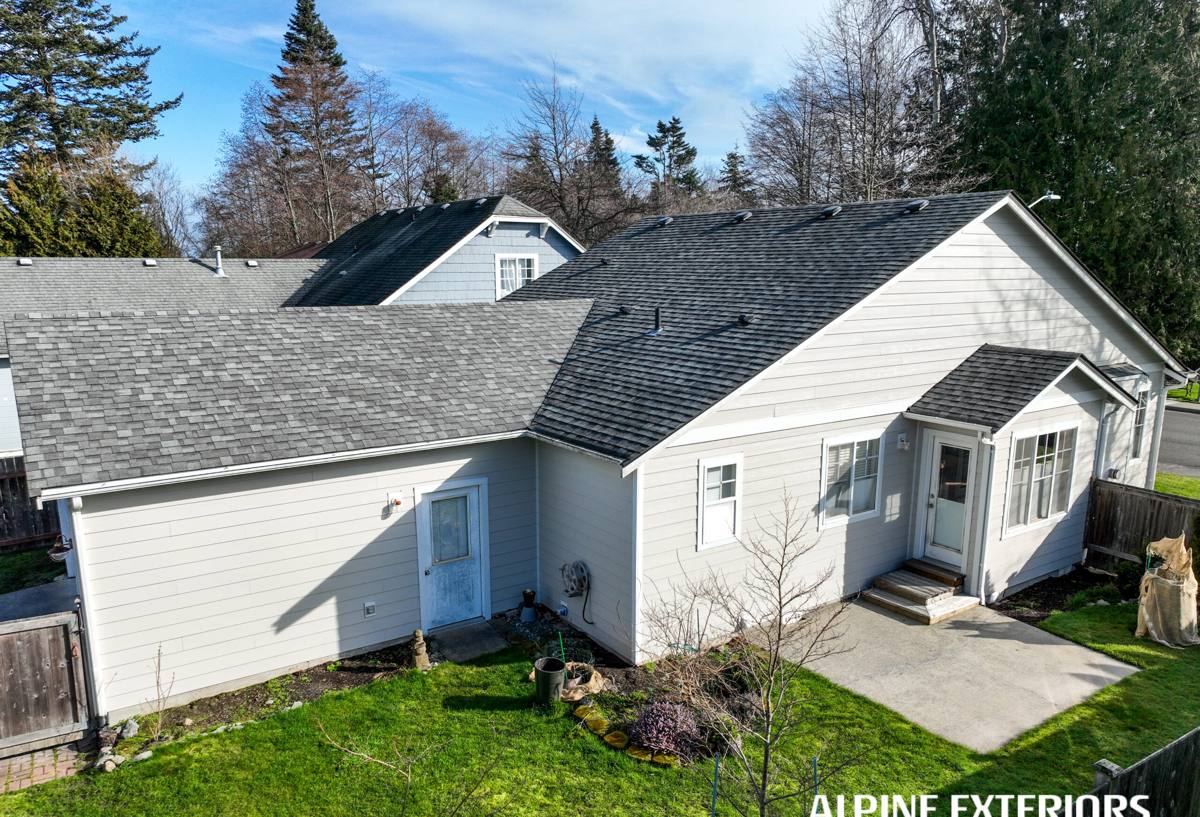
What the Climate Does to Siding in This Neighborhood
Salt Air and Slow Corrosion
Proximity to Bellingham Bay means airborne salt is a constant, low-grade factor on painted wood trim, fasteners, and lower-grade composite products. It doesn't destroy siding overnight — it works slowly, breaking down finishes and accelerating corrosion on anything metal that isn't properly rated for coastal exposure. Over a decade or two, that slow degradation shows up as chalking paint, rust streaks below fastener heads, and trim that softens faster than it should.
Driving Rain and Wind-Driven Moisture
Whatcom County storms don't always come straight down. When wind pushes rain sideways against a wall, water finds every seam, lap joint, and unsealed edge. Siding materials that swell, wick moisture, or rely on paint film alone to stay watertight are the ones that fail first under this kind of pressure — especially on north- and west-facing walls that catch the brunt of it.
Moss, Mildew, and the Shade Factor
Birchwood's tree cover and the region's damp, mild climate add up to a long moss and mildew season. Shaded walls, north exposures, and areas near roofline runoff stay damp longer than they would in a drier climate, and organic growth on siding isn't just cosmetic — trapped moisture behind moss and algae accelerates rot in wood-based products and can stain and etch lesser finishes over time.
Our Approach to Siding Work in Birchwood
Every project starts with a walk-around assessment of the specific walls, exposures, and trouble spots on the house — not a generic estimate. We look at:
- Which walls take the most wind-driven rain and which stay shaded and damp longest
- Condition of existing flashing, house wrap, and window/door transitions
- Signs of past moisture intrusion — soft trim, staining, bubbling paint
- Moss and algae buildup patterns that point to drainage or airflow issues
- Whether the current siding is salvageable in sections or needs full replacement
From there we scope the job around a material system that's actually built for this exposure, with flashing and water-management details done correctly — because even the best siding fails early if it's installed over bad prep work.
Why We Only Install James Hardie Fiber Cement
We made a deliberate decision years ago to stop offering vinyl siding, LP SmartSide, and other engineered wood or composite products, even though they're cheaper up front and plenty of contractors still install them. In a climate like Birchwood's, those trade-offs matter more than they do in drier parts of the country.
The Honest Trade-Offs We Weighed
| Factor | Vinyl / Engineered Wood | James Hardie Fiber Cement |
|---|---|---|
| Moisture behavior | Can swell, warp, or trap water at seams and edges | Non-combustible, dimensionally stable, engineered to resist moisture damage |
| Salt air exposure | Fasteners and trim prone to corrosion and finish breakdown over time | Factory-baked ColorPlus finish resists coastal fading and chalking |
| Moss/algae resistance | Organic growth can stain and, on wood-based products, promote rot | Cement composition doesn't feed rot; surface cleans without structural risk |
| Fire resistance | Vinyl can melt/deform; engineered wood is combustible | Non-combustible material |
| Warranty structure | Varies widely; often prorated or limited on finish | Long, transferable warranty backing both substrate and factory finish |
None of this means every vinyl or engineered wood installation fails — plenty hold up fine for years under the right conditions and maintenance. But we install exteriors we're willing to stand behind for decades in a coastal climate, and James Hardie's HZ5 product line, engineered specifically for climates like ours, gives us that confidence in a way the alternatives don't.
What James Hardie Gets Right for This Area
- Fiber cement composition doesn't provide food for moss, mold, or rot the way wood-based products can
- ColorPlus factory finish is baked on and warrantied against fading, chipping, and cracking — no field paint job to fail under salt air
- Engineered for moisture and temperature swings typical of the Pacific Northwest
- Non-combustible, which matters for insurance considerations and peace of mind
- Transferable warranty adds real resale value when a Birchwood home eventually goes on the market
Beyond Siding: Roofing, Windows, and Decks
Siding rarely fails in isolation. A leaking roof, a failing window seal, or a rotting deck ledger board all send moisture into wall assemblies, and that moisture shows up later as siding damage even if the siding itself was installed correctly. Because we handle roofing, windows, and decks alongside siding, we can look at a Birchwood home as one connected exterior system rather than patching one component while ignoring the ones feeding water into it.
Roofing
Roof condition directly affects how much water runs down exterior walls and how long it sits there. We check roof-to-wall transitions, gutters, and flashing as part of any siding assessment.
Windows
Window flashing and sealant are common failure points that let moisture behind siding without any obvious exterior sign until the damage is already underway. Replacing tired windows at the same time as siding lets us integrate flashing correctly the first time.
Decks
Deck ledger connections and attached structures are frequent sources of hidden moisture intrusion into the wall behind them — worth a look any time siding work is being planned nearby.
Why a Local Crew Matters Here
Whatcom County's coastal microclimates aren't uniform — a wall that stays dry in one part of Fairhaven can be a moss magnet a few blocks away in Birchwood depending on tree cover, sun exposure, and prevailing wind. A crew that works this specific area regularly recognizes those patterns immediately instead of treating every house the same way a national contractor or a crew unfamiliar with the region might. We're not driving in from out of the area to install a product and move on — we're doing work that has to hold up through the next twenty winters of the same weather we deal with ourselves.
What to Expect From a Siding Project
Typical Process
- On-site assessment of current siding, trim, flashing, and problem areas
- Written scope covering material, prep work, flashing details, and timeline
- Removal of old siding and correction of any water-damaged sheathing or framing found underneath
- Installation of house wrap, flashing, and James Hardie siding to manufacturer specification
- Final walk-through and warranty documentation
Signs a Birchwood Home May Need Siding Attention Soon
- Persistent moss or dark staining that returns quickly after cleaning
- Soft or spongy trim boards, especially near ground level or roof transitions
- Paint that's chalking, peeling, or bubbling on exterior walls
- Visible gaps, warping, or separation at siding seams
- Rising energy bills that may point to compromised wall insulation from moisture
Cost Factors Worth Understanding
Every home is different, but a few factors consistently drive the scope and cost of a siding project in this area:
| Factor | Why It Matters |
|---|---|
| Extent of existing moisture damage | Rotten sheathing or framing found during tear-off adds repair scope before new siding goes on |
| Home size and wall complexity | More corners, dormers, and trim details increase labor time |
| Siding profile and finish selection | James Hardie offers multiple plank widths, textures, and ColorPlus colors at different price points |
| Flashing and window integration | Proper detailing around openings takes more time but prevents future failures |
| Access and site conditions | Tree cover, slope, and staging space affect labor efficiency |
We provide a detailed, itemized estimate after the on-site assessment rather than a ballpark number over the phone, because the moisture-damage variable alone can shift scope significantly once tear-off begins.
If your Birchwood home is showing signs of moss buildup, moisture damage, or aging siding, we're happy to walk the property with you and give you a straightforward, no-pressure assessment. Fill out the form below to schedule a free estimate.