 Fairhaven Siding
 Siding in Sehome: What the Climate Actually Does to a House
Sehome sits close enough to Bellingham Bay that salt-laden air is a fact of life, not an occasional nuisance. Combine that with Whatcom County's long, wet winters and the moss and mildew pressure that comes with months of shade and moisture, and you have one of the tougher climates in Washington for exterior building materials. Siding here doesn't just need to look good on installation day — it needs to hold up through decades of driving rain off the Salish Sea, freeze-thaw cycles, and the kind of persistent dampness that never fully dries out between November and April.
We've worked on homes throughout Sehome and the surrounding Fairhaven area long enough to see which products age gracefully and which ones start showing problems inside five to ten years. That experience is the reason our company made a deliberate choice: we install James Hardie fiber cement siding exclusively. We don't offer vinyl, LP SmartSide, cedar, primed spruce, or other fiber cement brands like Allura or Cemplank. This page explains what Sehome homes are up against, how our siding replacement process works, and why Hardie is the only product we're willing to put our name behind here.
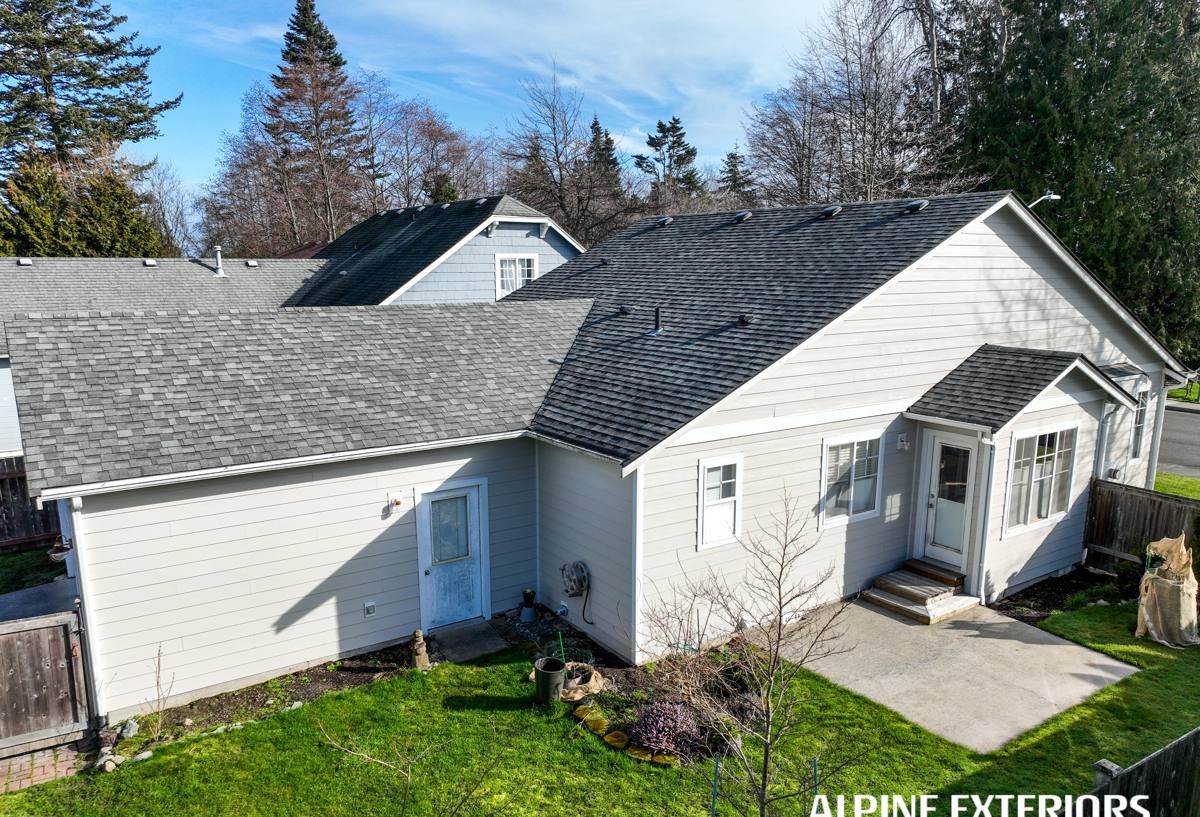
Why Sehome's Microclimate Is Hard on Siding
Salt Air and Corrosion
Homes within a few miles of Bellingham Bay pick up airborne salt that settles on exterior surfaces and accelerates corrosion of fasteners, trim, and any material with metal components exposed to weather. Salt air also holds moisture longer against a wall surface, which matters a great deal for anything wood-based.
Driving Rain
Storms coming off the water tend to arrive with wind-driven rain rather than straight-down rain, which pushes water sideways into laps, seams, and butt joints — the exact spots where lower-quality siding installations fail first. A siding system's water management (how it's flashed, lapped, and caulked) matters as much as the material itself.
Moss and Mildew Season
Bellingham's overcast, damp stretch from fall through spring gives moss, algae, and mildew months of ideal growing conditions on north-facing walls, under eaves, and anywhere sun doesn't reach. Porous or wood-based siding absorbs moisture that feeds this growth from within, not just on the surface.
Freeze-Thaw Cycling
Whatcom County doesn't get brutal winters, but it does get repeated freeze-thaw swings. Any siding material that has absorbed moisture and then freezes is at risk of cracking, splitting, or delaminating over time.
Why We Don't Install Vinyl, LP SmartSide, or Other Fiber Cement Brands
Vinyl Siding
Vinyl is inexpensive and easy to install, and for some climates it's a reasonable choice. In a marine environment like Sehome's, though, vinyl expands and contracts significantly with temperature swings, which stresses seams and fasteners over years of use. It's also a combustible plastic product, and in wind-driven rain it doesn't manage water at seams as well as a properly lapped fiber cement system. We simply don't think it's the right long-term investment for this area.
LP SmartSide and Wood-Based Products
LP SmartSide, primed spruce, and cedar are all wood-based (engineered or solid). Wood, by nature, absorbs moisture — and in a climate with this much sustained dampness and salt air, that moisture absorption is a real long-term liability. Even with quality primers and paints, wood-based siding requires vigilant maintenance: caulking gaps, repainting on a strict schedule, and watching for swelling at cut edges and seams. Skip a maintenance cycle in a climate like Sehome's and problems compound quickly. Cedar in particular is a beautiful, honest material, but it demands a level of ongoing upkeep that most homeowners underestimate when they choose it.
Other Fiber Cement Brands (Allura, Cemplank)
Fiber cement as a category is the right general approach for this climate — it's non-combustible, dimensionally stable, and doesn't absorb moisture the way wood does. But not all fiber cement is engineered or finished the same way. We standardized on James Hardie specifically because of its factory-applied ColorPlus finish, its HZ5 product engineering for the Pacific Northwest's moisture profile, and the depth of its installation network and warranty structure in this region. We'd rather install one product exceptionally well than juggle multiple brands with different specs and warranty terms.
Why James Hardie Is What We Install Instead
James Hardie fiber cement is manufactured to resist moisture, doesn't support the kind of biological growth that plagues wood siding, and is non-combustible — an increasingly relevant consideration given wildfire smoke and fire-code conversations in the Pacific Northwest. Hardie's HZ5 product line is engineered specifically for climate zones like ours, with freeze-thaw and moisture performance built into the formulation rather than added on.
The ColorPlus factory finish is baked on under controlled conditions, which gives it far better fade and wear resistance than field-applied paint, and it comes with its own finish warranty separate from the product warranty. For a homeowner in Sehome, that means fewer repaint cycles and a finish that's designed to handle UV and salt air exposure from day one.
How Siding Replacement Works
Assessment and Removal
We start with an inspection of the existing siding, sheathing, and any moisture damage underneath — this is often where we find problems homeowners didn't know existed, especially around window trim and lower wall sections where wind-driven rain concentrates. Old siding comes off, and we address any sheathing repair or replacement before anything new goes up.
Water Management First
Before a single piece of Hardie board is installed, proper weather-resistant barrier and flashing details go in around windows, doors, and penetrations. This is the step that determines whether a siding job holds up in a climate like ours — the siding itself is only part of the system.
Installation to Manufacturer Spec
James Hardie has specific fastening, gapping, and clearance requirements, and installing to spec is what keeps the manufacturer warranty valid. This includes proper ground clearance, correct nail placement, and appropriate caulking at joints — all details that matter more in a wet climate than a dry one.
Finish and Cleanup
Trim, caulking, and touch-up are completed, and the site is cleaned up. We also handle roofing, window, and deck work, so if your Sehome home needs more than siding, we can look at the whole exterior picture rather than treating each component separately.
Cost Factors for Sehome Siding Projects
| Factor | Why It Matters Here |
|---|---|
| Home size and wall complexity | More corners, dormers, and trim details mean more labor and material cuts |
| Existing sheathing condition | Moisture damage from prior siding failures adds repair scope before new siding goes on |
| Siding profile and color | Lap width, texture (smooth vs. cedar-look), and ColorPlus color selection affect material cost |
| Trim and accessory work | Window and door trim, corner boards, and fascia detailing add to the scope |
| Access and site conditions | Steep lots, tight setbacks, or multi-story sections common in Sehome affect labor time |
Every home is different, and the only way to get an accurate number is a walkthrough — but these are the variables that typically drive the range between a straightforward single-story project and a larger, more detailed home.
What to Look for When Hiring a Siding Contractor
- Manufacturer training or certification specific to the product being installed
- A clear explanation of water management details, not just the visible siding
- Willingness to explain trade-offs between materials rather than pushing the cheapest option
- Proper licensing and insurance for exterior contracting work in Washington
- A written scope that specifies flashing, fastening, and clearance details
- Local experience with the specific climate challenges of the Bellingham area
Why a Local Crew Matters in Sehome
Siding that performs well in Spokane or eastern Washington doesn't necessarily perform well a few blocks from Bellingham Bay. A crew that works throughout Whatcom County regularly sees how salt air, moss, and driving rain actually affect homes over years, not just what a manufacturer's spec sheet claims in ideal conditions. That local pattern recognition shapes decisions on flashing details, siding clearance, and product selection in ways that matter more here than in a milder inland climate. We handle siding, roofing, windows, and decks for homes throughout Fairhaven and Sehome, and we approach every exterior project with the same climate realities in mind.
Get an Estimate
If you're considering siding replacement for a home in Sehome, we're happy to walk the property, look at what your current siding and sheathing are dealing with, and give you a straightforward, no-pressure estimate for James Hardie siding. Use the form below to get started.