 Fairhaven Siding
 A Straight Answer Before You Ask
We get this question a lot, usually from homeowners who got a bid for LP SmartSide from another contractor and want a second opinion before they sign anything. Fair question, and it deserves a fair answer. LP SmartSide is not a bad product. It's a legitimate engineered wood siding line, and plenty of licensed, competent contractors install it well. We just don't. This page explains why, using the actual trade-offs of the material rather than scare talk, and why we put James Hardie fiber cement on every home we side instead.
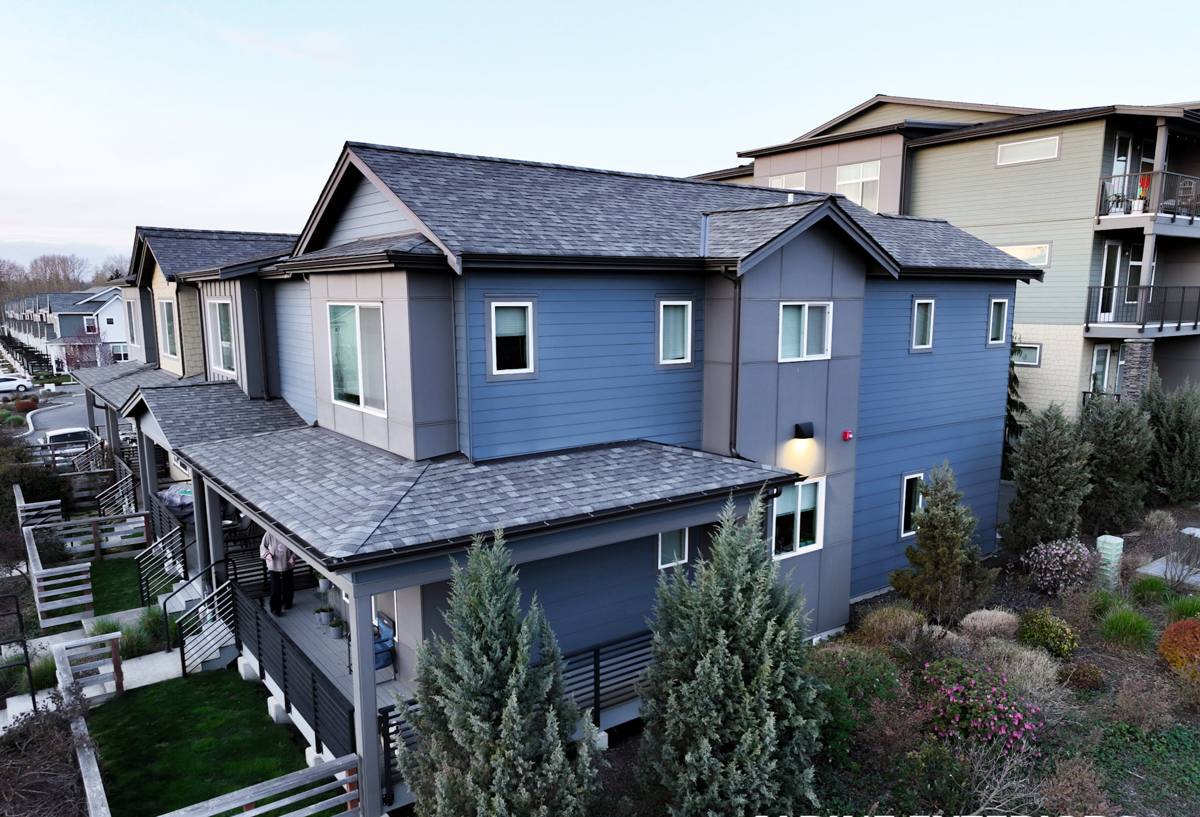
What LP SmartSide Actually Is
LP SmartSide is a strand-based engineered wood product. Wood strands are combined with resins and waxes, pressed into panels or lap boards, and treated with a zinc borate additive that resists fungal decay and insect damage. The face gets a resin-saturated overlay and a factory primer or finish coat. It's a step up from the OSB and hardboard sidings of decades past, and manufacturers have put real engineering into making it more moisture-tolerant than its predecessors.
It's also lighter and easier to cut and nail than fiber cement, which is part of why it's popular with builders working on tight schedules. On paper, and in a dry climate, it performs reasonably well when installed correctly.
What It Gets Right
Being fair means naming the upsides. LP SmartSide:
- Costs less per square foot installed than most fiber cement products, at least at the outset
- Is lighter, which can speed up installation labor on large jobs
- Comes primed or pre-finished from the factory in several textures and profiles
- Holds paint reasonably well when the substrate stays dry
- Carries a manufacturer warranty that, on paper, looks comparable to other siding products
If a homeowner in a dry inland climate wants a budget-friendly upgrade from old hardboard siding, we understand the appeal. Our objection isn't to the product in the abstract. It's to putting it on homes here.
The Core Issue: It's Still Wood
Strip away the resin overlay and the marketing, and the core of LP SmartSide is still wood fiber. Wood swells when it takes on moisture and shrinks when it dries out, and repeated cycles of that eventually stress paint film, joints, and fastener holes. The zinc borate treatment protects against rot and insects, but it doesn't change the fact that the substrate is hygroscopic. Every seam, cut edge, and nail penetration is a place where water can find its way in if the finish isn't perfect and stays that way for the life of the siding.
Fiber cement doesn't have that problem because there's no wood fiber to swell, delaminate, or feed decay in the first place. That single material difference is the root of almost everything else on this page.
Field Cuts and Edge Sealing
Factory-primed LP SmartSide only has that protection on the faces and factory-cut edges. Every board that gets trimmed on site, around a window, at a corner, at a soffit line, has a raw cut edge that has to be field-sealed with the manufacturer's specified sealant or paint before it goes up. Miss one, or use the wrong product, and that's the spot where moisture gets in first. On a typical home with dozens of window and door openings, that's a lot of edges for a crew to get right, every time, in variable weather. It's not that it can't be done. It's that it depends entirely on installer discipline, and we'd rather not build a home's weather envelope around a step that has zero margin for error.
Salt Air, Driving Rain, and Whatcom County's Moss Season
This matters more here than in most places we could be working. Fairhaven sits right on Bellingham Bay, and homes throughout Whatcom County deal with salt-laden air off the water, long stretches of driving rain in the fall and winter, and a moss season that can run from October well into spring on north-facing walls and anything shaded by fir and cedar cover. That combination is hard on any exterior material, but it's especially unforgiving toward a wood-based product that depends on an intact finish to keep moisture out.
Salt air accelerates the breakdown of paint and sealant films faster than it does in dry inland regions. Add near-constant dampness during our wet months, and you get more freeze-thaw-adjacent swelling and drying cycles at the fiber level than a manufacturer's warranty testing typically anticipates. We're not saying LP SmartSide will fail on every coastal home. We're saying the margin for a maintenance lapse is thinner here than in Spokane or Yakima, and we'd rather not sell a product whose long-term performance depends on a homeowner keeping perfect maintenance records in exactly the kind of climate that punishes maintenance lapses hardest.
Maintenance and Long-Term Cost
The lower upfront cost of engineered wood siding has to be weighed against what it takes to keep it performing over 20 or 30 years. Here's how the ongoing obligations compare, in general terms:
| Factor | LP SmartSide | James Hardie Fiber Cement |
|---|---|---|
| Finish | Factory primed or finished; field touch-up and repainting needed on a cycle | ColorPlus factory finish baked on, warrantied against fade and peel for its own term |
| Cut-edge treatment | Required on every field cut, by hand, every time | Recommended edge sealing, but no wood substrate to swell if occasionally missed |
| Moisture behavior | Wood fiber substrate; can swell or delaminate if finish fails | Fiber cement substrate; not wood, does not rot or delaminate from moisture |
| Repainting cycle | Typically needed within 8-12 years in wet coastal climates | ColorPlus finish commonly holds 15 years or longer before repainting is considered |
| Fire behavior | Combustible engineered wood product | Non-combustible material |
Add up a repaint or heavy touch-up cycle every decade or so, in a climate that's damp more months than it's dry, and the cost gap between the two products narrows a lot over the life of the siding. That math is the real reason we standardized on fiber cement, not brand preference.
Warranty Structure Worth Reading Closely
Engineered wood siding warranties commonly read well in the headline number of years, but the substance matters more than the number. Many are prorated after an initial full-coverage period, meaning the payout for a failure years down the road covers only a fraction of replacement cost, not the whole repair. Warranties also frequently require proof of proper installation and maintenance, including that field-cut edge sealing, to remain valid. If a claim comes down to whether every cut edge on a home was sealed to spec eight years ago, that's a hard thing for anyone to prove either way.
James Hardie's warranty on its fiber cement products is also conditioned on proper installation, like any manufacturer warranty, but the underlying material isn't fighting moisture and rot the same way a wood-based product is, which is a meaningfully different risk profile over a 30-year ownership window.
Why We Standardized on James Hardie
We made a decision a while back to install one siding system instead of stocking five different product lines: James Hardie fiber cement, in its HZ5 formulation engineered for wetter, harsher climates like ours. It's non-combustible, it doesn't have a wood substrate to swell or feed rot, and its ColorPlus factory finish is baked on and warrantied in its own right, which takes the repainting question off the table for a long time. Whatcom County's salt air and long wet season are exactly the conditions Hardie's climate-specific product lines were engineered around.
Standardizing on one product also means our crews install it constantly instead of switching between systems, which matters more for long-term water-tightness than almost anything else. A crew that flashes, gaps, and finishes Hardie the same correct way on every job is a bigger factor in how a wall performs in twenty years than which brand's name is on the box.
Questions Worth Asking Before You Choose a Siding Product
- Does the warranty pay full replacement cost, or does it prorate after a set number of years?
- Is the finish factory-applied and warrantied, or will it need repainting on a maintenance schedule?
- What happens at field-cut edges, and who is responsible for sealing them correctly?
- Is the substrate combustible, and does that affect insurance or local fire code requirements?
- How has this specific product performed in coastal, high-moisture climates like Whatcom County, not just in national averages?
- Is the contractor bidding this job experienced installing this exact product, or is it new to their crew?
If you're weighing siding options for a home in Fairhaven or anywhere else around Bellingham Bay, we're glad to walk through what we'd actually recommend and why, with no pressure to sign anything. A free estimate gets you a straight, specific answer for your house, not a generic pitch.