 Fairhaven Siding
 Siding Built for the Chuckanut Stretch
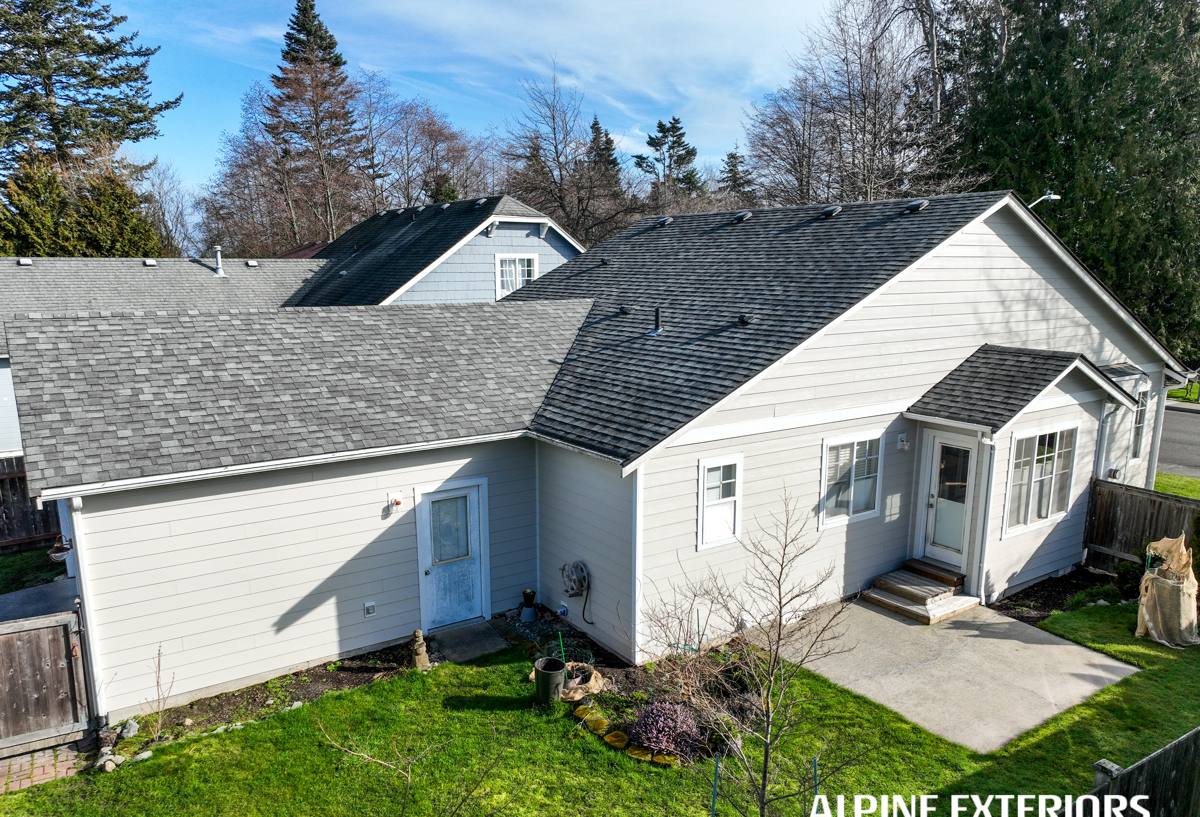
Homes along the Chuckanut corridor near Fairhaven sit in one of the more demanding exterior environments in Whatcom County. You've got Bellingham Bay close by feeding salt-laden air onto siding and trim, a wet season that runs long and heavy, and enough tree cover and shade in the surrounding hillside lots to keep north- and west-facing walls damp well after a storm has passed. It's a beautiful place to live, but it's not an easy place to be a house. Exterior materials that hold up fine forty miles inland can start showing problems here in half the time.
We work on homes throughout Fairhaven and the Chuckanut area regularly, and the patterns repeat: paint failing early on sun-exposed walls that then swing cold and wet overnight, moss and algae establishing on shaded siding and roof edges, and caulking and trim joints that were fine when installed but never accounted for how much moisture this stretch of coastline actually sees over a winter. None of that is unusual for the area — it's just what the climate does, and it's exactly what we design an exterior around.
What the Climate Actually Does to a House
Salt Air
Proximity to the bay means a steady low-level exposure to salt-carrying air, especially on west- and south-facing elevations that catch weather rolling in off the water. Salt air accelerates corrosion on fasteners, flashing, and any metal trim components, and it can also affect how paint and coatings age over time. Materials and fastener choices that ignore this exposure tend to show it first — rust streaking, degraded caulk lines, premature finish wear.
Driving Rain
Whatcom County doesn't just get a lot of rain — much of it arrives sideways, driven by wind off the water. That matters more than total rainfall totals suggest, because driving rain pushes moisture into laps, joints, and butt seams that a straight-down rain would never reach. Siding systems and installation details that aren't built with wind-driven rain in mind are the ones that develop hidden moisture problems behind the cladding, not on top of it.
The Long Moss Season
Shaded, damp conditions for much of the year make Chuckanut and Fairhaven properties prone to moss and algae growth on siding, trim, and roofing — often starting on north-facing walls and roof valleys before it's visible anywhere else. Beyond the cosmetic issue, sustained moss growth holds moisture against a surface longer than it would otherwise sit there, which is a slow but real threat to any material that isn't dimensionally stable when wet.
Why We Standardized on One Siding Product
We install James Hardie fiber cement siding exclusively. We don't offer vinyl, LP SmartSide, Cemplank, Allura, primed spruce, or cedar as alternatives — not because those products have no merit, but because after years of servicing homes in exactly this kind of coastal, wet, shaded environment, we settled on the one system that consistently holds up without asking the homeowner to babysit it.
Vinyl siding is affordable and low-maintenance in mild climates, but it can distort in temperature swings, its seams and J-channels are a real path for wind-driven rain to get behind the cladding, and it doesn't offer the fire resistance that matters more each year as wildfire smoke and ember exposure becomes a regional concern even west of the Cascades. Engineered wood products like LP SmartSide perform well when kept dry and properly maintained, but they're wood-based at the core — sustained moss cover and driving rain are exactly the combination that stresses that category of product over a couple of decades. Cedar is a beautiful, honest material with real upkeep demands: refinishing, sealing exposed cuts, and staying ahead of rot in shaded, damp zones — an ongoing commitment more than a one-time install decision. Primed spruce leans on the same idea with a lower up-front cost and a shorter runway before it needs attention. None of these are bad products in the abstract. They're just not the right fit for what this specific stretch of coastline does to a house year after year, which is why we don't put our name behind installing them here.
The James Hardie System We Install
James Hardie fiber cement is a cement, sand, and cellulose fiber composite — it's non-combustible, dimensionally stable when wet, and doesn't feed moss or rot the way wood-based products can. For this region, Hardie engineers its HardieZone products specifically for climate: HZ5 siding is formulated for areas with more moisture and freeze-thaw cycling, which fits Whatcom County's weather pattern well.
We install it with the ColorPlus factory finish, a baked-on coating applied under controlled conditions rather than painted on-site. That matters more here than in a drier climate — a factory finish resists the fading and early failure that field-applied paint is prone to when it's fighting salt air and long wet stretches from day one. It also comes with a dedicated finish warranty separate from the substrate warranty, and touch-up product matched to the exact color, so any nick from normal wear can be addressed without repainting a whole wall.
Product Lines We Use
- HardiePlank lap siding — the most common choice, available in smooth or cedar-textured finishes, in a range of exposure widths
- HardieShingle — for homes wanting a shingle-style look without the maintenance burden of real wood shingles
- HardiePanel — vertical panel siding, often used for accent sections, gables, or a more contemporary look
- HardieTrim — matched trim boards for corners, fascia, and window/door surrounds so the whole exterior system ages consistently
How We Install It on a Coastal Site
The product is only half the equation — installation detail is what actually determines whether a wall stays dry over the next twenty years, especially with driving rain in the mix. Our process on Chuckanut-area homes includes:
- Assessment of the existing wall assembly — checking for moisture damage, inadequate flashing, or drainage issues before anything new goes on, since covering up an existing problem just hides it
- Weather-resistant barrier and rainscreen detailing — creating a drainage gap behind the siding so any moisture that does get past the cladding can drain and dry rather than sit against the wall sheathing
- Flashing at every penetration — windows, doors, hose bibs, vents, and anywhere else the wall plane is interrupted, since these are the spots where wind-driven rain actually finds its way in
- Correct fastening per Hardie's published specs — proper nail placement and spacing affects both the warranty and the long-term integrity of the wall
- Caulk and sealant selection built for marine exposure — not every sealant on the market is rated for sustained salt air and moisture cycling
Skipping or shortcutting any one of these steps is usually invisible on install day and only shows up as a problem years later — which is exactly the kind of mistake that's expensive to find and fix after the fact.
Beyond Siding: The Full Exterior
Siding doesn't work in isolation — it's one part of an exterior envelope that also includes the roof, windows, and any attached structures like decks. We handle all four because they interact directly with each other: roof drainage that dumps water onto a wall, a window that isn't flashed to match the new siding plane, or a deck ledger board that traps moisture against the house can all undermine even a well-installed siding job. For Chuckanut and Fairhaven homes specifically, we look at roof condition and moss buildup, window flashing and seal condition, and deck structural connection points as part of any siding conversation, since addressing them together is more effective — and often more cost-efficient — than treating each as a separate project down the road.
What Drives Cost on a Project Like This
Every home is different, but the factors that move the price on a Chuckanut-area siding project tend to be the same ones:
| Factor | Why It Matters |
|---|---|
| Wall condition underneath | Rot, existing moisture damage, or missing weather barrier adds repair work before new siding can go on |
| Home size and complexity | More corners, gables, dormers, and trim detail means more labor and material |
| Product line and texture | Lap, shingle, and panel styles carry different material and install costs |
| Access and site conditions | Steep or wooded Chuckanut-area lots can affect staging, scaffolding, and material handling |
| Trim and detail package | Matched HardieTrim on corners, fascia, and window surrounds adds cost but keeps the whole system consistent |
| Bundled scope | Combining siding with roofing, window, or deck work can reduce redundant setup and staging costs |
We walk every project in person before quoting — on a site like this, condition of the existing wall assembly matters as much as square footage, and that's not something we're willing to estimate sight unseen.
Keeping an Exterior Healthy in This Climate
Fiber cement is low-maintenance compared to wood or vinyl, but "low-maintenance" isn't "no-maintenance," especially with this much moss and moisture in the picture. A short seasonal routine goes a long way:
- Rinse siding annually, focusing on shaded north- and east-facing walls where moss and algae establish first
- Keep gutters clear so roof runoff isn't dumping directly onto siding or trim below
- Trim back vegetation and tree cover that keeps a wall section damp and shaded longer than the rest of the house
- Inspect caulk lines at windows, doors, and trim joints once a year and have any cracked or missing sealant replaced promptly
- Watch for moss creeping from a roof edge down onto adjacent siding and address it at the source
Why a Local Crew Makes a Difference
A crew that works Whatcom County's coastline regularly already knows which walls on a given lot take the worst of the driving rain, where moss tends to establish first, and how to detail flashing for a site that sees this much wind-driven moisture. That's not something a general contractor unfamiliar with the area picks up on day one — it comes from doing this work on homes just like yours, in this exact climate, season after season. We're not guessing at how James Hardie performs here; we've installed it on enough Fairhaven and Chuckanut-area homes to know what the material and the site both need.
If you're planning a siding project — or want a second opinion on a roof, window, or deck issue tied into your exterior — we're happy to take a look and put together a straightforward, no-pressure estimate. Use the form below to get started.