 Fairhaven Siding
 One Product, One Standard
Most siding contractors in Whatcom County will install whatever a homeowner picks off a sample board — vinyl, LP SmartSide, cedar, fiber cement, whatever's on sale that quarter. We don't work that way. Fairhaven Siding Company installs James Hardie fiber cement siding and nothing else. Not because we have a marketing deal with Hardie, but because after years of tearing old siding off houses in Fairhaven, Bellingham, and up and down the Whatcom County coastline, we got tired of ripping out products that failed in ways this climate makes inevitable.
This page isn't a sales pitch dressed up as education. It's the honest reasoning behind a business decision that actually costs us jobs — some homeowners want vinyl because it's cheaper, and we let those jobs go to someone else. Here's why we made that trade.
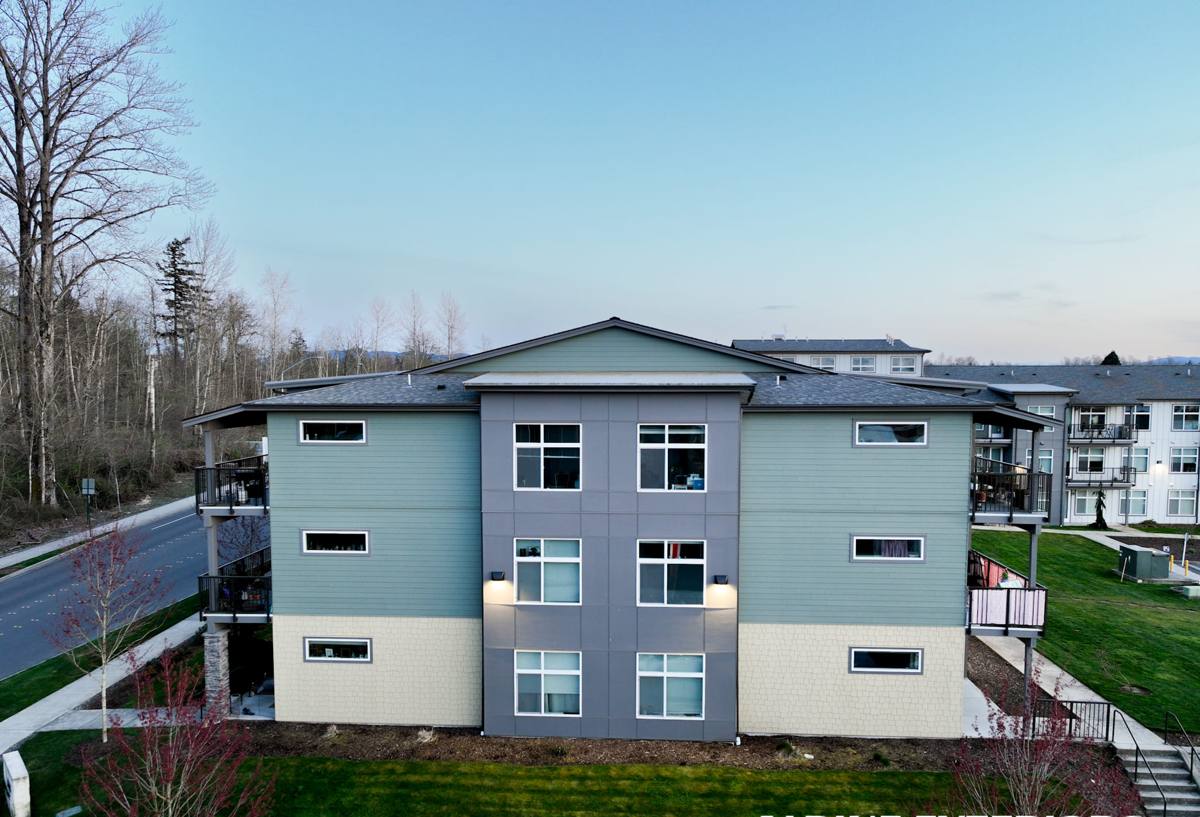
What This Climate Actually Does to Siding
Fairhaven sits right on Bellingham Bay, which means salt air is a daily fact of life, not an occasional coastal storm event. Add in the driving, wind-blown rain that comes off the Sound most of the winter, plus a moss and algae season that can run eight or nine months out of the year under our tree cover and cloud ceiling, and you have a siding environment that's harder on a house than most of the country deals with.
The three stressors that matter
- Salt air: accelerates corrosion of fasteners and metal trim, and degrades some paint and coating systems faster than inland exposure.
- Driving rain: wind-driven moisture finds every gap, seam, and fastener hole in a cladding system — the water management behind the siding matters as much as the siding itself.
- Moss and algae: constant damp shade means organic growth on siding surfaces is a matter of when, not if, unless the material and finish resist it.
Any siding product can look fine in a showroom. What separates products here is how they hold up after five winters of this specific combination.
Why We Don't Install Vinyl
Vinyl siding is inexpensive and easy to install fast, which is exactly why it's everywhere. It's also PVC plastic that expands and contracts significantly with temperature swings, which over time opens gaps at seams and around trim — gaps that driving rain in this area will find. Vinyl doesn't rot, but it can crack in impact and UV-fade unevenly, especially on south and west-facing walls that get the most sun between rain systems. Once it fades, there's no repainting it back to match; the whole run needs replacing.
None of that makes vinyl a bad product for every application. It just doesn't hold up to our standard for a coastal, wet, moss-prone environment where we want a 30-40 year installation, not a 15-year one.
Why We Don't Install LP SmartSide
LP SmartSide is an engineered wood product — strand board with a resin and wax treatment, then primed. It installs fast, costs less than fiber cement, and performs reasonably well in drier climates. The catch is that it's still wood-based, and wood-based products are dimensionally and chemically vulnerable to sustained moisture exposure in a way fiber cement simply isn't. In a climate where siding stays damp for long stretches and moss holds moisture against the wall surface, any breach in the factory treatment or field-cut edge sealing becomes a slow entry point for water. LP's warranty terms reflect this sensitivity — proper edge sealing and maintenance are conditions of coverage, not suggestions.
We're not saying LP SmartSide is poorly made. We're saying we don't want to be the contractor explaining to a homeowner in year eight why the bottom courses are swelling near the ground line, in a town where that ground line is wet more often than it's dry.
Why We Don't Install Cedar or Primed Spruce
Real wood siding has a look that some homeowners genuinely prefer, and there's nothing wrong with liking it. But cedar and primed spruce demand a maintenance commitment — recoating, caulking, spot-treating moss and mildew — that most homeowners underestimate when they buy the house. In a moss season that runs most of the year here, untreated or under-maintained wood siding becomes a multi-year project rather than a one-time install. We've replaced enough neglected cedar to know that the product isn't the problem; the maintenance schedule required to keep it sound in this climate is the problem, and most people don't keep up with it.
Why We Don't Install Cemplank or Allura
Cemplank and Allura are also fiber cement, and structurally the category is sound — that's precisely why we're in the fiber cement business at all. Where we draw the line is the specifics: factory finish quality, warranty structure, and the depth of product engineering for different exposure conditions. James Hardie backs its ColorPlus factory finish with a dedicated finish warranty separate from the product warranty, and the HardieZone system (more below) exists because Hardie engineers different formulations for different climate zones. We haven't seen the other fiber cement brands match that combination of factory finish durability and climate-specific engineering, and since we only want to install one system well rather than juggle several adequately, we standardized on the one with the deepest track record.
What James Hardie Gets Right for This Area
Non-combustible core
Hardie siding is fiber cement — sand, cement, and cellulose fiber — which doesn't burn, doesn't feed insects, and doesn't rot the way wood-based products can. That's a baseline advantage regardless of climate, but it also means we're not gambling on a treatment or coating layer to keep the core material sound.
HZ5 engineering for the Pacific Northwest
Hardie's HZ5 product line is engineered specifically for climates like ours — the freeze-thaw cycles, sustained moisture, and moisture-related growth (moss, mildew, algae) that define a Whatcom County winter. The formulation and moisture management specs are built around exactly the conditions Fairhaven throws at a house.
ColorPlus factory finish
Rather than field-painting siding after install — which introduces inconsistency and shortens repaint cycles — Hardie bakes on its ColorPlus finish at the factory under controlled conditions. It resists fading and chipping better than field-applied paint and comes with its own finish warranty, which matters in a place where UV exposure between rain events can be intense even though total sun hours are modest.
Transferable warranty
Hardie's product warranty is long-term and transfers to a new owner if the house sells, which matters for resale in a market like Fairhaven and greater Bellingham where buyers increasingly ask about exterior condition and remaining siding life.
Comparing the Options Side by Side
| Product | Core Material | Moisture Behavior Here | Maintenance Burden | Typical Warranty Structure |
|---|---|---|---|---|
| Vinyl | PVC plastic | Seams gap over time; doesn't rot but doesn't manage water | Low, but fading is permanent | Prorated, non-transferable in many cases |
| LP SmartSide | Engineered wood strand | Vulnerable at cuts/edges if treatment is breached | Moderate — edge sealing, caulking required | Conditional on maintenance compliance |
| Cedar / Primed Spruce | Solid or primed wood | High vulnerability without regular recoating | High — recurring recoat/moss treatment | Limited or none on material itself |
| Other Fiber Cement | Fiber cement | Generally sound; finish quality varies by brand | Low to moderate | Varies by manufacturer |
| James Hardie | Fiber cement, HZ5-engineered | Built for sustained moisture and moss-prone exposure | Low | Long-term, transferable, separate finish warranty |
What Correct Installation Requires
Even the right product fails if it's installed wrong, and fiber cement is less forgiving of shortcuts than vinyl. A proper Hardie install in this climate means specific attention to the details that keep water out over decades, not just at the walkthrough.
- Correct rain-screen or drainage plane behind the siding so any moisture that gets past the cladding can drain and dry
- Proper fastener type, spacing, and penetration depth — under- or over-driven nails are a common failure point
- Manufacturer-specified joint and butt-seam treatment, not just caulk over a gap
- Correct clearance from grade, decks, and roof lines so splash-back and standing water don't sit against the bottom course
- Flashing details at windows, doors, and penetrations installed to shed water outward, not trap it
- Field-cut edges treated per Hardie spec before installation, especially on any factory-primed (non-ColorPlus) product
We install to Hardie's published specifications on every job, which is also what keeps the manufacturer warranty intact if you ever need it.
What This Means for Your Project
If you're planning a siding replacement in Fairhaven or anywhere in Whatcom County, you're going to hear pitches for cheaper alternatives, and some of those pitches will be honest about what they're offering. Our position is simply that we've seen what this specific climate — the salt air off the bay, the driving winter rain, the long moss season — does to every category of siding over ten and twenty years, and James Hardie is the one we're willing to stand behind with our own installation work and reputation.
If you'd like to talk through what a Hardie install would look like for your home — product line, color options, and a straightforward cost estimate — we're happy to come take a look. The estimate is free, and there's no pressure attached to it.