 Fairhaven Siding
 Siding in Edgemoor: A Different Set of Conditions
Edgemoor sits close to Bellingham Bay, wrapped in mature trees and shaped by the marine air that moves in off the water. That's part of what makes it a beautiful place to live — and part of what makes exterior maintenance here different from a house twenty miles inland. Salt-laden air, wind-driven rain off the Sound, and a long, damp moss season each put steady pressure on siding, trim, roofing, and anything wood-based on the outside of a home. None of that is dramatic on its own. It's cumulative. A material or an installation detail that's "fine" in a drier climate can fail quietly here over years, and the first sign is often paint that won't hold, a soft spot at a butt joint, or moss creeping up from the north-facing wall.
Fairhaven Siding Company works throughout Whatcom County, and Edgemoor's proximity to the water means we pay close attention to a few things other neighborhoods worry about less: how the siding handles airborne salt without corroding fasteners or trim, how water sheds off a home with a lot of tree cover and shade, and how the assembly behind the siding manages moisture that never quite dries out for months at a time.
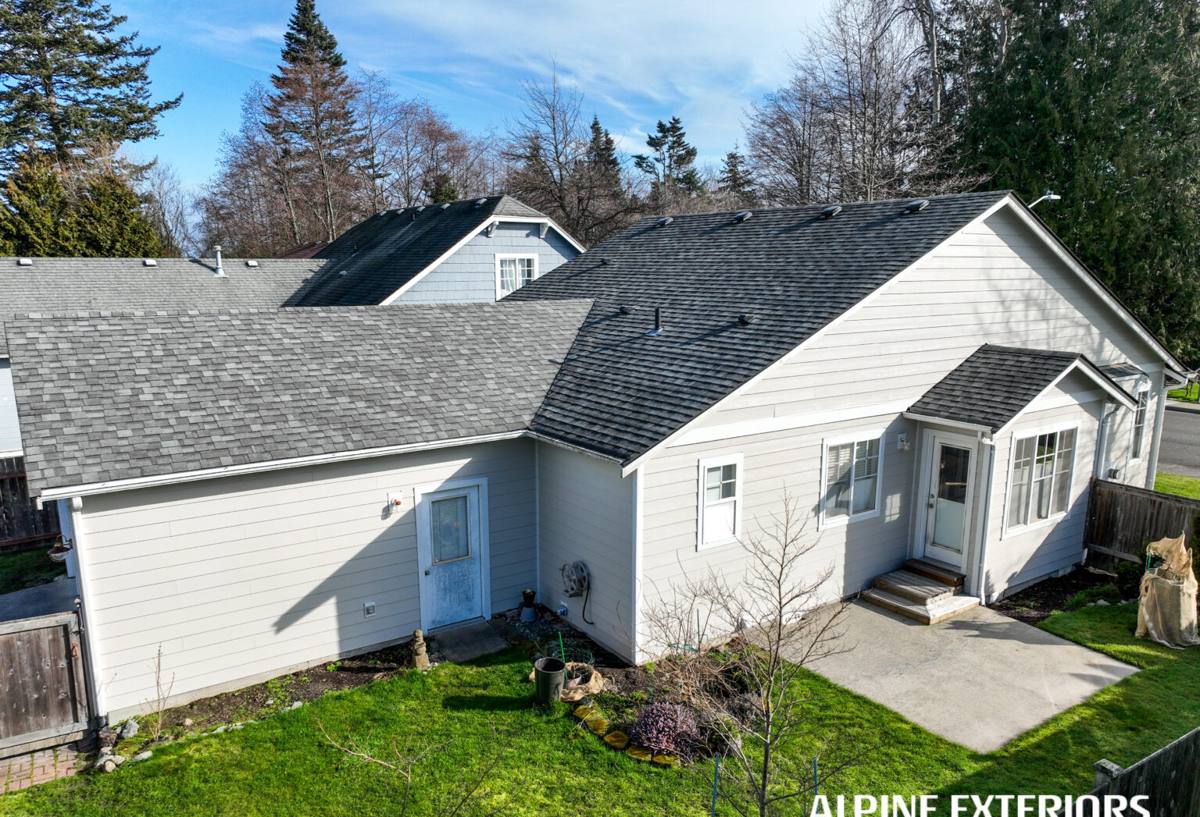
What the Bellingham Bay Climate Does to a House
Salt Air and Metal Fatigue
Homes close to the water deal with airborne salt that settles on every exterior surface. Over time, salt exposure accelerates corrosion on exposed fasteners, flashing, and light-gauge trim. It doesn't destroy a house overnight, but it shortens the working life of anything that wasn't specified for a coastal-adjacent environment. This is one reason fastener choice and flashing detail matter as much as the siding material itself — a great product installed with the wrong hardware will still show rust streaks and staining years before it should.
Driving Rain
Storms coming off the Strait of Georgia and Bellingham Bay tend to arrive sideways, not straight down. Wind-driven rain finds horizontal laps, uncaulked penetrations, and any gap in a water-resistive barrier that a calmer climate would never expose. Homes in Edgemoor need siding systems and flashing details built around the assumption that rain will hit the wall at an angle, not just fall on the roof.
The Long Moss Season
Tree cover, shade, and persistent humidity add up to a moss and algae season that can run most of the year on north- and west-facing walls. Moss holds moisture against a surface long after a sunnier wall has dried out. On wood siding or wood trim, that means extended exposure to standing dampness — exactly the condition that leads to rot at butt joints, sill areas, and anywhere caulking has started to fail. Even on more durable materials, moss buildup left untreated will eventually stain and degrade a factory finish.
Why This Adds Up to More Than "Normal Wear"
Individually, salt air, driving rain, and moss are manageable. Together, on a home that gets regular shade and sits near open water, they compress the maintenance timeline. A siding system that might go 8-10 years between paint jobs in a drier part of the state can need attention much sooner in Edgemoor if it wasn't built or installed with this climate in mind.
Why We Standardized on James Hardie Fiber Cement
Fairhaven Siding Company installs James Hardie fiber cement siding exclusively. We don't install vinyl, LP SmartSide, Cemplank, Allura, primed spruce, or cedar. That's not a marketing position — it's a decision built around what actually holds up in this specific climate, on this specific coastline, year after year.
Fiber cement is non-combustible, which matters increasingly in Washington regardless of proximity to wildfire zones, and it doesn't feed moisture into a wall assembly the way wood-based products can once a finish starts to fail. James Hardie's ColorPlus finish is baked on at the factory under controlled conditions, which gives it more consistent adhesion and UV resistance than field-applied paint — a real advantage on a wall that spends half the year in shade and damp. Hardie also engineers regional product lines (HZ5 for our climate zone) specifically to handle moisture cycling, which is the exact stress that salt air and a long wet season put on a wall.
What We're Not Saying
We're not claiming other products are junk. Vinyl is inexpensive and low-maintenance in the right setting. Cedar has a look plenty of homeowners love. Primed wood products can perform well if maintained aggressively. Our position is narrower and more practical: for the moisture load, salt exposure, and maintenance realities of homes in and around Edgemoor, we believe fiber cement — installed correctly — gives homeowners the best long-term balance of appearance, durability, and manageable upkeep. That's the product we're willing to warranty our workmanship on, and it's what we put on our own homes.
How Correct Installation Actually Works
Material choice is half the equation. Installation detail is the other half, and it's where most premature siding failures actually originate — not in the product itself.
- Water-resistive barrier and drainage plane: A correctly lapped, sealed WRB behind the siding gives any moisture that gets past the cladding a path to drain and dry, rather than sitting against the sheathing.
- Rainscreen or furring where appropriate: On shaded, moisture-prone walls — common in Edgemoor's tree cover — a small air gap behind the siding dramatically improves drying time after a storm.
- Flashing at every penetration: Windows, doors, hose bibs, light fixtures, and vents all need proper flashing, not just caulk. Caulk is a backup, not a primary defense against driving rain.
- Correct fastener spec: Stainless or coated fasteners rated for coastal exposure reduce the corrosion and staining that plain fasteners develop near salt air.
- Manufacturer-spec clearances: Proper gaps at grade, roofline, and butt joints keep the siding from wicking moisture it was never designed to sit in.
- Caulking and joint treatment per Hardie's published details: Skipping or shortcutting these details is the single most common cause of early failure we see on other contractors' work.
We follow James Hardie's published installation instructions to the letter because that's what keeps the manufacturer's warranty valid — and because those details exist specifically to handle conditions like Edgemoor's.
Beyond Siding: Roofing, Windows, and Decks
Siding doesn't act alone. It's one part of an exterior envelope that includes the roof, windows, and any deck or outdoor living space attached to the house, and in a climate like this they all face the same underlying stresses.
Roofing
A roof that's shedding granules, has failing flashing, or is holding moss is sending water somewhere — often down behind trim and siding at the roofline, which is one of the more common places we find hidden rot during a siding evaluation. Roofing and siding condition are worth assessing together, not separately.
Windows
Old or poorly flashed windows are a major point of water entry, especially under wind-driven rain. When we're already opening up a wall for siding work, it's often the most efficient time to address window flashing or replacement rather than doing it as a separate project later.
Decks
Decks in a shaded, moist environment like Edgemoor face the same moss and moisture issues as siding, plus direct foot traffic and structural load. Ledger board flashing where a deck attaches to the house is a frequent failure point that echoes the same water-intrusion problems we look for on wall assemblies.
Comparing Common Siding Approaches for This Climate
| Material | Moisture Behavior in Wet/Shaded Sites | Salt Air Durability | Maintenance Pattern |
|---|---|---|---|
| James Hardie fiber cement | Engineered HZ5 line for Pacific NW moisture cycling; doesn't rot | Non-metallic panel resists corrosion; factory finish holds up well | Occasional wash; repaint interval measured in decades with ColorPlus |
| Vinyl | Doesn't rot, but can warp/fade; seams can allow water behind panel | Panel itself is inert; trim and fasteners still a concern | Low, but limited repair options if damaged or discolored |
| Cedar | Prone to moisture retention and rot without diligent upkeep, especially shaded walls | No inherent salt resistance; finish degrades faster near water | High — refinishing and moss treatment on a short cycle |
| Primed spruce / engineered wood | Vulnerable at cut edges and joints if not fully sealed and maintained | Moderate; depends heavily on finish integrity | High — moisture intrusion risk if maintenance lapses |
This is a general comparison, not a claim that every non-Hardie product will fail. It reflects the trade-offs we weighed when we decided which material to put our name behind for homes in this specific climate.
What a Siding Evaluation Looks Like
When we walk a property in Edgemoor, we're looking at more than the visible siding surface.
- Condition of existing siding, trim, and caulking, including any soft spots or moss buildup
- Signs of moisture behind the cladding at butt joints, corners, and penetrations
- Flashing condition at windows, doors, and rooflines
- Grade clearance and drainage around the foundation perimeter
- Shade patterns and tree proximity that affect drying time after rain
- Deck ledger and attachment points, if a deck is part of the scope
That assessment shapes the plan — sometimes it's straightforward re-siding, sometimes it uncovers rot or flashing issues that need addressing before new siding goes on, which is far cheaper to fix at that stage than after the fact.
Why Hire a Local Crew for Edgemoor Work
A crew based in Whatcom County and familiar with Fairhaven and the Bellingham Bay shoreline understands things a traveling contractor won't pick up quickly: which walls in a given micro-area take the worst of the wind-driven rain, how much shade a lot actually gets through the year, and what moss pressure looks like on similar homes nearby. That local knowledge shapes real decisions — where a rainscreen gap is worth the extra step, which trim details need extra attention, and how aggressively to plan for drainage and drying.
It also means accountability. A local company is still here next year, next storm season, and the one after that — which matters when you're trusting a warranty on something as long-lived as siding.
Checklist: Is It Time to Look at Your Siding?
- Paint or finish peeling, chalking, or failing to hold on repainted areas
- Soft or spongy spots when pressed, especially near the bottom of walls or at joints
- Persistent moss or algae staining that returns quickly after cleaning
- Visible gaps, cracked caulking, or separated joints
- Rust streaking near fasteners or trim
- Musty smell or visible staining on interior walls that share an exterior wall
- Siding age approaching or past its expected service life
Any one of these on its own might be minor. Several together, especially on a shaded or water-facing wall, are worth a professional look before the next wet season.
Get a Free, No-Pressure Estimate
If you're weighing a siding project in Edgemoor — or want an honest read on whether your current siding, roof, windows, or deck are holding up the way they should in this climate — we're happy to take a look. Use the form below to request a free estimate; there's no obligation and no pressure, just a straightforward assessment from a crew that works this coastline regularly.