 Fairhaven Siding
 Siding That Actually Holds Up in Edgemoor
Edgemoor sits close to the water on the edge of Fairhaven, and that location cuts both ways. The views are part of why people live there, but the same exposure that makes the neighborhood desirable also makes it one of the harder places in Whatcom County to keep siding looking and performing the way it should. Salt-laden air off Bellingham Bay, wind-driven rain that comes in sideways during winter storms, and the deep shade from mature trees that keeps siding damp for weeks at a time all work against ordinary building materials. We install James Hardie fiber cement siding exclusively, and on homes in this part of Fairhaven, that's not a marketing preference — it's the product that's actually engineered to take what this specific location dishes out.
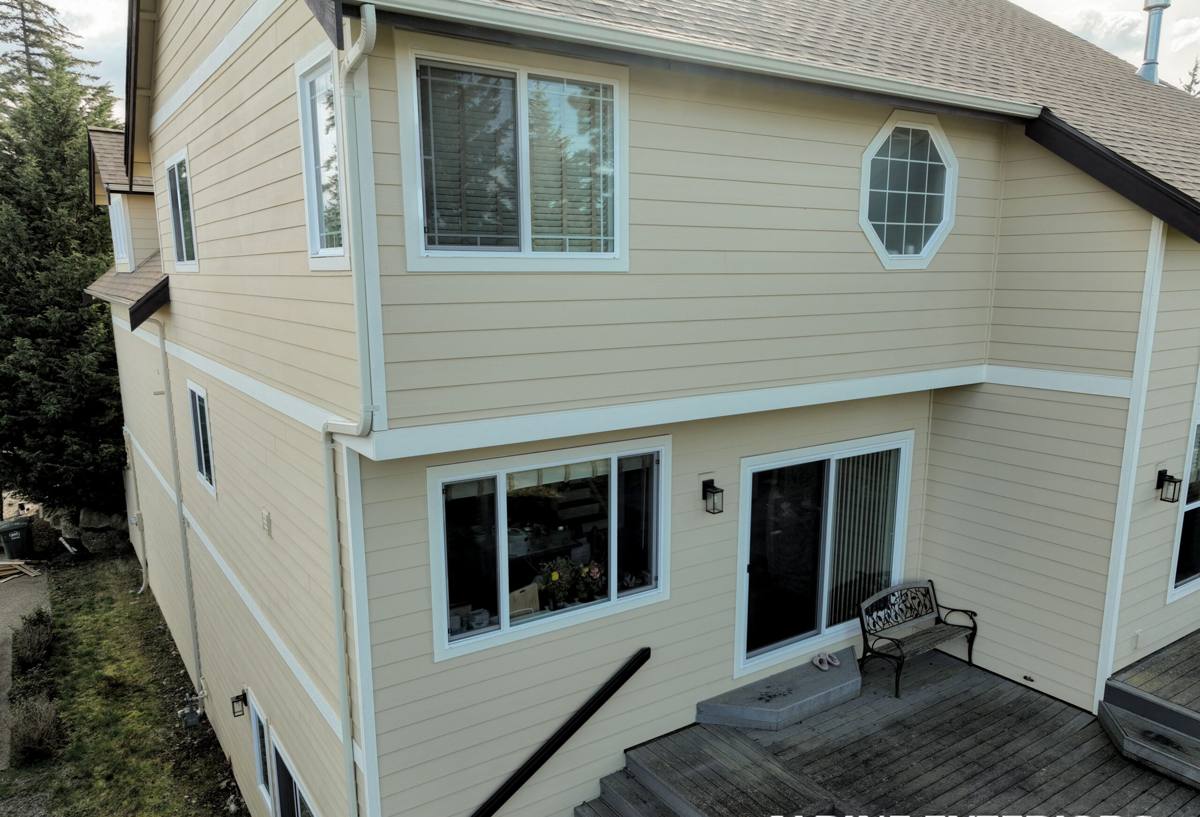
What Edgemoor's Microclimate Does to Siding
Salt Air and Marine Exposure
Homes closer to the shoreline deal with a fine mist of salt-bearing moisture that settles on exterior surfaces almost daily, even without visible rain. Over years, that salt exposure accelerates the breakdown of paint films, corrodes fasteners and trim metal that aren't rated for coastal use, and speeds up rot in any wood-based siding product once the surface coating starts to fail. It's a slow process, which is exactly why it catches homeowners off guard — the damage is well underway before it's visible from the street.
Driving Rain and Wind-Driven Moisture
Whatcom County gets plenty of straight-down rain, but the exposed, water-facing lots around Edgemoor also catch wind-driven rain that hits siding at an angle and pushes water up under laps, around trim, and into any gap in the weather barrier. Siding systems that rely on tight seams and perfect caulk lines to stay dry struggle here, because caulk is the first thing that fails under UV and wind stress. A siding system needs to shed that water even when the seal isn't perfect anymore.
Moss, Shade, and Prolonged Dampness
The tree canopy that gives Edgemoor its character also means a lot of siding never gets a full day of direct sun, especially on north-facing walls. That shade keeps surfaces damp long after a storm has passed, which is exactly the environment moss and algae need to take hold. Once moss establishes on a siding surface, it holds moisture against the material around the clock, which is a much bigger problem for wood-based products than it is for fiber cement.
Why James Hardie Is the Only Product We Put on Edgemoor Homes
We don't install LP SmartSide, vinyl, Cemplank, Allura, primed spruce, or cedar. That's a standard, not a limitation — we made the call after years of seeing how different products actually perform once they've been through a few real Pacific Northwest winters, not just how they perform on a spec sheet. James Hardie is the one product line built specifically for climates like this one.
HZ5 — Engineered for This Climate
James Hardie makes region-specific formulations, and the HZ5 line is engineered for areas with more moisture cycling and freeze-thaw exposure than the Southeast or Southwest lines are designed for. Fiber cement itself is non-combustible and doesn't provide a food source for moss, mold, or insects the way wood-based siding does — moss can grow on its surface, but it can't feed on the material or rot it from the inside the way it can with wood or wood composite.
ColorPlus Factory Finish
Most of the siding failures we get called out to inspect trace back to the paint, not the substrate — a coating that was field-applied, under-cured, or simply not rated for the UV and salt exposure a marine-adjacent lot receives. James Hardie's ColorPlus finish is baked on in a factory-controlled process and backed by its own finish warranty, which removes the weakest link in a typical siding job: the paint job happening on a ladder in variable weather.
What a Correct Installation Actually Involves
Product quality only gets you halfway. Fiber cement siding installed to a generic standard, rather than to James Hardie's published specifications for this climate zone, will still fail early — usually at the fasteners, the flashing, or the clearances. On an exposed, shaded, wind-loaded site like Edgemoor, these details matter more than they would on a sheltered inland lot.
| Detail | Why It Matters in Edgemoor |
|---|---|
| Proper starter strip and bottom clearance | Keeps the lowest course out of standing water and splash-back off hardscaping and landscaping beds |
| Corrosion-resistant fasteners | Salt air attacks standard fasteners faster; stainless or hot-dip galvanized nails hold up where standard fasteners rust and streak |
| Correct panel gapping and caulking | Fiber cement expands and contracts with moisture; tight-butted joints trap water and crack the finish |
| Rainscreen or drainage plane behind panels | Gives wind-driven rain that gets past the surface a path to drain instead of sitting against the wall sheathing |
| Flashing at every horizontal transition | Trim boards, window heads, and roof-to-wall intersections are where driving rain finds its way in first |
Our Process on Edgemoor Homes
The work follows the same sequence on every job, but the details get adjusted for the site.
- Walk and assessment — we look at sun exposure, shade patterns, drainage around the foundation, and the condition of the existing siding and trim before quoting anything.
- Tear-off and sheathing check — old siding comes off and we inspect the wall sheathing underneath for moisture damage that needs to be addressed before new siding goes on, not covered up by it.
- Weather barrier and drainage plane — a code-compliant water-resistive barrier goes on, with a drainage gap where the exposure calls for it, so any moisture that gets behind the siding has somewhere to go.
- James Hardie installation to spec — panels, fasteners, and flashing installed to James Hardie's published requirements for this region, not a generic "close enough" standard.
- Trim, caulking, and final detailing — the small stuff that determines whether water sheds correctly for the next twenty years.
- Walkthrough — we go over the finished work and the warranty coverage with the homeowner directly.
Signs an Edgemoor Home Needs New Siding Sooner Rather Than Later
- Moss or dark streaking that comes back within weeks of being cleaned off
- Paint that's peeling, bubbling, or chalking, especially on shaded or water-facing walls
- Soft spots, bowing, or visible warping in existing wood or composite siding
- Caulk lines that are cracked, shrunk, or pulling away from trim and windows
- Rust streaks running down from fasteners or trim metal
- A musty smell near exterior walls, which can point to moisture already inside the wall assembly
Cost Factors for an Edgemoor Siding Project
Every home is different, but the same handful of factors drive most of the cost variation we see on jobs in this area.
| Factor | How It Affects Cost |
|---|---|
| Wall square footage and home height | More surface area and multi-story access both add labor time |
| Condition of existing sheathing | Rot or moisture damage found during tear-off adds repair scope before new siding goes on |
| Trim and detail complexity | Homes with more corners, dormers, and window trim take longer to flash and finish correctly |
| James Hardie product line and profile | Lap width, texture, and ColorPlus color selection all carry different material pricing |
| Site access | Waterfront and sloped lots can require more setup and staging time than a flat, open lot |
We give exact numbers only after walking the actual house — broad ranges without seeing the site are a disservice to the homeowner, and we'd rather quote it accurately the first time.
Why a Crew That Already Works This Neighborhood Matters
A contractor who's worked exposed, water-adjacent lots in and around Fairhaven has already made the judgment calls this specific environment requires — how much drainage gap a shaded, north-facing wall needs versus a sun-exposed one, which fastener spec actually holds up to salt air over time, where wind-driven rain tends to find weak points on this kind of terrain. That's the difference between a siding job that looks right on installation day and one that's still performing correctly in fifteen years. It's also why we standardized on one product instead of installing whatever a homeowner asks for: James Hardie's climate-specific engineering, factory finish, and transferable warranty give us a system we can install consistently and stand behind, rather than juggling the maintenance profile and failure points of five different products across every job we take on.
If your Edgemoor home is due for new siding, or you're not sure whether what's on the walls now has years left in it, we're happy to come take a look. The estimate is free, there's no pressure to sign anything on the spot, and you'll get a straight answer about what your home actually needs.