 Fairhaven Siding
 Siding Built for Ferndale's Weather, Not Just Any Weather
Ferndale sits close enough to the water and far enough into Whatcom County's marine air pattern that homes here take a specific kind of beating. It isn't dramatic weather — no hurricanes, no hailstorms — but it's relentless. Salt-tinged air drifts in off the coast, driving rain comes sideways during the fall and winter storm cycles, and a long, damp moss season settles in and doesn't let go until late spring. None of that shows up as a single catastrophic failure. It shows up as siding that looks tired years before it should: swollen seams, peeling paint, green-black streaking, and soft spots where moisture finally won.
We're a local exterior contractor, not a national franchise, and we've built our whole business around understanding what Whatcom County exteriors actually go through year after year. When we talk about siding for a Ferndale home, we're talking about a product and installation approach that has to survive a specific combination of humidity, wind-driven moisture, and biological growth — not a generic "siding is siding" pitch.
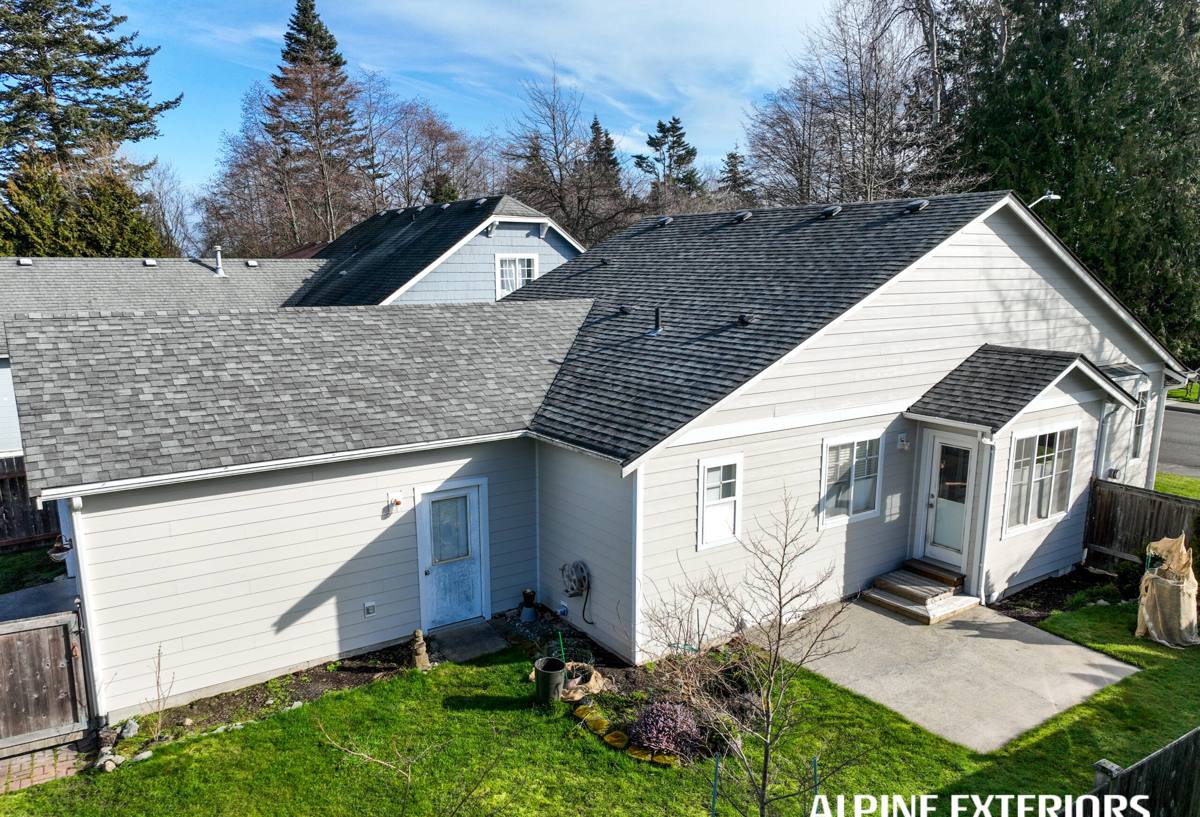
What Ferndale's Climate Actually Does to a House
Salt Air and Corrosion
Proximity to Bellingham Bay and the broader Salish Sea means airborne salt is a real factor here, even a few miles inland. Salt-laden moisture accelerates corrosion on fasteners, flashing, and any metal trim that isn't properly rated or protected. It also breaks down cheaper paint films faster than inland weather would, which is part of why factory-applied, baked-on finishes matter so much more here than they would in a drier climate.
Driving Rain, Not Just Rain
Whatcom County doesn't just get rain — it gets wind-driven rain that hits siding at an angle instead of falling straight down. That matters because it pushes water into laps, seams, and butt joints that a vertical rain would never reach. Siding systems and installation details that work fine in a calmer climate can fail here simply because water finds its way behind the cladding instead of running off the face of it.
The Long Moss and Mildew Season
Shaded north-facing walls, tree-lined lots, and the sheer number of overcast, moisture-heavy days in this region create ideal conditions for moss, algae, and mildew to take hold on exterior surfaces. Once organic growth gets a foothold in seams or behind poorly sealed trim, it holds moisture against the wall assembly and accelerates whatever rot or paint failure is already starting.
Why We Only Install James Hardie Fiber Cement
We get asked fairly often why we don't offer vinyl, LP SmartSide, or a cheaper fiber cement alternative like Cemplank or Allura. The honest answer is that we made a standard for our own crews and our own name, and James Hardie is the only siding system that consistently meets it in this climate.
- Non-combustible core: Hardie's fiber cement doesn't feed a fire the way wood-based or vinyl products can, which matters to insurers and homeowners alike.
- ColorPlus factory finish: A baked-on finish applied under controlled conditions holds up to salt air and UV far better than field-applied paint, and it's backed by its own finish warranty.
- Climate-engineered HZ product lines: Hardie builds region-specific formulations (HZ5 for our Pacific Northwest climate zone) engineered for moisture exposure rather than a one-size-fits-all mix.
- Proven longevity when installed to spec: Fiber cement doesn't swell, delaminate, or feed moss growth the way some wood-fiber composite sidings can when moisture gets behind them.
- Strong transferable warranty: A real, documented warranty that follows the house if it sells — worth more than a verbal assurance from a contractor who may not be around in ten years.
We're not saying every other product on the market is junk. LP SmartSide, vinyl, and other fiber cement brands all have installed base and legitimate uses. We simply concluded, after years of tear-offs and callbacks in this exact climate, that the trade-offs on those products weren't ones we wanted to put our name behind anymore. Hardie is what we now install, full stop.
How a Siding Project Works, Start to Finish
Assessment and Moisture Check
Every job starts with a walk-around and, where existing siding is coming off, a check of the sheathing underneath. In a climate like ours, it's common to find soft spots or old moisture staining near ground contact, roof-wall intersections, and window corners — the classic places driving rain and splash-back get in over the years.
Water Management Details
The house wrap, flashing, and drainage plane behind the siding matter as much as the siding itself. We install proper flashing at windows, doors, and roof intersections, and we keep the correct clearance between the bottom of the siding and grade, decks, and roof lines so water has somewhere to go instead of wicking up into the material.
Hardie Installation to Manufacturer Spec
Fiber cement performance depends heavily on installation — correct fastener type and placement, proper joint treatment, and factory-recommended gaps and sealants. We follow James Hardie's published installation guidelines rather than shortcuts, because that's what keeps the product warranty valid and the wall assembly dry long-term.
Final Trim and Paint Touch-Up
ColorPlus finishes come pre-colored, so field touch-up is minimal and limited to cut edges and any factory-matched caulking lines — not full repainting.
Beyond Siding: Roofing, Windows, and Decks
Siding rarely fails in isolation. A leaking roof valley, a failed window flashing, or a rotting deck ledger board can all send moisture into a wall assembly and undo good siding work from the inside. Because we handle roofing, windows, and decks in addition to siding, we look at the whole envelope of the house rather than just the wall cladding. If we spot a roofing or flashing issue while we're up close to a wall during a siding estimate, we'll tell you about it — even if it's not something you called us for.
Comparing Siding Options for a Ferndale Home
| Factor | Vinyl Siding | LP SmartSide | James Hardie Fiber Cement |
|---|---|---|---|
| Moisture behavior | Doesn't absorb water, but seams can trap it behind panels | Wood-fiber core can swell if moisture gets in at cut edges or seams | Fiber cement core resists swelling and rot when installed to spec |
| Salt air / coastal exposure | Can chalk and become brittle over time in coastal air | Factory treatment helps, but edge exposure is still a risk point | Engineered HZ formulation and factory finish built for this exposure |
| Fire resistance | Can melt or deform in high heat | Combustible wood-based core | Non-combustible core |
| Finish durability | Color molded in, but fades and chalks with UV over decades | Factory-primed or coated, still wood-based underneath | Baked-on ColorPlus finish with its own separate warranty |
| Typical lifespan when properly installed | 20-30 years | 20-30 years | 30-50+ years |
Cost Factors Homeowners Should Actually Weigh
Upfront price is only part of the picture. What actually drives long-term cost is how much maintenance and repair the siding demands over its life, and how it performs against this specific climate.
- Material cost per square foot: Fiber cement generally costs more upfront than vinyl, less predictable than some composite products depending on the job.
- Installation complexity: Correct fiber cement installation takes more skill and time than snapping vinyl panels into place — labor cost reflects that.
- Repaint and touch-up cycle: A factory finish that doesn't need repainting for 15+ years saves real money compared to field-painted products that need attention every 5-8 years in a wet climate.
- Moisture-related repair risk: Rot, mold remediation, and sheathing replacement from a failed wall assembly cost far more than the siding itself ever did.
- Resale and warranty value: A transferable manufacturer warranty is worth something concrete to a future buyer's inspector.
Signs a Ferndale Home Needs Siding Attention
- Persistent green, black, or gray streaking that comes back shortly after cleaning
- Soft or spongy spots when you press on siding near the ground, decks, or window sills
- Paint that's peeling, bubbling, or chalking heavily on sun- or wind-exposed walls
- Visible gaps, warping, or separation at seams and corner trim
- A musty smell or discoloration on interior walls that back up to exterior siding
- Siding that's noticeably older than 20-25 years and has never been fully inspected
Why a Local Crew Matters in Ferndale
Anyone can install siding on a dry, calm day. What separates a good result from a problem five years later is whether the crew understands how this specific area's weather attacks a wall assembly over time. Knowing where driving rain typically hits hardest, which orientations grow moss fastest, and how salt air affects fastener choice isn't generic contractor knowledge — it's local knowledge earned from doing this work in Whatcom County specifically. That's the standard we hold ourselves to on every Ferndale property we work on, whether it's siding, a roof, windows, or a deck.
If your home is showing any of the wear signs above, or you're simply due for an honest look at how your exterior is holding up against the salt air, rain, and moss this area throws at it every year, we're happy to take a look. Reach out for a free, no-pressure estimate using the form below.