 Fairhaven Siding
 What Primed Spruce Siding Actually Is
Primed spruce siding is solid or finger-jointed wood lap siding, milled from spruce and coated at the factory with a basic primer coat before it ships. It's been a staple of budget-conscious siding jobs for decades because the material is cheap, easy to cut with standard tools, and takes paint the way homeowners expect wood to. For a lot of houses around Whatcom County, it's the siding that's already on the wall, put there by a builder decades ago because it was the affordable, available option at the time.
We get asked to bid replacement and repair work on primed spruce siding regularly, and we're straightforward about it: we don't install new primed spruce. That's not because the product is a scam or a rip-off — it's a real, workable building material that's been used successfully in drier climates for generations. It's because of what happens to it specifically here, on the Fairhaven waterfront and across Bellingham Bay, where salt air, driving rain, and a moss season that can run eight months a year put a level of moisture stress on wood siding that primed spruce isn't built to shrug off long-term.
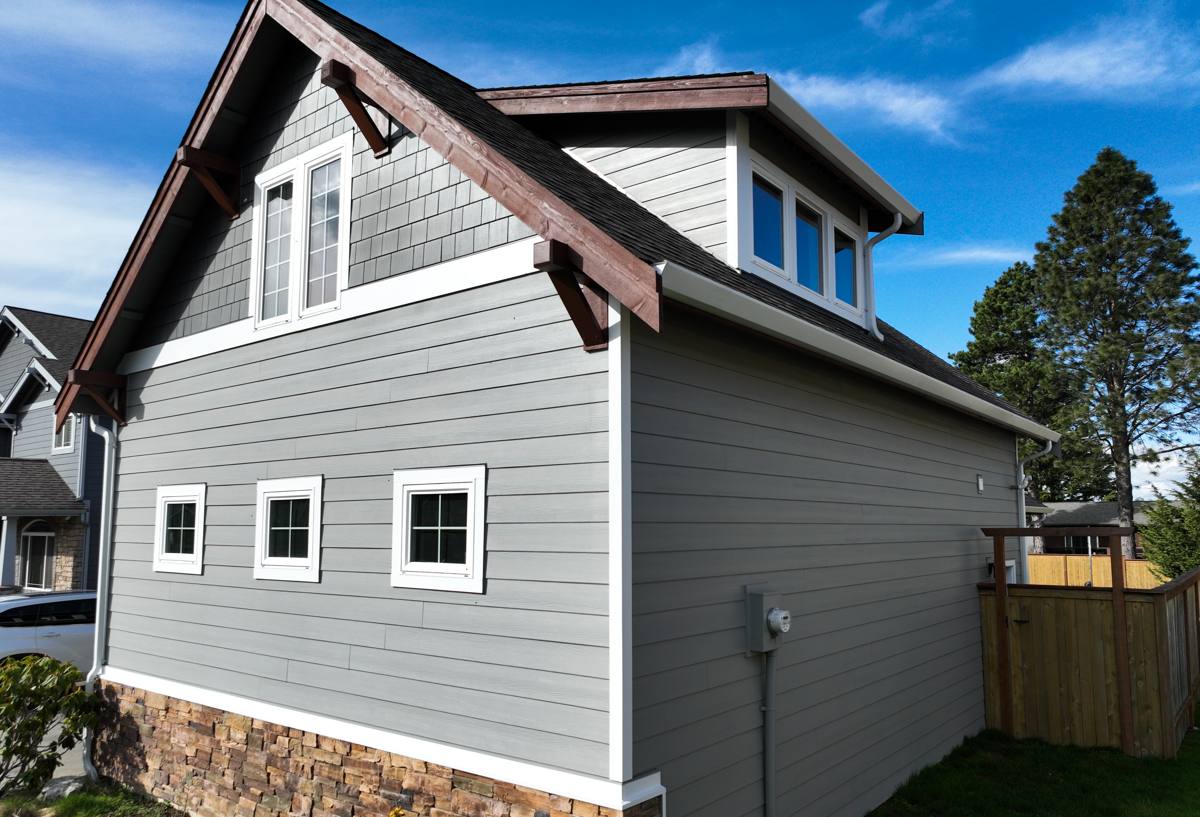
What Primed Spruce Gets Right
Fair is fair — there are reasons this product has stayed on the market:
- Low material cost. It's one of the least expensive lap siding options on the market, which matters on tight-budget projects.
- Easy to work with. Standard saws, standard nails, no special crews or tooling required.
- Familiar look. Painted wood lap siding is a classic Pacific Northwest look, and spruce takes that paint job well when it's fresh.
- Repairable in small sections. A single damaged board can be cut out and replaced without much fuss, at least early in the siding's life.
If a house sat somewhere dry and inland, with deep roof overhangs and no direct weather exposure, primed spruce could hold up reasonably well with disciplined maintenance. That's just not the environment most Fairhaven and Whatcom County homes sit in.
The Moisture Problem, Specifically Here
Salt Air
Fairhaven sits right on Bellingham Bay, and salt-laden marine air is a constant here, not an occasional event. Salt is hygroscopic — it pulls moisture out of the air and holds it against whatever surface it settles on. On primed spruce, that means the wood fibers under the paint film are staying damp longer than they would a few miles inland, even on days that look dry. Over years, that constant low-grade moisture exposure breaks down the paint bond faster and gives rot a foothold at seams, laps, and fastener holes.
Driving Rain
Winter storms off the Pacific don't just drop rain straight down — they drive it sideways into walls, especially on west- and south-facing elevations that catch the weather. Primed spruce siding depends entirely on an intact paint film to keep water out of the wood. Once wind-driven rain finds a hairline crack, a nail pop, or a worn edge, water gets behind the paint and into the board itself, and wood doesn't dry out quickly once it's wet on the back side.
Moss Season
Whatcom County's wet season stretches long — cool, damp, low-light conditions from fall through spring that are close to ideal for moss and algae growth on any north-facing or shaded siding. Moss holds moisture directly against the siding surface for months at a time. On fiber cement that's just a cosmetic issue you can wash off. On primed wood, sustained contact moisture under a moss mat is exactly the condition that starts rot.
The Maintenance Burden Homeowners Actually Face
The paint film is the entire moisture defense on primed spruce siding, and paint films don't last as long here as they do in drier parts of the country. In our experience with local homes, realistic repaint cycles run closer to every 3-5 years on the most exposed elevations, not the 7-10 years homeowners often expect based on paint can labels written for a national average climate. Skip a cycle, or let one elevation go a year or two past due, and that's usually when rot starts showing up at butt joints and bottom edges.
Cut Ends Are the Weak Point
Every time a board is cut on-site — at corners, around windows, at any butt joint — that cut exposes raw, unprimed wood. Factory priming only covers the face and back of the board as milled; field crews are supposed to seal every cut end with primer or caulk before installation, and that step is easy to skip or shortcut, especially on a large job. A single unsealed cut end is a direct path for water into the board, and it's invisible from the ground once the siding is painted.
Primed Spruce vs. James Hardie: The Honest Comparison
| Factor | Primed Spruce Siding | James Hardie Fiber Cement |
|---|---|---|
| Core material | Solid/finger-jointed wood | Cement, sand, and cellulose fiber |
| Moisture behavior | Absorbs and swells if paint film fails | Engineered to resist moisture-driven damage |
| Finish | Field-primed, site-painted | ColorPlus factory-baked finish (or field paint) |
| Repaint cycle in this climate | Roughly every 3-5 years on exposed walls | 15+ years typical on ColorPlus finish |
| Combustibility | Combustible | Non-combustible core |
| Pest vulnerability | Susceptible to rot and wood-boring insects | Not a food source for insects |
| Manufacturer warranty | Typically limited, often 1 year or less on the product itself | Long-term limited warranty backing the product |
| Upfront material cost | Lower | Higher |
| Cost over 20 years (material + maintenance) | Often higher once repaint cycles are counted | Generally lower total cost of ownership |
The upfront price gap is real, and we won't pretend it isn't. But when we price out a full siding job, we're pricing what the homeowner owns in year 15, not just what goes up in week one. Primed spruce's lower sticker price gets eaten up by repaint labor and eventual board replacement faster than most homeowners expect, particularly on the elevations that face the bay or sit under tree cover.
Why We Standardized on James Hardie Instead
We made a decision to install only James Hardie fiber cement siding, and it comes down to matching the material to the actual climate our customers live in. Hardie's HZ5 product line is engineered specifically for the wet, moderate climate zones the Pacific Northwest falls into — it's built to handle sustained moisture exposure without swelling, cupping, or rotting the way wood can. The ColorPlus factory finish is baked on under controlled conditions, which gives it a far more durable bond than a paint job applied on a ladder in variable weather, and it means we're not asking homeowners to budget for a repaint every few years just to keep the siding protected.
Fiber cement is also non-combustible, which carries real weight for insurance and for peace of mind, and it isn't a food source for the carpenter ants and moisture-loving insects that go after wood siding in damp coastal conditions. Backed by a strong, transferable warranty, it's a product we can install to spec and stand behind for the long haul — which is the whole point of doing a siding job once instead of every decade.
If You Already Have Primed Spruce Siding
We're not telling every homeowner with existing spruce siding to rip it out tomorrow — a well-maintained primed spruce exterior can still have useful life left in it. What matters is staying ahead of the maintenance instead of catching up to damage. Watch for:
- Peeling, cracking, or chalking paint, especially on south- and west-facing walls
- Soft or spongy spots when you press on the siding near the bottom edges
- Dark staining or persistent moss growth on shaded or north-facing sections
- Gaps opening up at butt joints, corners, and window trim
- Nail pops or fasteners backing out of the boards
- Visible unpainted or bare wood at any cut end or seam
Catching these early with a repaint or targeted board replacement is far cheaper than waiting until rot has spread into the sheathing behind the siding. Once we're on-site for an estimate, we'll always give you a straight read on whether repair, a partial repaint, or a full replacement makes sense for your situation and your budget.
What This Means for Your Project
If you're planning new construction, an addition, or a full re-side in Fairhaven or elsewhere in Whatcom County, we'll only bid James Hardie fiber cement — it's the one product we've found holds up to salt air, driving rain, and a long wet season without turning into a recurring maintenance project. We're happy to walk through why, show you the product lines and colors, and talk through real numbers for your specific house.
If you'd like a straightforward look at your options, reach out for a free, no-pressure estimate — we'll take a look at your current siding, tell you honestly what we see, and lay out what a Hardie install would look like for your home.