 Fairhaven Siding
 Silver Beach Homes Face a Specific Kind of Weather
Silver Beach sits close enough to the water that homes here deal with a different exposure profile than houses even a mile or two inland in Fairhaven. Salt-laden air off Bellingham Bay works on exterior materials in ways that inland Whatcom County homes never experience — it accelerates corrosion on fasteners and trim, and it interacts with paint and coatings in ways manufacturers don't always account for in their general warranty language. Add in driving rain that comes sideways during winter storms, and a moss season that can stretch from October through April, and you've got a combination that punishes any siding product with a weak point.
None of this means Silver Beach is a bad place to own a home — it's one of the more desirable pockets of Fairhaven for a reason. But it does mean the exterior envelope has to be chosen and installed with the actual conditions in mind, not the conditions on a spec sheet written for a national average.
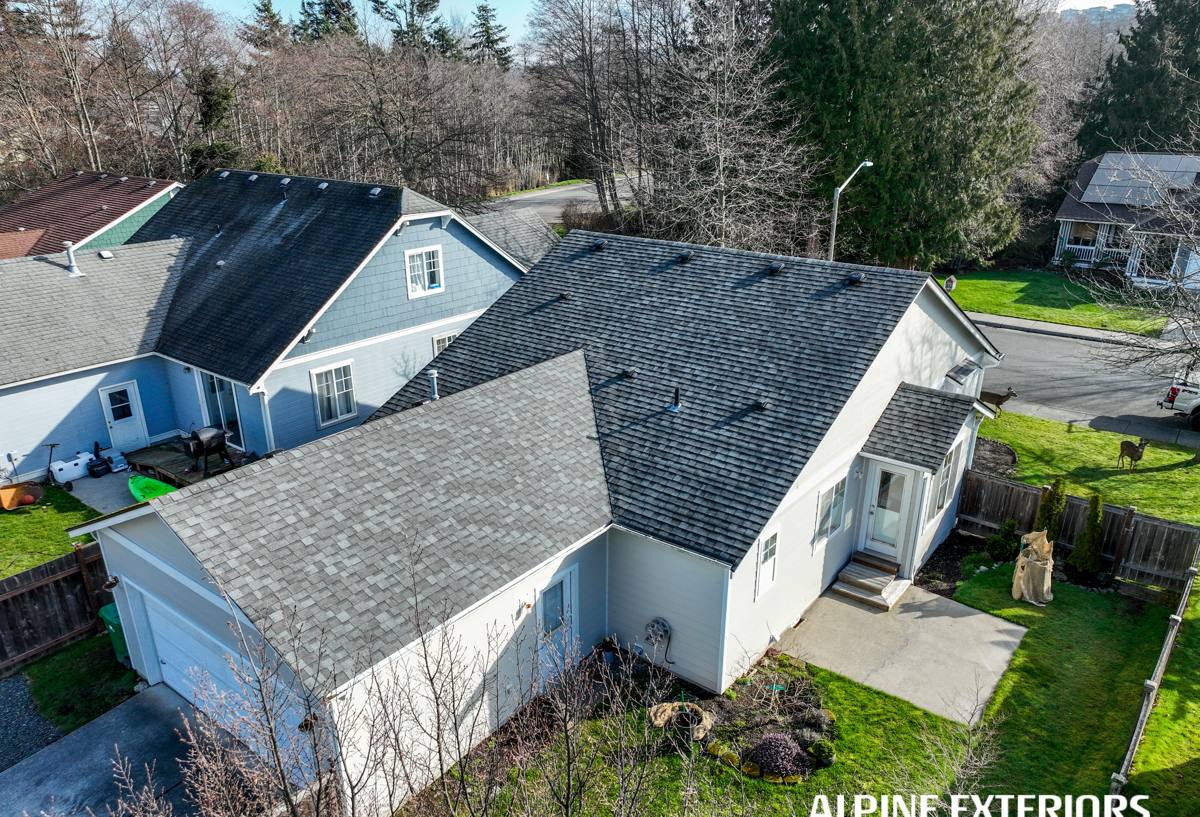
What Salt Air, Rain, and Moss Actually Do to Siding
Salt Air
Airborne salt is hygroscopic — it pulls moisture out of the air and holds it against whatever surface it lands on. On wood-based siding products, that means the surface stays damp longer between rain events, which is exactly the condition mold, rot fungi, and moss spores need to get established. On metal fasteners and flashing that aren't rated for coastal exposure, salt accelerates corrosion, which eventually shows up as rust streaking and failed fastener heads.
Driving Rain
Fairhaven's exposure to weather systems moving in off the Strait means wind-driven rain is common, not occasional. Siding systems depend on lap geometry, caulking, and drainage planes to keep that water moving down and out rather than behind the cladding. Any gap in that system — a poorly sealed butt joint, a nail driven too tight, a missing piece of flashing — becomes an entry point, and once water gets behind siding it doesn't dry out quickly in a marine climate.
Moss
Moss doesn't just grow on roofs. On north-facing walls, under eaves, and anywhere siding stays shaded and damp, moss and algae can take hold on the surface itself. Beyond the cosmetic issue, sustained moss growth holds moisture against the siding face longer, which shortens the life of any coating or finish that isn't built to shed it.
Why We Only Install James Hardie Fiber Cement
We get asked regularly why we don't offer vinyl, LP SmartSide, cedar, or primed spruce as options for Silver Beach homes. The honest answer is that we've made a standard, not a sales pitch: James Hardie fiber cement is the only siding we install, on every job, in every neighborhood we serve.
Fiber cement is non-combustible and dimensionally stable — it doesn't expand and contract with moisture the way wood-based products do, and it doesn't soften or warp when it stays wet for extended periods, which is a real consideration in a climate where "extended periods" describes most of the winter. Hardie's ColorPlus factory finish is baked on under controlled conditions rather than field-applied, which matters in a place where field-applied paint and stain have less time to properly cure between rain events. And Hardie's HZ5 product line is specifically engineered for wetter, harsher climates like ours — it's not a generic product with a marine-adjacent add-on.
We're not going to tell you that other products are junk. Vinyl is inexpensive and low-maintenance in the right climate. LP SmartSide and cedar have real advantages in appearance and workability. But each of those comes with a trade-off — vinyl's seams and thermal movement, engineered wood's moisture sensitivity at cut edges, cedar's ongoing maintenance demand — that we don't think holds up well against salt air, driving rain, and a five-to-seven-month moss season. We'd rather install one product correctly than offer five and hope the wrong one doesn't fail on your house.
How This Plays Out on an Actual Silver Beach Job
A siding job on a home exposed to bay air isn't just "install the same siding as inland, but with better caulk." It changes several details in the actual install:
- Fastener selection and spacing get more attention — corrosion-resistant fasteners driven to Hardie's specified depth, not just "snug."
- Flashing details around windows, doors, and roof-to-wall transitions get extra scrutiny, since these are the highest-risk points for wind-driven water intrusion.
- House wrap and drainage plane continuity matter more here than in a drier microclimate — any gap becomes a moisture path faster.
- Butt joints and field seams are sealed and detailed to shed water actively, not just passively rely on lap coverage.
- North- and west-facing elevations, which see the most moss and the least drying sun, sometimes warrant closer follow-up inspection in year one.
None of these are exotic techniques. They're standard best practice applied with the discipline that a marine exposure demands, by a crew that installs Hardie the same way on every job rather than treating manufacturer specs as optional.
Roofing, Windows, and Decks Face the Same Exposure
Siding isn't the only part of a Silver Beach home dealing with this climate. Roofing systems here need attention to moss-resistant materials and proper ventilation to keep the underside of the deck dry. Windows near the water benefit from good seals and corrosion-resistant hardware, since condensation and salt air both work on window components over time. Decks — especially uncovered ones — take the most direct hit from driving rain and need the right fastener and board choices to avoid the rot and moss buildup that's common on shaded, low-airflow decks in this area. We handle all four of these trades, which means when we're on-site for siding we're also looking at how the roofline, window flashing, and any attached deck structures interact with the wall system — because water doesn't respect trade boundaries.
Comparing Siding Options for a Coastal Fairhaven Exposure
| Material | Moisture Behavior in Salt Air / Driving Rain | Moss/Algae Resistance | Long-Term Maintenance |
|---|---|---|---|
| James Hardie Fiber Cement (HZ5) | Dimensionally stable, doesn't swell or rot; factory finish resists moisture intrusion at the surface | Finish designed to resist mildew and algae growth better than bare wood | Periodic caulk/paint touch-up per warranty schedule; no rot risk |
| Vinyl | Won't rot, but seams and panels can flex or warp under thermal and wind stress; doesn't breathe | Can host surface algae, especially in shaded areas | Low, but damaged panels are hard to color-match after fading |
| Engineered Wood (LP SmartSide) | Treated to resist moisture, but cut edges and fastener penetrations are vulnerable if not sealed correctly | Moderate; depends heavily on coating integrity | Coating maintenance is important; failure at compromised edges can be costly |
| Cedar / Primed Spruce | Natural material, absorbs and releases moisture; prone to cupping and checking in sustained damp conditions | Low without regular treatment; moss takes hold readily on untreated wood | Highest — regular staining/sealing required to hold performance |
Why a Local Crew Matters Here
A siding crew that mostly works drier inland jobs, or one flown in from out of the area, doesn't build the instinct for where water actually collects on a Whatcom County coastal home. Knowing which elevations take the worst of the winter storms, how far moss creeps up a wall in a given season, and which details fail first in bay-adjacent homes comes from doing this work repeatedly in this specific area — not from a general contracting background. We work throughout Fairhaven and the surrounding Whatcom County communities, and Silver Beach's exposure is one we plan for specifically rather than treat as a generic coastal footnote.
What to Ask Before Hiring Anyone for Exterior Work Near the Water
- Do you carry current Washington state contractor licensing and liability insurance, and can you provide proof?
- What fastener type and flashing details do you use specifically for salt-air exposure?
- Will the manufacturer's warranty stay valid based on how you install the product?
- How do you handle drainage plane continuity around windows, doors, and butt joints?
- Can you walk me through how you'd treat a north-facing wall differently than a south-facing one on this house?
A contractor who can answer these specifically, rather than generically, is one who's actually thought about this climate rather than applying a one-size-fits-all install.
Getting Started
If you're weighing a siding replacement, or dealing with an existing product that's showing moss staining, cupping, or fastener corrosion, it helps to have someone look at the actual house rather than guess from a description. We're happy to come out, walk the exterior with you, and give you a straight read on condition and options — no pressure, no pushy sales process. Reach out for a free estimate and we'll get a look at what your Silver Beach home actually needs.