 Fairhaven Siding
 South Hill: A Neighborhood That Takes a Beating From the Weather
South Hill sits up on elevated ground above Bellingham Bay, which means homes here get a version of Whatcom County weather that's a notch more intense than what you'd find further inland. The elevation catches wind coming off the water, the tree canopy that gives the neighborhood its character also keeps siding and roofing shaded and damp for long stretches, and the proximity to salt water means a fine mist of salt air settles on exterior surfaces almost daily. None of that is dramatic on its own. It's the accumulation — years of driving rain, months of shade-grown moss, and a slow drip of salt exposure — that wears houses down faster here than in a drier, more sheltered part of the county.
We work on homes across Fairhaven and greater Bellingham, and South Hill's older housing stock and hillside exposure make it one of the areas where exterior material choice matters most. A product that performs fine on a flat, sun-exposed lot in a different climate can struggle here. That's a big part of why we've narrowed our siding installs down to one system we trust in these conditions.
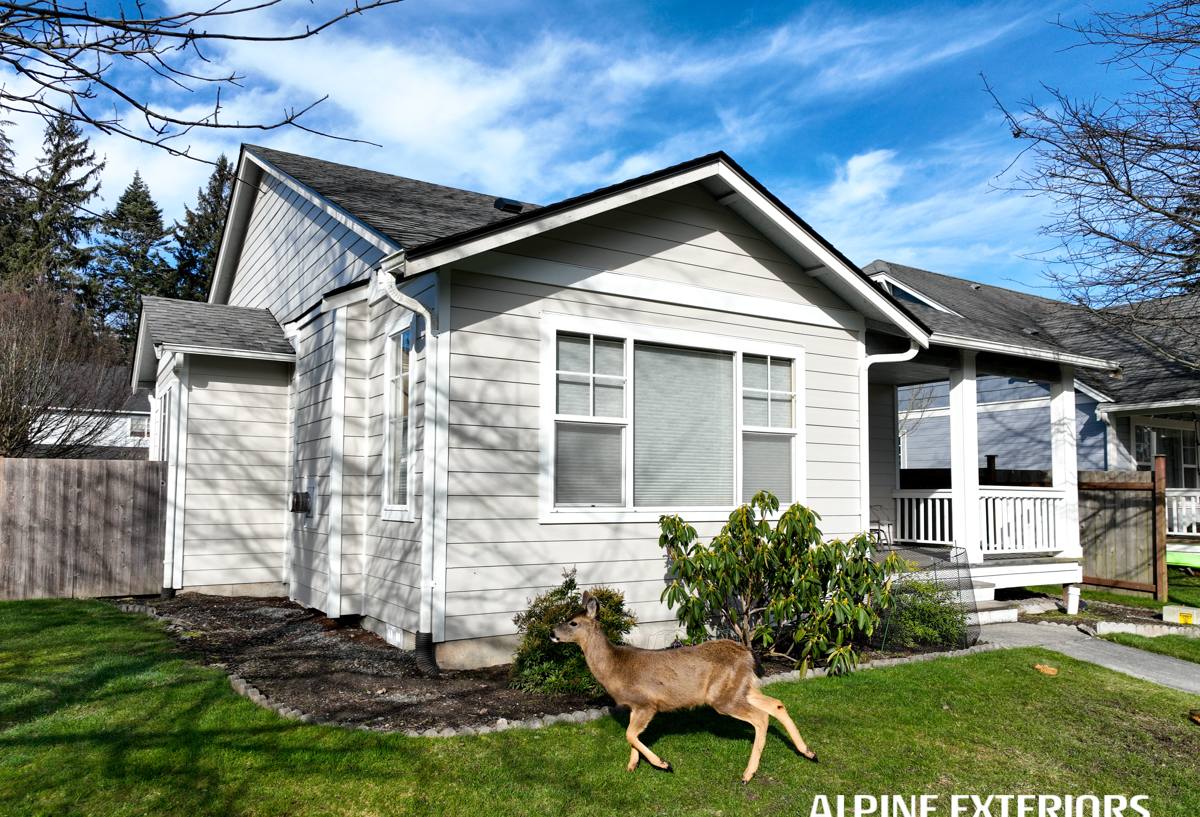
What Salt Air and Driving Rain Actually Do to a House
Salt air is corrosive to exposed metal fasteners, flashing, and hardware, and it accelerates the breakdown of paint films and lower-grade composite materials. Driving rain — rain that's pushed sideways by wind rather than falling straight down — finds every gap in a building envelope: unsealed seams, undersized flashing, siding laps that weren't installed tight. Over time, water that gets behind siding doesn't dry out quickly in a marine climate, because the air itself stays damp for weeks at a stretch.
Add a long moss season — moss and algae thrive in the shaded, moisture-retentive spots on north-facing walls and under tree cover — and you get surfaces that are constantly damp, slowly staining, and, on the wrong material, slowly deteriorating from the inside out. This is the exact combination of conditions that separates siding materials that hold up for decades from ones that need constant upkeep or early replacement.
Why We Standardized on James Hardie Fiber Cement
We install James Hardie fiber cement siding exclusively. We don't install vinyl, LP SmartSide, Cemplank, Allura, or bare wood siding like primed spruce or cedar, and that's a deliberate call based on what we see on houses in exactly this climate:
- Fiber cement is non-combustible and dimensionally stable — it doesn't expand, contract, warp, or rot the way wood-based and engineered-wood products can when they stay damp for long periods.
- Hardie's ColorPlus factory-applied finish is baked on under controlled conditions, which holds up better against UV and salt exposure than field-applied paint, and it comes with its own finish warranty.
- Hardie makes climate-engineered product lines (HZ5 for areas with more moisture and freeze-thaw exposure), so the material is formulated for a wet marine climate rather than a generic one-size-fits-all spec.
- It carries a strong, transferable product warranty when installed to manufacturer spec — something that matters if you ever sell the house.
None of the products we've chosen not to install are bad products in every application. Vinyl and engineered wood sidings have real advantages in the right setting. But on a hillside home a few blocks from Bellingham Bay, dealing with moss season and salt-laden rain year after year, we've seen enough call-backs and premature failures on those materials that we stopped offering them. We'd rather install one system correctly than offer five and have some of them let a homeowner down in year eight.
Roofing on the Hill: Where Moss and Wind Cause the Most Damage
South Hill's tree cover is a double-edged sword for roofs — it's part of what makes the neighborhood attractive, but shaded roof sections are exactly where moss and algae take hold fastest. Left unaddressed, moss lifts shingle edges, holds moisture against the roof deck, and shortens the life of an otherwise sound roof by years. Wind off the bay also puts more stress on ridge caps, flashing, and exposed edges than you'd see on a sheltered inland lot.
Our roofing work focuses on the details that matter most in this environment: proper underlayment for a wet climate, flashing that's actually sealed and lapped correctly around chimneys and valleys, and ventilation that lets a roof deck dry out between storms instead of staying damp all winter.
Windows: Sealing Out Wind-Driven Moisture
Older homes on South Hill often have windows that were adequate when they were installed but have since lost their seal, warped slightly, or simply weren't rated for the amount of wind-driven rain the hillside sees. Failing window seals are one of the most common hidden sources of water intrusion we find during siding tear-off — moisture gets behind trim and sheathing around a window long before it shows up as a visible problem inside.
When we replace windows, we pay close attention to flashing integration with the surrounding wall assembly, not just the window unit itself. A great window installed with poor flashing will still leak in this climate; correct integration is what actually keeps water out over the long run.
Decks: Built for Standing Water and Slow Drying Cycles
Decks on South Hill deal with the same slow-drying, shaded, moss-prone conditions as siding and roofing, plus the added stress of standing water on horizontal surfaces and foot traffic wearing down finishes faster than they would on a dry-climate deck. Ledger board attachment, proper flashing where the deck meets the house, and drainage that actually moves water off the surface instead of letting it pool are the details that determine whether a deck lasts fifteen years or needs major repair in five.
Why a Local Crew Matters Here
A crew that only works on drier, more sheltered sites will make different assumptions than one that works Whatcom County's marine climate every day. Knowing how long moss season runs, how much wind a hillside lot actually catches off the bay, and which details fail first on this kind of exposure isn't something you learn from a spec sheet — it's something you learn by doing the work here, season after season. That local knowledge shows up in small decisions: how much overlap to give a flashing detail, which side of the house needs extra attention for moss growth, how to sequence a job around Fairhaven's wetter months.
Comparing Exterior Siding Options for a Marine Climate
| Factor | James Hardie Fiber Cement | Vinyl | Engineered Wood / LP | Cedar / Primed Wood |
|---|---|---|---|---|
| Moisture tolerance | High — non-combustible, dimensionally stable | Moderate — can warp or gap over time | Moderate — vulnerable if moisture reaches the core | Low to moderate — needs consistent maintenance |
| Finish durability in salt air | Factory-baked ColorPlus finish, long warranty | Color can fade with UV exposure | Field-applied finish wears faster | Repaint/reseal cycle every few years |
| Moss/algae resistance | Good, especially with routine washing | Fair — moss grows on the surface | Fair to poor if coating breaks down | Poor without regular treatment |
| Long-term maintenance | Low — periodic washing, minor touch-ups | Low, but limited repair options | Moderate — watch for edge swelling | High — ongoing sealing/painting |
| Warranty structure | Strong, transferable manufacturer warranty when installed to spec | Varies by manufacturer | Varies, often shorter on finish | Typically no material warranty |
This is why, on a project in this climate, we recommend James Hardie fiber cement over the alternatives — not because the other materials have no place anywhere, but because the combination of salt air, driving rain, and shade-grown moss on South Hill rewards a material built to handle all three at once.
What Affects Your Project's Cost
A few honest factors that move the price on any siding, roofing, window, or deck project up or down: the size and complexity of the roofline or wall area, how much of the existing exterior needs to be removed and what condition the sheathing is in underneath, the specific Hardie product line and color selected, and access — a hillside lot with limited staging space can add time compared to a flat, open lot. We'll walk through all of this specifically for your house during an estimate rather than guessing at broad numbers here.
A Practical Maintenance Checklist for South Hill Homes
- Rinse siding and roof-shaded areas at least once a year to slow moss and algae buildup before it takes hold.
- Trim back tree branches that keep siding or roof sections in constant shade and slow drying time.
- Check window and door flashing for gaps or cracked caulk each fall, before the wet season sets in.
- Clear gutters and downspouts regularly — clogged gutters send water straight down exterior walls.
- Inspect deck ledger boards and flashing where the deck meets the house for any signs of trapped moisture.
- Look for early moss growth on north-facing and shaded siding sections, where it takes hold first.
- Have a professional check flashing details around chimneys, valleys, and roof penetrations every couple of years.
Getting Started
If you're on South Hill and dealing with siding that's showing its age, moss that keeps coming back no matter how often you clean it, drafty windows, or a deck that never quite dries out, we're happy to take a look. We offer free, no-pressure estimates for siding, roofing, window, and deck work, and we'll give you a straight assessment of what your house actually needs — no upsell, no guesswork about products that weren't built for this climate.