 Fairhaven Siding
 Why South Hill Homes Need Siding Built for This Climate
South Hill sits close enough to Bellingham Bay to feel the marine air every day of the year, and the hillside terrain means homes here catch wind, rain, and shade in patterns that differ block by block. Some houses get near-constant salt-laden breeze off the water; others sit under tree cover that keeps siding damp long after a storm passes. Whatcom County's wet season runs long, and South Hill's mix of older character homes and newer builds means siding decisions here have to account for both original construction details and decades of accumulated moisture exposure. Siding on this hill isn't just a cosmetic choice — it's the first line of defense against a climate that doesn't let up for months at a time.
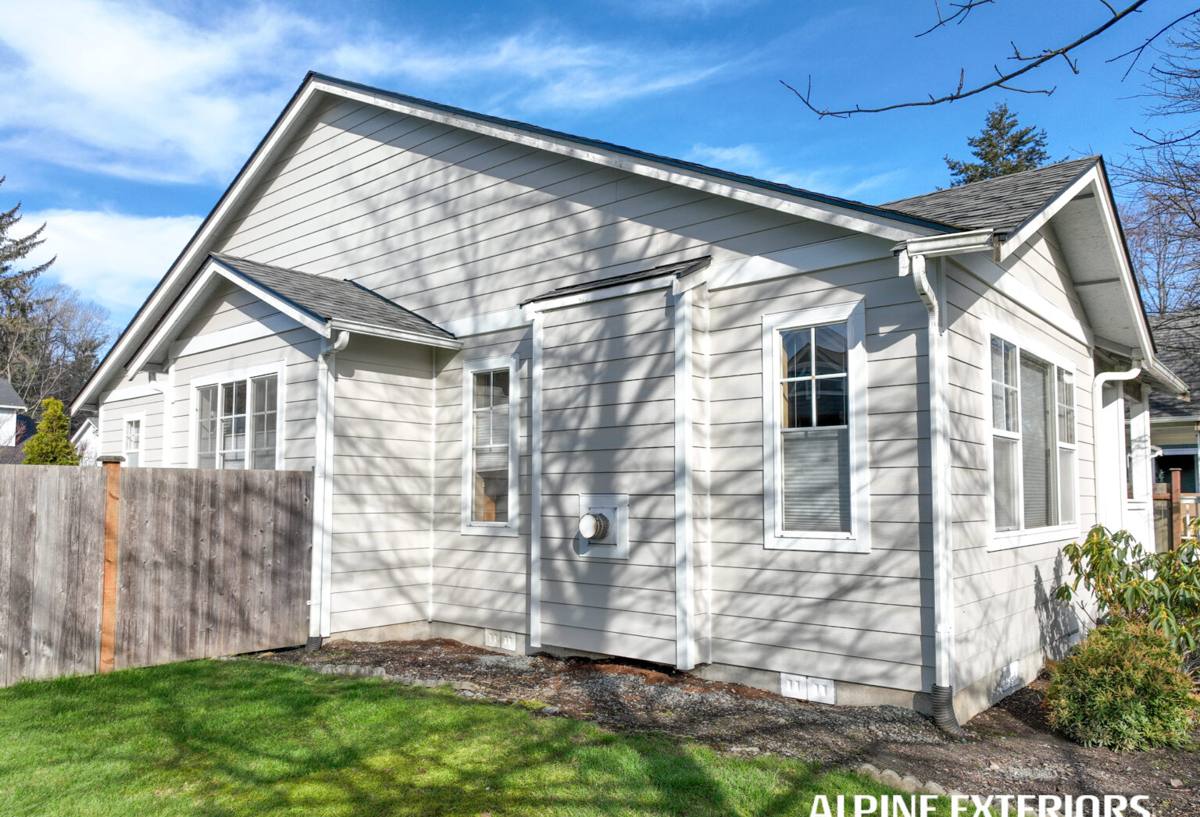
What Salt Air, Driving Rain, and Moss Season Actually Do to Siding
Salt Air
Airborne salt from the bay accelerates corrosion on fasteners, trim flashing, and any metal components tied into the siding system. It also breaks down cheaper paint films faster than inland weather would, leaving chalky, faded surfaces years ahead of schedule. Products that rely on a painted-on finish rather than a factory-baked one show this wear first, usually at butt joints and cut edges.
Driving Rain
Wind-driven rain off the water doesn't just fall on siding — it gets forced sideways and upward into laps, seams, and penetrations. Any siding installed without a properly detailed drainage plane behind it will eventually let water track behind the cladding, where it can sit against sheathing and framing unseen. This is less about the siding material itself and more about whether the installer built a real water-management system behind it.
Moss Season
Whatcom County's moss season can run eight months or more in shaded, north-facing, or tree-covered spots common on South Hill. Moss and algae hold moisture directly against the siding surface, and on materials that swell, delaminate, or absorb water, that constant dampness shortens the product's usable life. Siding that resists moisture absorption at the material level, not just at the paint layer, holds up far better under a long moss season.
Why We Install Only James Hardie Fiber Cement in This Neighborhood
We made the decision years ago to install James Hardie exclusively — no vinyl, no LP SmartSide, no Cemplank, Allura, primed spruce, or cedar. That's not a marketing position; it's a response to what we've seen hold up in Pacific Northwest marine climates and what hasn't. Vinyl can warp and fade under UV and thermal cycling and offers no real fire resistance. Engineered wood products like LP SmartSide rely on a resin-treated wood strand core that is vulnerable if the factory coating is ever compromised at a cut edge or fastener hole. Untreated wood species like cedar and primed spruce look good on day one but demand a maintenance schedule most homeowners underestimate — repainting, caulking, and moisture monitoring on a cycle that never really ends in a climate this wet.
James Hardie fiber cement is non-combustible, dimensionally stable in wet-dry cycling, and finished at the factory with ColorPlus Technology — a baked-on finish that resists fading and chipping far better than field-applied paint. For a hillside neighborhood exposed to salt air and long stretches of damp shade, that combination of moisture resistance and finish durability is the difference between siding that looks new at year fifteen and siding that needs attention by year five.
What a Correct James Hardie Installation Actually Involves
James Hardie siding is only as good as the installation behind it. The product itself is engineered to perform, but a poor install can undermine every advantage it offers. On South Hill projects, our process includes:
- Removing old siding down to the sheathing and inspecting for hidden rot, especially around window and door penetrations where past leaks are most common
- Installing a code-compliant water-resistive barrier and drainage plane so any moisture that gets behind the siding has somewhere to go
- Properly flashing all windows, doors, and roof-to-wall transitions before a single board goes up
- Fastening with corrosion-resistant nails or screws at the spacing and placement James Hardie specifies for the local wind and exposure zone
- Maintaining correct clearances at grade, decks, and roof lines so siding never sits in standing water or direct soil contact
- Using Hardie-approved caulking and touch-up products at cut edges so the factory finish isn't compromised where boards are trimmed on site
Skipping any one of these steps is how a quality product ends up with a short lifespan. It's also the most common reason we get called to inspect other contractors' work on homes in this area.
James Hardie Product Lines That Fit South Hill Homes
James Hardie makes several siding profiles, and the right one depends on the home's architecture, exposure, and the look the owner wants. We help homeowners match the product to the house rather than defaulting to one option everywhere.
| Product | Best Use | Notes for This Climate |
|---|---|---|
| HardiePlank Lap Siding | Most common wall siding, traditional and modern homes | Available in smooth or cedar-textured finish; handles driving rain well when laps are set correctly |
| HardiePanel Vertical Siding | Modern facades, accent walls, gable ends | Clean lines; fewer horizontal laps means fewer water-entry points if flashed properly |
| HardieShingle Siding | Cottage or craftsman-style homes, accent gables | Mimics cedar shingle look without the moisture-absorption problems of real wood shingles |
| HardieTrim Boards | Corners, window and door trim, fascia | Matches the ColorPlus finish system so trim and field siding age together |
Our Process, Start to Finish
- Free on-site estimate — we walk the exterior, check current siding and trim condition, and note any moisture or rot concerns before quoting anything
- Product and color selection — choosing the right Hardie profile and ColorPlus color for the home's style and exposure
- Prep and tear-off — removing old cladding and inspecting sheathing, with any needed repairs addressed before new siding goes on
- Weather barrier and flashing installation — the unseen work that determines how the siding performs for the next several decades
- Siding installation — installed to James Hardie's fastening, clearance, and joint-treatment specifications
- Final inspection and walkthrough — reviewing the finished work with the homeowner before calling the job complete
Living With Hardie Siding Through a Long Moss Season
James Hardie siding is low-maintenance compared to wood or vinyl, but "low-maintenance" doesn't mean "no maintenance," especially in a moss-heavy climate like South Hill's. A simple annual routine keeps the siding performing the way it's designed to:
- Rinse siding with a garden hose and soft brush once or twice a year to remove moss, algae, and grime buildup before it takes hold
- Avoid pressure washers on high settings, which can force water behind laps and joints
- Keep gutters clear so overflow doesn't run down the siding face repeatedly during heavy rain
- Trim back vegetation and tree limbs that keep siding shaded and damp for extended periods
- Re-caulk high-movement joints (around windows, trim intersections) if caulking cracks or separates over time
- Watch for any paint chipping or discoloration at cut edges, which can indicate the ColorPlus finish was compromised during a past repair
Cost Factors Homeowners Should Understand
Every South Hill home is different, and an accurate number only comes from an on-site look. That said, several factors consistently move the price on Hardie siding projects in this area:
| Factor | Why It Matters |
|---|---|
| Home size and wall complexity | More corners, gables, and dormers mean more cutting, flashing, and labor time |
| Condition of existing sheathing | Hidden rot from past water intrusion adds repair costs before new siding can go on |
| Product line and profile mix | Combining lap siding with shingle accents or vertical panels costs more than a single uniform product |
| Site access | Steep hillside lots or tight setbacks can slow staging and material handling |
| Trim and detail work | Full trim replacement with HardieTrim adds cost but keeps the finish system consistent |
Why a Crew That Already Works South Hill Matters
Siding installation isn't one-size-fits-all, and a hillside neighborhood with mixed sun exposure, tree cover, and direct marine air rewards contractors who understand those variables before they start cutting boards. A crew familiar with South Hill's terrain and weather patterns knows where moss tends to build up fastest, which elevations take the worst of the driving rain, and how to sequence a job around this area's wet stretches instead of fighting them. That local pattern recognition, paired with installing only one manufacturer's system, means fewer surprises mid-project and a finished job built for the conditions it actually has to survive.
If you're weighing a siding project on South Hill, we're happy to take a look and walk you through what your home specifically needs — no pressure, no obligation. Reach out using the form below to schedule a free estimate.