 Fairhaven Siding
 Bow's Coastal Climate and Your Home's Exterior
Homes in the Bow area sit close to the water, tucked between the tidal flats and farmland that stretch along this stretch of the Salish Sea coastline south of Fairhaven. That location is part of what makes the area beautiful, and it's also exactly what makes exterior materials work harder here than they do a few miles inland. Salt-laden air moves off the water and settles on siding, trim, and fasteners. Driving rain off Pacific storm systems pushes moisture sideways into wall assemblies, not just down from above. And the long, wet, mild winters common to this part of Washington create a moss and algae season that can run eight months or more on shaded, north-facing walls and anything tucked under tree cover.
None of that is unique to Bow, but it's more pronounced here than in drier, more sheltered parts of Whatcom and Skagit counties. A siding product that performs fine in a protected inland neighborhood can fail early on a waterfront or near-waterfront lot. That's the lens we use on every Bow-area project: not just "does this look good going up," but "what does this look like in year eight, in year fifteen, after a decade of salt, rain, and moss."
What Salt Air Actually Does
Airborne salt is corrosive to metal fasteners, flashing, and hardware, and it accelerates the breakdown of coatings and finishes that aren't engineered to resist it. On wood-based and wood-composite sidings, salt exposure combined with moisture cycling speeds up swelling, checking, and paint failure. It's a slow process, which is exactly why it's easy to underestimate when a house is first built or re-sided.
What Driving Rain Does
Wind-driven rain doesn't behave like a gentle shower running down a wall. It gets pushed into laps, seams, butt joints, and any gap in caulking or flashing. Over time, water that gets behind siding rather than off of it is the single biggest cause of rot, hidden damage, and premature siding failure in this region, regardless of what material is on the wall.
What Moss Season Does
Moss and algae need moisture, shade, and time to establish, and Bow gets plenty of all three for much of the year. On siding, moss holds moisture against the surface longer than open air would, which softens caulking, stains finishes, and on porous or absorbent materials, contributes to slow decay underneath the growth itself.
Why We Install Only James Hardie Fiber Cement Siding
We made a deliberate decision years ago to stop installing several common siding products, and we don't install them for Bow customers either. We don't install vinyl siding, LP SmartSide, Cemplank, Allura, primed spruce, or cedar. That's not a marketing position — it's a standard we hold because of what we've seen these materials do, and not do, in exactly this kind of coastal, high-moisture climate.
Vinyl expands and contracts with temperature swings, can warp or crack in cold snaps, and offers essentially no protection where impact or fire resistance matters. Wood-based composite sidings and primed wood products depend heavily on an intact factory or field coating to keep moisture out; once that coating is compromised at a cut edge, a nail hole, or a weathered face, moisture intrusion and swelling can follow, especially in a climate that rarely lets a wall dry out completely between rain events. Cedar is a genuinely attractive, time-tested material, but it requires ongoing refinishing, is combustible, and its performance is highly dependent on species, grade, and maintenance discipline that most homeowners don't want to keep up with for decades.
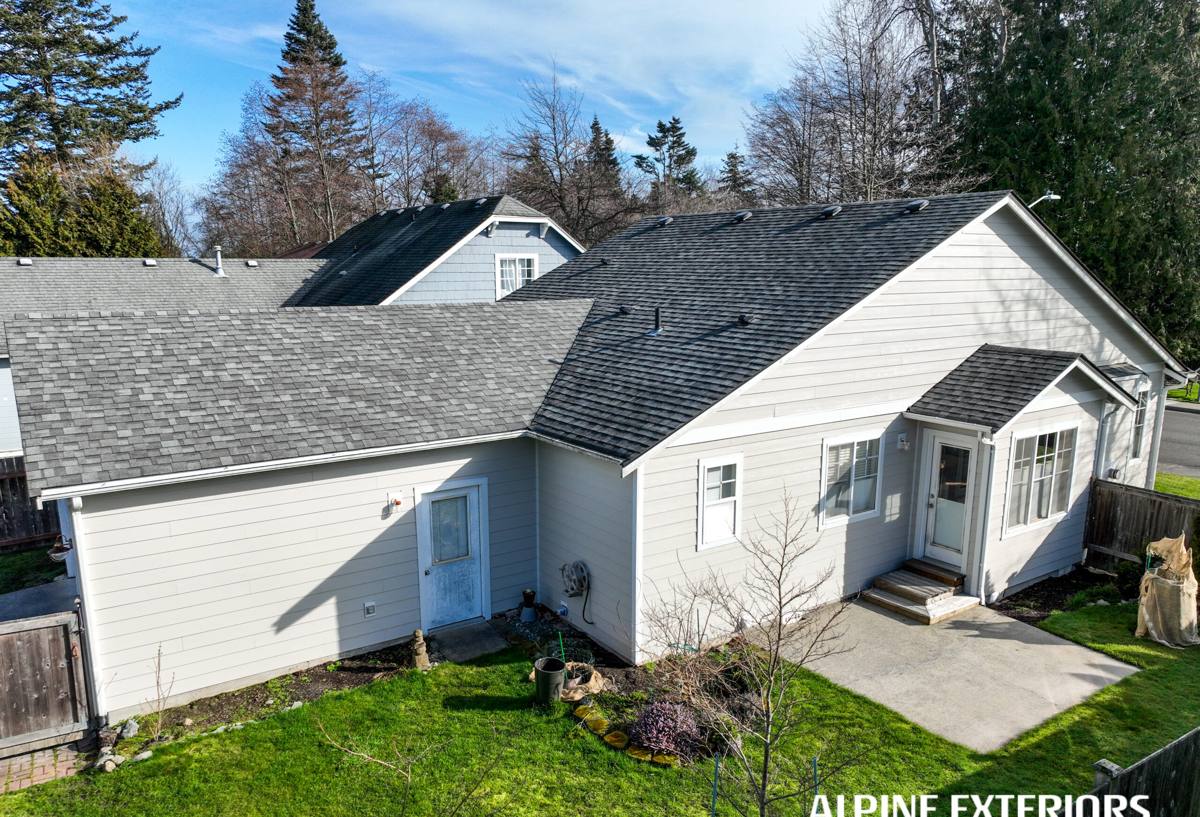
James Hardie fiber cement is what we put on homes instead. It's a non-combustible material engineered specifically for climate zones like ours, with a factory-applied ColorPlus finish that's baked on rather than field-painted, which means better color retention and fewer touch-ups over the life of the siding. Hardie's HZ5 product line is engineered for cold, wet, and freeze-thaw conditions, and it holds up to the moisture cycling that's constant near the water. It won't rot, it doesn't feed moss growth the way some absorbent materials do, and it carries a strong transferable warranty that adds real value if you sell the home down the road.
We're not saying every other product is worthless — plenty have legitimate uses in the right climate and budget. We're saying that for the specific conditions homes face in the Bow area, we've concluded fiber cement is the material that gives homeowners the least maintenance and the longest service life, and we'd rather stand behind one product we trust completely than offer several we have reservations about.
What Correct Installation Looks Like in This Climate
Fiber cement siding only performs as well as its installation. In a high-moisture, salt-exposed environment, a handful of details separate a siding job that lasts decades from one that causes problems in a few years.
- Proper weather-resistive barrier and flashing behind every seam, window, and door opening, not just at the obvious spots
- Correct fastener spacing, type, and corrosion-resistant hardware suited to a salt-air environment
- Manufacturer-specified clearances from grade, decks, and roof lines so water has somewhere to go
- Factory-cut and factory-primed edges kept intact wherever possible, with field cuts properly sealed
- Ventilation behind the cladding so the wall assembly can dry after wind-driven rain events
- Caulking and sealant only where the manufacturer calls for it — over-caulking can trap moisture rather than shed it
These aren't exotic requirements, but they're easy to skip when a crew is unfamiliar with the product or is rushing through an install. We follow Hardie's installation specifications because that's what keeps the warranty valid and, more importantly, what actually keeps water out of the wall.
Roofing, Windows, and Decks: A Whole-Exterior Approach
Siding doesn't work in isolation. On a home exposed to the kind of weather Bow sees, the roof, windows, and any exterior decking all interact with how water moves around the building. We handle all four because problems tend to show up at the seams between them — a leaking window that's damaging the siding around it, a roof edge that's dumping water onto a wall instead of away from it, or a deck ledger board that's trapping moisture against the house.
When we look at a Bow-area home, we're looking at the whole envelope, not just the wall cladding. That often means catching a smaller roofing or flashing issue before it turns into a siding replacement, or timing a window upgrade to coincide with a re-side so the transitions are done once, correctly, instead of patched piecemeal by different contractors over the years.
Comparing Siding Materials for a Bow-Area Home
| Material | Moisture/Salt Performance | Maintenance | Fire Resistance | Typical Lifespan |
|---|---|---|---|---|
| James Hardie Fiber Cement | Engineered for wet, coastal climates (HZ5 line) | Low — factory finish, occasional wash | Non-combustible | 30+ years with proper install |
| Vinyl | Can warp/crack with temperature swings | Low, but limited repair options | Combustible, can melt/deform | 15–25 years, variable |
| LP SmartSide / Wood Composite | Depends on coating integrity | Moderate — coating touch-ups over time | Combustible | Highly install/maintenance dependent |
| Cedar | Natural material, moisture-sensitive | High — regular refinishing needed | Combustible | Varies widely by care and grade |
This table reflects general industry characteristics, not a claim about any specific product failing on any specific job. It's simply why, weighing all four factors against Bow's climate, fiber cement is the standard we've settled on.
Maintenance: What to Expect Season to Season
Even the best siding benefits from a little seasonal attention, especially in a moss-prone, salt-air environment. Here's a practical rhythm we recommend to Bow-area homeowners:
- Late winter/early spring: Check north-facing and shaded walls for moss buildup and gently wash it off before it establishes further
- Spring: Inspect caulking around windows, doors, and trim for cracking or gaps after winter's freeze-thaw cycles
- Summer: A light exterior wash removes salt residue and road film; avoid high-pressure settings that can force water behind seams
- Fall: Clear gutters and downspouts before the heavy rain season so water is directed away from siding and foundation walls
- Any season: Watch for soft spots, discoloration, or gaps at trim and corner boards — early signs are far cheaper to fix than deferred ones
James Hardie siding with a ColorPlus finish generally needs less of this than painted wood products, but no exterior material is maintenance-free in this climate.
Why a Local Crew Matters
A crew that works throughout Whatcom and Skagit counties knows what a Bow-area lot actually deals with — the wind exposure off the water, the shade patterns that keep certain walls damp longer, the way winter storms move through this corridor. That's different from a general contractor's crew that installs a few siding jobs a year alongside unrelated work. Knowing the local climate isn't a nice-to-have; it directly affects decisions like fastener choice, flashing detail, and how much clearance to leave at grade.
It also matters for the boring but important things: being reachable if a question comes up two years after the job, standing behind the workmanship warranty locally rather than through a call center, and understanding permitting and inspection expectations for this part of the state.
Cost Factors to Understand Before You Get Quotes
| Factor | Why It Affects Price |
|---|---|
| Home size and wall complexity | More corners, gables, and transitions mean more cutting, flashing, and labor time |
| Existing siding removal | Tear-off and disposal of old material adds cost versus installing over a properly prepared surface |
| Water damage discovered mid-job | Rotted sheathing or framing found once old siding comes off needs repair before new siding goes on |
| Trim and detail work | Custom trim, corner treatments, and accent bands take more time than plain lap siding |
| Access and site conditions | Steep lots, limited equipment access, or landscaping to protect can add labor time |
We don't quote broad numbers without seeing a home, because these factors swing the price meaningfully from one property to the next. What we can promise is a clear, itemized estimate that explains what's driving the cost, not a vague lump sum.
Ready to Talk About Your Home in Bow
If you're weighing a siding replacement, dealing with a roofing or window issue, or just want an honest read on how your exterior is holding up against the salt air and rain, we're glad to come take a look. There's no pressure and no obligation — just a straightforward assessment from a crew that installs one siding system because we trust it, and understands this specific stretch of coastline because we work in it. Reach out below to schedule a free estimate.