 Fairhaven Siding
 Why Moisture, Not Weather, Is What Actually Wears Out Siding
Most homeowners assume siding fails because of sun exposure or age. In reality, the material that does the most damage to a house's exterior in Western Washington isn't UV light or wind — it's water that gets behind the siding and can't get back out. Siding's real job isn't to look good; it's to manage water. Every failure mode we see on inspections, from soft trim to buckled boards to stained sheathing, traces back to moisture that found a way in and had nowhere to go.
This matters more in Fairhaven and the rest of Whatcom County than in drier parts of the country, simply because of how much water our climate throws at a house over a given year, and how long that water sits against exterior surfaces before it dries.
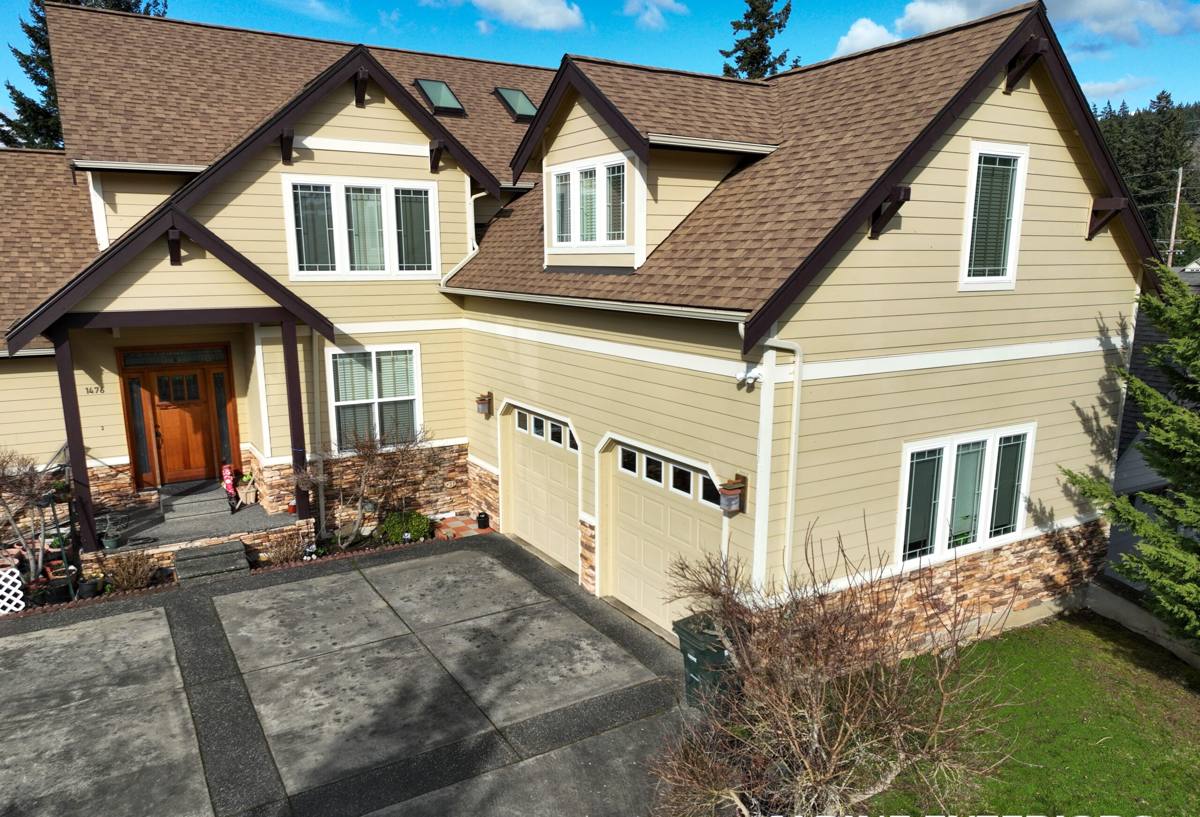
How Water Actually Gets Behind Siding
Siding doesn't need a visible hole or crack to let water in. Most intrusion happens through details that look fine from the ground:
- Caulking that has shrunk, cracked, or separated at trim joints, window edges, and butt joints between siding boards
- Nail holes and fastener penetrations that were never properly sealed or that back out slightly over time
- Poor or missing flashing above windows, doors, and where roof lines meet walls
- End cuts on siding boards that were left unsealed during installation, letting water wick straight into the material
- Siding installed too close to grade, decks, or roof surfaces, so it sits in a near-constant splash zone
- House wrap or weather-resistive barrier that was torn, poorly lapped, or installed without a drainage gap behind the siding
None of these are dramatic. That's the problem — they're small, easy-to-miss details that don't cause visible damage for months or years, which is exactly why so much rot is discovered well after it starts.
What Happens Once Moisture Gets Trapped
Once water gets past the siding surface, what happens next depends on whether it can dry out. A brief soaking that dries within a day or two rarely causes lasting harm. Water that stays trapped against wood-based sheathing or framing is a different story. Wood fiber begins to break down once it holds elevated moisture for extended periods, and the fungi that cause rot need exactly that: sustained moisture, moderate temperature, and organic material to feed on. Whatcom County's mild, wet winters are close to ideal conditions for that process once it starts behind a wall.
The damage is almost always worse than it looks from outside, because rot spreads through wood framing and sheathing before it becomes visible at the surface. By the time a board feels soft to the touch or paint is visibly bubbling, there's often already compromised material behind it.
Mold and Air Quality
Trapped moisture doesn't just threaten structure — it creates the conditions mold needs to grow on sheathing, insulation, and framing. In homes with tighter modern insulation and less passive airflow through the wall cavity, moisture that gets in has less chance to dissipate on its own, which is part of why older assumptions about "houses breathe fine" don't always hold up in a well-insulated retrofit.
Fairhaven's Climate Is Genuinely Tougher on Siding Than Most Regions
Fairhaven sits right on Bellingham Bay, and that proximity to salt water changes the math on exterior durability. Salt-laden air accelerates the corrosion of exposed fasteners, hardware, and metal flashing — and once a fastener starts to corrode, the seal around it weakens, giving water a new entry point. Homes closer to the waterfront see this show up years before homes further inland in the county.
Add to that the driving rain that comes in off the Strait during fall and winter storms. Wind-driven rain doesn't just fall on siding — it's pushed sideways and upward into laps, joints, and trim edges that were designed for water running down, not water forced in at an angle. A siding system that performs fine in a light, straight-down rain can still let water in during a Whatcom County windstorm.
Then there's moss season, which in this part of Washington is less a season than most of the year. Moss and algae thrive in the shaded, moisture-retentive spots on a house — north-facing walls, areas under overhangs, and anywhere airflow is limited. Beyond looking bad, a moss or algae mat on siding holds water against the surface far longer than bare siding would, extending the amount of time that section of wall stays wet after every rain.
None of this means a house in Fairhaven is doomed to rot. It means the margin for error in material choice, installation detail, and maintenance is smaller here than it would be in a drier climate, and cutting corners shows up sooner.
How Different Siding Materials Actually Handle Moisture
Every siding material has a different relationship with water. Understanding that relationship is more useful than comparing materials on looks or price alone.
| Material | How It Responds to Moisture | Long-Term Risk in This Climate |
|---|---|---|
| Cedar / primed wood | Absorbs water readily; needs an intact paint or stain film to stay protected | High — coating failure, cracking, or unsealed end cuts lead to rot within a few wet seasons |
| Engineered wood (e.g., OSB-based products) | Wood-fiber core is vulnerable if the factory coating or seal is breached at cuts, edges, or fasteners | Moderate to high — performs well when installed and maintained exactly to spec; unforgiving of shortcuts |
| Vinyl | Doesn't absorb water itself, but doesn't manage it either — water can travel behind panels and sit against sheathing | Moderate — the siding survives, but hidden moisture behind it can still cause structural rot unnoticed |
| Fiber cement (James Hardie) | Non-organic core doesn't feed rot or swell from moisture; factory-applied finish resists water intrusion at the surface | Low — main vulnerability is installation detail (flashing, gaps, sealed cuts), not the material itself |
The pattern worth noticing: the materials most vulnerable to moisture damage are the ones with an organic, wood-based core. Water doesn't rot fiber cement the way it rots wood or wood composite, because there's no wood fiber for fungi to break down. That single difference is why moisture resistance is the biggest factor in how we advise clients on material choice.
Early Warning Signs of Moisture Trouble
Most rot problems are cheaper to fix the earlier they're caught. A short seasonal walk-around can catch problems long before they require major repair.
- Paint or finish that's peeling, bubbling, or alligator-cracking in a localized area rather than uniformly across the house
- Siding boards that feel soft, spongy, or give slightly when pressed with a thumb
- Dark staining or streaking below window sills, at butt joints, or under trim
- Visible gaps or separation at caulked joints, especially around windows and doors
- A musty smell near exterior walls inside the house, particularly in closets or rooms on exterior corners
- Persistent moss or algae growth that doesn't wash off easily, especially on north- or shade-facing walls
- Warping, bowing, or wavy siding lines when viewed at a low angle along the wall
Any one of these is worth a closer look. Several together usually mean it's time for a professional inspection rather than a wait-and-see approach.
Maintenance That Actually Prevents Rot
Maintenance requirements vary a lot by material, and this is where a lot of homeowners get surprised after the fact. Painted wood siding generally needs recoating every few years to keep its protective film intact — skip that cycle in a climate like ours and the clock on rot starts running. Engineered wood products depend on caulking and sealed cuts staying intact, which means periodic caulk inspection is not optional. Vinyl needs less direct maintenance but doesn't eliminate the need to check flashing and trim behind it, since the siding itself won't show you if water is getting past it.
Across every material, the highest-value maintenance habit is simple: keep gutters clear, keep vegetation and sprinklers from spraying directly on siding, and re-seal or repair any cracked caulk joints as soon as they're noticed rather than at the next scheduled maintenance visit.
Why We Standardized on James Hardie Fiber Cement
We install James Hardie fiber cement siding exclusively, and moisture performance is the core reason. Fiber cement's cement-and-cellulose composition doesn't provide the organic material that rot fungi need to establish, and it doesn't swell or delaminate the way wood-based products can when moisture reaches the core. Hardie's factory-applied ColorPlus finish is also engineered and cured under controlled conditions, which gives it more consistent, longer-lasting protection than a field-applied coat.
That doesn't mean fiber cement is immune to problems — it still depends entirely on correct installation. Flashing above windows and doors, proper gaps at the bottom of the siding, sealed butt joints, and adherence to manufacturer clearance requirements around decks, roofs, and grade all still matter. A well-installed fiber cement wall in Fairhaven's marine climate holds up far better over decades than the alternatives; a poorly installed one can still let water in. Installation quality is where the real risk lives, regardless of material — which is why we treat those details as non-negotiable on every job, not as optional upgrades.
Getting Ahead of It
Moisture damage is one of the few exterior problems that's genuinely cheaper to prevent than to repair. A siding system that manages water well, installed with attention to the details that actually matter in a salt-air, high-rainfall climate, is the difference between a house that ages gracefully and one that needs unexpected sheathing or framing repair a decade in. If you're noticing any of the warning signs above, or simply want an honest read on how your current siding is holding up against Whatcom County's climate, we're happy to take a look. Reach out for a free, no-pressure estimate — we'll tell you what we actually see, not just what sells a job.