 Fairhaven Siding
 Exterior Work in the York Neighborhood
York sits close enough to Fairhaven and Bellingham Bay that homes here deal with the same weather patterns that shape exterior work across this part of Whatcom County: salt-laden air off the water, long stretches of driving rain, and shaded, moisture-holding conditions that keep moss and mildew active for much of the year. We handle siding, roofing, windows, and decks for homes in this area, and we approach all four with the same basic philosophy — build the exterior envelope to actually hold up to what this climate throws at it, not just to look good on installation day.
A lot of exterior contractors treat every job the same regardless of where the house sits. We don't think that works well here. A home a few blocks from the water behaves differently than one tucked back under a stand of fir and cedar, and both are common in and around York. Knowing which conditions apply to a given lot changes decisions about siding material, flashing details, roof ventilation, and even where to place downspouts.
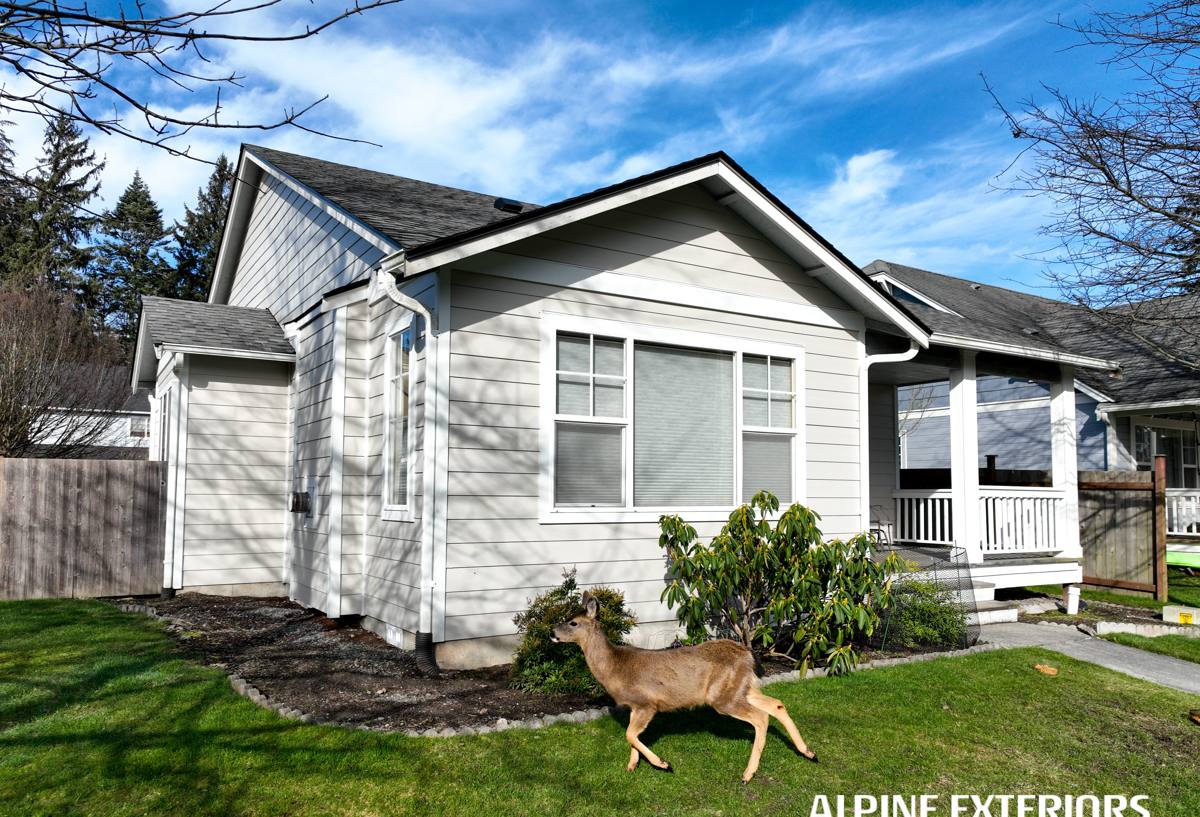
What the Local Climate Does to a House
Three things drive most of the exterior deterioration we see on homes in this part of Whatcom County, and they compound each other.
Salt Air
Proximity to Bellingham Bay means airborne salt is a real factor, not a coastal-town cliché. Salt-laden moisture accelerates corrosion on fasteners, flashing, and any metal trim that isn't rated for the exposure. It also degrades certain paint and coating systems faster than inland areas would see, which is one reason factory-applied finishes hold up better here than field-applied paint that has to fight the elements from day one.
Driving Rain
This region doesn't just get a lot of rain — it gets wind-driven rain that hits siding at an angle, works into seams, and finds any gap in flashing or caulking. Materials and details that work fine in a climate with mostly vertical rainfall can fail here because water is being pushed sideways into joints that were never designed to handle it.
Moss and Sustained Moisture
Mild temperatures combined with shade from mature trees and long wet seasons make this one of the better environments in the country for moss, algae, and mildew growth. On roofs, moss lifts shingles and holds moisture against the roof deck. On siding, it holds moisture against the substrate and, on materials that aren't dimensionally stable, contributes to swelling, cupping, or rot over time.
None of these three factors is dramatic on its own. The problem is that they run for most of the year, year after year, and materials that aren't built for that kind of sustained exposure show it within a decade — sometimes sooner.
Why We Only Install James Hardie Fiber Cement Siding
We get asked fairly often why we don't offer vinyl, LP SmartSide, or cedar as options. It's not that those products have no place in the market — it's that after years of doing exterior work in this specific climate, we made a professional decision to standardize on one product system that we've seen perform consistently under these conditions: James Hardie fiber cement.
Fiber cement is non-combustible, dimensionally stable in wet-dry cycling, and doesn't feed moss and mildew the way wood-based products can. Hardie's ColorPlus finish is baked on at the factory under controlled conditions, which gives it better adhesion and UV resistance than most field-applied paint jobs — a meaningful advantage in a climate that's hard on coatings. Hardie also engineers specific product lines (their HZ5 line, for example) for climates with more moisture and temperature swing, which lines up with what Whatcom County homes actually experience.
We're not going to tell you cedar looks bad or that vinyl is worthless — they're not, and plenty of homes wear them fine in drier climates. What we will say is that after weighing maintenance burden, moisture behavior, and long-term cost against upfront price, Hardie is the product we're willing to put our name behind and back with installation workmanship we stand by.
How Common Siding Materials Compare in This Climate
| Material | Moisture/Rot Resistance | Maintenance | Typical Lifespan Here | Fire Resistance |
|---|---|---|---|---|
| Vinyl | Doesn't rot, but can warp or crack in temperature swings and impacts | Low, but seams and edges trap moisture and grime | 15-25 years before fading/warping issues | Melts/deforms under heat |
| Cedar / Primed Spruce | Vulnerable to rot, especially in shaded, damp spots | High — repainting/staining and moss treatment on a regular cycle | 10-20 years before major maintenance is needed | Combustible |
| LP SmartSide (engineered wood) | Better than raw wood, but edge/seam sealing is critical and installation-sensitive | Moderate — caulking and touch-up over time | 20-30 years with diligent maintenance | Combustible |
| James Hardie Fiber Cement | Dimensionally stable, doesn't swell/rot, resists moss adhesion | Low — periodic wash, factory finish holds up | 30-50 years with correct installation | Non-combustible |
These are general ranges, not guarantees — every material's real-world lifespan depends heavily on installation quality, sun/shade exposure, and how consistently a homeowner keeps up with basic upkeep. But the pattern holds across the industry: materials that resist moisture absorption and hold their factory finish longest tend to need less attention and last longer in a climate like this one.
Roofing, Windows, and Decks: The Rest of the Envelope
Siding doesn't work in isolation. A house is a system, and the weak point is often wherever two systems meet — where siding meets a window frame, where a deck ledger attaches to the wall, where a roof edge meets fascia and gutter.
Roofing
In a moss-prone climate, roof longevity is as much about ventilation and moisture management as it is about the shingle or metal product itself. We look at attic ventilation, underlayment quality, and flashing details around penetrations, since those are usually where roof leaks actually originate — not in the field of the roof itself.
Windows
Window replacement is often the right time to correct flashing and weather-barrier details that were never installed properly to begin with, especially on older homes in established neighborhoods. A new window installed over bad flashing will leak just like the old one did.
Decks
Decks take the most direct beating from standing water and UV exposure of anything on the exterior. Ledger board attachment, joist protection, and drainage away from the house are the details that determine whether a deck lasts five years or twenty-five.
What a Local Crew Actually Means
"Local" gets used as a marketing word a lot, so here's what it concretely means for exterior work in a neighborhood like York:
- Familiarity with how close a given lot is to the water and how that affects material and fastener choices
- Knowledge of which streets and lots tend to sit in more shade and see heavier moss buildup
- Understanding of Whatcom County and City of Bellingham permitting requirements so projects aren't delayed by paperwork surprises
- A crew that's installed enough Hardie siding in this specific climate to know the installation details that matter here — proper clearances, flashing at penetrations, correct fastener spacing — versus generic manufacturer instructions written for a national audience
- Being reachable locally if a warranty or workmanship question comes up years down the road, rather than dealing with a call center
Installation quality matters as much as material choice, maybe more. Hardie siding installed with the wrong clearance to grade, insufficient flashing, or improperly sealed butt joints will develop moisture problems regardless of how good the product itself is. That's true of any siding material, but the margin for error tends to be less forgiving here than in drier climates, simply because there's more moisture around to exploit a mistake.
Our Process for a Siding Project
- On-site assessment of current siding, trim, flashing, and any moisture damage already present
- Discussion of Hardie product lines, plank profiles, and ColorPlus color options that fit the home
- Written estimate covering scope, materials, and timeline
- Removal of old siding with inspection of the sheathing and weather barrier underneath — this is often where hidden problems turn up
- Repair of any damaged sheathing or framing before new siding goes on
- Installation of weather-resistive barrier and flashing at all windows, doors, and penetrations
- Hardie siding installation to manufacturer spec, with attention to clearances and fastening
- Final walkthrough with the homeowner
Simple Maintenance That Extends Exterior Life
Even low-maintenance materials benefit from basic upkeep in this climate. A short annual routine goes a long way:
- Rinse siding and roof surfaces annually to slow moss and algae buildup, especially on shaded north-facing sections
- Keep gutters clear so water isn't overflowing onto siding or pooling near the foundation
- Trim back vegetation that keeps siding or roof sections in constant shade and moisture
- Check caulking around windows, doors, and trim penetrations once a year and re-seal as needed
- Inspect deck ledger boards and fasteners annually for signs of moisture intrusion
None of this is complicated, but skipping it is exactly how minor moisture issues turn into expensive repairs over a decade.
Cost Factors Worth Understanding
Every project is different, so we won't quote numbers without seeing the house, but the main variables that drive cost on a siding project are worth knowing going in: total square footage and home complexity (number of corners, trim details, and stories), condition of the sheathing and framing underneath the old siding, plank profile and color selection, and any additional work like trim carpentry or repair of rot discovered during removal. A house that looks straightforward from the street can turn up hidden sheathing damage once old siding comes off — which is exactly why we inspect before quoting final numbers and communicate clearly if conditions change once work begins.
If you're weighing options for your home's siding, roofing, windows, or a deck in the York area, we're happy to take a look and walk you through what we're seeing and why we'd recommend one approach over another. There's no pressure and no obligation — just a straightforward estimate and honest answers about what your home actually needs.