 Fairhaven Siding
 Why "What Does Siding Cost?" Doesn't Have One Answer
Every homeowner asks the price question first, and every honest contractor gives the same answer: it depends. Two houses on the same block in Fairhaven can have siding bids that differ by thousands of dollars, and the difference usually isn't padding or upcharge — it's real variation in the size of the job, the condition of what's underneath the old siding, and the material being installed. This page walks through the actual cost drivers so you can read a bid and understand what you're paying for, rather than just comparing bottom-line numbers.
Whatcom County's climate is part of that math, not a footnote to it. Homes near the water deal with salt-laden air that accelerates corrosion on fasteners and finishes. Long stretches of driving rain push water into every gap in a building envelope that isn't detailed correctly. And a moss season that can run half the year keeps north-facing walls and shaded siding damp for weeks at a time. None of that changes what siding costs to buy, but it changes what it costs to install correctly — and what it costs you later if it wasn't.
The Core Cost Drivers
Size and Complexity of the House
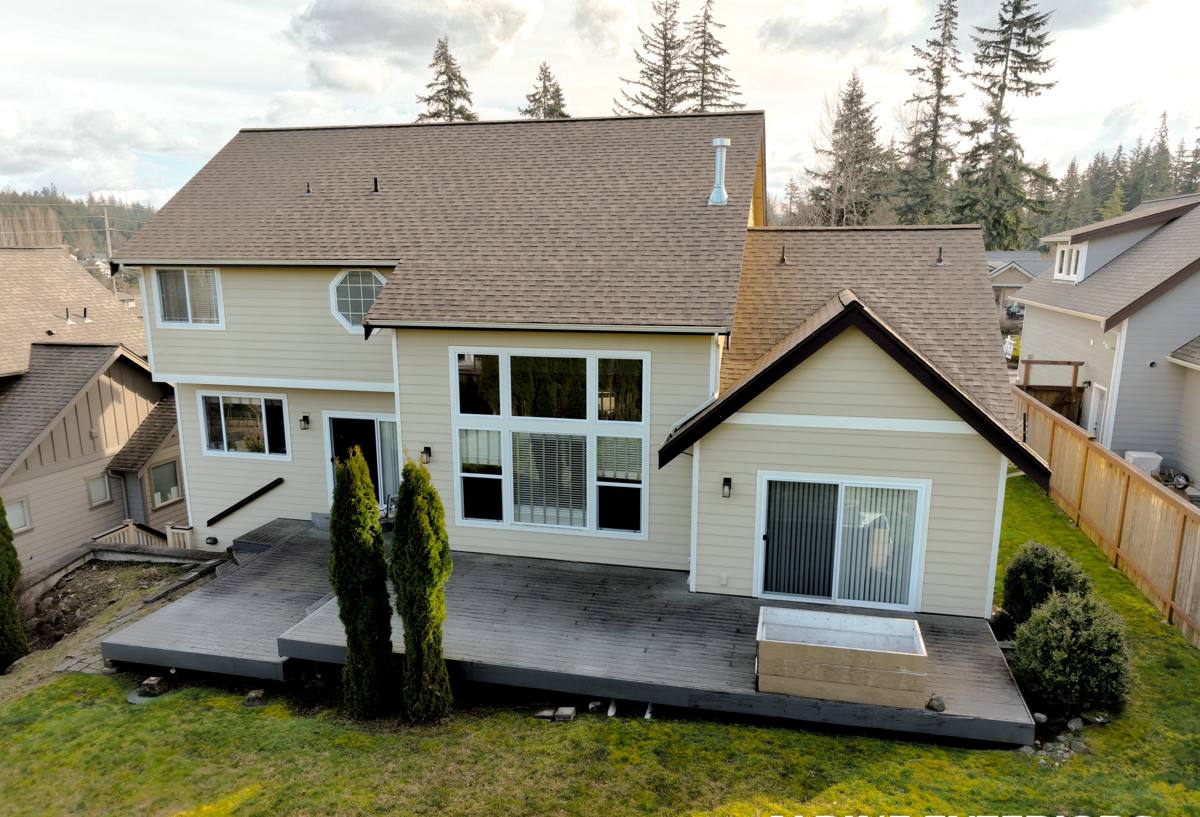
Square footage of wall area is the starting point, but complexity matters just as much. A simple rectangular ranch with few windows is cheaper to side than a home with multiple gables, dormers, bump-outs, and a lot of trim detail — even at the same square footage. Two-story homes and homes with limited ground clearance (steep lots, tight side yards) also add labor time for staging and access.
Tear-Off vs. Overlay
Removing old siding down to the sheathing costs more up front than siding over what's already there, but it's the only way to actually inspect and fix what's underneath — rot, failed house wrap, soft sheathing, old moisture damage. In a climate that drives water into walls the way ours does, we don't consider overlay a real option on a full replacement. You're not just buying siding; you're buying the chance to catch and fix problems before they're sealed behind a new wall for another 30 years.
Siding Material
Material is usually the single biggest swing factor in a bid, both in product cost and in what it costs to install and finish correctly. This is where a lot of homeowners get bids that look similar on paper but represent very different products.
Trim, Accessories, and Detail Work
Corner boards, window and door trim, fascia, soffit work, and any rot repair found during tear-off are usually priced separately from the field siding itself. On an older home, these line items can add up to a meaningful share of the total — and they're also where corners get cut on cheaper bids.
| Cost Factor | What Drives It Up | What Keeps It Reasonable |
|---|---|---|
| Home size/shape | Multiple stories, gables, dormers, cut-up walls | Simple rectangular footprint, fewer wall breaks |
| Tear-off vs. overlay | Full tear-off to sheathing, disposal of old material | Overlay (not recommended for full replacements here) |
| Material | Fiber cement with factory finish, engineered profiles | Vinyl or unfinished wood-based products |
| Substrate condition | Rot, failed house wrap, soft sheathing found at tear-off | Sound sheathing, no hidden moisture damage |
| Trim complexity | Custom corner boards, extensive window trim | Standard trim details |
| Access | Steep lots, tight setbacks, multi-story staging | Easy ground-level access all around |
Material Choice Changes the Math More Than Anything Else
Vinyl siding is the cheapest material to buy and install, and it shows in the price. It's also the thinnest, most temperature-sensitive option, and it's not something we install — our reasoning is covered in detail on our other product pages, but in short: it doesn't hold up the way we want a Whatcom County exterior to hold up over 20-30 years, especially with the temperature swings and moisture exposure this area sees.
Engineered wood products like LP SmartSide sit in the middle price-wise and have real strengths — they're lighter, easier to cut, and less brittle than fiber cement. The trade-off is that they're still a wood-based substrate, meaning edge sealing, caulking, and paint maintenance have to be kept up religiously, especially anywhere moss and standing moisture are a factor. We don't install engineered wood siding for that reason; a long moss season is not a forgiving environment for a product that depends on an intact factory seal to keep water out of wood fiber.
Fiber cement — specifically James Hardie, which is the only brand we install — costs more than vinyl and generally more than engineered wood, both in material and in labor, because it's heavier, requires different blades and fasteners, and takes more care to install to spec. What you're buying for that difference is a non-combustible product that doesn't rot, doesn't feed moss growth the way wood fiber does, and holds a factory-applied ColorPlus finish that's built to handle sun and salt air without the recoat cycle other materials need. Over the real lifespan of a siding job, that's the material that makes the up-front cost make sense.
What Fairhaven's Climate Actually Adds to the Bill
Salt Air
Homes closer to Bellingham Bay see accelerated corrosion on fasteners, flashing, and any exposed metal trim. Correct installation means stainless or coated fasteners and flashing details rated for that exposure — a detail that's easy to skip and expensive to fix later.
Driving Rain
Wind-driven rain finds every unsealed seam and under-flashed penetration. Proper house wrap, correctly lapped flashing at windows and doors, and rainscreen or drainage gap detailing where called for all add labor time, but they're what actually keeps water out of the wall assembly — which is the whole point of new siding in the first place.
Moss Season
Shaded and north-facing walls here can stay damp for months. That doesn't just affect the siding surface; it affects how quickly caulk fails, paint breaks down, and wood substrates hold moisture against the sheathing. This is a big part of why material choice and installation detailing matter more here than in a drier climate.
Labor and Installation Quality: The Cost Factor Homeowners Underrate
Two bids using the identical material can differ significantly based on labor alone, and the cheaper labor isn't always the better deal. Fiber cement in particular is unforgiving of rushed installation — improper fastener placement, missed clearances at grade, wrong caulk in the wrong joint, or skipped flashing details won't show up as a problem on day one. They show up in year five or ten, as moisture damage that costs far more to repair than the labor savings were worth. When you're comparing bids, ask what fastening pattern, clearance, and flashing details each crew follows — a contractor who can answer specifically is telling you something real about the bid.
Permits, Disposal, and the Line Items People Forget
A full siding job typically involves a building permit, disposal of the old siding and any removed sheathing or trim, and sometimes incidental repairs discovered once the walls are open — a soft stud, an old vent that needs re-flashing, a downspout that needs rerouting. None of these are padding; they're normal parts of a real tear-off job. A bid that doesn't account for any of them at all is either assuming a best-case scenario or leaving room to add change orders later.
Getting a Quote You Can Actually Compare
The best way to compare bids is to make sure you're comparing the same job. Before you call around, it helps to have the following ready:
- Rough age of the home and current siding material
- Any known problem areas — soft spots, past leaks, visible moss or mildew staining
- Whether you want tear-off to the sheathing (recommended) or are open to other options
- Which trim and accessory work you want included versus handled separately
- Your target siding material and, if you have one, a color or finish preference
- Timeline flexibility — weather windows matter for scheduling in this region
When you get bids back, check that each one specifies the same tear-off scope, the same material and thickness/profile, and the same trim work — not just a total number.
Thinking About Cost Per Year, Not Just Cost Today
The most useful way to compare siding options isn't the sticker price — it's the sticker price divided by realistic years of service before major maintenance or replacement is needed. A cheaper material that needs recoating, caulk renewal, or panel replacement within 10-15 years often costs more over 30 years than a higher up-front material that doesn't. That's the calculation that led us to standardize on James Hardie: it costs more on day one, but it's designed to go decades in a climate like this one without repainting, resealing, or replacing sections — and it comes with a strong transferable warranty backing that up.
If you'd like a real number instead of a range, we're happy to take a look at your home and put together a free, no-pressure estimate — no obligation, and we'll walk you through exactly what's driving the number.