 Fairhaven Siding
 Downtown Bellingham's Exterior Challenge
Downtown Bellingham sits close enough to Bellingham Bay that salt-laden air is a real factor in how exteriors age, not just a coastal talking point. Combine that with Whatcom County's long wet season, frequent wind-driven rain off the water, and heavy tree cover shading many streets, and you get a climate that is genuinely hard on the outside of a house. Homes here don't fail because owners neglected them — they fail because the materials on the wall weren't built for this specific mix of moisture, salt, and shade.
We work on homes throughout the Fairhaven and Downtown Bellingham area regularly, and the pattern is consistent: siding, trim, roofing, and window assemblies all take more abuse here than they would twenty or thirty miles inland. That's the lens we bring to every estimate in this neighborhood.
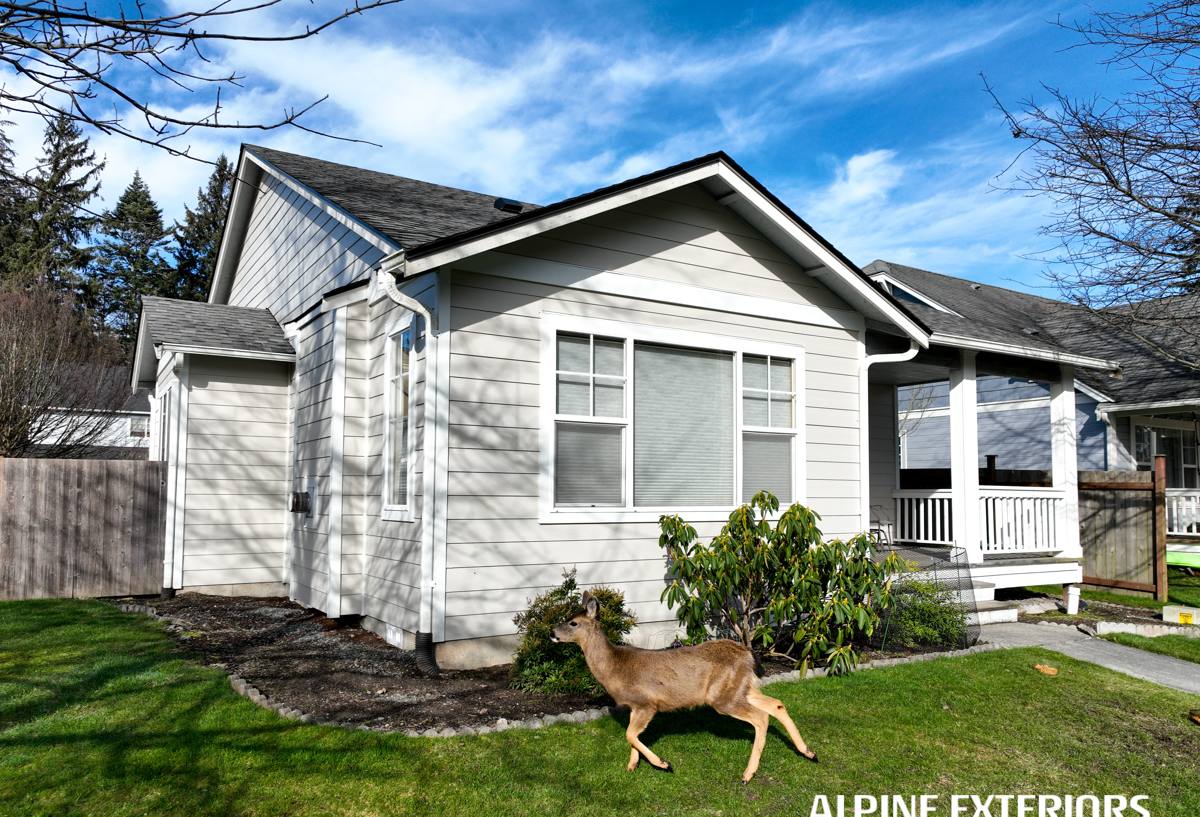
What Driving Rain and Salt Air Actually Do
Moisture intrusion
Bellingham gets rain that doesn't just fall straight down — wind off the bay pushes it sideways into wall assemblies, seams, and trim joints. Any siding product with weak seams, poor flashing detail, or a finish that isn't fully sealed on all six sides will start absorbing moisture at those points long before it shows up as a visible problem. Once moisture gets behind the cladding, it doesn't dry out quickly in our climate — the air itself stays damp for months at a stretch.
Salt exposure
Downtown Bellingham isn't oceanfront, but it's close enough to Bellingham Bay that salt in the air accelerates corrosion of fasteners, staples, and any exposed metal trim, and it speeds up the breakdown of lower-grade paint films. Over years, that shows up as chalking, fading, and fastener staining well before a comparable house further inland would show the same wear.
Moss and algae season
Between the shade from mature street trees and the long wet stretch from fall through spring, north- and east-facing walls in this neighborhood grow moss and algae faster than most homeowners expect. On porous or textured siding, that growth gets a foothold in the surface itself, not just sitting on top of it, which makes it harder to clean off without damaging the material underneath.
Why We Standardized on James Hardie Fiber Cement
We install James Hardie fiber cement siding exclusively — we don't install vinyl, LP SmartSide, cedar, primed spruce, or other fiber cement brands. That's a deliberate call, not a supplier preference. Fiber cement as a category resists moisture, rot, and pest damage in ways wood-based products can't match, and within that category, James Hardie's ColorPlus factory-applied finish and its HZ5 product line (engineered for wetter climates like ours) hold up to exactly the conditions Downtown Bellingham throws at a house: driving rain, salt air, and sustained damp shade.
The factory finish matters more here than in a dry climate. A field-applied paint job has to seal every cut edge and fastener hole on site, and any gap in that seal becomes a moisture entry point. ColorPlus is baked on before the boards ever reach the jobsite, which gives it a more consistent, durable bond — and it's backed by a real finish warranty, not just a material warranty.
We won't tell you every other product is worthless — vinyl and engineered wood sidings have legitimate uses in the right climate and price point. But for this neighborhood's combination of salt air, wind-driven rain, and moss pressure, we've made fiber cement, specifically James Hardie, our standard because it's what we're comfortable standing behind long-term.
Siding Options and How They Hold Up Here
| Material | Moisture resistance | Salt-air performance | Maintenance in this climate |
|---|---|---|---|
| James Hardie fiber cement | Excellent — non-combustible, engineered HZ5 line for wet climates | Strong; factory finish resists chalking and fade | Occasional wash; no repainting for many years |
| Vinyl | Moderate; seams and panel movement can let moisture behind the wall | Can become brittle and discolor faster near salt air | Low, but limited repair options if damaged |
| Cedar / primed wood | Poor without constant upkeep; absorbs moisture readily | Accelerated weathering near the bay | Frequent repainting and rot inspection |
| Engineered wood (LP SmartSide, etc.) | Good if installed and sealed correctly; edge sealing is critical | Sensitive to installation quality in salt-air zones | Moderate; depends heavily on original install quality |
What a Siding Project Looks Like on a Downtown Bellingham Home
Most homes in this area fall into one of two categories: older houses with original wood siding or dated replacement siding that's showing its age, and newer construction that needs its first re-side decades down the road. Either way, the process starts the same way — with an honest look at what's underneath.
- Walk the exterior and identify problem areas: soft trim, moss-heavy walls, failed caulk lines, water staining near windows or the roofline.
- Check sheathing and framing condition once old siding comes off — this is where hidden rot from years of trapped moisture usually turns up.
- Address any moisture barrier or flashing issues before new siding goes on. Covering up a bad moisture plane with new material just delays the same failure.
- Install James Hardie panels or lap siding with manufacturer-specified fastening and clearances, which matter more here given the rain volume.
- Detail trim, corners, and penetrations (vents, hose bibs, light fixtures) — these are the spots that let wind-driven rain in if they're rushed.
It's Not Just Siding — The Whole Exterior Takes the Same Beating
We do siding, roofing, windows, and decks, and in this neighborhood those four things are more connected than homeowners usually realize. A roof that's shedding granules or has aging flashing sends extra water down the wall behind the siding. Windows with failed seals let moisture into the same wall cavity a siding problem would. A deck that's holding water against the house creates a moss and rot zone right at the foundation of your siding job. When we look at a home here, we're looking at how water moves across the whole exterior, not just one component.
Roofing
Moss and algae growth on roofs is as common a concern here as it is on siding, for the same reasons — shade, moisture, and a long wet season. A roof inspection is worth doing alongside any siding project, since roof runoff patterns directly affect how much water your new siding has to shed.
Windows
Older single-pane or early double-pane windows in this area often have failed seals that let condensation and drafts in. When we're already opening up wall sections for siding work, it's the right time to evaluate whether window flashing needs attention too.
Decks
Decks in a climate this wet need materials and fastening details that account for standing water and freeze-thaw cycling in the colder months. A deck built or maintained poorly becomes a moisture source for the siding right above it.
Choosing a Contractor for This Kind of Work
Downtown Bellingham's mix of older housing stock and coastal-adjacent weather means installation quality matters more here than in a lot of places. A siding job that would hold up fine in a dry inland climate can fail early here if flashing, fastening, or edge-sealing details are cut short. A few things worth checking before hiring anyone:
- Ask whether the crew works in this neighborhood regularly and can speak specifically to local moisture and moss issues, not just generic siding advice.
- Confirm they carry proper licensing and insurance for exterior work in Washington State.
- Ask what moisture barrier and flashing details they use — this is where quality separates itself, and a contractor should be able to explain it clearly.
- Check whether the siding warranty is transferable, which matters for resale in this market.
- Get a written scope that spells out sheathing inspection, not just "install new siding over what's there."
Maintenance That Actually Matters Here
Even the best siding material benefits from a little seasonal attention in a climate like this. For Downtown Bellingham homes specifically:
- Rinse moss and algae growth off north- and east-facing walls before it has a chance to establish, ideally before the wet season ramps up in fall.
- Keep gutters clear — overflow during heavy rain events is a major source of water running down and behind siding at corners and trim.
- Trim back tree limbs and shrubs that keep walls in constant shade and slow down drying after rain.
- Have caulk and trim joints checked every few years, since that's where wind-driven rain finds its way in first.
Get a Free, No-Pressure Estimate
If you're noticing moss buildup, soft trim, fading, or just want an honest read on how your home's exterior is holding up against Bellingham's coastal weather, we're happy to take a look. There's no cost and no pressure — just a straight assessment from a crew that works in this climate every day, and a clear explanation of what we'd recommend and why. Fill out the form below to get started.