 Fairhaven Siding
 Downtown Bellingham's Siding Has a Tougher Job Than Most
A house near the core of Bellingham deals with a specific combination of weather that inland Whatcom County homes don't see nearly as often. You're close enough to Bellingham Bay to pick up salt-laden air, exposed to storms that roll in off the water with real wind behind them, and stuck with a long stretch of the year where surfaces just don't dry out. Siding here isn't decorative — it's the one layer standing between that weather and the framing underneath. When it's installed wrong, or installed with the wrong product, the problems don't show up as a paint issue. They show up as rot.
Salt Air Off the Bay
Airborne salt accelerates the breakdown of caulking, fasteners, and paint film faster than most homeowners expect. It's not dramatic — you won't see it happen — but it shows up over years as chalky finishes, early caulk failure at joints, and corrosion on lower-quality trim and hardware. Siding products and finishes that hold up fine forty miles inland can wear noticeably faster on a home exposed to bay air.
Driving Rain and Wind-Loaded Walls
Storms coming off the Strait of Georgia and the Sound don't just drop rain straight down — they push it sideways into walls, especially on west- and south-facing elevations with less natural shelter. That means water gets forced up under laps, into unsealed joints, and behind trim that isn't flashed correctly. A siding job that would be fine in a calmer climate can fail here specifically because it wasn't detailed for wind-driven moisture.
A Long Moss and Mildew Season
Between the tree canopy in parts of the downtown area, tighter lot spacing that shades north-facing walls, and roughly eight months a year of damp conditions, moss and algae get a long runway to establish themselves. On the wrong siding material, that growth holds moisture against the wall surface and accelerates decay. On the wrong finish, it stains permanently.
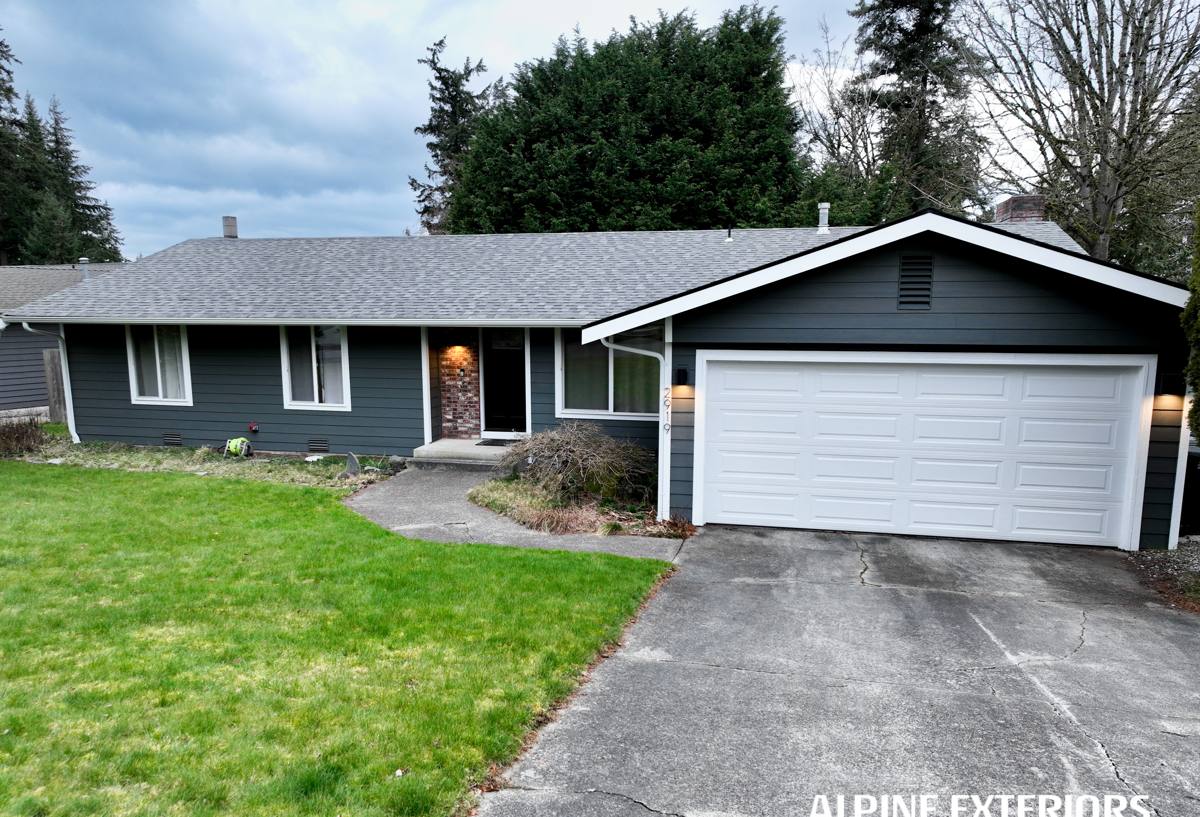
What This Means for Downtown Bellingham Homes Specifically
A lot of the housing stock near the downtown core dates back decades, often with multiple layers of siding history underneath whatever's on the wall today — old cedar, later re-covered with something else, sometimes more than once. Lots tend to be tighter than newer subdivisions, which limits sun exposure and airflow along shared walls and affects how quickly a building dries after a storm. Homes closer to the water get more direct salt exposure than those set back on higher ground. And because many of these lots have limited setback and street access, even the logistics of a siding job — staging materials, placing a dumpster, protecting neighboring property — take more planning than a typical suburban install.
None of that is a reason to avoid re-siding an older downtown home. It's a reason to be deliberate about the product and the installation details, because this location doesn't forgive shortcuts the way a drier, more sheltered site might.
Why We Install Only James Hardie Fiber Cement
We standardized on James Hardie fiber cement siding and don't install vinyl, LP SmartSide, Cemplank, Allura, primed spruce, or cedar. That's a deliberate call, not a limitation of what we're capable of installing. Fiber cement is non-combustible, doesn't feed moss or insects the way wood-based products can, and holds its shape and flatness through the wet-to-dry cycling that's constant in this climate. James Hardie engineers its siding by climate zone, and the products used in our region are built for the freeze-thaw and moisture exposure typical of the Pacific Northwest — not a generic, one-size-fits-all formulation.
The factory-applied ColorPlus finish matters here specifically. Field-applied paint is more vulnerable to the salt air and UV cycling this location sees, and repainting a full exterior every several years isn't something most homeowners want to budget for. A baked-on factory finish holds color and resists fading and chalking far longer, which is a real advantage on a home that's going to spend decades exposed to bay-adjacent weather.
What a Correct Fiber Cement Job Looks Like Here
Fiber cement is only as good as its installation. The material can outperform every alternative on the market and still fail early if it's hung without attention to the details that matter most in a wet, wind-exposed climate. On every downtown Bellingham project, our crews work through the same non-negotiables:
- Full inspection of the sheathing and framing once old siding is off — soft spots and hidden rot get repaired before anything new goes up, not covered over
- A continuous weather-resistive barrier installed and lapped correctly, with no gaps for wind-driven rain to exploit
- Proper flashing at every window, door, and roofline intersection — the single most common failure point on rushed siding jobs
- Manufacturer-specified fastener type, spacing, and placement, not a generic nail schedule
- Correct gapping and sealant at butt joints and trim, matched to James Hardie's published installation guidelines
- Field-cut edges primed and sealed before installation, since exposed raw fiber cement edges are a common source of early moisture intake
- Proper clearance from grade, roof lines, and decks to keep the bottom edge of the siding from sitting in standing moisture
Skip any one of these and you can still end up with a house that looks fine for a year or two before problems start underneath the surface.
Our Process for a Downtown Bellingham Project
- Walk-around and moisture assessment. We look at existing siding condition, trim, window flashing, and any visible signs of past water intrusion before quoting anything.
- Permitting. Siding replacement in the city typically requires a permit — we handle that process as part of the job rather than leaving it on the homeowner.
- Tear-off and sheathing check. Old siding comes off, and the sheathing underneath gets inspected and repaired as needed before anything new is installed.
- Weather barrier and flashing. A continuous, properly lapped barrier goes on first, with flashing detailed at every penetration and transition.
- Hardie installation. Panels or lap siding go up to manufacturer spec, with attention to elevations that take the most direct wind and rain.
- Caulking and finish work. Joints, trim, and any field-cut edges are sealed and finished before final cleanup.
- Final walkthrough. We review the completed work with the homeowner before calling the job done.
Cost Factors for a Downtown Bellingham Fiber Cement Project
Every home is different, and we won't quote a number without seeing the property, but these are the factors that most often move a project's cost up or down in this specific area:
| Factor | Why It Affects Cost |
|---|---|
| Age and layers of existing siding | Older downtown homes sometimes have multiple layers to remove, and hidden rot repair adds labor |
| Lot access and staging space | Tighter urban lots can limit equipment placement and material staging, adding time |
| Home height and number of stories | Taller walls and steep rooflines require more scaffolding and safety setup |
| Trim and architectural detail | Homes with more corners, dormers, and trim take longer to flash and finish correctly |
| Siding profile and product line | Lap siding, shingle-style panels, and specialty trim vary in material and labor cost |
| Extent of moisture damage found | Rot discovered once old siding is removed needs to be repaired before re-siding proceeds |
Why a Crew That Already Works in Downtown Bellingham Matters
A contractor who mostly works elsewhere in the county still knows how to install siding — but a crew that regularly works this specific area already knows which elevations on a given block tend to take the worst wind-driven rain, how tight a given lot layout typically is for staging and disposal, and what the city's permitting process actually requires before work starts. That familiarity shows up in fewer surprises mid-project and in installation choices — extra flashing attention on an exposed wall, for example — that come from experience with this exact climate rather than a generic checklist.
Keeping Fiber Cement Siding Looking Right in This Climate
Fiber cement is low-maintenance compared to wood or repainted alternatives, but "low-maintenance" isn't "no-maintenance," especially here. A periodic gentle rinse keeps moss and algae from taking hold, particularly on shaded, north-facing walls. Gutters and downspouts should be checked to make sure they're actually moving water away from the walls rather than overflowing onto siding below. Caulking at trim and joints is worth a visual check every year or two, since it's usually the first thing to show wear in a salt-air, high-moisture environment — catching a failed bead of caulk early is a lot cheaper than dealing with the water damage it eventually causes if it's ignored.
If you're weighing a siding project for a home near downtown Bellingham, we're happy to take a look and walk you through what your specific house needs. There's no cost and no pressure to a free estimate — just a straight assessment of your siding's condition and what a correct fiber cement installation would involve for your property.