 Fairhaven Siding
 Roof Repair for Sudden Valley Homes
Sudden Valley sits back in the trees near Lake Whatcom, and that setting is a mixed blessing for a roof. The tree canopy that makes the neighborhood feel private also keeps roofs shaded, damp, and covered in needles and leaf litter for much of the year. Add in the broader Whatcom County pattern of driving rain, salt-laden air moving in off the water, and a moss season that can stretch from fall through spring, and you have a roof that ages differently than one out in the open. A repair that works on a sun-exposed roof in a drier climate often doesn't hold up here.
We work on roofs throughout the Fairhaven area and out into communities like Sudden Valley regularly, so we're not guessing at how local roofs fail. We're fixing the same handful of problems over and over, and we've built our repair process around what actually causes them.
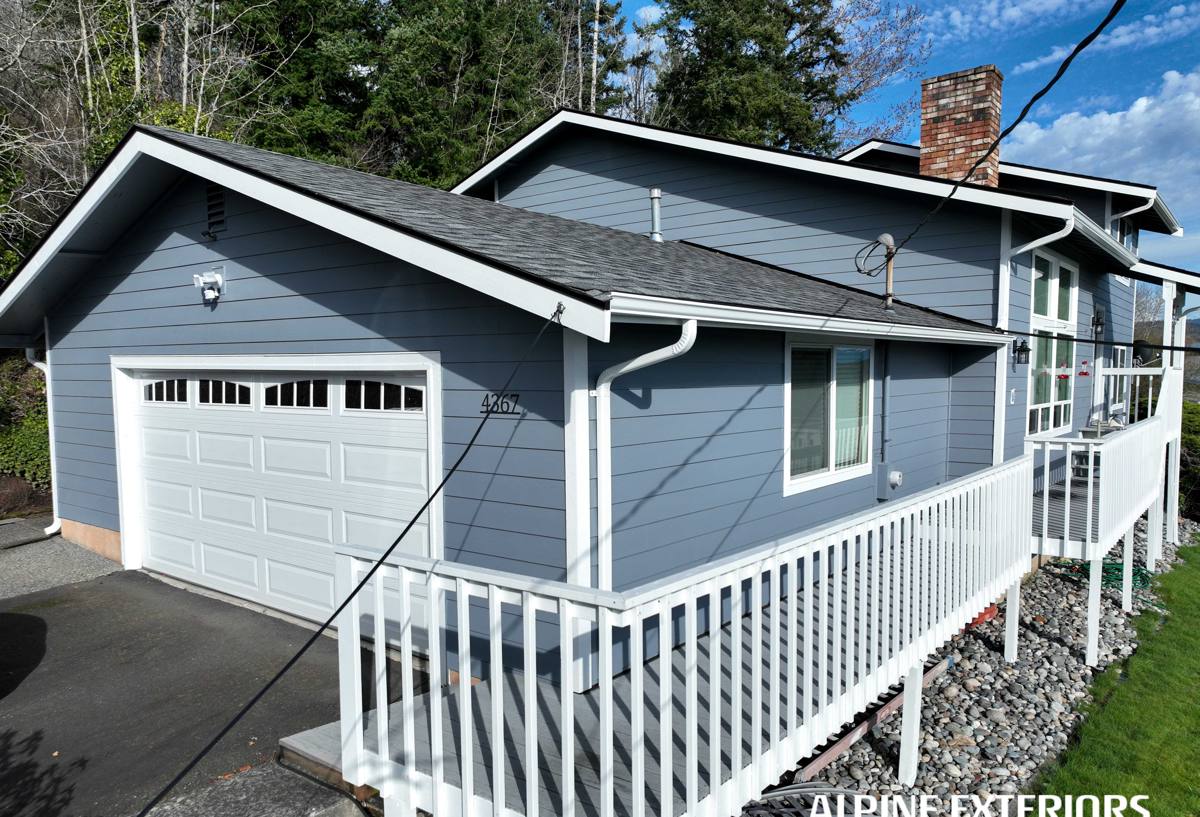
Why Sudden Valley Roofs Wear Differently
Shade and moisture that never fully dry out
A roof surrounded by mature trees loses a lot of its ability to dry between rain events. Shaded sections of the roof, north-facing slopes, and areas under overhanging branches stay damp longer than the rest of the roof. That extended moisture is exactly what moss, moss, and algae need to take hold, and once organic growth establishes itself, it holds even more water against the roofing material.
Moss is a mechanical problem, not just a cosmetic one
Moss doesn't just look bad. As it grows, it lifts shingle edges, works its way under laps, and holds water directly against the roof deck. Over a full moss season, that constant dampness accelerates granule loss on asphalt shingles, promotes rot in wood-based roofing, and can work moisture into fastener holes and flashing seams that were otherwise sound.
Debris load and clogged drainage
Needles, cones, and leaf debris collect in valleys and behind chimneys and dormers faster here than on a roof in an open, treeless yard. When debris dams up water instead of letting it run off, that water finds the weakest point in the roofing system — usually a flashing seam or an aging shingle edge — and that's where leaks start.
Salt air and coastal exposure
Even set back from the water, homes in this part of Whatcom County get some benefit — and some cost — from proximity to Bellingham Bay and the Sound. Salt-laden air accelerates corrosion on exposed metal: flashing, fasteners, vent caps, and gutter hardware all corrode faster here than they would further inland. A repair that ignores the metal components and only addresses the shingles is a repair that will need to be redone.
Signs a Sudden Valley Roof Needs Repair
Most roof problems announce themselves quietly before they become a leak inside the house. Homeowners in this area should watch for:
- Moss or dark streaking concentrated on shaded or north-facing slopes
- Granules collecting in gutters or at downspout outlets
- Curling, lifted, or missing shingles, especially near valleys and roof edges
- Rust staining or visibly corroded flashing around chimneys, vents, or skylights
- Soft or discolored ceiling patches, especially after a heavy rain
- Standing debris in valleys that doesn't clear on its own between storms
- Daylight visible through the roof deck from inside an attic space
Any one of these on its own might be minor. Several together, or any sign of active water intrusion, means it's time to have someone look at the roof before the next storm cycle.
What a Correct Roof Repair Actually Involves
Diagnosis before repair
The most common mistake in roof repair is treating the visible symptom instead of finding the source. A stain on a ceiling can trace back to a flashing failure ten feet away, following the roof deck before it shows up inside. We start every repair by tracing the water, not just patching where it appeared.
Flashing and metal work
Given how much of the damage in this area starts at flashing — chimneys, skylights, dormers, wall-to-roof transitions — we treat flashing as a primary repair item, not an afterthought. Corroded or improperly lapped flashing gets replaced and re-integrated with the surrounding roofing, not just caulked over.
Shingle and underlayment work
Damaged shingles are removed and replaced in matching courses so the repair sheds water the way the surrounding roof does. Where underlayment is compromised, we replace it rather than shingling directly over questionable material — a shortcut that hides a problem instead of fixing it.
Moss and debris removal, done without damaging the roof
Moss removal on an active roof has to be done carefully. Aggressive scraping or high-pressure washing can strip granules and shorten the life of otherwise sound shingles. We remove moss growth and clear debris using methods that don't damage the roofing surface, and we treat the area to slow regrowth rather than just clearing what's visible today.
Common Repair Types and What Drives Their Cost
Every roof and every repair is different, but the table below outlines the general categories of repair work we see most often on homes in this area, and the main factors that affect cost.
| Repair Type | Typical Cause Locally | Main Cost Factors |
|---|---|---|
| Flashing replacement | Corrosion from salt air, age, poor original installation | Number of penetrations, accessibility, metal type |
| Shingle patch/replacement | Moss damage, wind, granule loss | Size of affected area, shingle match/availability |
| Valley repair | Debris damming, worn valley material | Valley length, underlying decking condition |
| Moss treatment and removal | Shade, moisture retention under tree canopy | Roof pitch, extent of growth, access |
| Deck/sheathing repair | Prolonged undetected leaks | Extent of rot, framing exposure |
As a rough guide, a straightforward flashing or shingle repair on an accessible roof is usually a modest, half-day-or-less job. Repairs involving deck replacement, extensive moss damage, or difficult access naturally run higher. We always inspect and quote before any work starts, so there are no surprises once we're on the roof.
Our Roof Repair Process
- Inspection. We walk the roof (or use appropriate access methods for steep or difficult pitches) and document the actual condition, not just the reported symptom.
- Diagnosis and explanation. We tell you what's actually wrong, what's causing it, and what happens if it's left alone — in plain terms, not sales pressure.
- Written estimate. You get a clear scope and price before any work begins.
- Repair. We do the work to match the existing roof system as closely as possible, using materials suited to the moisture and moss conditions common in this area.
- Cleanup and check. Debris is cleared, gutters are checked for blockage caused by the repair area, and the work is reviewed before we consider the job done.
Repair or Replace? Making the Right Call
Not every roof problem in Sudden Valley calls for a full replacement, and not every roof can be reasonably patched forever. The honest answer depends on the roof's age, how widespread the damage is, and whether the underlying deck is still sound.
Repair usually makes sense when:
Damage is localized, the roof is reasonably young or mid-life, and the deck underneath is dry and solid. Isolated flashing failures, moss damage on one or two slopes, and storm damage to a limited area are typically good repair candidates.
Replacement becomes the more honest recommendation when:
Damage is spread across multiple slopes, the roofing material is at or past its expected service life, or repeated leaks have already compromised the deck in more than one location. In those cases, patching individual spots just delays a bigger cost and risks more interior damage in the meantime. We'll tell you plainly which situation you're in — our goal is a roof that performs, not the largest invoice.
Why Local Experience in Sudden Valley Matters
A roof repair crew that hasn't worked in this specific setting can miss things that are obvious to someone who has. Knowing which slopes typically hold moisture longest under heavy tree cover, expecting corrosion at flashing points because of the region's salt air, and understanding how debris behaves in valleys on a forested lot — that's knowledge built from repeat visits to this kind of property, not a general roofing checklist. If your home is on a private road or part of an association-managed community, we're also used to coordinating access and working within those logistics without it becoming a hassle for you.
We're a Fairhaven-based crew serving Whatcom County, and Sudden Valley is part of our regular service area — not a stretch job we take on occasionally. That familiarity shows up in fewer surprises during the work and a repair that's matched to how this specific environment treats a roof.
If you've noticed moss buildup, a stain on a ceiling, or just want a second opinion on a roof that's due for attention, we're glad to take a look. Use the form below to request a free, no-pressure estimate for your Sudden Valley home.