 Fairhaven Siding
 Siding in Sunnyland: A Climate That Doesn't Forgive Shortcuts
Sunnyland sits close enough to the water and the wooded hillsides around Fairhaven that its homes take on a specific kind of weather stress most of the year. Salt-laden air drifts in off Bellingham Bay, wind-driven rain comes in sideways during fall and winter storms, and the shaded, moisture-heavy stretches under mature trees keep moss and algae growing for months at a time. None of that is unusual for Whatcom County. But it does mean exterior materials here work harder than they would in a drier inland climate, and the difference between a siding job that lasts decades and one that fails early usually comes down to what the material is made of and how carefully it was installed.
We work on homes throughout the Fairhaven area, including Sunnyland, and we've built our whole approach around what actually holds up in this specific environment — not what looks good on a spec sheet in a showroom somewhere else.
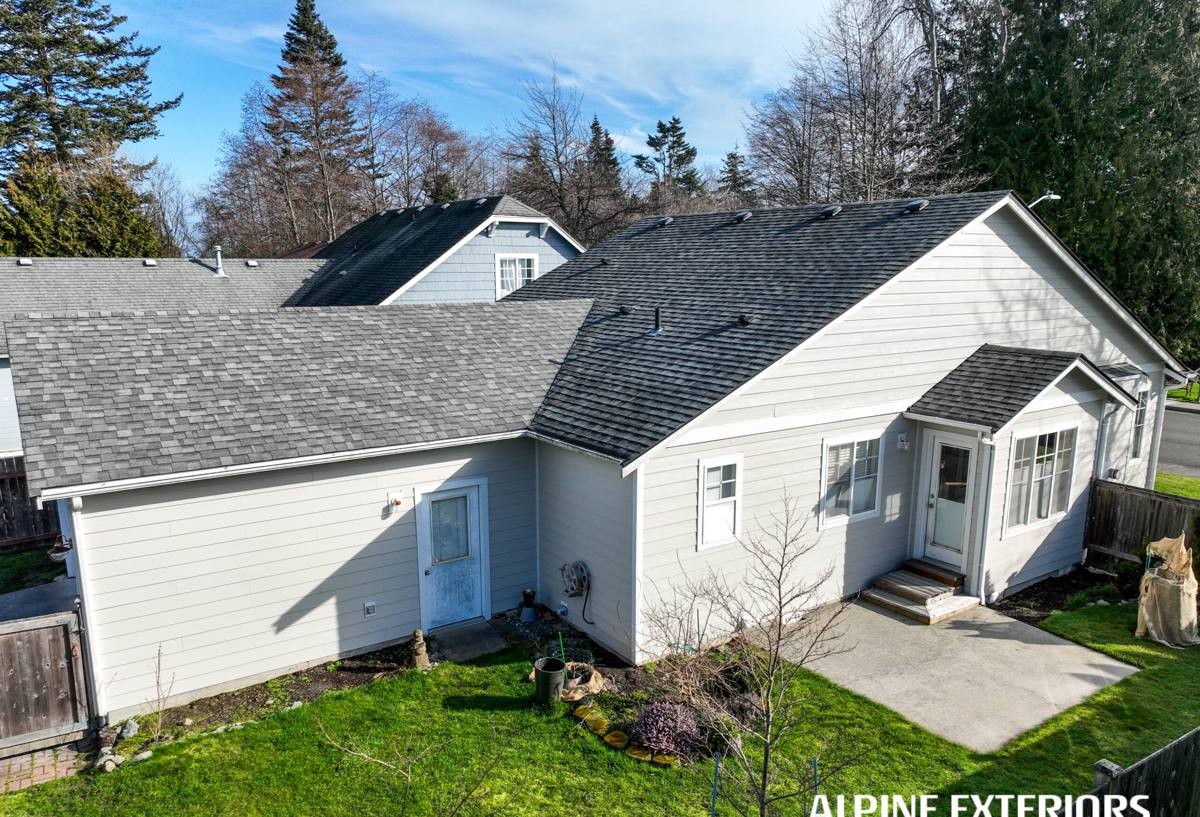
What Salt Air, Rain, and Moss Actually Do to Siding
Salt Air
Airborne salt is corrosive to metal fasteners and trim, and it accelerates the breakdown of paint films and coatings on wood-based products. Over years, homes closer to the water tend to show chalking, fading, and surface erosion faster than homes further inland.
Driving Rain
Storms here don't just fall straight down — wind pushes rain sideways into wall assemblies, especially on south and west-facing elevations. Any siding system that isn't detailed correctly around windows, doors, and butt joints will eventually let water behind it, and once moisture gets trapped against sheathing, the damage happens where you can't see it until it's expensive.
Moss and Organic Growth
Shaded siding, especially on the north side of a house or under overhanging trees, stays damp for extended stretches. That's exactly the environment moss, algae, and mildew need to establish themselves on porous or wood-based siding surfaces.
Why We Install Only James Hardie Fiber Cement
We made a deliberate decision to install one siding system — James Hardie fiber cement — rather than offering a menu of products at different price points. That's not a marketing angle; it's a standard we set after weighing how different materials actually perform in a coastal Pacific Northwest climate over the long run.
Fiber cement is a mix of cement, sand, and cellulose fiber, which makes it non-combustible and dimensionally stable — it doesn't swell, cup, or rot the way wood-based siding can when it takes on repeated moisture exposure. James Hardie also factory-applies its ColorPlus finish, which is baked on and warrantied against fading and chipping in a way field-applied paint can't match. For a climate that cycles through wet winters and salty air year-round, that combination matters more here than it would somewhere dry.
We don't install vinyl, LP SmartSide, or primed wood siding, and we're upfront about why: each of those products has real trade-offs in exactly the conditions Sunnyland deals with — moisture sensitivity, coating maintenance, or long-term dimensional stability — that we're not willing to put our name behind. If you want the fuller comparison on any specific product, we're glad to walk through it during an estimate.
James Hardie Product Lines We Work With
| Product | Best Use | What It Offers |
|---|---|---|
| HardiePlank Lap Siding | Most common siding replacement | Traditional lap profile, several textures, ColorPlus or primed options |
| HardieShingle | Accent gables, dormers, full facades | Staggered or straight-edge shingle look without cedar's moisture upkeep |
| HardiePanel | Modern vertical siding, board-and-batten looks | Clean vertical lines for contemporary or farmhouse-style homes |
| HardieTrim | Corners, fascia, window and door trim | Matches siding durability so trim doesn't fail before the field siding does |
James Hardie also engineers its HZ5 product line specifically for regions that see freeze-thaw cycling and sustained moisture exposure — which fits the Fairhaven area better than the HZ10 line built for hot, humid climates further south.
How We Install for This Specific Climate
Manufacturer specs are a floor, not a finish line. In a neighborhood dealing with driving rain and persistent damp shade, the installation details are what actually determine whether a siding job performs for 30-plus years or starts showing problems in five.
- Rainscreen or drainable house wrap behind the siding to let any moisture that gets past the cladding drain and dry out instead of sitting against the sheathing
- Correct flashing sequencing at windows, doors, and every horizontal trim break, so water is directed out and down rather than trapped
- Proper fastener placement and type — over-driven or incorrectly spaced nails are one of the most common causes of early fiber cement failure
- Manufacturer-specified clearances from grade, roofing, and decks, so splash-back and standing moisture don't sit against the bottom course
- Caulking and sealant only where Hardie's install guide calls for it — sealing the wrong joints traps moisture instead of releasing it
These aren't optional add-ons. They're standard on every job we run, because a coastal climate exposes bad installation practices faster than a dry one does.
Beyond Siding: Roofing, Windows, and Decks
Siding doesn't work in isolation — it's one piece of the building envelope, and the same weather that stresses siding stresses the roof, windows, and any exterior decking on a home. We handle all four because they interact: flashing at a roofline has to tie into the siding correctly, window trim has to integrate with the cladding, and a deck ledger board is a common point where water intrudes into a wall if it isn't detailed right.
When we're on-site for a siding project, we're looking at the whole exterior — not just the walls — because problems in one area often show up as symptoms in another. A homeowner dealing with interior water stains near a window, for example, sometimes has a siding or flashing issue rather than a window problem itself.
Why a Local Crew Matters in Sunnyland
Whatcom County's coastal microclimate isn't the same as siding conditions 100 miles inland, and a crew that mostly works drier regions doesn't always build in the moisture-management details this area actually needs. Working the Fairhaven area regularly means we see how homes here age — where moss tends to establish first, which elevations take the worst of the driving rain, and how salt air affects trim and fasteners over time. That local pattern recognition shapes how we detail every job, not just what product we hand you a brochure for.
It also means we're accountable locally. If something needs a follow-up visit, we're not driving in from another region to handle it.
Maintaining Fiber Cement Siding in a Coastal Climate
James Hardie siding is low-maintenance compared to wood or many painted surfaces, but "low-maintenance" isn't "no-maintenance" — especially in a moss-prone, salt-air environment.
- Rinse siding annually with a garden hose and soft brush to clear salt residue, pollen, and early moss growth — avoid high-pressure washing, which can force water behind panels or joints
- Trim back tree branches and shrubs that keep siding shaded and damp for long stretches
- Check caulking at trim joints and penetrations every year or two, and have any gaps resealed before winter rains set in
- Watch for moss or algae staining on north-facing or shaded walls and address it early — it's easier to remove before it's established
- Have flashing and trim inspected periodically, since these are the components most likely to show wear before the siding field does
What Siding Replacement Typically Involves
| Factor | What Affects Cost |
|---|---|
| Existing siding removal | Tear-off complexity, whether sheathing needs repair underneath |
| Home size and elevations | Total square footage and number of corners, gables, dormers |
| Product mix | Lap siding only vs. lap plus shingle accents, trim, and panel details |
| Moisture or rot repair | Any sheathing or framing damage found once old siding is removed |
| Site access | Tight lots, multi-story sections, or landscaping that complicates staging |
Every home is different, and the only way to get an accurate number is to look at the actual house — condition of the existing siding, what's underneath it, and how the walls are laid out.
Get a Straight Answer for Your Home
If you're weighing a siding project in Sunnyland or anywhere in the Fairhaven area, we're happy to walk your home, point out what the salt air, rain, and moss have actually done to your current exterior, and give you a clear picture of what James Hardie fiber cement would involve — no pressure, no upsell script. Fill out the form below for a free estimate.