 Fairhaven Siding
 Windows in a Neighborhood That Sees Salt Air and Sideways Rain
Downtown Bellingham sits close enough to the water that homes here take a different kind of weather beating than houses ten miles inland. Salt-laden air off Bellingham Bay accelerates corrosion on hardware and fasteners. Wind-driven rain off the water hits windows at an angle, not straight down, which means water finds gaps that would stay dry in a calmer location. And the long gray stretch of fall through spring keeps wood trim and sills damp for months at a time, which is exactly the environment moss and rot organisms want. None of this is exotic — it's just Whatcom County weather doing what it does. But it changes what "correct" window installation looks like in this part of Fairhaven compared to a drier, more sheltered lot.
A window that's installed to a generic national standard can still fail here within a few years if the flashing detail, sealant choice, or hardware spec doesn't account for the local conditions. This page covers what we actually do differently for Downtown Bellingham homes, and what to look for whether you hire us or someone else.
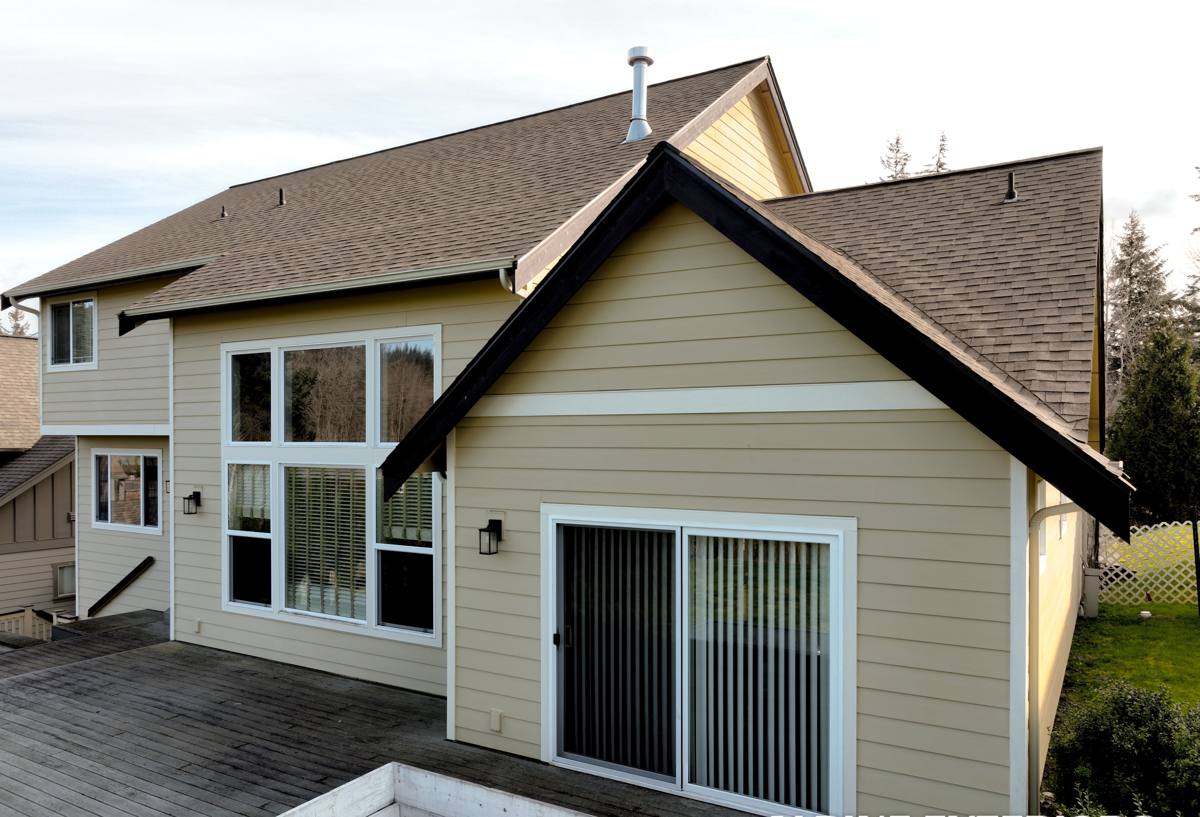
What Local Homes Are Up Against
Salt Air and Hardware Corrosion
Standard steel fasteners and lower-grade window hardware corrode faster this close to salt water. We spec corrosion-resistant fasteners and hardware for jobs in this area as a matter of course, not as an upsell. It's a small material cost difference that saves a callback in five years when a lock mechanism seizes or a fastener head rusts through the finish.
Wind-Driven Rain
Rain that comes in at an angle tests window flashing in ways vertical rain doesn't. Water gets pushed up under the bottom flange and sideways behind trim if the flashing sequence isn't layered correctly — housewrap over the top flange, flashing tape over the sides and bottom lapped correctly, sill pan underneath. This is the single most common source of hidden water damage we find when we pull old windows in this neighborhood: not a bad window, but a flashing job that let water track behind it, sometimes for years before anyone noticed.
Moss and Sustained Dampness
Whatcom County's moss season isn't limited to roofs. Wood sills, trim, and even vinyl tracks that stay damp too long collect moss and organic growth, which holds moisture against the material and shortens its life. Proper drainage detailing and sill design that sheds water instead of trapping it matters more here than in a drier climate.
What a Correct Installation Actually Involves
Window installation is mostly invisible work — once the trim goes back on, you can't see the flashing, the shimming, or the sealant joints underneath. That's exactly why the process matters more than the product. Here's what we consider non-negotiable on every job:
- Remove the old window and inspect the rough opening for rot, soft wood, or prior water damage before anything new goes in
- Install a sloped sill pan so any water that gets past the window drains back out, not into the wall
- Flash in the correct shingle-lap sequence: sill pan, then sides, then top, integrated with the housewrap
- Shim and level the unit so it operates smoothly and doesn't rack under seasonal movement
- Use low-expansion foam or backer rod plus sealant at the perimeter — never foam alone as the only air seal
- Seal and caulk the exterior with a product rated for this climate, not a generic hardware-store caulk
- Re-trim and finish so the sightlines match the rest of the house
Skip the sill pan or get the flashing lap order backwards, and the window can look perfect for years while water quietly works on the framing behind it. We've replaced enough rotted rough openings under seemingly fine windows to take this step seriously every time.
Choosing Windows for This Location
We're not going to tell you there's one "best" window brand — there isn't, and anyone who says so is selling something. What matters more than the label is the frame material's track record in a marine climate, the glass package for our gray-sky winters, and whether the installer follows the manufacturer's flashing instructions to the letter, since that's usually what determines whether a warranty actually holds up.
| Frame Material | How It Handles This Climate | Maintenance |
|---|---|---|
| Vinyl | Good moisture resistance, no repainting, solid value | Low — occasional cleaning |
| Fiberglass | Excellent dimensional stability, holds up well to temperature swings and damp | Low — very durable finish |
| Wood (clad exterior) | Attractive, but exposed wood elements need vigilance in a wet climate | Higher — periodic inspection and upkeep |
| Aluminum | Strong but conducts cold and can condensate more in our damp winters | Moderate — check seals and thermal breaks |
For most Downtown Bellingham homes we lean toward vinyl or fiberglass frames for the exterior-exposed portions because they shrug off the damp without ongoing upkeep. If you love the look of real wood on the interior, a clad option gives you that appearance while keeping the weather-facing surface low-maintenance — we'll walk through the trade-offs for your specific house rather than push one answer.
Glass Packages Worth Knowing About
Double-pane, low-E glass with argon fill is the standard baseline for this region now, and it makes sense — it cuts heat loss during our cool, wet winters and reduces condensation on the interior glass surface, which matters when indoor humidity runs high for months at a time. Triple-pane is available and does perform better thermally, but for most homes here the added cost doesn't pencil out against the incremental gain over a quality double-pane unit. We'll tell you honestly where it does and doesn't make sense for your project rather than defaulting to the upsell.
Our Process for a Downtown Bellingham Window Job
- Walkthrough and assessment — we look at existing window condition, rough openings, and any signs of past water intrusion, and take real measurements
- Written estimate — clear pricing, product options, and a realistic timeline, no pressure to decide on the spot
- Scheduling around the weather — we plan install days to minimize how long an opening sits exposed, which matters more here than in a drier climate
- Removal and opening inspection — old window comes out, we check the framing before anything new goes in
- Sill pan, flashing, and install — done in the correct sequence, every time, not just when someone's watching
- Interior and exterior finish work — trim, caulking, and cleanup so the house looks finished, not just functional
- Final walkthrough — we operate every window with you before we call the job done
Why a Crew That Already Works This Area Matters
There's a real difference between a crew that installs windows in a dozen different microclimates a year and one that regularly works Fairhaven and the surrounding Bellingham neighborhoods. We know which details matter most this close to the water — the flashing sequence that actually keeps wind-driven rain out, the hardware grade that won't corrode in a couple of seasons, the sill design that sheds moisture instead of holding it through moss season. That's not a marketing line; it's the accumulated result of seeing what fails and what doesn't in this specific stretch of Whatcom County.
We also know the practical side: permitting expectations, typical rough opening sizes in the older housing stock around Fairhaven and downtown, and how to sequence a job so your house isn't sitting open to the weather longer than it needs to be.
Cost Factors to Understand Before You Get Quotes
| Factor | Why It Moves the Price |
|---|---|
| Frame material | Vinyl is generally the most affordable; fiberglass and wood-clad cost more |
| Number of windows | Per-unit cost usually drops with larger jobs due to shared setup and labor |
| Opening condition | Rot or damage found during removal adds repair time before the new window goes in |
| Glass package | Upgraded low-E coatings or triple-pane glass raise material cost |
| Trim and finish complexity | Custom trim profiles or matching older house details take more labor |
Be cautious of any quote that's dramatically lower than the others — it's often a sign of skipped flashing steps, minimal hardware, or a crew that doesn't carry proper insurance. In a climate this demanding on building envelopes, the installation labor and detailing matter as much as the window itself.
Questions to Ask Any Contractor Before You Hire
- Do you install a sloped sill pan on every window, or only when asked?
- What's your flashing sequence, and can you explain why it's in that order?
- Are you licensed and insured in Washington, and can you provide proof?
- Do you warranty your installation labor separately from the manufacturer's product warranty?
- Have you worked in this neighborhood before, and do you understand the local moisture challenges?
If a contractor can't answer the flashing question clearly, that's worth noting — it's the detail most likely to determine whether your windows are still performing well in ten years.
Ready to Talk About Your Windows?
If you're dealing with drafty, foggy, or hard-to-operate windows in Downtown Bellingham or elsewhere in Fairhaven, we're happy to take a look and give you a straight assessment — no pressure, no hard sell. Fill out the form below for a free estimate and we'll walk through your options based on what your house actually needs.