 Fairhaven Siding
 Roofing for a Neighborhood That Sits Between the Bay and the Rain
Downtown Bellingham's older homes and infill construction share a common problem: they're close enough to Bellingham Bay to catch salt-laden air off the water, and far enough into the Pacific Northwest's wet-season pattern to sit under low clouds and steady rain for months at a stretch. Add the shade from mature street trees and tight lot lines, and you get roofs that stay damp longer than roofs just a few miles inland. Asphalt shingle roofing can handle all of that — but only when it's installed with this specific combination of exposure in mind, not treated like a generic reroof.
We work on homes in and around Downtown Bellingham regularly, which means we're not guessing at how a roof here ages. We see which shingle lines actually hold their granules through a wet winter, which ventilation setups keep attics dry under constant cloud cover, and which flashing details fail first when salt air gets into the mix. This page is about what that experience means for your roof specifically — not asphalt shingle roofing in general.
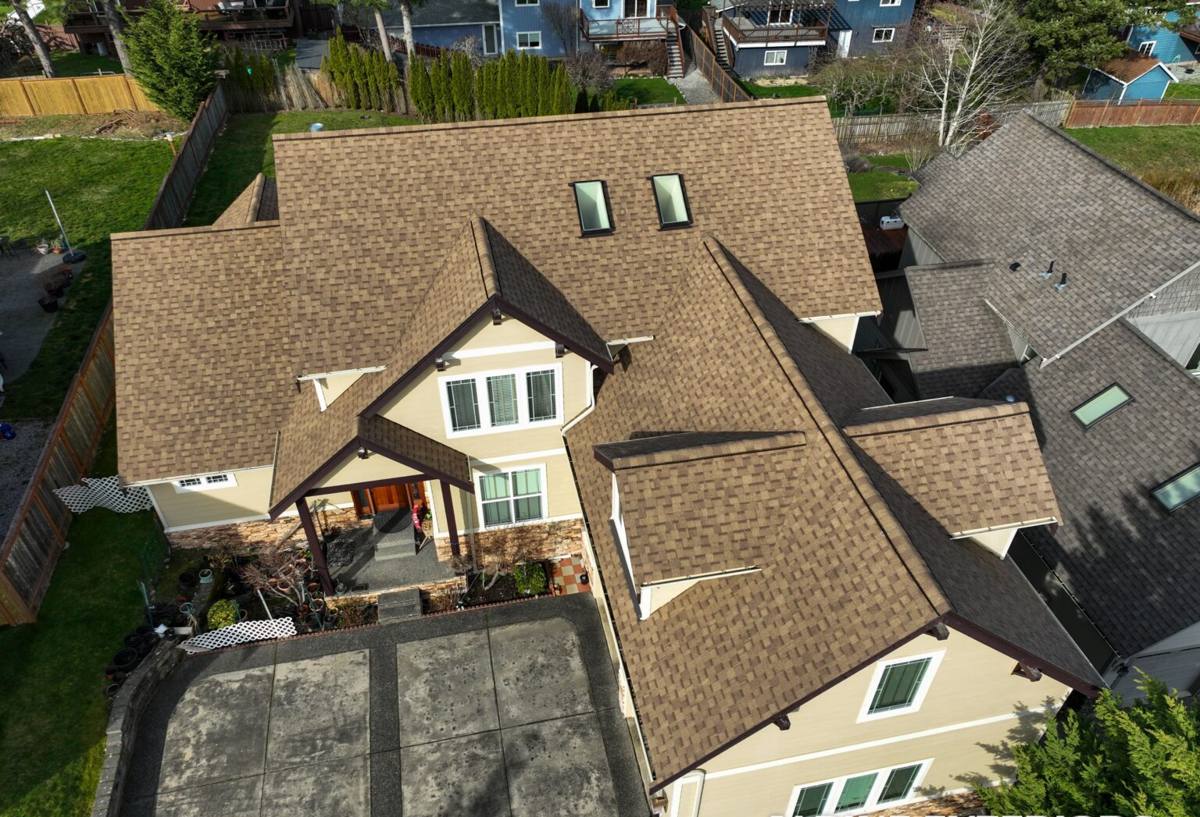
What Salt Air, Driving Rain, and Moss Actually Do to a Shingle Roof
Salt Air
Salt-carrying moisture off the bay accelerates corrosion on any exposed metal — nail heads, flashing, vent stacks, gutter hardware. On a roof, corroded fasteners and flashing are almost always where leaks start, well before the shingles themselves wear out. It's a slow process, but it's constant, and it's part of why fastener choice and flashing material matter more here than in a drier, inland town.
Driving Rain
Wind-driven rain doesn't just fall straight down — it pushes sideways and can work its way under shingle tabs, around chimneys, and through poorly lapped flashing. A roof that would perform fine in a calm, moderate climate can leak here if the underlayment, flashing laps, and shingle nailing pattern weren't built for wind-driven exposure specifically.
Moss Season
Bellingham's long, cool, wet stretch of the year is close to ideal moss and algae growing conditions, especially on north-facing slopes and roof sections shaded by trees. Moss holds moisture against the shingle surface, lifts tabs as it grows, and — if left unaddressed for years — can shorten the life of an otherwise sound roof. It's a maintenance issue, not a defect, but it needs to be planned for from day one.
What a Correctly Installed Roof Looks Like Here
"Correct" isn't just nailing shingles to a deck. For Downtown Bellingham conditions, a proper asphalt shingle roof includes:
- A synthetic or felt underlayment rated for extended wet exposure, not just minimum code coverage
- Ice-and-water shield membrane at eaves, valleys, and around penetrations, where wind-driven rain is most likely to find a gap
- Corrosion-resistant flashing and fasteners appropriate for coastal-influenced air, especially around chimneys, skylights, and sidewalls
- Balanced intake and exhaust ventilation, so the attic can actually dry out between rain events instead of staying damp
- Shingles with algae-resistant granules on shaded or north-facing sections
- Proper nailing pattern and fastener count for wind exposure, not just the manufacturer's minimum
Skip any one of these and the roof may still look fine for a year or two — but the failures that show up later almost always trace back to one of these details being cut.
Signs a Downtown Bellingham Roof Needs Attention
Because so much of the damage here is slow and moisture-driven rather than sudden, it's easy to miss the early signs. Watch for:
- Dark streaking or green-black patches, especially on north-facing or shaded slopes
- Granules collecting in gutters or at downspout outlets
- Curling, cupping, or lifted shingle tabs
- Soft or spongy spots when walking the roof (a sign of deck moisture underneath)
- Rust staining around flashing, vent boots, or exposed fastener heads
- Daylight visible through the attic roof deck, or a musty smell in the attic
- Moss buildup thick enough to hold visible moisture after a dry day or two
None of these mean the roof needs to be replaced immediately, but each one is worth a look before it turns into a deck repair instead of a shingle repair.
Choosing Shingles for This Microclimate
Not every asphalt shingle line handles wet, shaded, salt-influenced exposure the same way. The differences that matter most here are algae resistance, wind rating, and how the shingle behaves when it stays damp for long stretches.
| Shingle Class | Typical Wind Rating | Algae Resistance | Best Fit |
|---|---|---|---|
| Standard 3-tab | 60–70 mph | Varies, often minimal | Budget reroofs on well-ventilated, sun-exposed roofs |
| Architectural / laminate | 110–130 mph | Usually includes algae-resistant granules | Most Downtown Bellingham homes — better wind and moisture performance |
| Premium / designer laminate | 110–130 mph | Enhanced algae-resistant granules, heavier mat | Shaded, north-facing, or moss-prone roof sections; longer-term value |
We don't push one brand over another as a matter of policy — the right call depends on the roof's exposure, slope, and shading, and on what warranty structure and maintenance commitment makes sense for the homeowner. What we do insist on is algae-resistant granules on any shaded or north-facing section in this area; skipping that on a house that sits under tree cover just guarantees an earlier moss problem.
Underlayment and Flashing Matter as Much as the Shingle
A premium shingle over a corner-cut underlayment and generic flashing will still leak. In wind-driven rain, the underlayment and flashing are doing more of the actual waterproofing work than most homeowners realize — the shingle is the wear layer and the first line of defense, but it's not the only line.
Our Process for a Downtown Bellingham Reroof
1. On-Site Inspection
We walk the roof (or inspect from the eave and attic when walking isn't safe) to check deck condition, ventilation, flashing points, and moss or algae extent before quoting anything.
2. Honest Scope and Estimate
We tell you what's actually needed — full reroof, partial slope replacement, or repair — and explain the reasoning, including any deck repair that shows up once old shingles come off.
3. Tear-Off and Deck Check
Old material comes off down to the deck so we can check for soft spots, rot, or prior moisture damage that a re-layer (shingling over existing shingles) would hide.
4. Underlayment, Flashing, and Ventilation First
Before a single shingle goes down, we get the waterproofing layer, flashing, and ventilation right. This is the step that determines how the roof performs in year five, not just year one.
5. Shingle Installation to Manufacturer and Wind-Exposure Spec
Correct nailing pattern, fastener count, and exposure — no shortcuts on nail count to save time.
6. Final Walkthrough
We review the finished roof with you, cover basic maintenance expectations for this climate, and answer questions before we consider the job done.
Moss and Algae Maintenance: What's Actually Worth Doing
A new roof reduces moss and algae problems but doesn't eliminate them if the site has heavy shade. A few things genuinely help:
- Gentle, low-pressure cleaning rather than power-washing, which can strip granules and shorten shingle life
- Keeping gutters clear so water isn't sitting against the eave line
- Trimming overhanging branches where practical, to reduce shade and debris
- Zinc or copper strips near the ridge on heavily shaded roofs, which release trace metals that discourage moss growth over time
What we don't recommend is aggressive scraping or high-pressure washing as a routine fix — it does more damage to the shingle surface than the moss itself typically does in a season.
Why Local Experience in Downtown Bellingham Matters
A roofing crew that mostly works dry inland climates will often under-spec ventilation and underlayment for a neighborhood like this, because it's never had to solve for constant damp and salt air together. A crew working Downtown Bellingham and the surrounding Whatcom County area regularly sees how roofs actually age here — which shaded slopes moss first, which flashing details corrode early, and which shingle lines hold up through repeated wet winters. That's not something a spec sheet tells you; it's something you learn from doing the work in this specific climate, year after year.
What Affects the Cost of a Downtown Bellingham Reroof
| Factor | Why It Matters Here |
|---|---|
| Roof size and pitch | Steeper roofs and more shaded slopes need more careful underlayment and safety work |
| Shingle class chosen | Algae-resistant and architectural lines cost more upfront but reduce moss-related maintenance |
| Deck condition | Rot or soft decking found at tear-off adds material and labor before shingling can start |
| Ventilation upgrades | Older homes often need added intake or exhaust venting to meet current moisture-management standards |
| Flashing scope | Chimneys, skylights, and multiple roof planes each add flashing detail work |
| Access and site constraints | Tight downtown lots, mature trees, and limited staging space can add setup time |
We won't quote a price without seeing the roof — anyone who does is guessing, and on a roof with this many climate variables, guessing leads to change orders later.
If you're in Downtown Bellingham or elsewhere in the Fairhaven area and want a straight answer on what your roof actually needs, we're glad to take a look. Use the form below to request a free, no-pressure estimate.