 Fairhaven Siding
 Siding Repair for York Homes Near Fairhaven
The York neighborhood sits close enough to Bellingham Bay that its houses take a different kind of weathering than homes further inland. Salt-laden air off the water, wind-driven rain that finds every gap in a wall system, and a moss season that can stretch from October well into spring all work on siding in ways that are easy to underestimate until a repair gets expensive. We do siding repair work in this area regularly, and the patterns we see here aren't the same patterns we see on a dry south-facing wall in a different part of Whatcom County.
This page is about one thing: repairing existing siding on a York-area home correctly, not just patching what's visible. A repair that only addresses the surface problem tends to come back in a year or two once you're dealing with coastal moisture and moss on top of it. A repair that addresses what's underneath the siding usually doesn't.
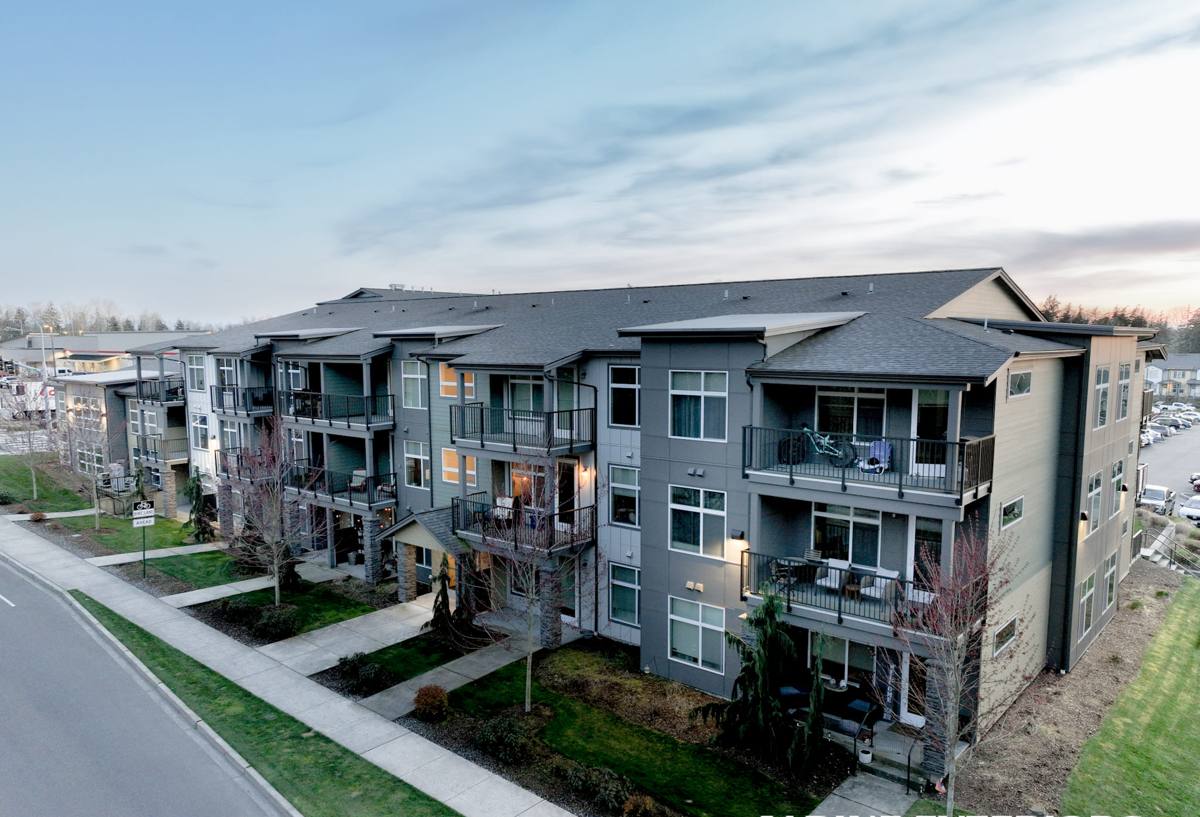
What Fairhaven-Area Weather Does to Siding Over Time
Salt air
Proximity to the water means airborne salt settles on exterior surfaces and accelerates corrosion of exposed fasteners, flashing, and any metal trim. On siding itself, salt exposure combined with moisture speeds up finish breakdown, especially on products that rely on field-applied paint rather than a factory-cured finish. Over years, this shows up as chalking, fading, and paint that fails faster than the manufacturer's warranty would suggest it should.
Driving rain
Whatcom County storms frequently come with sideways rain rather than straight-down rain. That matters because siding systems are engineered assuming water mostly runs down a wall — driving rain pushes water sideways and upward into laps, seams, and butt joints that were never meant to handle that kind of pressure. Homes on more exposed lots or upper stories catch this worse than sheltered ones.
A long moss season
Persistent damp, filtered light under mature trees, and mild temperatures give moss and algae a long runway in this part of Washington. Moss holds moisture against the siding surface far longer than open air would, and on wood-based products that moisture eventually reaches the substrate. On any siding, moss buildup in laps and corners is often the first visible sign that water isn't shedding the way it should.
None of this means York is a uniquely hard place to keep a house — plenty of homes here hold up fine. It means repairs need to account for these three things specifically, not just cover the cosmetic damage.
Signs Your Siding Needs Repair, Not Just a Repaint
- Soft or spongy spots when you press on the siding, especially near the bottom courses or under windows
- Visible gaps, cracks, or separated seams at butt joints and corners
- Paint that's bubbling, peeling, or failing in localized patches rather than evenly across the wall
- Dark staining or streaking below joints, trim, or fastener heads
- Moss or algae that keeps returning to the same section within a season or two of cleaning
- Boards that have visibly cupped, warped, or pulled away from the wall
- Interior signs — a musty smell, a soft spot on interior drywall, or peeling interior paint on an exterior wall — that suggest moisture has already gotten past the siding
- Fastener heads that are rusted, backed out, or leaving rust streaks down the face of the board
A single item on this list doesn't necessarily mean a major problem. Several of them together, or any of them combined with interior symptoms, usually means water has gotten past the surface and the repair needs to go further than a caulk-and-paint fix.
What We Typically Find on York-Area Repair Calls
| Issue | Usual Cause Locally | What a Correct Repair Involves |
|---|---|---|
| Soft or rotted board sections | Long-term moisture from driving rain or trapped moss growth | Remove and replace the affected boards, check and repair the underlying wrap/flashing, not just patch the surface |
| Peeling or chalking paint | Field-applied finishes breaking down faster under salt air and UV | Address the moisture source first, then repaint with an appropriate exterior product or, where boards are compromised, replace with factory-finished material |
| Recurring moss in laps and corners | Shaded, damp wall sections with limited airflow | Clean properly, inspect for trapped moisture underneath, correct any grading or drainage issues contributing to it |
| Gapped or failed caulking at joints and trim | Material movement plus driving-rain pressure on seams | Remove old sealant fully, inspect the joint for water intrusion, reseal with a product rated for the exposure |
| Rust streaking from fasteners | Corrosion from salt-air exposure on standard fasteners | Replace with corrosion-resistant fasteners appropriate to the siding material and re-finish the affected area |
Repair or Replace: How We Actually Decide
Not every damaged section needs a full re-side, and not every homeowner who calls about "a repair" ends up needing one. We look at three things before recommending either path:
How much of the wall is actually affected
Isolated damage on one or two wall sections is usually a legitimate repair. Damage that shows up in multiple, unrelated areas of the house often points to a systemic issue — an aging original installation, a failing water-resistive barrier, or a product that's simply reaching the end of its usable life — where patching individual spots just delays the same conversation.
What's happening behind the siding
Surface damage is easy to see. What matters more is whether water has reached the sheathing or framing behind it. Where we can, we open up a damaged section to check before quoting anything, rather than guessing from the outside.
What the existing material is
Repairing wood-based or engineered wood siding that's already showing widespread moisture damage is often a short-term fix on a product that's approaching the end of its service life. In those cases, we'll say so directly rather than billing you for a repair we don't think will hold.
What a Correct Siding Repair Involves
- Diagnose before removing. We identify not just the damaged board but the reason it failed — a flashing gap, a caulk failure, a drainage problem — so the same spot doesn't fail again.
- Remove only what's compromised. Sound siding stays. We're not looking to turn a repair into an unnecessary re-side.
- Inspect what's underneath. House wrap, flashing, and sheathing get checked and repaired where needed before anything new goes back on. This step is the difference between a repair that lasts and one that doesn't.
- Match or replace intelligently. Where we can match existing siding cleanly, we do. Where the existing material is failing broadly, we'll talk through whether it makes more sense to address that wall section with a longer-term product.
- Reseal and refinish to spec. Correct sealant at joints, correct fasteners for the exposure, and a finish that holds up to salt air and UV — not just whatever's fastest.
- Final check for water path. Before we call it done, we confirm the repaired section sheds water the way the rest of the wall does.
Our Process for York Siding Repair Calls
Most repair jobs in this neighborhood follow the same basic sequence:
- Walk-through and assessment — we look at the damaged area and the wall around it, not just the spot you called about
- Honest scope discussion — what needs replacing, what can be cleaned and resealed, and what (if anything) suggests a bigger issue
- Written estimate — clear about materials, labor, and what happens if we find additional damage once we open the wall
- The repair itself — done to the standard above, not a surface patch
- Cleanup and a final walk-through — so you can see exactly what was done and why
We don't upsell a full re-side to homeowners who need a repair. We also don't quote a "quick fix" on damage we think will fail again within a season — we'd rather tell you that up front.
Why We Repair With James Hardie Fiber Cement
When a repair calls for new material — whether that's a few boards or a full wall section — we use James Hardie fiber cement, which is the only siding product we install. It's not the only option on the market, but for the conditions York homes deal with, it's the one we're willing to stand behind.
Fiber cement is non-combustible and doesn't absorb and hold moisture the way wood-based products do, which matters directly for the moss and driving-rain issues common in this area. Hardie's ColorPlus finish is baked on at the factory rather than applied on-site, so a repaired section holds its color and resists the chalking and peeling that salt air accelerates on field-painted materials. Hardie also makes HZ5 product lines engineered specifically for wetter, harsher climates like the Pacific Northwest, which is a meaningful difference when you're repairing a wall that faces prevailing weather off the bay.
We won't tell you every home needs to be re-sided in Hardie to get a good repair — plenty of repairs are straightforward matches to existing material. But where a repair involves replacing enough siding that material choice matters, this is why we steer toward it.
Why Local Repair Experience Matters
A siding repair on a home exposed to Bellingham Bay's salt air behaves differently than the same repair inland, and a crew that hasn't worked this specific stretch of coastline can miss that. We've done repair work throughout the Fairhaven and York area and know which wall orientations tend to take the worst of the driving rain, which conditions accelerate moss return, and which fastener and sealant choices actually hold up here versus which ones look fine for a season and then fail. That local pattern recognition is often what separates a repair that lasts from one that's back on the schedule in two years.
If you're seeing any of the warning signs above on a York-area home, we're happy to take a look and give you a straight answer — repair, replace, or leave it alone — with no pressure either way. Reach out for a free estimate using the form below.