 Fairhaven Siding
 Siding Installation in Marietta: A Different Set of Problems Than Inland Bellingham
Marietta sits low and close to the water, and that changes what siding has to survive. Homes just a mile or two inland deal with rain and cold. Homes in Marietta deal with rain, cold, salt-laden air off Bellingham Bay, and long stretches of shade and dampness that keep moss and algae established on north- and west-facing walls for most of the year. Siding that would hold up fine on a sunnier, more sheltered lot in another part of Whatcom County can start showing problems here in half the time.
We install siding in this neighborhood regularly enough to know which failure patterns show up first — where caulk lines give out, which corners take on water, which siding materials swell and soften faster near the bay than they do a few miles away. This page is about what a correct siding installation for a Marietta home actually requires, not a generic rundown of siding basics.
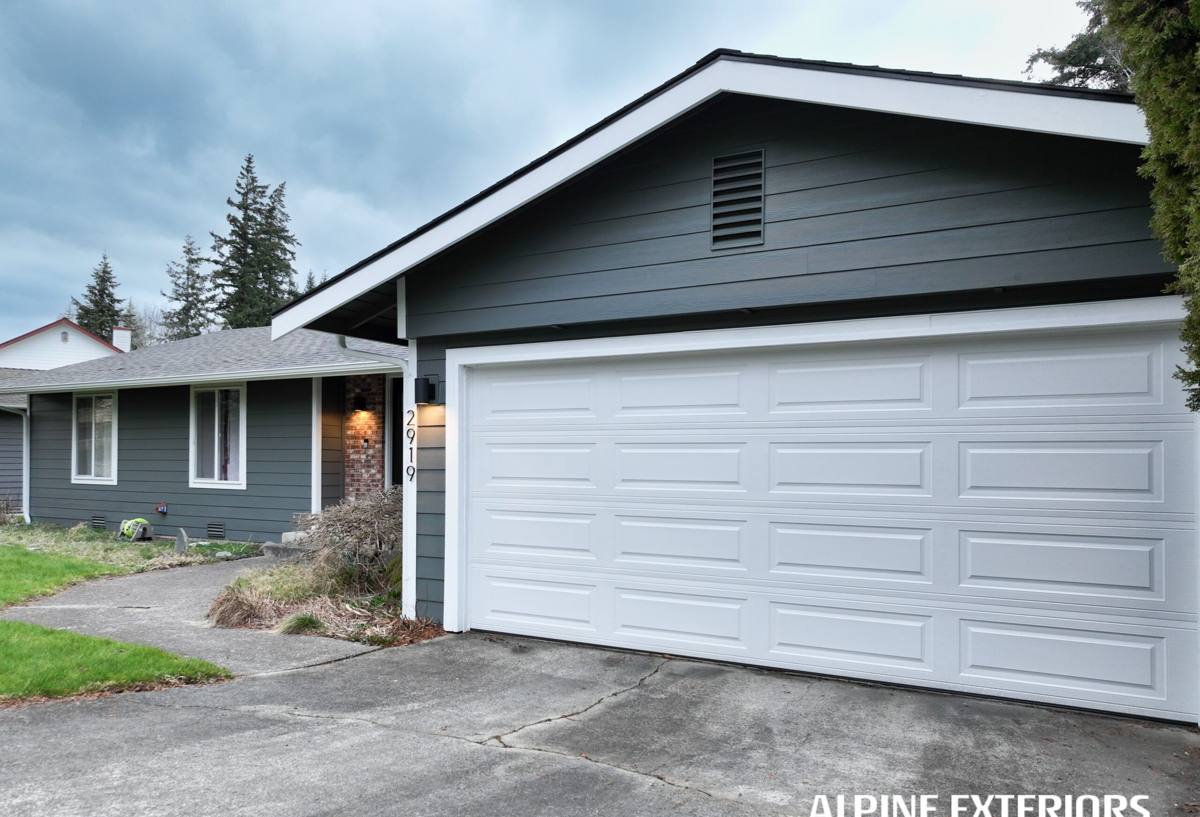
What the Marietta Climate Actually Does to Siding
Salt Air
Proximity to Bellingham Bay means airborne salt settles on exterior surfaces more than it does further inland. Salt is hygroscopic — it pulls moisture out of the air and holds it against whatever surface it lands on. For siding, that means paint films break down faster, fasteners are under more corrosion stress, and any material that isn't dimensionally stable will expand and contract more aggressively as it cycles between damp and dry.
Driving Rain
Storms coming off the water don't just fall straight down — wind pushes rain sideways into walls, corners, and window trim. That means the water-resistive barrier behind the siding, the flashing details around openings, and the way siding laps and seals at joints matter more here than in a calmer, more sheltered location. A siding job that's merely "waterproof on paper" isn't good enough when rain is hitting the wall horizontally several times a winter.
Moss Season
Western Washington's moss season effectively runs most of the year on shaded, damp walls, and Marietta's lower elevation and water proximity keep humidity high longer into the day. Moss and algae growth isn't just cosmetic — it holds moisture against the siding surface, and on materials that aren't moisture-stable, that sustained dampness is what starts rot, delamination, or paint failure well before the siding's expected lifespan is up.
What a Correct Siding Installation Involves
Siding is a system, not a single product. A crew that only pays attention to the visible panel and ignores everything behind it is setting the homeowner up for problems that won't show up for a year or two — by which point the installer is long gone. A correct installation in a climate like Marietta's includes:
- A continuous, correctly lapped water-resistive barrier behind the siding — no gaps, no reverse laps that funnel water inward
- Properly flashed windows, doors, and any wall penetrations, installed in the correct shingle-fashion sequence so water sheds outward at every layer
- A drainage plane or rainscreen gap where conditions call for it, so any moisture that does get behind the siding has somewhere to go instead of sitting against the sheathing
- Fasteners driven to the manufacturer's specified pattern, depth, and substrate penetration — not just "enough nails to hold it up"
- Correct clearances at grade, roof lines, and decks, so siding isn't sitting in standing water or trapped moisture from day one
- Factory-finished panels and trim sealed and caulked only where the manufacturer's install instructions call for it — over-caulking traps moisture just as badly as under-caulking
Skip any one of these and the siding on top can look perfect for a year while the wall behind it is already in trouble. This is where a lot of installation problems in older Whatcom County homes actually started — not with a bad product, but with a rushed or incomplete install.
Why We Install Only James Hardie Fiber Cement
Fairhaven Siding Company installs one product line: James Hardie fiber cement siding. We don't install vinyl, LP SmartSide, Cemplank, Allura, primed spruce, or cedar. That's not a marketing position — it's a decision based on what holds up in this specific climate without turning into a maintenance project for the homeowner.
Fiber cement doesn't swell, rot, or feed insects the way wood-based products can, which matters directly in a moss-and-moisture-heavy environment like Marietta's. It's also non-combustible, which is a meaningful difference from vinyl and engineered wood products, particularly as wildfire smoke and ember exposure have become a more regular late-summer concern across Western Washington. James Hardie backs its siding with a strong transferable limited warranty and finishes many of its products with ColorPlus technology — a factory-applied, baked-on finish that resists fading and holds up to UV and salt air better than field-applied paint, which means fewer repaint cycles over the life of the siding.
James Hardie also engineers regional product lines — its HZ5 formulation, for example, is built for climates with more moisture cycling, which fits a bay-adjacent neighborhood like Marietta better than a one-size-fits-all product. We install to that engineered spec rather than treating siding as an interchangeable commodity.
What We Don't Install, and Why
| Product | Where it's a reasonable product | Why it's not our standard here |
|---|---|---|
| Vinyl siding | Budget-driven projects, drier inland climates | Can warp or crack in temperature swings; seams and J-channels give salt-laden moisture more entry points |
| LP SmartSide | Wood-look at a lower cost than fiber cement | Engineered wood substrate is more moisture-sensitive than fiber cement; edge sealing is critical and easy to get wrong |
| Cemplank / Allura | Lower-cost fiber cement alternatives | We standardize on one manufacturer's engineering, warranty, and finish system rather than mixing specs |
| Primed spruce / cedar | Historic-look or traditional aesthetic projects | Highest maintenance burden of any option — repainting, sealing, and rot vulnerability in a wet, shaded climate |
Every product on that list has legitimate uses somewhere. None of them are what we'd want protecting a home that sits this close to the water, this exposed to driving rain, and this prone to sustained moss growth.
Our Installation Process
The steps below are the same regardless of siding brand, but the care taken at each one is what separates a durable install from one that fails early — and it's where our Marietta-area experience actually shows up.
- On-site assessment. We look at the existing siding and sheathing condition, check for hidden moisture damage around windows and at grade, and note anything specific to the lot — shade patterns, water exposure, drainage.
- Tear-off and substrate check. Old siding comes off and we inspect the sheathing underneath. Soft or water-damaged sheathing gets repaired before anything new goes on — covering it up only hides the problem.
- Weather barrier installation. A continuous water-resistive barrier goes on with correct laps and seams, sized and placed to handle the wind-driven rain this area sees.
- Flashing and trim. Windows, doors, and penetrations get flashed in the correct sequence before any siding goes up around them.
- Siding installation. James Hardie panels, planks, or shingles go up to manufacturer fastening specs, with correct clearances at grade and roof intersections.
- Final detailing and cleanup. Caulking only where specified, touch-up of any factory finish nicked during install, and a final walk-through with the homeowner.
Signs a Marietta Home Needs New Siding — Not Just Repairs
Because of the moisture and salt exposure here, siding problems in this neighborhood tend to show up in a few recognizable ways:
- Persistent moss or algae staining that comes back within weeks of being cleaned
- Soft spots, bubbling, or visible swelling, especially near the bottom courses or around window sills
- Paint that's chalking, peeling, or fading unevenly across different walls (a sign of uneven moisture exposure)
- Caulk lines that have cracked or pulled away at seams and trim
- Visible warping or cupping of individual boards or panels
- A noticeable increase in how often the exterior needs repainting
Any one of these on its own might be a spot repair. Several at once, especially on the water-facing side of the house, usually means the siding system itself — not just the surface — has reached the end of its useful life.
Cost Factors for a Marietta Siding Project
Every home is different, so we won't quote a number without seeing the house, but the factors that move the price on a siding installation here are fairly consistent:
| Factor | Why it matters |
|---|---|
| Sheathing condition | Water-damaged sheathing found during tear-off needs to be replaced before new siding goes on |
| Home size and wall complexity | More corners, dormers, and trim details mean more labor and material cuts |
| Siding profile chosen | Lap siding, shingle-style, and panel systems all price differently in labor and material |
| Existing siding removal | Tear-off adds cost versus siding over an already-sound substrate, when that's appropriate |
| Trim and accessory scope | Fascia, soffits, and window trim replacement alongside siding adds to the overall project |
Why Hiring a Crew That Already Works This Area Matters
A siding crew that mostly works drier, more sheltered neighborhoods can do a technically fine install and still get details wrong for Marietta specifically — under-flashing a window that takes more sideways rain than they're used to, or skipping a drainage gap that would matter here but wouldn't in a more sheltered spot. Local, repeated experience with this exact combination of salt air, wind-driven rain, and moss exposure is what catches those details before they become the homeowner's problem two winters later.
A few questions worth asking any contractor before they touch your siding:
- Are they licensed and insured in Washington State, and can they provide proof without hesitation?
- Do they install to the manufacturer's written specifications, or their own shortcuts?
- Will they put the scope of work, materials, and warranty terms in writing before starting?
- Do they check and repair sheathing during tear-off, or just cover over whatever's underneath?
- Can they explain why they chose the specific product and profile for your home's exposure?
Maintenance and Warranty After Installation
Correctly installed James Hardie siding is low-maintenance, but "low" isn't "none" — especially in a moss-prone location like Marietta. Periodic gentle washing to keep moss and algae from taking hold, checking caulk lines every year or two, and prompt attention to any impact damage will keep the siding performing for its full service life. James Hardie's transferable limited warranty covers manufacturing defects, and correct installation is what keeps that warranty intact — another reason installation quality matters as much as the product choice itself.
If your Marietta home's siding is showing moss buildup that won't stay clean, soft spots, or paint that's failing faster than it should, we're happy to take a look and give you a straight answer about what's going on and what it would take to fix it. Reach out for a free, no-pressure estimate — we'll walk the exterior with you and tell you exactly what we see.