 Fairhaven Siding
 Roofing in Sunnyland: A Different Set of Problems
Sunnyland sits close enough to the water and to Bellingham Bay's weather patterns that its roofs take a different kind of beating than roofs twenty miles inland. It's not one dramatic storm that does the damage — it's the accumulation. Salt-laden air corrodes exposed metal faster than it would in a dry climate. Driving rain, pushed sideways by wind off the water, finds every weak seam and undersized flashing detail. And the long, damp stretch from fall through spring gives moss, moss, and more moss months to take hold on north-facing slopes and shaded valleys.
None of that means Sunnyland roofs fail faster across the board. It means the details that get overlooked in a rushed or cut-rate replacement — flashing, ventilation, underlayment choice, fastener material — matter more here than they would somewhere drier and calmer. A roof replacement done right in this neighborhood should be built with that reality in mind from the first shingle to the last ridge cap.
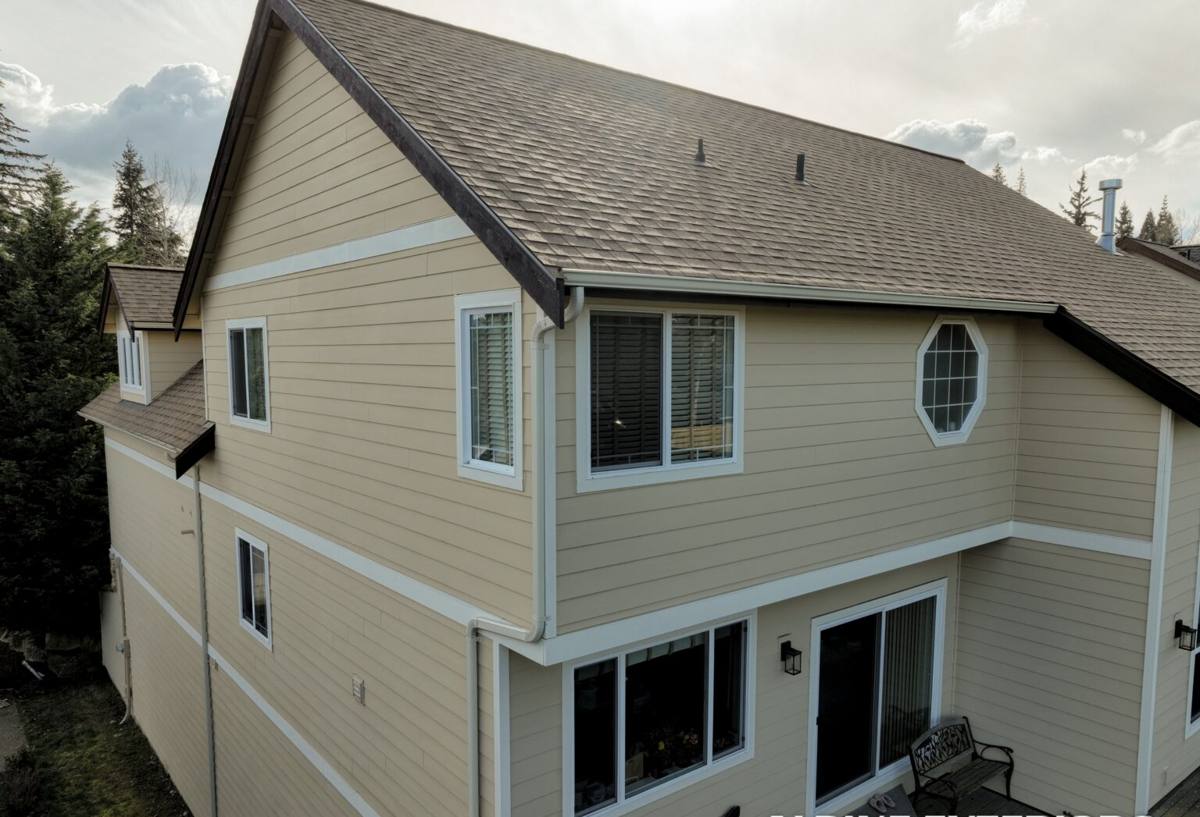
Signs Your Sunnyland Roof Is Telling You Something
Most roofs don't fail all at once. They send warning signs for months, sometimes years, before a leak shows up inside the house. Homeowners in this area should watch for:
- Granules collecting in gutters or at the base of downspouts — a sign asphalt shingles are wearing thin
- Dark streaking or thick moss growth on shaded or north-facing roof sections
- Curling, cupping, or cracked shingle edges, especially on slopes that catch the most wind-driven rain
- Rust staining around flashing, vent boots, or metal valleys
- Soft or spongy spots when walked (our crew checks for this, not a DIY step)
- Daylight visible through the attic roof deck, or damp insulation near the eaves
- A roof past 20-25 years old for asphalt shingle, or showing widespread wear rather than isolated damage
One or two of these on their own might mean a repair is enough. Several at once, especially on a roof already past its expected service life, usually means repair costs start approaching what a full replacement would cost — and a patched roof in this climate rarely buys as much time as homeowners hope.
What a Correct Roof Replacement Actually Involves
A roof replacement is only as good as what's underneath the shingles. In a climate that combines salt air, wind-driven rain, and long wet seasons, the underlayment, flashing, and ventilation choices matter as much as the shingle brand on the label.
Tear-Off and Deck Inspection
We remove the old roofing down to the deck rather than layering over it. That's the only way to actually see what's there — soft or rotted sheathing, especially near eaves and valleys where moss and standing moisture do the most damage, has to be found and replaced before anything new goes down. Roofing over a compromised deck just hides the problem for a few more years.
Underlayment and Water Protection
Standard felt underlayment works, but in areas that see sustained wind-driven rain, a synthetic underlayment with better tear resistance and water repellency holds up more reliably over the life of the roof. Along eaves, valleys, and any low-slope transitions, self-adhered ice-and-water barrier membrane adds a second line of defense in the spots where wind can drive rain up under shingles rather than straight down off the roof.
Flashing That Actually Sheds Water
Flashing failure is the single most common cause of the leaks we get called out to inspect on older roofs in this area. Chimneys, skylights, sidewalls, and roof-to-wall transitions all need properly formed, corrosion-resistant flashing — not just a bead of caulk over an old piece of metal. We use flashing materials chosen to hold up against salt-air corrosion rather than the cheapest option that meets code.
Ventilation That Matches the Climate
Balanced intake and exhaust ventilation keeps attic moisture from condensing under the deck during our long wet season, which protects both the new roof and the framing underneath it. A roof that looks great from the curb but traps humid air in the attic will show problems from the inside out within a few years.
Material Options for Whatcom County Homes
There's no single "best" roofing material for every Sunnyland home — the right choice depends on budget, roof pitch, how much shade and moss exposure the roof gets, and how long the homeowner plans to stay in the house. Here's how the common options compare for this specific climate.
| Material | Typical Lifespan Here | Moss & Moisture Behavior | Salt-Air Durability |
|---|---|---|---|
| Architectural asphalt shingle | 20-30 years | Needs periodic moss treatment/removal on shaded slopes | Good with corrosion-resistant flashing and fasteners |
| Standard 3-tab asphalt shingle | 15-20 years | More prone to moss retention; thinner profile | Adequate, shorter service life overall |
| Standing seam metal | 40-60+ years | Sheds moisture fast; sheds moss more readily than shingle | Excellent when a marine-grade coating/finish is specified |
| Composite/synthetic shingle | 30-50 years | Resists moisture absorption well | Good; check manufacturer warranty terms for coastal use |
We'll walk through these options honestly during an estimate, including where a less expensive material makes sense for a shorter-term ownership plan versus where the higher upfront cost of metal or composite pays off over decades. We don't push one material as a one-size-fits-all answer — the right call depends on the roof and the homeowner's plans, not on what's easiest for us to install.
How Our Replacement Process Works
- On-site inspection and estimate. We walk the roof (weather permitting) or inspect from the attic and exterior, note deck condition, flashing points, and ventilation, and give a written estimate with material options.
- Material selection. We go over the trade-offs in plain terms — cost, lifespan, moss/moisture behavior, and warranty structure — so the decision fits the home and the budget.
- Scheduling around the weather. Roof replacements need a dry work window. We plan around Whatcom County's forecast rather than pushing a tear-off into a rain system.
- Tear-off, deck repair, and dry-in. Old roofing comes off, the deck is inspected and any damaged sheathing replaced, and underlayment goes down the same day whenever possible to minimize exposure.
- Flashing, ventilation, and final install. Flashing details and ventilation components go in before the finish material, then the new roofing is installed to manufacturer specification.
- Cleanup and final walkthrough. Job site debris, nails, and old material are cleared, and we walk the finished roof and attic with the homeowner before calling the job done.
What Affects the Cost
Every roof is different, and we won't quote a number without seeing the roof, but these are the factors that move the price up or down on most Sunnyland replacements:
| Factor | Effect on Cost |
|---|---|
| Roof size and number of planes | More area and more valleys/hips mean more material and labor |
| Deck condition | Rotted sheathing found during tear-off adds material and time |
| Material choice | Asphalt is lowest upfront cost; metal and composite cost more but last longer |
| Roof pitch and access | Steep or hard-to-access roofs take longer and require more safety setup |
| Flashing and ventilation upgrades | Bringing older details up to current standards adds cost but reduces future leak risk |
| Chimneys, skylights, and penetrations | Each one adds flashing work and detail time |
As a broad range, most full asphalt shingle replacements on an average Sunnyland home fall into the mid-five-figure range, with metal and composite roofs running higher. The only way to get an accurate number is a look at the actual roof — we won't guess over the phone, and we won't lowball an estimate just to win the job and add costs later.
Why a Local Crew Matters
A roof replacement isn't just a product installed to spec — it's a product installed to fit the conditions it'll actually face. A crew that works Sunnyland and the broader Fairhaven/Bellingham area regularly knows which slopes hold moss longest, which flashing details tend to fail first on older homes in this area, and how to schedule tear-offs around a weather pattern that can turn quickly. That's knowledge that comes from being here, not from a manufacturer's install guide alone.
It also means we're a known quantity if a question comes up two years after the job — not a crew that came through once from out of the area and moved on.
Keeping a New Roof Ahead of Moss Season
A correctly installed roof still benefits from basic upkeep in a climate this wet. Simple habits go a long way toward protecting the investment:
- Keep gutters and downspouts clear so water actually drains instead of backing up under shingle edges
- Trim back overhanging branches to reduce shade and debris buildup on moss-prone slopes
- Have moss physically removed rather than pressure-washed off, which can strip granules and shorten shingle life
- Schedule a periodic visual check after major windstorms, especially for flashing and ridge lines
- Address small leaks or lifted shingles quickly — small problems stay small when caught early
If you're seeing wear on your current roof or just want an honest read on where it stands, we're happy to come take a look. The estimate is free, there's no pressure attached to it, and you'll get a straight answer either way — use the form below to get started.