 Fairhaven Siding
 Board & Batten Siding in Downtown Bellingham
Downtown Bellingham sits close enough to Bellingham Bay that salt-tinged air reaches the older residential blocks near the core, and close enough to the surrounding hills and mature tree canopy that shaded siding stays damp for weeks at a stretch. Board and batten siding has become a popular choice for homeowners in this part of the city because it fits both the historic character found near Fairhaven and the newer farmhouse-style remodels going up around downtown. But the look only works long-term if the installation underneath it is built for this specific climate. This page covers what board and batten actually needs to hold up in downtown Bellingham, what a correct install involves, and why we only put it up in James Hardie fiber cement.
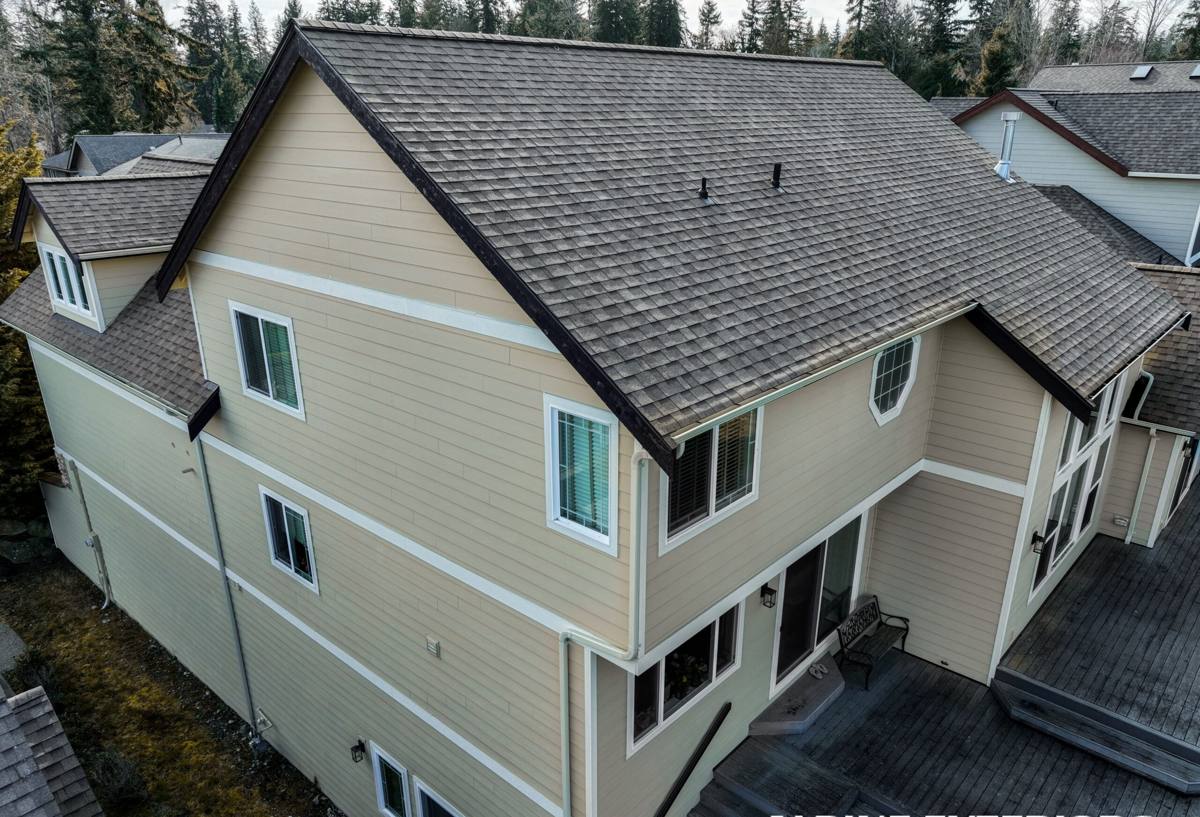
Why Board & Batten Fits This Neighborhood
Board and batten is a vertical siding pattern — wide panels or boards with narrow strips (battens) covering the seams. It reads as clean and architectural on the craftsman and cottage-style homes common in older Bellingham neighborhoods, and it also matches the modern farmhouse look a lot of homeowners are choosing for remodels near downtown. It's a style choice, but it's also a functional one: the vertical lines shed water differently than horizontal lap siding, which matters in a city that sees as much rain as Bellingham does.
The tradeoff is that board and batten has more seams and more places for water to find a way in if it's not detailed correctly. That's the part that gets skipped when a crew is unfamiliar with how downtown Bellingham's microclimate — bay-driven moisture, shaded lots, and a moss season that runs most of the fall through spring — actually behaves against a wall.
What Local Homes Are Working Against
- Salt air: Proximity to Bellingham Bay means airborne salt accelerates corrosion on unprotected fasteners and lower-grade trim.
- Driving rain: Wind off the water pushes rain sideways into wall assemblies, not just straight down — a real test for any vertical seam.
- Long moss season: Shaded lots and mature trees near downtown keep siding damp for extended stretches, especially on north-facing walls.
- Older housing stock: Many downtown-adjacent homes have layers of past repairs, uneven sheathing, or outdated moisture barriers hidden behind the old siding.
What a Correct Board & Batten Installation Involves
Board and batten looks simple from the curb, but it's less forgiving than lap siding if the fundamentals are rushed. A correct install for this climate includes:
Moisture Management Behind the Siding
Every seam and joint gets a weather-resistive barrier and properly lapped flashing before a single board goes up. On a wall that faces prevailing wind off the bay, this step is what actually keeps water out — the siding itself is the second line of defense, not the first.
Rainscreen or Furring Where It's Needed
A small air gap behind the siding lets any moisture that does get past the surface drain and dry out instead of sitting against the wall. This matters more on shaded, north-facing elevations near downtown, where walls simply don't get the sun exposure to dry out quickly on their own.
Batten Spacing and Fastening
Battens need consistent spacing and fasteners driven into solid framing, not just the panel face. Inconsistent spacing is one of the most common cosmetic mistakes we see on board and batten jobs, and it's usually a sign the fastening underneath wasn't done carefully either.
Corrosion-Resistant Fasteners and Trim
Given the salt air near the bay, we use fasteners and trim rated for coastal exposure. Standard hardware can start showing rust streaks on light-colored siding within a few years in this environment — a detail that's easy to overlook and expensive to fix later.
The James Hardie Board & Batten System
We install James Hardie's vertical siding system — HardiePanel used with HardieTrim battens — engineered specifically for this kind of installation. It's not a look achieved by nailing individual narrow boards; it's a panel-and-trim system designed to move as one assembly and shed water the way it's supposed to.
Why We Standardized on Hardie for This Application
- Non-combustible fiber cement — doesn't feed a fire the way wood-based products can.
- Engineered for Pacific Northwest climate — Hardie's HZ5 product line is built for regions with sustained moisture exposure, which describes most of Whatcom County.
- ColorPlus factory finish — baked-on color that resists the fading and peeling that field-painted siding is prone to in a damp, low-sun climate.
- Dimensionally stable — fiber cement doesn't swell, cup, or warp with humidity swings the way wood and some engineered wood products can, which keeps board and batten seams tight over time.
- Strong transferable warranty — backed by the manufacturer, not just our own workmanship guarantee.
We don't install vinyl board and batten, engineered wood, or primed spruce versions of this look. Each of those has a place in the market, but none of them hold up the same way against sustained coastal moisture and moss pressure, and we'd rather stand behind one system we trust completely than offer several we'd have reservations about.
Board & Batten Material Comparison
| Material | Moisture Behavior | Maintenance | Typical Lifespan |
|---|---|---|---|
| James Hardie Fiber Cement | Dimensionally stable, engineered moisture barrier compatible | Occasional wash; factory finish resists fading | 30+ years with proper install |
| Vinyl Board & Batten | Doesn't absorb water but can warp or buckle with heat/cold cycling | Low, but color fades and can't be repainted easily | 15-25 years |
| Engineered Wood (LP-style) | Requires strict edge sealing; vulnerable at cut ends and seams | Regular inspection of seams and caulk lines | 20-30 years if maintained perfectly |
| Cedar/Primed Wood | Absorbs moisture; prone to moss growth in shaded, damp areas | Repainting/staining every few years, moss treatment | 15-25 years with consistent upkeep |
Our Process for a Downtown Bellingham Board & Batten Job
- On-site assessment: We look at sun exposure, wind direction relative to the bay, existing moisture damage, and how the old siding was flashed.
- Tear-off and sheathing check: We remove the old siding and inspect the sheathing underneath for rot or soft spots before anything new goes up — this is where hidden problems from decades-old work usually surface.
- Weather barrier and flashing: A new weather-resistive barrier goes on with properly lapped flashing at every window, door, and penetration.
- Rainscreen installation where called for: On shaded or wind-exposed elevations, we add furring to create a drainage gap behind the siding.
- HardiePanel and HardieTrim installation: Panels and battens go up to Hardie's fastening specifications, with corrosion-resistant hardware throughout.
- Final detailing: Caulking, trim work, and a walkthrough so you understand what was done and why.
What Affects the Cost of a Board & Batten Job
| Factor | Why It Matters |
|---|---|
| Condition of existing sheathing | Rot or moisture damage found during tear-off adds repair work before new siding can go up |
| Wall height and complexity | Multi-story downtown homes and homes with lots of trim detail take more labor |
| Rainscreen requirement | Shaded, damp elevations often warrant a furred-out drainage gap, which adds material and labor |
| Color and trim selection | Factory ColorPlus finishes and custom trim packages vary in price |
| Access and lot layout | Narrow downtown-adjacent lots can affect staging, scaffolding, and material delivery |
We give straightforward, written estimates after an in-person look at the home — not a phone-quoted number based on square footage alone. Board and batten in particular needs an eyes-on assessment because the batten layout and trim detailing affect labor more than they would with plain lap siding.
Why Hiring a Crew That Works This Neighborhood Matters
Downtown Bellingham and the Fairhaven area share a lot of the same conditions — proximity to the water, older housing stock, mature trees — but they also have their own quirks: narrow lots, alley access, mixed zoning near the commercial core, and homes built across several different decades with different original construction standards. A crew that regularly works this specific area already knows what to expect when the old siding comes off, how the local moisture pattern behaves against different wall orientations, and how to keep a job moving on a tight downtown lot without disrupting neighbors.
That familiarity shows up in small ways that add up: knowing which elevations in this part of town need a rainscreen and which don't, recognizing early signs of moss-driven moisture damage before it becomes structural, and having a realistic sense of how long a job actually takes on a Whatcom County home built before modern moisture barriers were standard practice.
Maintaining Board & Batten Siding in This Climate
- Rinse siding annually to clear salt residue and organic buildup, especially on walls facing the bay or shaded by trees.
- Inspect caulk lines at trim and window edges every couple of years and re-caulk where it's cracked or pulling away.
- Trim back vegetation and tree limbs that keep siding shaded and damp longer than necessary.
- Check gutters and downspouts before the fall rains start — misdirected water is one of the most common causes of siding damage in this region.
- Watch for moss or algae streaking on north-facing walls and address it early rather than letting it establish.
Fiber cement needs far less of this than wood, but no siding is entirely maintenance-free in a climate like Whatcom County's, and a few minutes of attention a couple of times a year goes a long way.
If you're considering board and batten siding for a home in downtown Bellingham or the surrounding Fairhaven area, we're happy to take a look and walk you through what your specific home would need. Use the form below to request a free, no-pressure estimate.