 Fairhaven Siding
 Happy Valley's Siding Problem Isn't Quite Like Other Neighborhoods'
Happy Valley sits close enough to Bellingham Bay and the Salish Sea that homes here take on a specific mix of punishment: salt-laden air moving in off the water, driving rain that comes in sideways during winter storms, and a tree canopy that keeps large sections of siding shaded and damp for months at a time. Any one of those on its own is manageable. Together, over enough winters, they wear siding down faster than homeowners expect — and faster than siding in drier, more open parts of Whatcom County.
This page is about one thing: repairing siding on homes in and around Happy Valley. Not a full re-side, not a generic "siding services" overview — the specific work of finding what's actually failing on a wall that's already up, fixing it correctly, and leaving the rest of the siding system intact and protected.
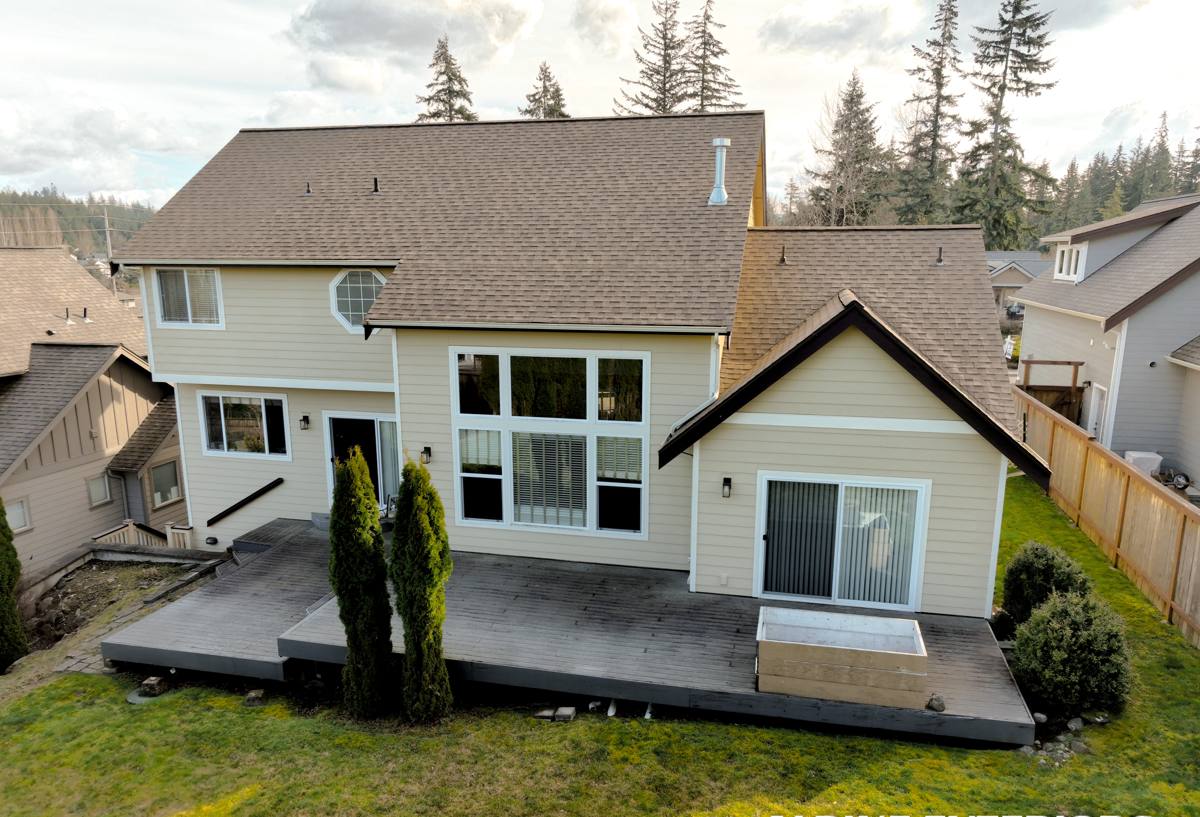
What Salt Air, Driving Rain, and a Long Moss Season Actually Do to Siding
Salt Air and Coastal Corrosion
Airborne salt doesn't just sit on the surface — it works into fasteners, trim flashing, and any exposed cut edge of siding material. Over years, it accelerates corrosion on nails and screws, which loosens boards and opens small gaps that water then exploits. It also breaks down cheaper paint and factory finishes faster than inland exposure would, leading to chalking, fading, and peeling well ahead of a product's expected service life.
Wind-Driven Rain and Water Intrusion
Fairhaven's exposure to storms coming off the water means rain here doesn't just fall — it drives sideways into wall assemblies, especially at corners, window and door trim, and anywhere siding meets a roofline or deck. Water intrusion at these transition points is the single most common reason we get called for repair. It's rarely the siding "failing" on its own — it's usually a flashing detail, a caulk joint, or a butt seam that gave way and let water behind the material.
Moss, Shade, and Trapped Moisture
The tree cover that makes Happy Valley pleasant to live in also means a long moss season on north-facing and shaded walls. Moss and algae hold moisture directly against the siding surface for extended stretches, which is a problem for any material that isn't engineered to handle constant damp contact. On wood-based products this often shows up as soft spots, swelling, or rot at the base of boards and around trim. On fiber cement installed correctly, it's mostly a cosmetic and maintenance issue — but even Hardie siding needs periodic cleaning in heavily shaded spots to keep moss from building up at seams.
Signs Your Siding Needs Repair, Not Just Cleaning
Homeowners often wait until damage is visible from the street, but by then the underlying issue has usually been active for a while. Here's what we tell Happy Valley homeowners to watch for between inspections:
- Soft, spongy, or crumbling spots when you press on a board, especially near the bottom of walls or below windows
- Visible gaps or separation at butt joints, corners, or where siding meets trim
- Persistent dark staining or streaking that comes back quickly after cleaning
- Bubbling, peeling, or chalking paint concentrated on one wall or elevation
- Warped, bowed, or cupped boards, particularly on south- or west-facing walls that take direct weather
- Moss or algae that regrows fast and thick in the same spot year after year
- Nail heads that have backed out, rusted, or left visible streak marks
- Soft trim boards or caulk that's cracked and pulled away from the siding edge
Any one of these alone might be minor. Two or three together, especially near the same section of wall, usually means water has been getting behind the siding for a while and the repair needs to address the cause, not just the symptom.
Patch Job vs. a Correct Repair
Not all "siding repair" is the same work. A lot of what passes for repair in this region is a quick patch that covers the visible damage without addressing why it happened — which means the same spot fails again within a season or two, often worse.
| Quick Patch | Correct Repair |
|---|---|
| Caulks over the visible gap or crack | Traces the water path back to the actual entry point |
| Replaces only the damaged board face | Checks and repairs house wrap, flashing, and framing behind it |
| Uses whatever material is on hand | Matches profile, reveal, and finish to the existing siding |
| Ignores nearby boards that show early signs of the same issue | Repairs the full affected section, not just the worst board |
| No follow-up once the visible fix is done | Confirms drainage and flashing details are correct before closing the wall back up |
The extra step in a correct repair — actually opening up the wall enough to see what's happening behind the siding — is what determines whether a repair lasts five years or fifteen.
Why We Only Repair — and Install — James Hardie Fiber Cement
When we're called to repair siding in Happy Valley, we're often repairing something other than Hardie: aging vinyl that's cracked or faded past matching, cedar or LP SmartSide that's swelled and gone soft where moss held moisture against it for years. We understand why those products got installed — they're common, and they cost less up front. But repairing them tells the same story every time: in this climate, materials that are sensitive to sustained moisture or that rely on field-applied paint don't hold up as well as an engineered fiber cement system with a factory-applied finish.
That's why James Hardie is the only siding product we install, and it shapes how we approach repairs too. Hardie's HZ product lines are engineered specifically for wet, coastal Pacific Northwest conditions, and ColorPlus factory finish is baked on under controlled conditions rather than brushed on in the field — which means it resists the fading and peeling that salt air and UV cause faster here than inland. When we repair a Hardie wall, we're usually dealing with an installation or flashing detail that needs correcting, not the board itself breaking down. When we repair a non-Hardie wall, we'll tell you honestly whether a targeted repair makes sense or whether the material itself has reached the point where repair is just delaying a full re-side — we're not going to keep patching a wall that's going to keep failing.
Our Happy Valley Repair Process
- On-site inspection. We look at the damaged area and the surrounding wall, not just the spot you called about — since related damage often hasn't shown itself yet.
- Diagnose the water source. We open up enough of the affected area to find where moisture is actually getting in, whether that's a flashing gap, a failed caulk joint, or a fastener issue.
- Define the real scope. We tell you plainly what needs to be repaired now, what's borderline and worth watching, and what can wait — no upselling a full re-side when a targeted repair will genuinely hold.
- Match materials and finish. For Hardie repairs, we match plank profile, reveal, and ColorPlus color as closely as the product line allows. For non-Hardie repairs, we advise honestly on what a like-for-like patch can and can't achieve.
- Correct the underlying issue. Flashing, house wrap, and fastener details get fixed as part of the repair, not left for next time.
- Close it back up right. Proper fastening, sealing, and finish work so the repaired section performs the same as the surrounding siding — not just looks close from the street.
What Drives the Cost of a Siding Repair
Repair costs vary more than most homeowners expect, mostly because the visible damage rarely tells the whole story. These are the factors that actually move the price:
| Factor | Why It Matters |
|---|---|
| Extent of hidden damage | What's behind the siding (rot, wet insulation, damaged sheathing) often costs more to address than the visible boards |
| Accessibility | Second-story walls, tight side yards, or areas near decks and landscaping take longer and require more setup |
| Material matching | Matching an older Hardie color or profile, or a discontinued vinyl or wood style, can add sourcing time and cost |
| Flashing and moisture correction | Fixing the actual water path — not just the board — is real labor, but it's what prevents a repeat repair |
| Scope of the affected area | One board is a quick job; a whole wall section with related early damage is a different project |
We give straightforward, written estimates after an on-site look — no ballpark guesses over the phone, since the range on a repair job is genuinely too wide to be useful without seeing the wall.
Why Hiring a Crew That Already Works Happy Valley Matters
A crew that regularly works this neighborhood already knows where the recurring problems tend to show up — which elevations catch the worst of the wind-driven rain, which shaded walls hold moss longest, and which older siding installs in the area are prone to the same flashing shortcuts. That local pattern recognition shortens the diagnosis part of the job and means fewer surprises once a wall is opened up.
It also means accountability that isn't tied to a one-time visit. Siding repair in a climate like Whatcom County's isn't a "fix it once and forget it" job — it's part of maintaining a wall system that's under constant pressure from salt air, rain, and moss. A crew that's going to be working in Happy Valley next year and the year after has every reason to get the repair right the first time.
If you're seeing soft spots, staining, gaps, or persistent moss on your siding, we're happy to take a look and give you an honest read on what's going on — no pressure, no obligation. Reach out for a free estimate and we'll tell you straight whether you need a targeted repair, a larger section addressed, or nothing at all yet.