 Fairhaven Siding
 New Roof Installation Built for Sudden Valley's Wooded, Lakeside Setting
Sudden Valley sits on the south shore of Lake Whatcom, wrapped in second-growth forest, with homes spread across a hilly, private road network managed by its own homeowners association. It's one of the most heavily wooded residential settings in the Bellingham area, and that changes what a new roof actually needs to do compared to a roof going on a home in a more open, in-town subdivision. Unlike homes right along Bellingham Bay that deal directly with salt-laden marine air, Sudden Valley's roofs face a different combination of stresses: near-constant shade under mature tree canopy, humidity that rises off the lake, and rain that gets pushed sideways across hillside lots by wind moving through the surrounding ridgelines.
Replacing a roof is one of the larger exterior investments a homeowner makes, and it's not one you want to redo in ten years because the underlying details were wrong for the property. This page covers what a correct new roof installation looks like specifically for a Sudden Valley home, the choices that actually matter here, and how we run the project from first inspection to final cleanup.
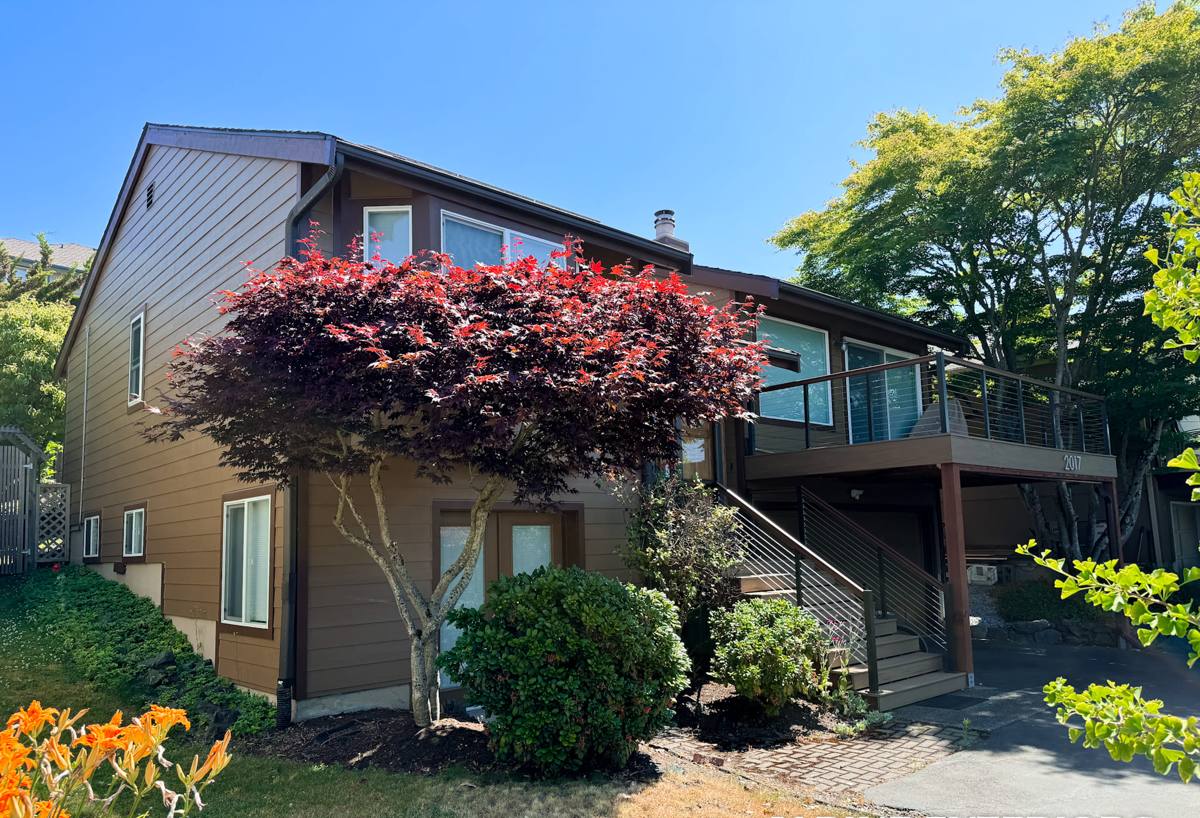
What a Sudden Valley Roof Is Actually Up Against
A Long, Heavy Moss Season Under the Tree Canopy
Most Sudden Valley lots sit under significant tree cover, and a lot of roofs here have at least one slope that gets very little direct sun for most of the year. Shade, mild temperatures, and consistent moisture are the exact conditions moss and mildew need, and Sudden Valley's canopy keeps that combination active for most of the year rather than just a few wet months. A new roof that isn't built with that in mind — algae-resistant granules, clean valleys, decent airflow — will start showing moss well before a comparable roof on an open, sunnier lot.
Driving Rain and Wind Off the Lake and Ridgelines
Lake Whatcom and the hills around it funnel wind in ways that don't behave the same on every elevation of a house. On a hilly, tree-broken property like a typical Sudden Valley lot, one roof plane can take rain nearly straight down while another, a hundred feet away, gets it driven sideways under the eave. That variability means flashing and underlayment decisions can't assume uniform exposure across the whole roof; they have to account for the specific orientation and slope of each section.
Humidity and Debris That Slow Everything Down
Homes closer to the lake pick up extra ambient humidity on top of Whatcom County's normal rainfall, and that dampness lingers longer under a shaded canopy than it would on an open lot with more sun and airflow. Add in the falling needles, leaves, and small branches that come with living among mature trees, and you get a roof surface that stays wetter, longer, and collects debris in valleys and against roof-to-wall transitions faster than a roof out in the open. None of that makes a new roof a bad idea here; it just means the install has to account for slower drying time from the start.
Choosing the Right Roofing System for This Terrain
Most Sudden Valley homes are well served by asphalt shingles, but not every shingle grade holds up the same way under heavy shade and tree debris. Metal roofing is also a reasonable option worth understanding, particularly on steeper pitches or lots with heavier debris load.
| Roofing Option | Typical Lifespan | Fit for Sudden Valley's Shade and Tree Cover |
|---|---|---|
| 3-Tab Asphalt Shingles | 15-20 years | Lowest upfront cost, but a thinner profile with less algae resistance struggles under sustained shade |
| Architectural Shingles (algae-resistant) | 25-30 years | Heavier build and copper/zinc granule technology slow moss growth; the most common practical fit here |
| Premium/Designer Shingles | 30+ years | Strongest algae resistance and thickest profile, worth considering on the most heavily shaded slopes |
| Standing Seam Metal | 40-50+ years | Sheds moss and debris more readily than shingles and holds up well on steep pitches, at a higher upfront cost |
For most homes here, architectural shingles with algae-resistant granules hit the right balance of cost and performance. Whether it's worth stepping up to a premium shingle or metal usually comes down to how much of the roof sits under heavy canopy, how steep the pitch is, and how long you plan to stay in the home.
What a Correct New Roof Installation Involves
Tear-Off and Deck Inspection
A full tear-off down to the decking is the only reliable way to find rot or soft spots that have developed quietly under old shingles, which is common on roof sections that have stayed damp under shade for years. A layover installed directly over old shingles skips that inspection entirely and seals whatever problems already exist underneath a new surface.
Underlayment and Ice-and-Water Shield
Synthetic or self-adhered underlayment gives the deck a real secondary water barrier, which matters on a roof where wind-driven rain can get forced under shingle edges on some slopes even while other slopes stay dry. We give extra attention to ice-and-water shield membrane at eaves, valleys, and low-slope transitions, the spots where prolonged shade and slower drying make water intrusion most likely over time.
Flashing at Valleys, Chimneys, and Skylights
Most roof leaks in this region start at flashing, not in the open field of shingles. Valleys, chimney and skylight penetrations, and roof-to-wall transitions all need flashing that's properly lapped and integrated with the underlayment as one system, not caulked over after the shingles are already down. On a property with multiple roof planes at different orientations, that detail work has to be consistent across every section, not just the ones that are easiest to reach.
Ventilation for a Shaded Roof
Balanced intake and exhaust ventilation keeps the underside of the deck dry, which matters more on a shaded roof than a sunny one, since there's less natural drying happening from above to compensate for whatever moisture builds up below. Poor attic airflow quietly shortens shingle life and feeds moss growth from underneath, and it's one of the details that's easy to miss on a roof that still looks fine from the ground.
Access, Terrain, and Site Considerations Specific to Sudden Valley
A new roof install involves more than the roof itself. Dump trailers, material delivery, and staging areas all need a plan that fits a hilly, tree-lined, privately-managed community.
- Coordinating scheduling and vehicle access within Sudden Valley's private road network and HOA guidelines
- Planning safe material staging and debris removal on sloped, tree-crowded lots where a flat, open driveway isn't always available
- Identifying overhanging limbs that need trimming back before tear-off, so falling debris doesn't undo cleanup work mid-project
- Accounting for steeper roof pitches common on hillside homes when setting up fall protection and staging
- Protecting landscaping and lower roof sections from tool and material drops on a tighter, more wooded work site than an open subdivision lot
Cost Factors for a New Roof Installation in Sudden Valley
| Factor | What It Affects | Why It Matters Here |
|---|---|---|
| Tear-off vs. layover | Whether hidden deck damage gets found and repaired | Shaded sections often hide moisture damage that's invisible until the old shingles come off |
| Shingle or metal grade | Material cost and expected lifespan | Heavier, algae-resistant products cost more upfront but hold up better under sustained shade |
| Underlayment and ice-and-water shield scope | How well the roof resists wind-driven rain and slow drying | Variable wind exposure across a hilly lot means some sections need more protection than others |
| Roof pitch and access | Labor time, staging, and safety requirements | Steeper hillside roofs and limited flat staging area add setup time |
| Tree trimming and debris management | Site prep before and cleanup after | Overhanging limbs and ground debris are more common here than on an open lot |
| Ventilation upgrades | Long-term moisture control and shingle lifespan | A shaded roof depends more on mechanical airflow to dry out than a sunny one does |
Two bids for the same Sudden Valley roof can look very different in price, and the gap is usually real scope, not padding. A written estimate that breaks out tear-off, underlayment, flashing, and ventilation separately tells you far more than a single lump-sum number.
How Our Process Works
- In-person inspection: We walk the roof and attic ourselves, noting how shade, slope, and tree exposure vary across the property, since that often differs more from one roof plane to the next in Sudden Valley than it would on a flatter, open lot.
- Written estimate: You get an itemized bid covering tear-off, underlayment, flashing, ventilation, material selection, and site access, not one vague line item.
- Coordinating access: We work out staging, delivery, and scheduling details within Sudden Valley's private road network ahead of time, so the job doesn't stall on logistics once it starts.
- Tear-off and deck repair: Old roofing comes off completely, and any deck damage we find gets repaired before anything new goes down.
- Underlayment, flashing, and installation: Each layer goes on to manufacturer specification, with extra attention at valleys, penetrations, and the roof-to-wall transitions this property's layout tends to create.
- Final walkthrough and cleanup: We review the finished roof with you in person and do a full site and magnetic nail sweep, including areas where fallen debris tends to collect, before calling the job done.
Why Hiring a Crew That Already Works in Sudden Valley Matters
A crew that regularly works roofs in Sudden Valley has already seen how shade and tree cover slow drying time, how wind funnels differently across a hillside lot than a flat one, and which roof orientations hold moss longest through the wet months. That's the kind of practical knowledge that shows up in dozens of small decisions on install day, decisions a crew unfamiliar with this specific setting might not think to make. It also matters that the company standing behind your workmanship warranty is one you can actually reach years later, not a name that's moved on.
A Practical Checklist Before You Hire a Roofer
- Do they perform a full tear-off with deck inspection, not just a layover?
- Does the estimate specify underlayment type and shingle or metal product, not just "new roof installed"?
- Is flashing work at valleys, chimneys, and roof-to-wall transitions explicitly written into the bid?
- Do they carry current Washington contractor licensing, liability insurance, and workers' compensation?
- Have they worked within Sudden Valley's HOA and private-road system before, and do they understand the access rules?
- Does the bid clearly separate the manufacturer's material warranty from the contractor's own workmanship warranty?
Signs Your Sudden Valley Roof May Need Replacing
- Moss or dark streaking that returns quickly after cleaning, especially on shaded, north-facing slopes
- Granules collecting in gutters, signaling shingles wearing thinner than they should be at this stage
- Curling, cracking, or lifted shingle edges on wind-exposed sections
- Soft spots, sagging, or visible deck flex near valleys and penetrations
- Water staining on interior ceilings after a heavy or extended rain
- Debris consistently building up in valleys or against roof-to-wall transitions faster than it can be cleared
If several of these sound familiar, it's worth having the roof looked at before the next wet stretch forces the decision for you.
If you're weighing a new roof for your Sudden Valley home, we're glad to walk the property with you and give an honest read on what it actually needs. Reach out using the form below to schedule a free, no-pressure estimate.