 Fairhaven Siding
 Why Bellingham Roofs Take a Different Kind of Beating
Bellingham sits close enough to the water that salt-laden air is a constant, low-grade stress on every exposed roof surface — fasteners, flashing, and metal drip edge corrode faster here than they would forty miles inland. Layer on top of that the driving rain that comes with winter windstorms off the Strait of Georgia, and you get wind-driven water that finds its way under shingles that would stay dry in a straight-down rain. Add a moss season that, in this part of Whatcom County, can run eight or nine months out of the year on shaded, north-facing slopes, and you have three separate forces working against a roof at the same time instead of one.
None of that means Bellingham roofs are doomed to fail early. It means storm damage repair here has to account for all three factors at once, not just patch the obvious hole and move on. A repair that ignores salt air corrosion on the flashing, or leaves moss mats in place under new shingles, tends to fail again within a season or two.
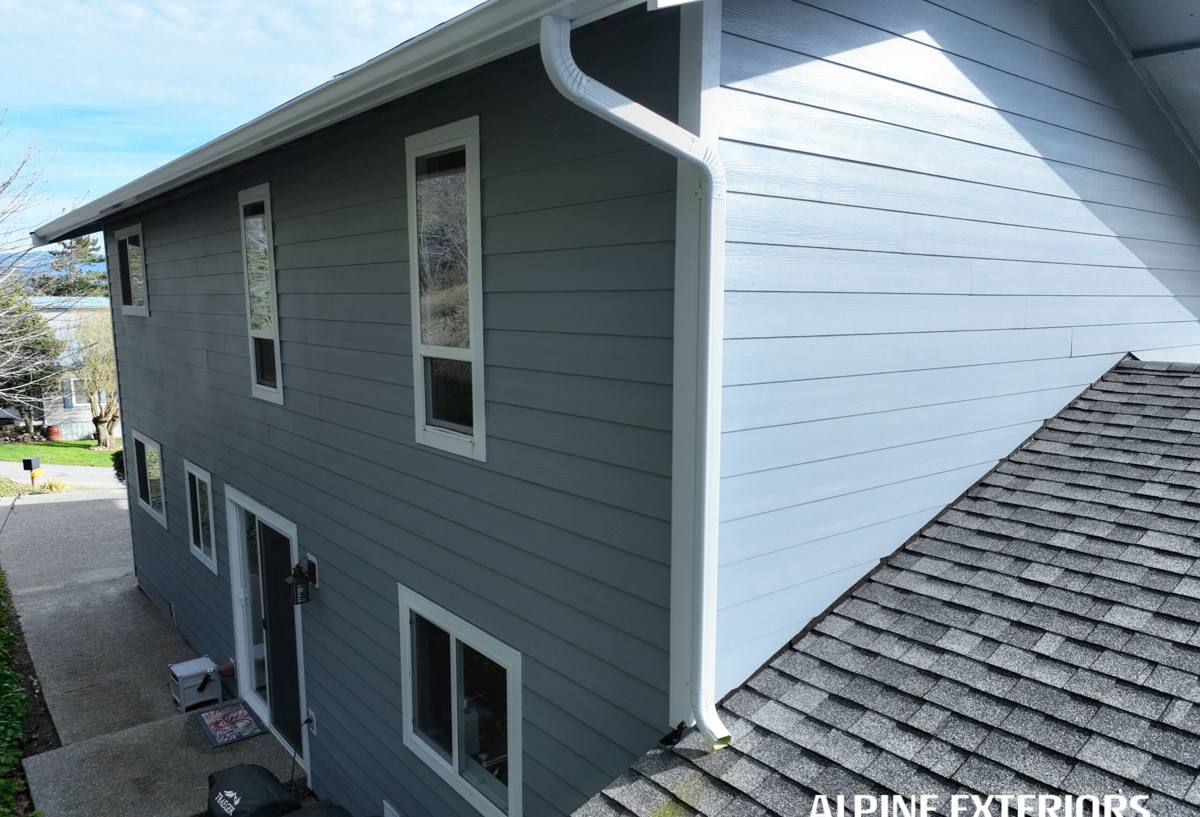
Signs Your Roof May Have Storm Damage
After a windstorm or a heavy rain event, most storm damage isn't dramatic — it's a handful of small, easy-to-miss signs that add up to a real problem if left alone.
- Shingles that are cracked, curled, creased, or missing entirely, especially on the side of the roof that faces prevailing wind
- Granules collecting in gutters or at the base of downspouts — a sign the shingle surface is wearing thin
- Lifted or bent flashing around chimneys, vents, and skylights
- Soft or spongy spots when walking the roof (a job for a professional, not a homeowner)
- Water stains or discoloration on ceilings or in the attic after a storm
- Daylight visible through the roof deck from inside the attic
- Moss buildup thick enough to hold water against the shingle surface, particularly on shaded or north-facing slopes
- Debris — broken branches, needles, gravel from the shingle surface — collected in valleys and gutters
Any one of these on its own might be minor. Several together, especially after a named storm or a stretch of high wind, are worth a professional look before the next rain.
What a Correct Storm Damage Repair Actually Involves
Inspection Before Anything Else
A proper storm damage repair starts on the roof, not on paper. That means walking the full roof surface, checking flashing at every penetration, and looking at the attic from the inside for signs of water intrusion that haven't shown up on the ceiling yet. Wind damage in particular can be uneven — one slope takes the brunt of it while the rest of the roof looks fine, so a partial inspection can miss the section that actually needs work.
Temporary Protection
If there's an active leak or exposed decking, the first priority is keeping water out — tarping or temporary flashing — before anything else happens. This isn't the repair itself, but skipping it while waiting on scheduling or insurance paperwork is how a small storm event turns into a rot problem.
Repair vs. Replace
Most storm damage is fixable without replacing the whole roof: swapping damaged shingles, resealing or replacing flashing, addressing a compromised section of decking. The exceptions are roofs that were already near the end of their service life before the storm hit, or damage that's spread across enough of the surface that patching would leave a visibly mismatched, functionally weaker roof. An honest contractor will tell you which situation you're in and explain why, not default to a full replacement because it's a bigger job.
Matching Materials, Not Just Covering the Hole
Especially with older roofs, exact shingle matches aren't always available. A correct repair accounts for that — blending in a way that keeps the roof performing as a system, rather than just nailing down whatever's on the truck.
Roofing Materials in a Salt Air, Moss-Prone Climate
The right material for a Bellingham roof isn't necessarily the one that looks best on day one — it's the one that handles salt air corrosion, sustained moisture, and moss pressure over years, not months.
| Material | Moss & Moisture Behavior | Salt Air Considerations | Typical Storm Repair Approach |
|---|---|---|---|
| Asphalt composition shingle | Prone to moss on shaded slopes if not maintained; algae-resistant granule options help | Fasteners and flashing matter more than the shingle itself | Individual shingle and flashing replacement; usually the most straightforward repair |
| Cedar shake/shingle | Needs airflow and upkeep to resist moss and rot in a wet climate | Wood itself is not corrosion-prone, but fasteners are | Individual shake replacement is possible but labor-intensive; requires close color/weathering match |
| Metal roofing | Sheds moss and moisture well when properly installed | Fastener and flashing material choice is critical this close to the water | Panel or seam repair requires matching profile and finish; not a DIY-friendly repair |
| Torch-down/membrane (low-slope) | Performs well against standing water if seams are sound | Less exposed metal, but edge flashing still at risk | Seam and flashing repair; patching is common and effective if done correctly |
None of these materials is "wrong" for the area. The maintenance burden and repair approach just differ, and that's worth knowing before you decide what to repair with versus what to replace with.
Our Process, Start to Finish
- Initial inspection and photo documentation — we walk the roof, check the attic, and document the damage, including anything that may be relevant if you're filing an insurance claim.
- Honest scope discussion — we tell you what's damage, what's wear, and what's just cosmetic, and give you options rather than a single take-it-or-leave-it quote.
- Temporary protection if needed — tarping or emergency flashing to stop active water intrusion while repair work is scheduled.
- Repair work — shingle, flashing, or decking replacement matched to the existing roof as closely as materials allow.
- Cleanup and final walk-through — gutters and valleys cleared of storm debris, and a final check from the ground and, where accessible, the attic.
After the Repair: Keeping Moss and Moisture From Coming Back
A repair is only as good as what happens after it. In Whatcom County's climate, that mostly comes down to two things: keeping moss from re-establishing on shaded slopes, and keeping gutters and valleys clear so water has somewhere to go. Overhanging tree branches that keep a section of roof shaded and damp longer than the rest are worth trimming back if that's practical. None of this is complicated, but it's the difference between a repair that lasts and one that's undone by the same conditions that caused the original damage.
Working With Insurance on Storm Damage
Wind and storm damage is often covered under standard homeowner's policies, but coverage depends on your specific policy, the cause of damage, and your deductible — that's a conversation for you and your insurer, not something we can promise on your behalf. What we can do is document the damage clearly with photos and a written scope before any repair work starts, which gives you something concrete to bring to a claim. If an adjuster wants to see the roof directly, we're glad to walk it with them and point out what we found.
Why It Matters That We're Already Working in Bellingham
Storm damage repair isn't a job you want to hand to whoever happens to answer the phone fastest after a big wind event — every storm brings a wave of traveling crews into Western Washington looking for quick work, and they're gone before a repair has a chance to prove itself. We're based in the Fairhaven area and do this work locally and year-round, which means we're still around for the follow-up questions, and we've already seen how roofs in this specific stretch of Whatcom County hold up against salt air, driving rain, and a long moss season. That local pattern recognition is part of what makes a repair correct the first time, rather than a temporary fix that needs redoing next winter.
Cost Factors Worth Understanding
Storm damage repair costs vary widely depending on scope, and we'd rather walk your roof and give you real numbers than quote a range that doesn't apply to your situation. In general, cost is driven by how much of the roof surface is affected, whether flashing or decking needs replacement in addition to shingles, how close a material match is available, and roof accessibility. A small, localized repair is a very different project from one involving multiple slopes or compromised decking, and a straightforward estimate visit is the fastest way to know which one you're dealing with.
If you've had storm damage — or you're just not sure whether what you're seeing on your roof after the last windstorm is worth worrying about — we're happy to take a look. Reach out for a free, no-pressure estimate using the form below, and we'll give you a straight answer about what's actually going on and what it would take to fix it right.