 Fairhaven Siding
 Homes in Bow face a specific combination the window aisle at a big box store was never designed around: salty air rolling in off the water, rain that comes in sideways during a proper Pacific Northwest blow, and long stretches of gray, damp weather that keep wood, vinyl, and trim wet for days at a time. Fairhaven Siding Company has built and replaced windows in this stretch of northwest Washington long enough to know which details actually matter here and which are just manufacturer boilerplate written for a drier climate. This page covers what a correct custom window job looks like for a Bow home, and why hiring a crew that already works this area, rather than one passing through, changes the outcome.
What "Custom" Actually Means for a Bow Home
"Custom window" gets used loosely in this trade, so it is worth being specific. It does not mean expensive or fancy by default. It means a window built or ordered to fit something other than a standard, off-the-shelf stock size and shape. In practice that covers a wide range of real situations we run into around Bow and the greater Fairhaven area.
Non-Standard Openings
Older homes in this part of Washington were often framed before manufacturers settled on today's common window sizes, so a straight swap-in replacement is not always possible without either a custom-built unit or reframing the rough opening. Additions and remodels create the same problem in newer homes, since a new opening built into an existing wall rarely lines up with a catalog size.
Style, Shape, and View-Driven Openings
A lot of homes in and around Bow were sited to make the most of water or territorial views, which means bay windows, picture windows, and other larger-format openings show up more often here than in a typical inland neighborhood. Arched tops, angled walls, and oversized openings all fall under custom work too, since none of them are pulled straight from a standard parts bin.
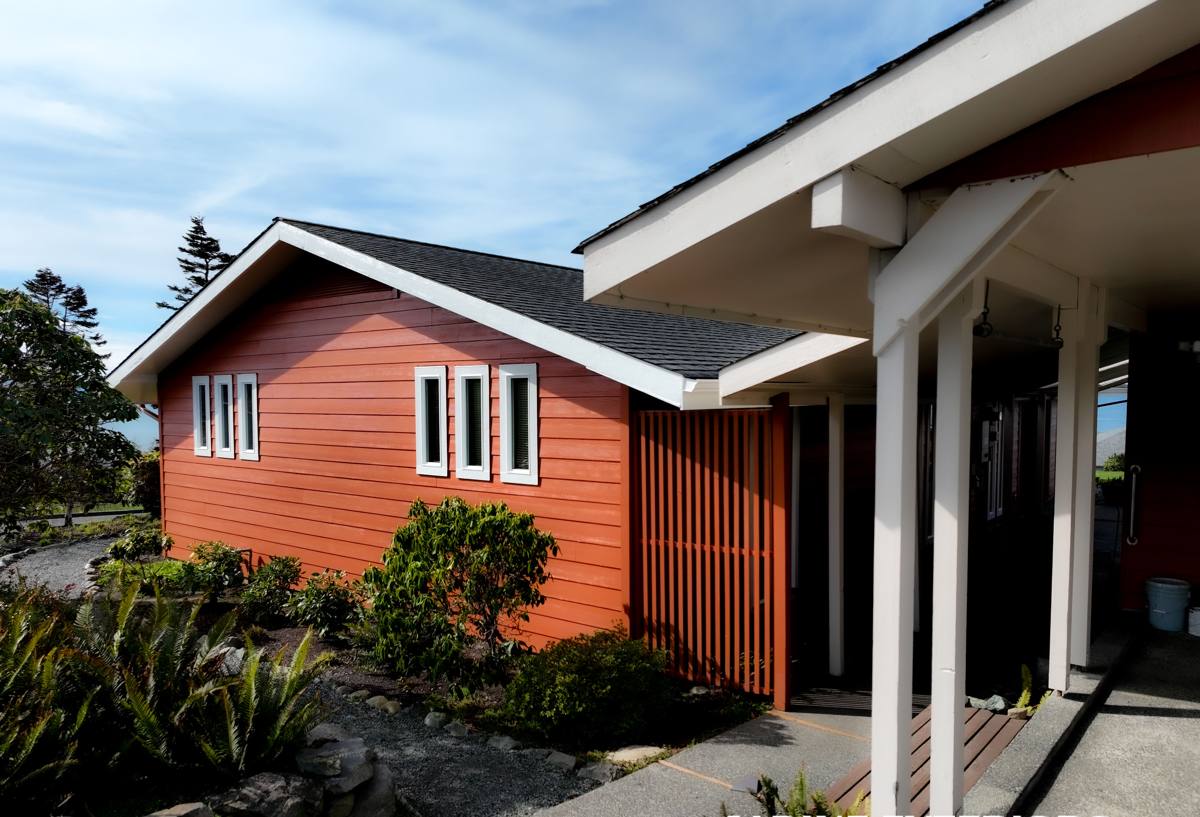
Salt Air, Driving Rain, and Moss: What Every Window Here Has to Survive
The regional climate is not just a backdrop for this kind of project, it is the main design constraint. Three things do most of the damage to windows in this area over time, and each one attacks a different part of the assembly.
Salt Air and Hardware
Even a few miles inland, salt-laden air off the water accelerates corrosion on hinges, locks, cranks, and lower-grade fasteners. Cheaper hardware finishes can start pitting or seizing up years before the glass or frame shows any wear, which is why hardware quality matters as much as the window unit itself on a coastal-influenced property like this.
Driving Rain and Flashing
Storms here do not just drop rain straight down — wind pushes it sideways into wall assemblies, testing every seam a calmer climate would never stress. Flashing that is sequenced correctly, lapped the right direction, and tied properly into the surrounding wall covering is what keeps that water out. Flashing that is close enough usually holds for a while and then fails quietly, inside the wall, long before anyone notices from outside.
Moss and Trapped Moisture
Shaded, damp corners of a lot, common on wooded or north-facing sites around Bow, support a moss and algae season that can run most of the year. Moss holds moisture against sills, trim, and lower frame sections far longer than a drier climate would ever allow, which softens wood components and breaks down caulk and sealant faster than their rated lifespan.
Choosing a Window Style That Fits the House and the Weather
Style choice is not just an aesthetic decision out here, since some shapes are inherently easier to weatherproof correctly than others. The table below covers the styles we install most often for Bow homes.
| Style | Best For | Weatherproofing Complexity | Ventilation |
|---|---|---|---|
| Bay or bow window | Maximizing a view, adding interior space | High — needs its own roof and flashing system | Often includes operable side units |
| Picture window | Wide fixed views, simpler budgets | Moderate — large sill area to manage | None, fixed glass only |
| Casement | Hard-to-reach spots, tight seal needs | Low to moderate — single seam design | Excellent, cranks fully open |
| Double-hung | Traditional look, easy cleaning | Low, well-documented details | Good, top and bottom sash |
None of these is automatically the "right" answer. A bay window can perform beautifully on a Bow property when the roof and flashing details are built correctly, and a picture window can fail just as fast as anything else if the sill is not sloped to shed water outward. The style decision should follow the view, the room's use, and the budget — then the installation plan gets built around whatever is chosen.
Frame Material: What Actually Holds Up Out Here
Frame material matters more on this stretch of coastline than it would in a milder inland climate, since sustained moisture and salt exposure will find any weak point over enough seasons.
| Material | Coastal Durability | Maintenance | Trade-Off |
|---|---|---|---|
| Vinyl | Good — will not rot or corrode | Low, occasional cleaning | Limited color and profile options |
| Fiberglass | Very good — stable in temperature swings | Low | Higher upfront cost than vinyl |
| Wood-clad | Good on the clad exterior, vulnerable if the cladding is breached | Moderate to high depending on exposure | Warm interior look, exterior needs monitoring |
| Aluminum | Prone to corrosion near salt air unless properly coated | Moderate | Narrow sightlines, thermal performance concerns |
We do not default to one material for every job. A wood-clad interior with a properly protected exterior cladding can be the right call when the interior look matters most, while a fully vinyl or fiberglass unit is usually the more practical choice for a window that takes direct weather with no overhang protection. We will walk through the honest trade-offs for your specific opening rather than steering you toward whatever is easiest to install.
How We Handle a Custom Window Job, Start to Finish
- On-site assessment — we measure the actual opening, check for square and level, and look at what the existing flashing and framing are doing before anything gets ordered.
- Honest recommendation — custom unit, modified stock size, or full reframe, explained with the reasoning behind it rather than whatever moves fastest.
- Ordering and lead time — custom units are built to order, so we give a realistic timeline up front instead of a best-case guess.
- Removal and opening prep — the old unit comes out carefully, and any hidden rot or old flashing failures get addressed before the new window goes in, not after.
- Installation and flashing — the new unit is set, shimmed level and plumb, and flashed in a sequence matched to its specific shape, whether that is a simple rectangular opening or a bay window roof.
- Trim and finish integration — exterior trim is matched to the surrounding siding so the finished window looks like it belongs, not like it was added on.
- Final walkthrough — we check operation, seals, and finish work with you before calling the job done.
Questions Worth Asking Before You Order
A little vetting up front on a custom window project can save headaches later, whether you go with us or price it out elsewhere.
- Has the opening been field-measured, or is the quote based on a rough guess or old plans?
- What is the realistic lead time for this specific unit, in writing, not a best case?
- Is the window unit's warranty separate from the installation labor warranty, and what does each actually cover?
- What is the flashing plan for this specific shape, not a generic answer that applies to any window?
- Does the opening need any structural review, especially for a bay, bow, or oversized unit?
- How will the exterior trim be matched to the rest of the house?
Signs Your Current Windows Are Already Losing the Fight
Windows in this climate rarely fail all at once. They usually show warning signs for a season or two first.
- Fogging or a milky haze between panes, which means a sealed unit's seal has failed
- Soft, spongy, or discolored wood at the sill or lower frame
- Windows that stick, bind, or need force to open and close
- Visible daylight or a noticeable draft around the frame when it is shut
- Moss, algae, or persistent green staining building up on the frame or sill
- Condensation forming on the inside of the glass regularly, even in mild weather
- Peeling or bubbling paint on the interior or exterior trim near the frame
Any one of these on its own is not necessarily an emergency, but two or three together on the same window usually means water has already gotten past the seal and is working on something behind it.
Why It Matters That We Already Work in Bow
Manufacturer installation guides are written for average conditions, and Bow's mix of salt air, wind-driven rain, and a long wet season is not average. A crew that has actually built out bay windows, flashed picture window sills, and dealt with older framing in this specific area knows which parts of the standard install instructions are non-negotiable here and where extra time on flashing or sealant is worth it even when it is not strictly required elsewhere. Fairhaven Siding Company works this area regularly, which means we are not guessing about how this climate treats a window over ten or fifteen years — we have seen it firsthand on other homes nearby.
That familiarity also shows up in smaller, practical ways: knowing what kind of rot patterns to expect when opening up an older sill, having a realistic sense of how long a custom unit takes to arrive from suppliers we already use, and understanding how Whatcom County's coastal weather patterns differ from what a contractor coming from a drier region might expect.
What Upkeep Looks Like After Installation
A correctly installed custom window in this climate is not maintenance-free, but the upkeep is manageable if you stay ahead of it. Rinsing salt residue and moss spores off frames and sills a couple of times a year keeps both from taking hold. Checking and refreshing exterior caulking on a wood-clad frame before it visibly cracks is far cheaper than repairing water damage after it fails. Keeping gutters and downspouts clear nearby prevents overflow from dumping extra water directly onto a window during a storm. None of this is complicated, but skipping it is usually how a well-installed window ends up with an avoidable problem a few years in.
If you are weighing a custom window for a Bow home — whether it is a straight replacement in an older opening, a bay or picture window to make the most of a view, or new construction that needs windows built to non-standard sizes — we are happy to take a look and talk through what is actually involved. Fairhaven Siding Company offers free, no-pressure estimates for custom window projects in Bow and the surrounding area; use the form below to get on the schedule.