 Fairhaven Siding
 Deck Building for Downtown Bellingham, Built for the Conditions It Actually Faces
Downtown Bellingham sits close to the water, which means decks here take a different kind of beating than decks built inland. The combination of salt-laden air off Bellingham Bay, driving rain that comes in sideways during winter storms, and a moss season that can stretch for months adds up to real wear on a structure that was never built with this climate in mind. A deck that would hold up fine in a drier part of the state can start showing problems within a few years down here — soft spots in the decking, corroded fasteners, railings that wobble, and a green film that never seems to fully go away.
We build and repair decks specifically for Whatcom County conditions, and Downtown Bellingham is one of the neighborhoods we work in regularly. That matters more than it sounds like it should, because the right deck for this part of town isn't necessarily the same deck you'd build in a sunnier, drier climate. Material choice, fastener grade, drainage detailing, and even the layout all change once you account for how much moisture this deck is going to see over its lifetime.
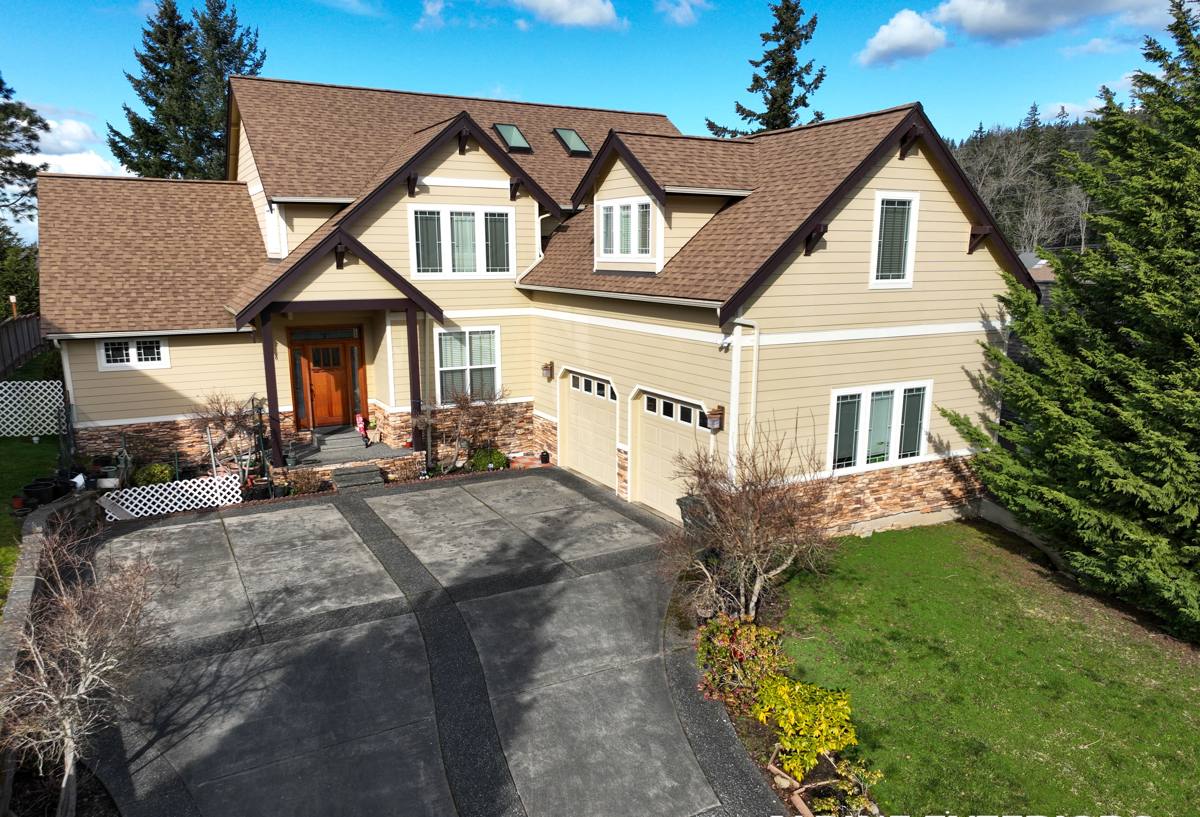
What Downtown Bellingham's Climate Does to an Ordinary Deck
It helps to understand the specific mechanisms at work, because they explain why certain shortcuts cause problems here that wouldn't show up somewhere drier.
Salt Air and Corrosion
Being close to the bay means airborne salt settles on everything, including deck hardware. Standard zinc-coated fasteners and connectors corrode faster in a salt-air environment than their ratings suggest. Once a fastener starts rusting, it weakens, and it can also stain the surrounding wood or composite. This is a slow process, so it's easy to miss until a board starts moving underfoot.
Driving Rain and Water Intrusion
Rain that comes in at an angle finds its way into places vertical-only rain never would — under railing caps, behind ledger boards, into end grain that isn't sealed. Once water gets past the surface, it doesn't dry out quickly in our climate, and trapped moisture is what actually causes rot, not rain itself.
Moss and the Long Wet Season
Moss needs shade and consistent moisture, and a lot of Downtown Bellingham's tree cover and marine-layer humidity gives it both for much of the year. Beyond looking bad, moss holds water against the deck surface and can make boards dangerously slick, especially on stairs.
Choosing the Right Decking Material
There's no single "best" decking material — the right choice depends on how much maintenance a homeowner is realistically willing to do, the budget, and how exposed the deck is to sun, shade, and rain. Here's how the common options compare for this specific climate.
| Material | How It Handles This Climate | Maintenance Burden | Typical Lifespan Here |
|---|---|---|---|
| Pressure-treated wood | Affordable, but needs sealing on a regular schedule to resist moss and moisture | High — annual cleaning and periodic re-sealing | 10-15 years with upkeep |
| Cedar | Naturally rot-resistant and handles rain well, but greys and can host moss without upkeep | Moderate to high | 15-20 years with upkeep |
| Composite decking | Resists moisture absorption and rot; surface texture matters for moss and algae grip | Low — periodic washing | 25-30 years |
| PVC/capped decking | Fully sealed surface sheds water and resists staining and moss the best of the group | Lowest | 25-30+ years |
We're generally cautious about recommending uncapped wood-composite blends in a marine climate like this one — the exposed wood fibers in some composite formulations can absorb moisture at the edges over time, which shows up as swelling or dark staining years down the line. Fully capped composite or PVC boards avoid that failure mode entirely, which is why we lean toward them for decks with heavy shade or limited airflow.
What Actually Holds a Deck Up: The Substructure
The decking boards are the part everyone sees, but the framing underneath is what determines whether the deck is still solid in fifteen years. This is where corners get cut on lower-quality builds, and it's the hardest part to inspect once the deck is finished.
Footings and Post Bases
Footings need to be sized and set below frost depth and bear on undisturbed soil. On sloped downtown lots, that sometimes means deeper or stepped footings rather than a uniform grid. Post bases should hold the post above the concrete and any standing water, not embed it directly.
Ledger Attachment and Flashing
If the deck attaches to the house, the ledger board and its flashing are one of the most common failure points we see on older decks. Water that gets behind an improperly flashed ledger doesn't just damage the deck — it can migrate into the house's wall assembly, which turns a deck repair into a siding and framing repair. Correct flashing directs water out and away, with a gap or drainage plane behind the ledger rather than a tight seal against the house.
Joist Protection and Hardware
Joists should be wrapped or capped with a moisture barrier at the top edge, since that's where standing water sits longest against the wood. All structural hardware — joist hangers, screws, bolts — should be rated for the type of decking and framing lumber being used, and in a salt-air environment we favor connectors and fasteners built for coastal or marine exposure over standard hot-dip galvanized hardware.
Our Deck Building Process
We keep the process straightforward and make sure the homeowner understands each stage before we move to the next one.
- On-site assessment. We look at the lot, sun and shade exposure, drainage patterns, and how the deck will tie into the house.
- Design and material selection. We talk through decking, railing, and framing options honestly, including trade-offs in maintenance and cost.
- Permitting. We handle the permit application with the City of Bellingham or Whatcom County, whichever has jurisdiction over the property.
- Site preparation and footings. Excavation, footing layout, and inspection sign-off before framing begins.
- Framing. Ledger, posts, beams, and joists go in with the flashing and hardware appropriate for this climate.
- Decking and railing installation. Boards, fascia, stairs, and railing are installed to code, with attention to fastener spacing and drainage gaps.
- Final walkthrough. We go over maintenance expectations for the specific material chosen before we consider the job done.
Permits, Setbacks, and Downtown Lot Realities
Most new decks and many deck replacements require a building permit, and elevated decks typically need guardrails and specific stair and baluster spacing to meet code. Downtown Bellingham lots are often smaller and closer together than lots elsewhere in the county, and some sit on sloped ground, which can affect setback requirements and footing design. We pull permits as part of our process rather than leaving that step to the homeowner, and we design around the actual constraints of the lot rather than assuming a standard suburban layout will fit.
Living With a Deck in a Moss-Prone, Salt-Air Climate
Even a well-built deck needs some seasonal attention in this climate. The good news is that the maintenance is manageable if it's done consistently rather than skipped for years at a time.
- Sweep debris and standing leaves off the deck regularly, especially in fall — trapped organic matter is what feeds moss and holds moisture against the boards.
- Wash the surface at least once a year with a deck-safe cleaner to remove early moss and algae growth before it takes hold.
- Check railings and stair connections annually for movement, since loosening hardware is often the first sign of fastener corrosion.
- Keep gutters and downspouts near the deck clear so runoff isn't draining directly onto or under it.
- Reseal wood decking on the schedule recommended for the specific product — skipping a season is often when moisture problems start.
- Watch for soft spots, especially near the ledger board and stair stringers, and address them early rather than waiting.
A Quick Reference for Seasonal Priorities
| Season | Main Risk | What to Do |
|---|---|---|
| Fall | Leaf buildup, early moss growth | Clear debris regularly, check drainage paths |
| Winter | Driving rain, standing water | Confirm gutters and downspouts are diverting water away from the deck |
| Spring | Moss and algae peak | Wash surface, inspect for slick spots on stairs |
| Summer | Drying and UV exposure | Reseal wood if due; inspect hardware for corrosion |
Why a Crew That Already Works Downtown Bellingham Makes a Difference
A deck built by a crew unfamiliar with this specific stretch of coastline is more likely to default to generic assumptions — standard fasteners, standard flashing details, standard maintenance advice — that don't hold up against the salt air and rain patterns this neighborhood actually sees. We've built and repaired decks in this area long enough to know which details matter here and which corners get cut elsewhere. That shows up in fastener selection, in how we flash a ledger against a house that's going to see driving rain from a specific direction, and in giving homeowners realistic maintenance expectations instead of a one-size-fits-all sheet.
It also matters for the practical side of the job — navigating tighter downtown lots, coordinating around neighboring properties, and working efficiently within the permitting process for this jurisdiction. None of that is complicated, but it adds friction and delay when a crew is figuring it out for the first time on your project instead of the tenth.
Get a Straightforward Estimate
Whether you're planning a new deck, replacing one that's showing its age, or just want an honest opinion on whether yours needs repair versus replacement, we're happy to take a look. Fill out the form below for a free, no-pressure estimate, and we'll walk you through your options for building a deck that's actually suited to Downtown Bellingham's climate.