 Fairhaven Siding
 Windows Built for Silver Beach's Coastal Conditions
Silver Beach sits close enough to Bellingham Bay that salt-laden air is a daily fact of life, not an occasional nuisance. Combine that with Whatcom County's long wet season — driving rain that comes in sideways off the water, months of low sun angle, and a moss season that seems to start earlier every year — and you have a climate that is genuinely hard on windows. Frames corrode faster near the water. Seals that would last two decades inland can fail in twelve or fifteen years here. Wood sashes hold moisture longer than they would in a drier part of the state, which invites rot and the kind of soft, spongy trim that homeowners don't notice until it's already a problem.
None of this means Silver Beach homes need exotic materials or unusual designs. It means the details that get skipped in easier climates — frame material selection, flashing sequence, sealant choice, drainage paths — matter more here and can't be treated as optional. This page is about what that looks like in practice, for this specific neighborhood, not windows in general.
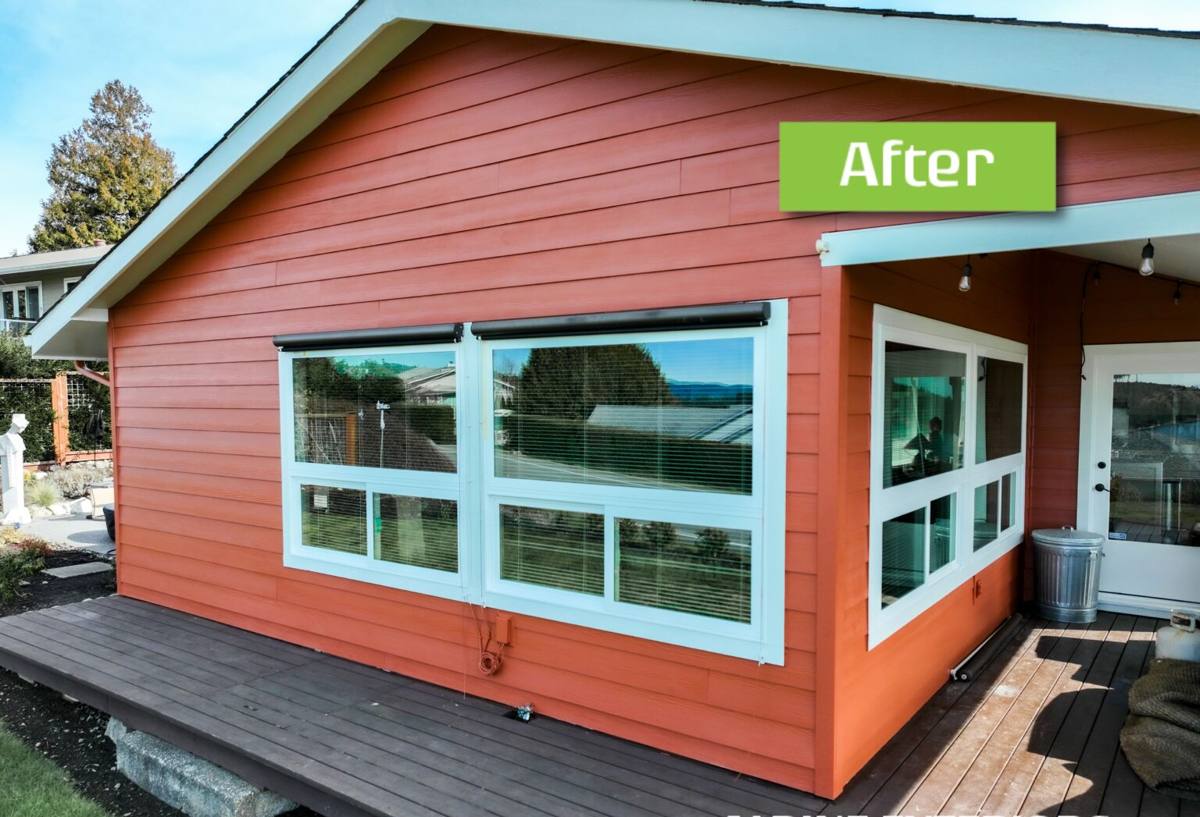
What "Energy-Efficient" Actually Means for This House
Energy efficiency in a window isn't one number — it's a combination of how well the glass resists heat transfer, how well the frame seals against air movement, and how the whole assembly handles moisture over time. In a marine climate like Fairhaven's, all three matter, but air infiltration and moisture performance often matter more day-to-day than raw insulation value, simply because the weather here is wet and windy more often than it's extremely cold.
The Numbers Worth Knowing
- U-factor — measures heat loss through the window. Lower is better. This is the number that most affects winter heating bills.
- SHGC (Solar Heat Gain Coefficient) — measures how much solar heat passes through the glass. Moderate SHGC values generally work well here, since we don't get the intense summer sun that makes low-SHGC glass critical in hotter regions.
- Air Leakage rating — measures how much air moves through the window assembly when closed. On a home exposed to steady wind off the bay, this number affects comfort and drafts as much as any insulation spec.
A window with a great U-factor but poor air-leakage performance can still feel drafty in a spot like Silver Beach. That's why we look at the whole assembly — glass, frame, and installation — rather than chasing one spec on a label.
Frame Material: The Decision That Matters Most Near Salt Air
Frame material is usually the single biggest factor in how a window holds up here. Below is an honest comparison of the main options we work with, weighed specifically against salt air, driving rain, and long-term maintenance.
| Frame Material | Salt Air / Moisture Performance | Maintenance | Notes for This Area |
|---|---|---|---|
| Vinyl | Good — won't corrode, handles moisture well | Low — no painting, occasional cleaning | Solid all-around choice for coastal exposure at a moderate price point |
| Fiberglass | Excellent — dimensionally stable, resists warping and corrosion | Low | Best long-term durability in salt air; higher upfront cost |
| Wood (unclad) | Poor to fair without diligent upkeep | High — regular painting/sealing required | We're cautious recommending unclad wood this close to the water; moisture cycling shortens its life without a strict maintenance schedule |
| Aluminum-clad Wood | Good exterior protection, but seams need monitoring | Moderate | Can work well when detailing and flashing are done correctly, but installation sensitivity is higher |
| Aluminum (bare) | Fair — prone to corrosion pitting over time near salt air | Moderate | Thermally less efficient unless thermally broken; less common in our residential recommendations here |
We're not against wood or aluminum-clad options on principle — some homeowners want the look and are committed to the maintenance. Our job is to be upfront about what each material actually demands in this specific environment, so the choice is made with full information rather than discovered the hard way in year eight.
Glazing Package Considerations
Double-pane, low-E, argon-filled units are the practical standard for this climate — they balance insulation value, cost, and moisture resistance well. Triple-pane can make sense for north-facing rooms that catch the worst of the wind and rain off the bay, but it adds weight and cost that isn't always necessary for every elevation of a home. We size glazing decisions by which side of the house is actually taking the weather, not a blanket spec for the whole structure.
Signs Your Current Windows Are Working Against You
Homeowners in Silver Beach often live with window problems for years before connecting them to the windows themselves. A quick self-check:
- Visible condensation or fogging between the panes (a sign the seal has failed)
- Drafts you can feel near the frame on a windy day, even with the window fully latched
- Paint or trim that's peeling, bubbling, or feels soft to the touch near the sill
- Windows that are hard to open, close, or lock — often a sign of frame swelling or warping
- Visible corrosion, pitting, or chalky white residue on metal frames or hardware
- A noticeable jump in heating costs without any other change in the house
- Moss or dark staining building up in the corners of exterior trim or sills
Any one of these alone isn't necessarily urgent. Several together, especially on the side of the house that faces the prevailing weather, usually means the windows are past the point where caulk and weatherstripping will fix the underlying issue.
What a Correct Installation Actually Involves
Most window failures we see in this climate trace back to installation shortcuts, not bad products. A window can carry a great efficiency rating and still leak, rot the surrounding framing, or fail early if it's not installed with the right sequence and materials.
The Details That Matter Here
- Removing the old unit carefully and inspecting the rough opening for hidden rot or moisture damage before anything new goes in — this is common enough near the water that we plan for it rather than treat it as a surprise.
- Correct flashing sequence — flashing tape and building paper layered so water is always directed outward and downward, never trapped behind the new frame.
- Sill pan installation at the base of the opening, giving any water that does get past the exterior seal a way to drain back out instead of pooling against wood framing.
- Proper shimming and squaring so the sash operates smoothly and the seal compresses evenly all the way around — an out-of-square frame is one of the most common causes of premature seal failure.
- Low-expansion foam and backer rod used correctly at the perimeter, sized to the gap rather than overfilled, which is a frequent source of bowed frames on rushed jobs.
- Exterior sealant chosen and applied for long-term flexibility in a climate that cycles between soaking wet and dry more often than it freezes hard.
- Interior and exterior trim finished to shed water away from the frame, not toward it.
Skipping or rushing any one of these steps is usually invisible on install day and only shows up two or three winters later as a leak, a drafty spot, or a rotting sill. That gap between the shortcut and the consequence is exactly why installation quality is worth asking about directly when you're comparing contractors.
How Our Process Works
We keep the process straightforward and give you real information at each step, not just a sales pitch.
- Free on-site estimate: we walk the exterior with you, look at which elevations take the worst weather, and check the condition of existing frames and trim.
- Honest product recommendation: we'll tell you which frame material and glazing package fit your home and your budget — and why — rather than upselling a single product line to everyone.
- Written scope and pricing: a clear breakdown before any work starts, so there are no surprises mid-project.
- Careful removal and inspection: we check the rough opening for hidden moisture damage before installing anything new.
- Installation to the standards above: flashing, sill pans, sealing, and finish work done in sequence, not shortcuts.
- Walkthrough and cleanup: we confirm every window operates correctly and the site is left clean before we consider the job done.
Why Local Experience in Silver Beach Matters
A window contractor who mostly works inland doesn't necessarily know which corner of a Silver Beach home takes the worst of the wind-driven rain, or how quickly moss builds up on a north-facing sill this close to the water. That kind of knowledge comes from doing the work here repeatedly, not from a manufacturer's spec sheet. It shows up in small decisions — which elevation gets the upgraded sealant, where extra flashing attention is worth the time, which frame material we'll actually recommend for a home a block off the water versus one further inland.
It also matters for warranty follow-through. A crew that plans to keep working in Fairhaven and the surrounding Whatcom County communities has a real reason to make sure the job holds up, because they're not moving on to the next city over.
Living With Windows Here: Realistic Maintenance
Even the right windows, correctly installed, benefit from a little seasonal attention in this climate. None of it is complicated, but skipping it entirely shortens the life of any window system.
| Task | Frequency | Why It Matters Here |
|---|---|---|
| Rinse frames and tracks with fresh water | 2-3 times per year | Removes salt residue before it accelerates corrosion or hardware wear |
| Clear moss and debris from sills and weep holes | Ahead of and during wet season | Keeps drainage paths open so water doesn't pool against the frame |
| Check and re-caulk exterior perimeter seals | Annually, or when cracking is visible | Sealants break down faster under constant wet-dry cycling |
| Inspect for soft spots near sills and trim | Annually | Catches early rot before it spreads into framing |
| Lubricate hardware and locks | Annually | Salt air stiffens and corrodes moving parts faster than in drier climates |
None of this replaces a well-built window — it just protects the investment once it's in. We're happy to walk through a maintenance routine specific to your home's exposure when we're out for an estimate.
Get a Straightforward, No-Pressure Estimate
If your windows are showing their age, feeling drafty, or you're simply planning ahead for a home this close to the water, we're glad to take a look and give you an honest read on what you actually need — not a padded scope. Use the form below to request a free estimate for your Silver Beach home.