 Fairhaven Siding
 When a Storm Rolls Off Bellingham Bay, Downtown Roofs Take the Hit First
Downtown Bellingham sits close enough to the water that storms coming off Bellingham Bay arrive with real force — driving rain pushed sideways by wind, gusts that funnel between buildings and up hillside streets, and enough sustained moisture afterward to keep a damaged roof wet for days. The neighborhood's mix of older homes near the core and newer construction on the surrounding slopes means roof age, pitch, and material vary a lot from block to block, which also means storm damage shows up differently from one house to the next. A repair approach that works on one roof can be the wrong call on the one next door.
We work Downtown Bellingham regularly out of our Fairhaven base, and most of what we get called out for after a storm isn't dramatic — it's a handful of lifted shingles, a compromised flashing seam, or a clogged gutter that let water back up under the roof edge. Left alone through another Whatcom County winter, small damage like that turns into rot, interior staining, and a much bigger bill.
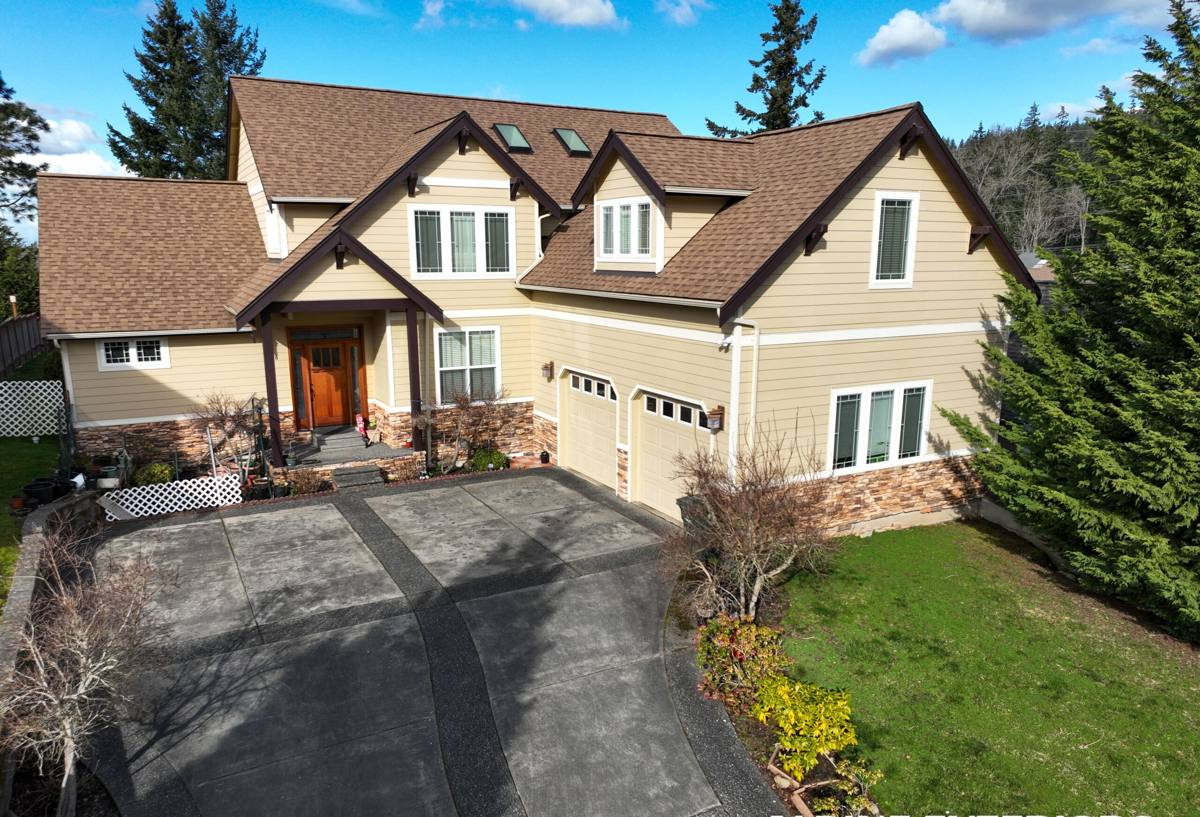
The Climate Factors That Wear These Roofs Down Faster
Salt Air and Metal Fatigue
Proximity to Bellingham Bay means a steady trace of salt in the air, and salt air is hard on exposed metal. Roof flashing, fasteners, gutter hangers, and vent caps corrode faster here than they would further inland. Corroded flashing is one of the most common hidden causes of a "storm leak" that actually started as slow metal fatigue the storm just finished off.
Moss Season's Slow Damage
Whatcom County's long damp season — roughly fall through spring — gives moss and algae months to take hold on north-facing slopes and shaded roof sections. Moss doesn't just look bad; it holds moisture against the roofing material, lifts shingle edges as it grows, and creates channels for wind-driven rain to get underneath during a storm. A roof with an active moss problem is far more likely to sustain real storm damage than a clean one, because the moss has already loosened the roof's defenses.
Wind-Driven Rain
Straight-down rain rarely causes damage on its own. Rain that's being pushed sideways by wind is a different problem — it gets forced up under shingle tabs, into flashing laps, and around chimneys and vent penetrations that were never designed to shed water moving in that direction. This is the mechanism behind most storm-related leaks we see Downtown, and it's why storm damage often shows up in spots that never leaked before.
What Storm Damage Actually Looks Like
Some damage is obvious from the ground; a lot of it isn't. Knowing both helps you catch a problem before it becomes a ceiling stain.
Signs Visible From the Ground or a Ladder
- Shingles that are cracked, curled, torn, or missing outright, especially on the side of the roof facing the prevailing wind
- Granules collecting in gutters or at downspout outlets after a storm
- Flashing around chimneys, skylights, and roof-to-wall junctions that's bent, lifted, or separated
- Sagging or overflowing gutters, which point to debris blockages that force water under the roof edge
- Visible moss mats that have shifted or torn loose during high wind
Signs That Show Up Inside
- Water stains on ceilings or upper interior walls, sometimes appearing days after the storm as trapped moisture works its way through
- Musty odor in an attic or top-floor closet
- Visible daylight through the roof deck when viewed from inside the attic
- Damp or discolored insulation directly below a roof penetration
What a Correct Storm Damage Repair Actually Involves
A storm repair done right is more than swapping out the shingles you can see. It means finding the full extent of what the storm exposed or worsened, not just the part that's leaking today.
- Full-area inspection, not a spot check. We look at the whole roof plane, not just the reported leak location, because wind damage rarely stays in one tidy spot.
- Underlayment and decking check. If water got under the shingles, the underlayment and the wood deck beneath it need to be checked for saturation or soft spots before anything new goes down.
- Flashing correction, not just resealing. A bead of sealant over failed flashing is a temporary fix. Correct repair means re-forming or replacing the flashing so it sheds water the way it's supposed to.
- Material match. Where possible, replacement shingles or panels are matched to the existing roof in profile and color so the repair blends in rather than creating an obvious patch.
- Ventilation review. Storm repairs are a good moment to confirm attic ventilation is still working correctly, since trapped moisture is what turns a small leak into a mold or rot problem.
Our Storm Damage Repair Process for Downtown Bellingham Homes
Because we're based in Fairhaven, we're not driving in from across the county when Downtown Bellingham takes a hit. Our process is the same one we'd want if it were our own roof:
- Stabilize first. If a roof is actively letting water in, the priority is getting it dried in — tarping, temporary flashing, or whatever stops further damage while a permanent repair is scheduled.
- Inspect thoroughly. We check the roof surface, flashing, gutters, and attic interior, and we document what we find in writing with photos.
- Give you a clear scope. You get a written explanation of what's damaged, what needs to happen, and roughly what it involves — no vague verbal estimate you have to take on faith.
- Support the insurance side if needed. If you're filing a claim, our documentation is written to hold up to an adjuster's review, distinguishing storm damage from pre-existing wear.
- Repair with matched materials. We replace only what needs replacing, using materials that match your existing roof as closely as possible.
- Walk the finished job with you. Before we consider it done, we go over what was repaired and answer any questions about maintenance going forward.
Repair or Replace? The Factors That Actually Decide It
Not every storm-damaged roof needs a full replacement, and not every roof that "just needs a patch" should get one. Here's what actually drives that decision:
| Factor | Leans Toward Repair | Leans Toward Replacement |
|---|---|---|
| Roof age | Under roughly 10–12 years, no widespread wear | Near or past the material's expected service life |
| Extent of damage | Isolated to one section or a few penetrations | Damage spread across multiple roof planes |
| Moss/algae history | Minimal, or recently treated | Heavy, long-term moss that's degraded shingles broadly |
| Deck condition | Dry, solid decking under the damaged area | Soft or rotted decking found during inspection |
| Material availability | Close match still manufactured | Discontinued material, patch would clearly mismatch |
An honest assessment should walk through each of these with you rather than defaulting to the more expensive option. Most storm calls we get Downtown Bellingham turn out to be legitimate repairs, not full replacements — but we won't tell you that just to keep a job smaller than it should be.
Working With Insurance on Storm Claims
Homeowners' policies generally cover sudden storm damage — wind, falling debris, hail — but they don't cover damage from gradual neglect like long-term moss growth or an aging roof that finally gave out. That distinction matters, because an adjuster will be looking for it too. Our job during the inspection is to document what's clearly storm-related separately from any pre-existing wear, with dated photos and a written scope that describes cause, not just effect. We're not a public adjuster and won't promise a claim outcome, but a clear, honest report makes the claims process faster and less contentious on both sides.
Why a Crew That Already Works Downtown Bellingham Matters
Downtown Bellingham's roofs aren't uniform. There's a real mix of older homes closer to the core with steeper, more complex rooflines, and newer builds on the surrounding streets with simpler geometry. A crew that works this neighborhood regularly already has a sense of which roof types tend to trap moss, which flashing details fail first in salt air, and how quickly a given roof style needs attention after a wind event. That familiarity shortens the inspection, sharpens the diagnosis, and means fewer surprises once the repair is underway. Being based in Fairhaven also means we can typically get eyes on storm damage quickly rather than adding it to the end of a long regional route.
Preventing the Next Storm From Doing the Same Damage
Most of what we repair after a storm was made worse by something that could have been caught earlier. A little seasonal upkeep goes a long way in this climate:
- Clean gutters and downspouts before the fall storm season starts, and again mid-winter if trees are nearby
- Have moss treated or removed before it spreads across a full roof plane, not after
- Check flashing around chimneys, skylights, and vents annually — salt air corrodes fasteners faster than you'd expect
- Trim back tree limbs that hang over the roof, since falling branches are a common source of storm impact damage
- Confirm attic ventilation is clear and functioning, so trapped moisture doesn't accelerate deck or shingle failure
- Address small leaks immediately rather than waiting for the next storm to make them worse
Choosing a Contractor for Storm Damage Repair
Storm damage brings out door-knockers who work a neighborhood once after a big weather event and are gone by the next season. A few questions help separate a real local contractor from that:
- Are they licensed and insured in Washington, and will they show you proof without being asked twice?
- Do they inspect the whole roof, or just the spot you called about?
- Do they give you a written scope of work before starting, not just a verbal number?
- Can they explain, in plain terms, why they're recommending repair versus replacement?
- Do they have an actual local presence you can find and return to next year, not just a truck that showed up after the storm?
If you're dealing with storm damage on a roof Downtown, we're happy to take a look, walk you through what we find, and give you a straightforward, no-pressure estimate. There's no cost to have us out — just an honest assessment of what your roof actually needs.