 Fairhaven Siding
 Why Ferndale Siding Takes a Different Kind of Beating
Ferndale sits close enough to Bellingham Bay and the Salish Sea that salt-laden air is a daily fact of life for anything mounted on the outside of a house. Add Whatcom County's long, wet fall-through-spring stretch and the shaded, slow-drying north and west walls that never quite catch a full day of sun, and you get siding that ages faster here than it would fifty miles inland. Driving rain off the water doesn't just wet a wall — it drives moisture sideways into seams, laps, and fastener holes that a calmer climate would leave alone. Layer on a moss season that can run eight or nine months out of the year on shaded elevations, and you have three separate stressors working on the same siding at the same time: salt, water, and organic growth.
Repair work in Ferndale has to account for all three, not just patch the visible crack or gap. A repair that only addresses the cosmetic problem and ignores the moisture path behind it tends to fail again within a season or two — which is a big part of why we get called back to re-do other contractors' quick fixes.
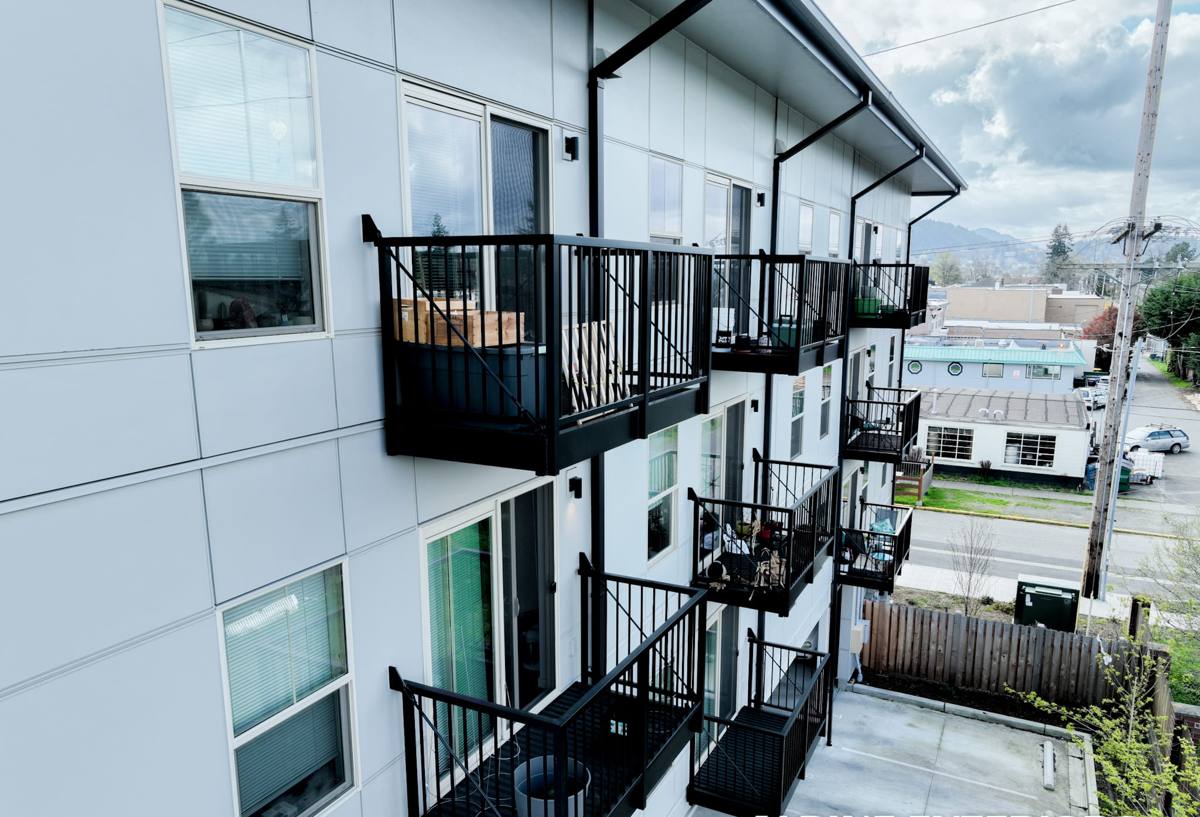
The Damage Patterns We See Most in This Area
Every siding material fails differently, but a few patterns show up again and again on Ferndale and greater Fairhaven homes:
- Moisture intrusion at seams and butt joints — caulking that was fine in a drier climate dries out, shrinks, and opens a path for wind-driven rain.
- Moss and algae staining/growth on north- and west-facing walls, fences, and anywhere siding sits close to trees or shaded landscaping.
- Cupping, buckling, or delamination in wood-based products that have absorbed moisture repeatedly without fully drying between storms.
- Rust streaking and corrosion around fasteners, accelerated by salt content in the air near the water.
- Cracked or split boards at corners and around window and door trim, where movement and moisture concentrate.
- Soft or spongy sections that indicate water has already reached the sheathing behind the siding — the most serious of these issues, since it's no longer a cosmetic problem.
Why a "Quick Patch" Often Isn't Enough Here
In a drier region, a small siding repair can genuinely be a small job — cut out the bad section, fasten in a matching piece, caulk, paint, done. In Ferndale's climate, that approach skips a step that matters: checking what's happening behind the siding. If water has been getting in for any length of time, the underlying weather-resistive barrier, flashing, or sheathing may already be compromised, and painting over a new piece of siding without addressing that just hides the problem for another season.
A correct repair here starts with figuring out why the damage happened before deciding how to fix it. Was it a caulk failure, a flashing detail that was never installed correctly, a grade or gutter issue directing extra water at that section of wall, or simple age and material fatigue from years of salt and moisture cycling? The answer changes the repair.
What We Check Before We Touch a Board
- Whether moisture has reached the sheathing or framing, not just the siding surface
- Condition of flashing at windows, doors, and horizontal trim
- Whether the weather-resistive barrier behind the siding is intact in that area
- Extent of moss/algae growth and whether it's cosmetic or has trapped moisture against the surface
- Whether the damage is isolated or a sign the whole elevation is due for attention soon
What Correct Repair Work Involves
Once we know what's actually wrong, the repair itself generally follows the same disciplined steps regardless of the material involved:
- Remove the damaged section cleanly, without disturbing more of the surrounding siding than necessary.
- Inspect and repair the barrier behind it — housewrap, flashing, or sheathing — before anything new goes back on.
- Match the replacement material in profile, reveal, and finish as closely as the original allows.
- Use corrosion-resistant fasteners appropriate for a coastal-influenced climate, not standard interior-grade hardware.
- Reseal and flash correctly at every seam, corner, and penetration — this is where most amateur and rushed repairs cut corners.
- Address the growth or staining issue at its source where possible, not just clean the surface and leave the same shaded, slow-drying conditions in place.
Skipping any one of these steps is how a repair becomes a recurring expense instead of a solved problem.
Repair or Replace? How We Help You Decide
Not every damaged section needs a full re-side, and not every "repair" job is worth doing instead of planning a replacement. We walk homeowners through this honestly rather than defaulting to whichever job is bigger.
| Factor | Leans Toward Repair | Leans Toward Replacement |
|---|---|---|
| Extent of damage | Isolated sections, one or two elevations | Widespread across most of the home |
| Underlying moisture | Contained, sheathing dry | Found in multiple areas or spreading |
| Age of existing siding | Still well within expected service life | Nearing or past its practical lifespan |
| Material condition overall | Sound elsewhere, one problem area | General fatigue, chalking, or repeated failures |
| Cost over time | One-time fix resolves the issue | Pattern of recurring repairs each wet season |
If we look at a repair and honestly think a full replacement will serve you better long-term, we'll tell you that — and explain why — rather than stack patches on a wall that's on its way out.
Our Process for Ferndale Repair Calls
We keep this straightforward: an on-site inspection first, always, because siding damage in this climate rarely tells the whole story from the ground. We look at the damaged area, check for moisture behind it, and look at the rest of the elevation for related issues before writing up a plan. You get a clear explanation of what we found, what caused it, and what the repair involves — no pressure to upgrade to a bigger job than you actually need. Once you approve the plan, we do the work, clean up fully, and walk the repaired area with you before we call it done.
Why We Only Work in James Hardie Fiber Cement
Our crews install and repair exclusively in James Hardie fiber cement siding. That matters directly for repair work in a climate like Ferndale's: Hardie's HZ5 product line is engineered specifically for climates with sustained moisture exposure, it's non-combustible, and its factory-applied ColorPlus finish resists the fading and moisture absorption that painted wood and some engineered wood products struggle with here. If your home currently has vinyl, LP SmartSide, cedar, or another fiber cement brand, we can still often make a sound repair matched to what's there — but if you're facing repeated repairs on the same wall, that's usually a sign the material itself is fighting the climate, not just bad luck. In those cases we'll talk honestly about what a transition to Hardie would look like, on your timeline, not ours.
We don't install LP SmartSide, vinyl, Cemplank, Allura, or primed wood siding — not because those products have no merit, but because after years of doing repair and replacement work in exactly this kind of coastal, wet climate, Hardie has consistently held up better against the specific combination of salt, sustained moisture, and moss pressure that Whatcom County homes deal with.
Why Hiring a Crew That Already Works This Area Matters
A contractor who mostly works drier, inland areas can still do competent general carpentry — but siding repair in a salt-air, high-moisture microclimate rewards local pattern recognition. Knowing which elevations in this area typically take the worst weather, which fastener and flashing details actually hold up here, and how aggressive the moss season gets on shaded walls all comes from doing this work locally and repeatedly. It shows up in fewer callbacks and repairs that actually last through the next wet season instead of needing attention again in a year.
Signs It's Time to Call
- Visible cracking, splitting, or gaps at seams and corners
- Soft, spongy, or discolored spots when you press on the siding
- Heavy moss or algae buildup that keeps returning after cleaning
- Peeling paint or bubbling finish concentrated in one area
- Rust streaks running down from fastener locations
- Rising energy bills with no other obvious cause — sometimes a sign of moisture-compromised insulation behind damaged siding
If you're seeing any of these on a home in Ferndale or elsewhere around Fairhaven, it's worth having someone look before the next storm season adds to the problem. We offer free, no-pressure estimates — we'll tell you honestly what we find and what your real options are.