 Fairhaven Siding
 Custom Windows Built for Bellingham's Weather
Bellingham sits close enough to Bellingham Bay that salt-laden air reaches homes well inland, and it sits under a weather pattern that delivers months of low-angle rain, wind-driven storms off the Strait, and a long damp season where moss and mildew get a foothold on anything that stays wet too long. Windows take the brunt of this. They're the one part of a home's envelope with moving parts, seals, and seams that all have to keep working year after year in that environment. A window that's a great fit for a dry inland climate can be the wrong choice here, and a window installed correctly in Arizona can still fail in Whatcom County if the flashing and sealing details aren't adapted to our rain volume.
"Custom windows" doesn't just mean an odd-shaped opening or a specialty shape over a stairwell, though we do plenty of that. It also means matching window styles, proportions, and materials to the home you actually have — a 1920s bungalow near Fairhaven's older streets, a mid-century rambler, or a newer build — instead of forcing a stock size into an opening that was never square to begin with. Older Bellingham homes in particular often have settled framing, non-standard rough openings, and original trim details worth preserving. Custom work respects that instead of papering over it.
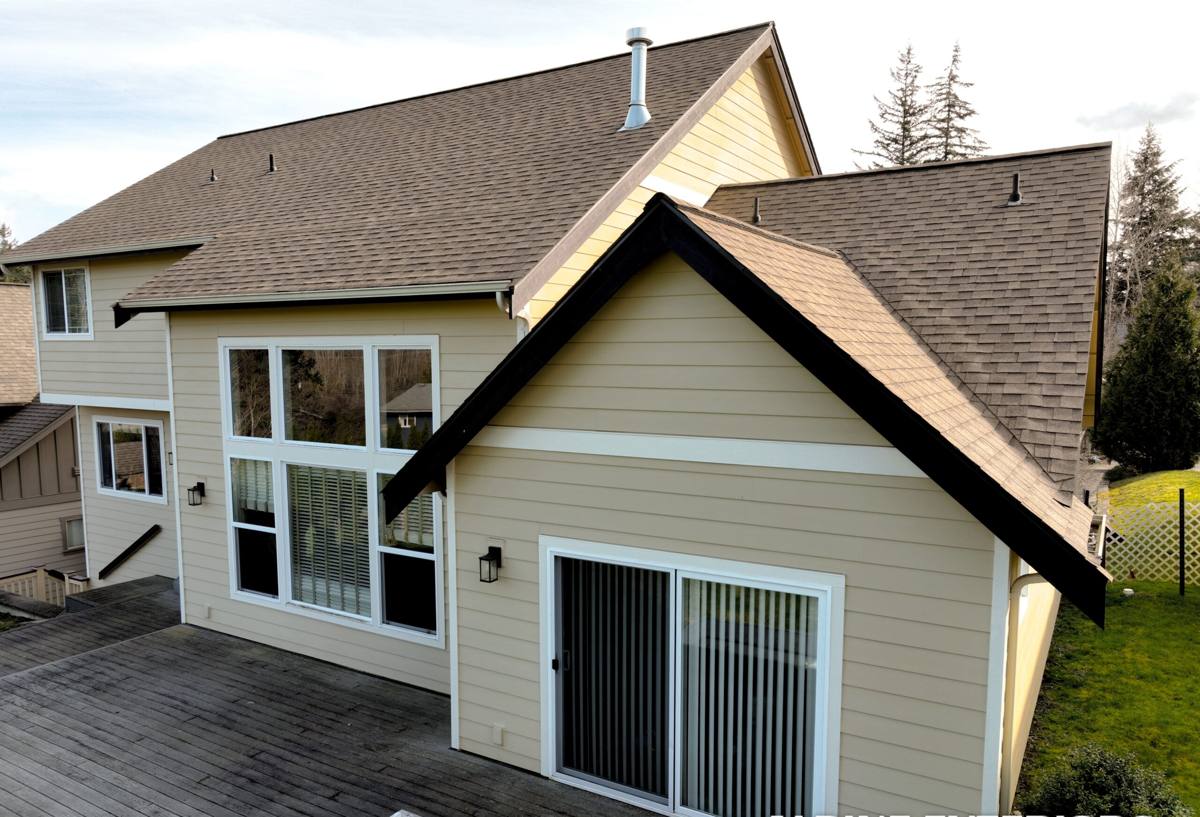
What Local Homes Actually Need From a Window
Before we talk product or price, it helps to know what a window in this climate is actually being asked to do:
- Shed wind-driven rain without letting water track behind the trim or into the wall cavity
- Resist condensation on the interior glass during cold, damp stretches — a common complaint we hear from homeowners with older aluminum-frame windows
- Hold a seal through decades of seasonal wood movement, since Whatcom County swings between soaked winters and drier summers
- Resist mold and mildew growth in the frame and sill, especially on north- and west-facing exposures that stay shaded and damp longer
- Stand up to salt air without corroding hardware, especially on homes closer to the bay
None of that is exotic — it's just what "correct" looks like here. The problem is that a lot of window failures we get called out to inspect aren't product failures at all. They're installation failures: missing or reversed flashing tape, no sill pan, caulk used as a substitute for proper flashing, or a window that was never shimmed level so it racks and binds within a few years.
Where Moss Season Comes In
Moss doesn't just grow on roofs. It takes hold on window sills, in frame corners, and along horizontal trim that stays shaded and wet for weeks at a stretch — usually late fall through early spring. Left alone, that moisture and organic growth breaks down caulk and finish faster than it would in a drier climate, which is why sill design, drainage, and material choice matter more here than in a lot of the country.
Material Options: What We Recommend and Why
There's no single "best" window material for every Bellingham home — it depends on the house, the budget, and how much upkeep you want to take on. Here's how the common options actually perform in this climate:
| Material | How It Handles Our Climate | Maintenance | Best Fit |
|---|---|---|---|
| Vinyl | Won't rot or corrode; good moisture resistance; can expand/contract with temperature swings | Low — occasional cleaning | Budget-conscious replacements, rental properties, most standard openings |
| Fiberglass | Very stable dimensionally, holds paint well, strong seal life in wet climates | Low to moderate | Homeowners wanting a long-term, low-drama window with a paintable finish |
| Wood (clad exterior) | Excellent look for period homes; exterior cladding protects against our rain if detailed correctly | Higher — interior wood needs periodic attention | Historic or craftsman-style homes where matching original sightlines matters |
| Aluminum | Prone to condensation and, near the bay, corrosion over time unless thermally broken | Moderate | Limited use cases; we're selective about where we recommend it here |
We don't push one brand or material on every job. What we do insist on is that whatever you choose gets installed with flashing and drainage details suited to our rain volume — that's the part that actually determines whether a window lasts 10 years or 30.
What a Correct Installation Actually Involves
This is the part that separates a window that performs for decades from one that leaks within a few winters. Our process for a Bellingham custom window install includes:
- Opening inspection — checking the rough opening for square, level, and any existing water damage or rot before anything new goes in. Older homes especially often reveal issues here that need addressing first.
- Sill pan installation — a sloped, sealed pan under the window that gives any water that gets past the sash a way out, instead of pooling against the wall sheathing.
- Proper flashing sequence — flashing tape and building paper integrated in the correct shingle-lap order (bottom to top) so water is always directed outward and downward, never trapped behind trim.
- Correct shimming and fastening — the window set plumb, level, and square, with shims at the right points so the frame doesn't rack, bind, or put stress on the seals over time.
- Insulation and air sealing — the gap between frame and rough opening filled with a low-expansion foam or backer rod and sealant, not stuffed with fiberglass that does nothing to stop air and moisture movement.
- Exterior trim and caulking — finished with a sealant rated for our climate and UV exposure, applied at the right joints (not as a substitute for flashing).
- Final function check — every sash operated, locked, and checked for a tight, even seal before we call the job done.
Skip or shortcut any one of these steps and you can end up with a window that looks fine for a year or two and then starts showing staining, soft trim, or drafts — right around the time the original installer is long gone.
Signs Your Current Windows Are Losing the Battle
If you're not sure whether it's time to look at replacement or repair, these are the signs we see most often on Bellingham homes:
- Fogging or condensation between the panes of a double-pane window — the seal has failed
- Soft or discolored trim and sill wood, especially on north- or west-facing windows
- Visible moss or persistent black staining on sills and lower trim
- Drafts you can feel even with the window fully latched
- Windows that are difficult to open, close, or lock — often a sign the frame has racked out of square
- Paint or finish failing faster on window trim than on the surrounding siding
Any one of these on its own might just mean a repair or a re-caulk. Several together, especially on an older window, usually mean it's cheaper long-term to replace than to keep patching.
Cost Factors Worth Understanding
We're not going to quote a number here because every job is different, but these are the variables that actually move the price:
| Factor | Why It Matters |
|---|---|
| Standard vs. custom size/shape | Non-standard openings require special-order units, which cost more and take longer to arrive |
| Material (vinyl vs. fiberglass vs. wood-clad) | Material cost varies significantly and affects long-term maintenance |
| Condition of the existing opening | Rot repair or reframing adds labor before the new window can even go in |
| Number of windows done at once | Doing several windows in one visit typically reduces per-window labor cost |
| Trim and interior finish work | Matching existing interior casing, especially on older homes, adds time |
We'll walk your home, look at each opening, and give you a written estimate that breaks these out — no guessing after the fact.
Why Hire a Crew That Already Works Bellingham
Window installation isn't one-size-fits-all, and a crew that mostly works drier inland climates may not think twice about the details that matter most here — a proper sill pan, the right flashing sequence, drainage that accounts for sustained rain rather than the occasional shower. We work in Whatcom County year-round, which means we're used to sequencing installs around our weather rather than hoping for a dry week, and we know what the first few winters of driving rain and salt air will do to a job that was rushed or under-flashed.
We also know the housing stock here — the older Fairhaven-area homes with settled framing and original trim worth preserving, alongside newer builds with straightforward standard openings. That local familiarity means fewer surprises once we open up your walls and fewer callbacks after the job is done.
What to Expect When You Work With Us
A straightforward process, start to finish:
- An in-person walk-through of every window you're considering, inside and out
- An honest assessment of what's failing, what's still sound, and what your real options are
- A written estimate broken down by window, material, and labor — no vague lump sums
- A realistic install timeline, including lead time for any custom-ordered units
- Cleanup and a final walkthrough before we consider the job complete
If you're in Bellingham and dealing with drafty, foggy, or failing windows — or you're planning a renovation and want the openings done right the first time — we're happy to come take a look. Fill out the form below for a free, no-pressure estimate.