 Fairhaven Siding
 Why Composite Decking Fits Downtown Bellingham's Climate
Downtown Bellingham sits close enough to Bellingham Bay that salt-tinged air is a real factor for anything built outdoors, and the neighborhood gets the same long, wet Whatcom County season as the rest of the region — driving rain off the Pacific from fall through spring, and shaded, damp corners that can grow moss nearly year-round. A deck built here has to handle all three at once: salt exposure that speeds up corrosion on fasteners and hardware, standing moisture that works into end grain and screw holes, and moss or algae that takes hold wherever a surface doesn't get much sun or airflow.
Traditional wood decking can be made to work in this climate, but it needs a maintenance routine — sanding, staining, sealing — that most homeowners fall behind on within a couple of seasons, and once that routine slips, moisture damage moves fast. Composite decking, a wood-fiber-and-polymer board that's usually capped with a protective polymer shell, is built to resist exactly those conditions. It doesn't absorb water the way solid wood does, it won't rot or splinter, and a properly capped board resists the surface staining that gives moss and algae something to grip. That doesn't make it maintenance-free — nothing outdoors survives a Whatcom County winter without some upkeep — but it shifts the work from sanding and sealing to occasional cleaning.
What Downtown Bellingham's Homes and Lots Mean for a Deck Build
Hillside Lots and Multi-Level Decks
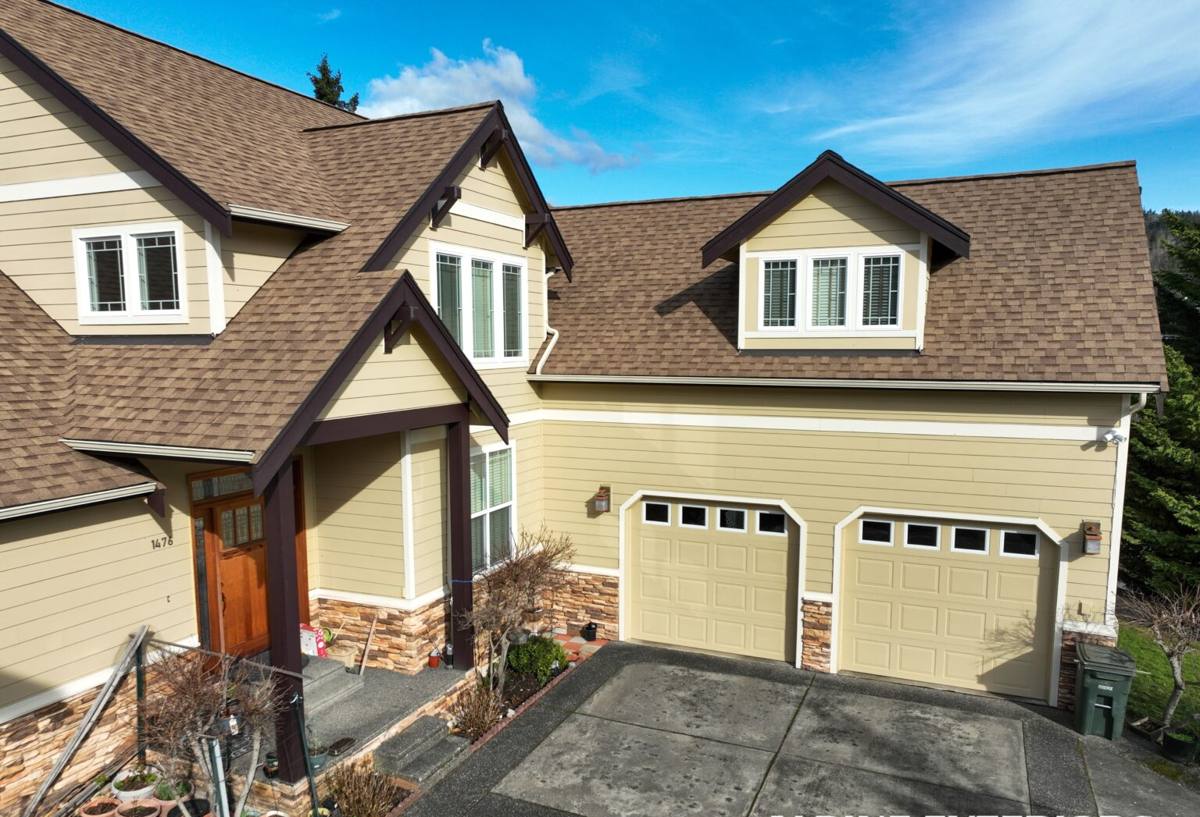
A lot of downtown and near-downtown Bellingham properties sit on ground that slopes toward the bay, so decks are often elevated well above grade, stepped across two or three levels, or built to bridge a grade change rather than sit flat on level ground. That changes the engineering, not just the layout — taller posts need bracing and footings sized for the actual height and wind exposure, not a standard ground-level deck plan, and stairs and railings end up being a bigger part of the job than they would be on a flat suburban lot.
Tight Urban Access
Lots downtown, and the streets and alleys around them, tend to run tighter than a typical suburban block — narrow side yards, shared driveways, limited room to stage material or park a trailer for a few days. A crew unfamiliar with the area often loses real time figuring out access on the fly. We plan material staging, delivery, and debris removal around it before the job starts instead of improvising once the truck is already there.
What a Correct Composite Deck Installation Actually Involves
Composite boards are only as good as what's underneath them. Most composite deck problems we're called out to look at didn't start with the boards — they started with the framing, flashing, or fastening underneath.
Framing and Ledger Flashing
Where a deck attaches to the house, correct ledger flashing is the single most important — and least visible — part of the job. Get it wrong and water tracks behind the flashing into the house framing long before it ever shows up as a stain inside. Given how much rain this part of Washington gets over a typical winter, we treat ledger flashing as a non-negotiable step, not an add-on.
Fasteners and Board Spacing
Composite boards expand and contract with temperature more than solid wood does, so manufacturer-specified gapping and a proper hidden-fastener system matter more than people expect. Too tight, and boards can buckle during a warm stretch; too loose, and they look sloppy and collect debris and moisture in the gaps. Coastal humidity swings make getting this right even more important here than in a drier inland climate.
Drainage and Ventilation Underneath
Composite decking sheds surface water well, but the space underneath still needs to drain and breathe — especially on the low, shaded, or partially enclosed decks common on hillside downtown lots. Without airflow underneath, that crawlspace-like gap stays damp all winter and becomes exactly the kind of environment moss, algae, and mildew like.
Composite vs. Wood vs. PVC Decking: What Actually Fits This Climate
All three materials show up on decks around Bellingham. Here's how they generally compare for a coastal, wet-winter climate like Downtown Bellingham's:
| Material | Upfront Cost | Salt Air & Moisture Resistance | Maintenance Needed | Typical Lifespan |
|---|---|---|---|---|
| Pressure-Treated Wood | Lowest | Fair — absorbs moisture, needs regular sealing | Annual cleaning, periodic staining/sealing | 10-15 years with consistent upkeep |
| Capped Composite | Mid-range | Strong — resists moisture, salt, and surface staining | Occasional washing, no sanding or sealing | 25-30+ years, typically manufacturer-warrantied |
| PVC / Vinyl Decking | Highest | Strong — fully synthetic, no wood fiber to absorb water | Occasional washing | Similar to or longer than composite |
For most Downtown Bellingham homes we work on, capped composite lands in the sweet spot: meaningfully lower maintenance and better moisture performance than wood, a lower upfront cost than full PVC, and the wood-look board options that fit an older home's character better than an all-plastic product usually does.
Our Process, From Estimate to Finished Deck
- On-site walk-through of the existing deck or build area, including access, grade, and how the house's water management (gutters, downspouts, grading) interacts with the deck footprint.
- A written estimate that spells out material, framing scope, ledger and flashing work, and a realistic timeline — no vague allowances.
- Permit review and submission where required, handled as part of the job rather than left for the homeowner to sort out.
- Demo of the old deck (if applicable) and prep of framing, footings, and ledger attachment.
- Composite decking, hidden fasteners, and railing installation to manufacturer spec.
- Final walk-through and site cleanup before we call it done.
Living With a Composite Deck Through a Whatcom County Winter
Even a well-built, correctly ventilated composite deck will pick up some surface film during a long wet season — that's biology, not a defect, and it happens to some degree with every decking material in this climate. The difference with composite is that it usually washes off instead of needing to be stripped and resealed. A broom, mild soap, and water handle most seasonal buildup; a pressure washer can be used on composite but should stay at a wide angle and reasonable distance, since too much pressure too close can etch the capped surface over time.
Two things matter more than scrubbing: keeping gutters and downspouts directing water away from the deck rather than sheeting onto it, and keeping nearby vegetation trimmed back enough that the deck actually gets some airflow and light. Decks tucked under overhangs or surrounded by close plantings — common on tighter downtown lots — hold onto moss and algae longer regardless of what the decking is made of, simply because they don't dry out between storms.
Permits and Working in Downtown Bellingham
Most raised deck construction in Bellingham requires a building permit, and properties close to the historic Fairhaven district or near the shoreline can sometimes fall under additional design or environmental review. Requirements vary by address and by how the deck is configured, so we confirm what applies to a specific property before pulling any permit rather than assuming a standard set of rules covers every downtown lot. Handling that step correctly up front avoids the far more expensive problem of redoing work that didn't meet code.
Checklist: What to Ask Before You Hire a Downtown Deck Contractor
- Do they have recent experience with elevated, multi-level, or hillside deck framing — not just flat, ground-level decks?
- Will they detail exactly how ledger flashing will be installed and inspected before boards go down?
- Do they handle permit submission, or leave it entirely to the homeowner?
- Can they explain manufacturer-specified fastener and gapping requirements for the composite product they're proposing?
- Do they have a plan for material staging and access on a tight urban lot before the job starts?
- Is the estimate itemized enough to show framing, flashing, and material scope separately, not just one lump sum?
Why a Local Crew That Already Works Downtown Bellingham Matters
None of the details above are exotic — proper flashing, correct fastener spacing, real drainage underneath — but they're the details that get skipped when a crew is unfamiliar with a neighborhood's older housing stock, sloped lots, and tight access. A crew that already works Downtown Bellingham has seen the hillside framing quirks, knows what a Whatcom County winter does to an underventilated deck, and isn't guessing at how to stage a job on a narrow lot. That familiarity shows up less in what gets talked about during the estimate and more in what doesn't go wrong two winters later.
If you're weighing composite decking for a home in or near Downtown Bellingham, we're happy to take a look and put together a straightforward, no-pressure estimate — just fill out the form below.