 Fairhaven Siding
 Why Downtown Bellingham Homes Need a Different Approach to Windows
Downtown Bellingham sits close enough to the water that salt-laden air is a constant, not an occasional visitor. Add Whatcom County's long wet season — months of driving rain pushed sideways by wind off the bay — and a moss and mildew season that can stretch from fall through spring, and you have a climate that is genuinely harder on windows than most of the country deals with. A window that would coast along fine in a dry inland climate can fail early here if it wasn't built, sealed, or installed with this specific environment in mind.
Downtown Bellingham also has a mixed housing stock — older homes with original wood-frame windows sitting next to remodels and infill construction from the last few decades. That mix matters. A window replacement plan that works for a 1920s home with settled framing is not the same plan that works for a 1990s vinyl-clad house. Fairhaven Siding Company has spent years working in and around this neighborhood, and the pattern is consistent: the homes that hold up best are the ones where the replacement job accounted for the local climate from the start, not just the window unit itself.
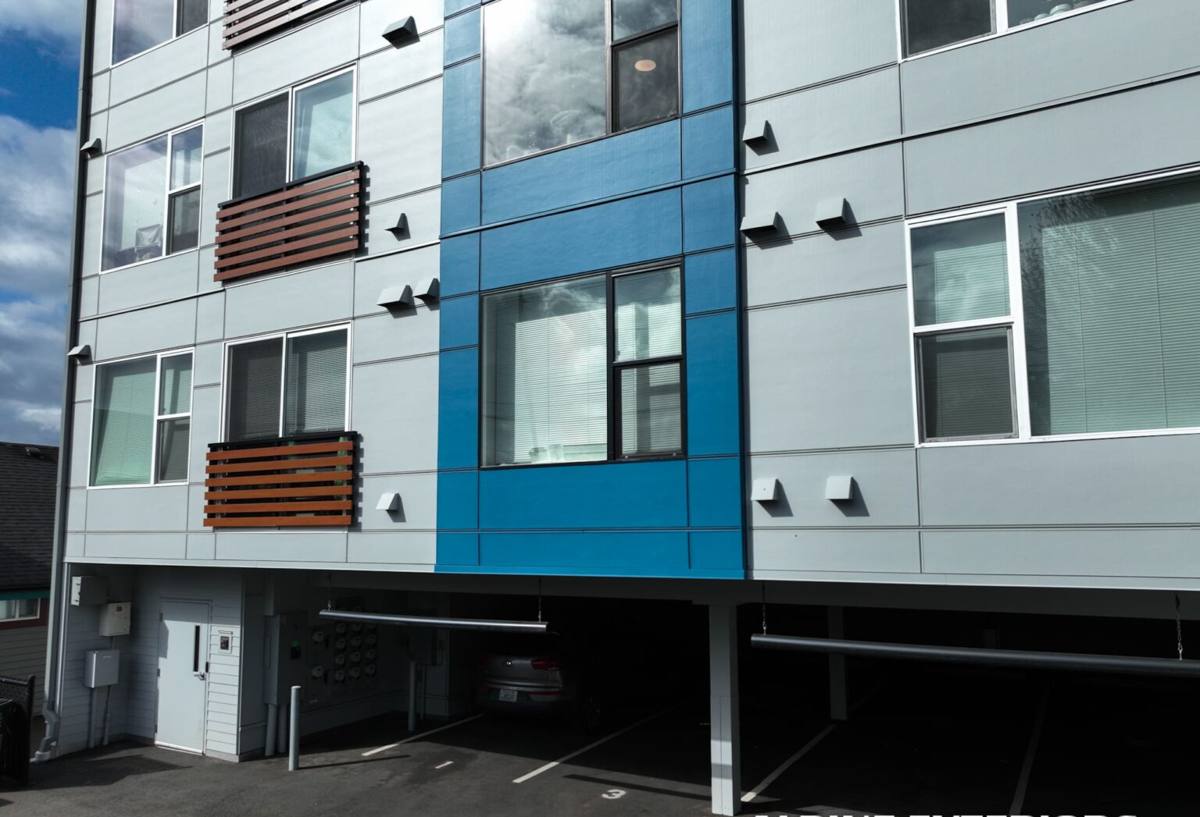
What Whatcom County Weather Actually Does to Windows Over Time
Salt Air
Salt in the air accelerates corrosion on hardware — hinges, cranks, balance systems, and especially aluminum components that aren't specifically rated for coastal exposure. It also degrades cheaper seals and gaskets faster than inland installations, which shows up years later as air leaks and fogging between panes.
Driving Rain
Wind-driven rain doesn't just fall on a window, it gets pushed sideways into any gap in the flashing, sill pan, or sealant. Most water intrusion problems we find during a replacement aren't from a bad window — they're from water that was never properly directed away from the wall assembly in the first place, often because the original installation didn't account for wind-driven conditions.
Moss and Sustained Moisture
A long moss season means prolonged dampness sitting against trim, sills, and the wood framing around window openings, especially on shaded or north-facing walls common in this neighborhood's older lots. Sustained moisture is what turns a small gap into rot, and rot around a window opening is one of the most expensive problems to fix if it's caught late instead of during the replacement.
Signs a Downtown Bellingham Home Needs Window Replacement
Some of these are obvious, some show up gradually enough that homeowners get used to them before realizing they're a problem:
- Visible fog or moisture trapped between glass panes — a sign the seal has failed
- Drafts you can feel near the frame even with the window fully latched
- Soft, spongy, or discolored wood on the sill, jamb, or exterior trim
- Windows that are hard to open, close, or lock, or that have dropped out of square
- Condensation forming on the inside of the glass regularly during colder months
- Visible corrosion or stiffness in hardware, especially on walls facing the water
- Noticeably higher heating bills without another clear cause
- Paint or caulk around the window failing faster than it does elsewhere on the house
Any one of these on its own might just need a repair. Several at once, especially combined with a window's age, usually means replacement is the more honest recommendation.
What a Correct Window Replacement Job Actually Involves
The window unit itself gets most of the attention, but in this climate the installation details matter just as much, if not more. A correct job includes:
Opening Prep and Inspection
Before a new window goes in, the opening gets inspected for hidden rot, soft framing, or prior water damage. Skipping this step is the single most common shortcut that leads to problems resurfacing a few years later, hidden behind a brand-new window.
Flashing and Drainage
Proper flashing directs water that gets past the exterior surface back out, rather than letting it sit against the framing. Given how much wind-driven rain this area sees, this is not optional detail work — it's the difference between a window that stays dry for decades and one that quietly rots the wall around it.
Sealing Rated for Coastal Conditions
Sealants and gaskets should be appropriate for salt air and sustained moisture exposure, not just standard-grade materials that are fine in a drier climate. This is a small cost difference at install time and a large difference in how the window performs ten years later.
Hardware Selection
Locks, cranks, and balance systems should be chosen with corrosion resistance in mind, especially for homes closer to the water. This is a detail that's easy to overlook because it doesn't show up until a few years in.
Choosing the Right Window Material for This Climate
There isn't one universally "best" window material — the right choice depends on the home's age, style, budget, and how exposed it is to salt air and driving rain. Here's how the common options generally compare for Whatcom County conditions:
| Material | Moisture & Salt Air Behavior | Maintenance | Typical Fit |
|---|---|---|---|
| Vinyl | Doesn't corrode, handles moisture well, but can flex in temperature swings | Low — no painting or sealing needed | Most homes, especially budget-conscious replacements |
| Fiberglass | Very stable in wet and salty air, resists warping and corrosion | Low to moderate | Homes wanting durability with a more refined appearance |
| Wood | Classic look but vulnerable to sustained moisture and rot if not maintained | High — regular painting and sealing required | Historic or period-style homes where appearance is a priority |
| Wood-Clad (wood interior, metal or vinyl exterior) | Better moisture resistance on the exposed side, wood warmth inside | Moderate | Homes wanting a wood interior look without full wood maintenance |
| Aluminum | Prone to corrosion in salt air unless specifically coated and rated for coastal use | Moderate to high near the water | Limited use here unless coastal-rated |
For homes in and immediately around Downtown Bellingham, we generally steer clients away from standard aluminum frames unless they're specifically rated for coastal exposure — not because aluminum is a bad material everywhere, but because untreated aluminum's corrosion behavior in salt air is a real, predictable maintenance burden that most homeowners don't want to sign up for. Vinyl and fiberglass tend to be the more practical everyday choices, with wood or wood-clad reserved for homes where matching an existing architectural style matters more than minimizing upkeep.
How Our Process Works
- On-site assessment. We look at existing windows, framing condition, and any signs of past water intrusion before recommending anything.
- Honest scope and options. We walk through material and style options with real trade-offs, not a one-size pushed product.
- Measurement and ordering. Precise measurements matter more in older homes where openings have shifted slightly over time.
- Removal and opening inspection. Old windows come out carefully, and we check the opening for hidden damage before anything new goes in.
- Installation with climate-appropriate flashing and sealing. This is where most of the long-term performance is actually determined.
- Final check and cleanup. Every window is tested for operation and seal before we consider the job done.
Cost Factors Worth Understanding
Window replacement pricing varies by opening size, material, number of windows, and what's found once the old window comes out. Rather than quote a number that won't reflect your actual home, here's what tends to move the price up or down:
| Factor | Effect on Cost |
|---|---|
| Number of windows replaced at once | Doing multiple windows in one visit typically lowers the per-window cost |
| Material (vinyl vs. fiberglass vs. wood) | Vinyl is generally the most budget-friendly; wood and wood-clad cost more upfront |
| Hidden rot or framing damage | Repair work discovered during removal adds cost but prevents a repeat problem later |
| Window size and configuration | Larger openings, custom shapes, or multi-pane configurations cost more than standard sizes |
| Access and home age | Older openings that have shifted out of square can take more labor time to fit correctly |
We'd rather walk your home and give you real numbers than throw out a broad range that doesn't mean much either way.
Why Hiring a Crew That Already Works Downtown Bellingham Matters
A contractor who works this neighborhood regularly already understands which homes tend to have hidden rot around older openings, which walls take the worst of the wind-driven rain, and which window details fail early if they're not done right the first time. That's not something you can fully get from a general contractor who mostly works inland or in drier parts of the state — the failure patterns here are specific to this coastline and this county's weather.
It also means faster, more accurate assessments. When we know the neighborhood, we're not guessing at what a home's exposure looks like across a full wet season — we've already seen how it plays out on similar homes nearby.
Questions to Ask Before You Hire Anyone for Window Replacement
- Will you inspect the framing and opening for rot before installing, not just after a problem shows up?
- What flashing and sealing approach do you use, and is it appropriate for coastal wind-driven rain?
- Are the materials and hardware you're recommending suited to salt air exposure, not just a generic spec?
- What's included in the warranty, and does it cover installation as well as the window unit itself?
- Can you explain why you're recommending one material over another for my specific home?
If a contractor can't answer these clearly, that's worth noticing before you sign anything.
If you're weighing window replacement for a home in or around Downtown Bellingham, we're happy to take a look and give you a straight assessment — no pressure, no inflated scope. Fill out the form below for a free estimate, and we'll walk you through exactly what your home needs and why.