 Fairhaven Siding
 Downtown Bellingham Siding Takes a Different Kind of Beating
Downtown Bellingham sits close enough to Bellingham Bay that salt-laden air is a daily fact of life, not an occasional nuisance. Add in the driving, wind-blown rain that rolls off the Salish Sea for months at a stretch, plus the deep shade and moss growth that comes with mature street trees and tightly spaced older homes, and you have a siding environment that is genuinely harder on exterior materials than most inland Whatcom County neighborhoods. Homes here don't fail because owners neglected them. They fail because the siding installed on them was never built for this specific combination of stressors, or because a repair years ago patched the symptom without solving the underlying moisture problem.
We work on siding repair in this neighborhood regularly, and the patterns repeat: corrosion at fastener heads, soft or delaminating panels at ground level and roof lines, and moss holding moisture against the wall long after a storm has passed. Understanding why those patterns happen is the first step to fixing them correctly instead of temporarily.
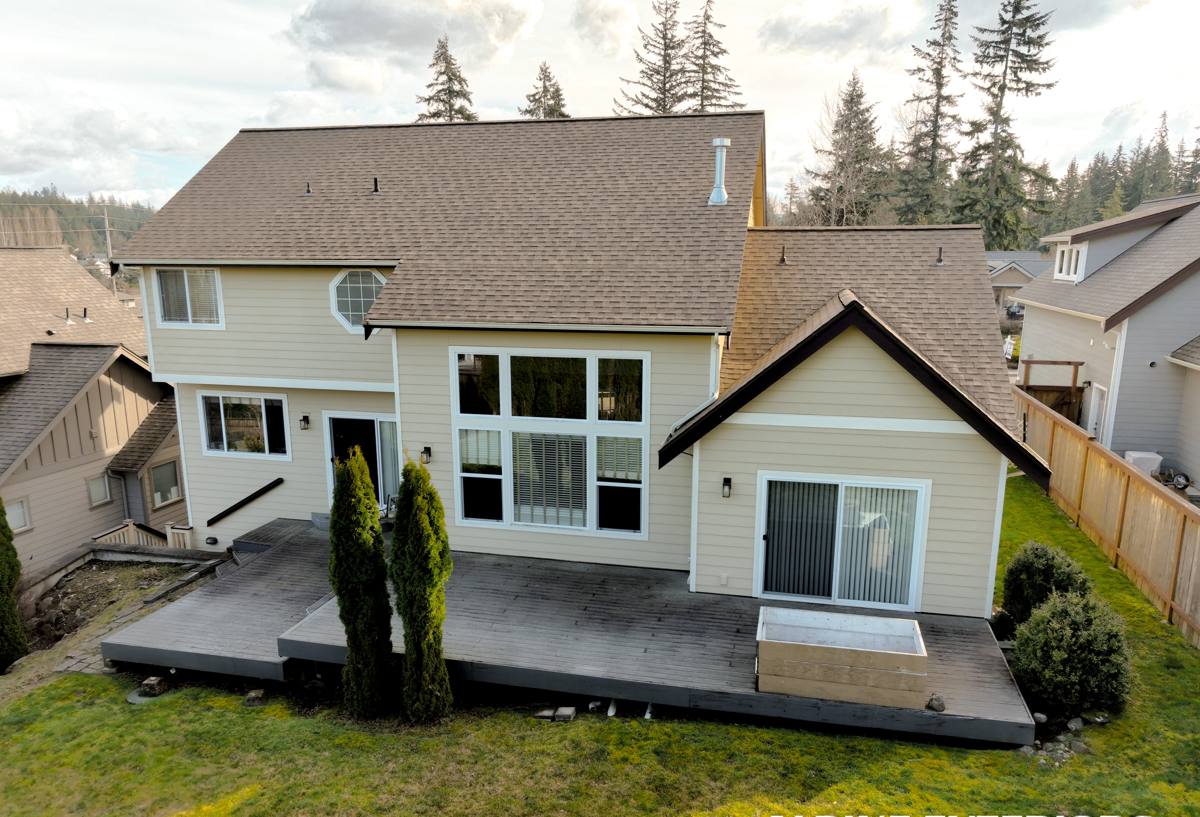
What Salt Air, Rain, and Moss Actually Do to Siding
Salt Air and Metal Fasteners
Airborne salt accelerates corrosion on exposed nail heads, trim flashing, and any metal fastener that isn't fully sealed or coated for a marine environment. Once a fastener starts to rust, it can telegraph a stain through paint or factory finish, and the tiny gap that forms around a corroding nail becomes a new entry point for water. On a home a few blocks from the water, this happens faster than most manufacturers' generic warranty language accounts for.
Driving Rain and Wall Assembly Moisture
Wind-driven rain doesn't just wet the surface of a wall, it pushes water sideways and upward under laps, at trim joints, and around windows and doors. If the water-resistive barrier, flashing, and siding overlaps behind the finish material aren't detailed correctly, moisture works its way behind the cladding and stays there, because Bellingham's damp climate rarely gives a wall enough dry stretch to fully release trapped water between storms.
Moss, Shade, and Trapped Moisture
Downtown Bellingham's tree cover and close home spacing mean many walls stay shaded and damp far longer than a full-sun wall would. Moss and algae take hold on horizontal trim, under eaves, and along ground-level courses, and once established they hold moisture against the siding surface almost continuously. On wood-based products this accelerates rot; on any siding it accelerates paint and finish failure and creates a cosmetic problem that keeps coming back until the moisture source and shade condition are addressed together.
Signs a Downtown Bellingham Home Needs Siding Repair
Some damage is obvious. A lot of it isn't, especially if it's been developing behind the surface for a season or two. Walk your exterior and look for these:
- Soft, spongy, or bubbling spots when you press on a panel, especially near the ground, under windows, or at deck and porch attachments
- Rust streaking or bleed-through around nail heads, corner trim, or flashing
- Persistent green or black staining on horizontal surfaces that returns shortly after cleaning
- Visible gaps, cracking, or separation at panel seams, corner boards, and trim joints
- Peeling or bubbling paint concentrated in one area rather than spread evenly across the wall
- A musty smell or visible staining on interior walls that back up to an exterior wall section
- Warping or bowing panels, particularly on shaded, north-facing, or wind-exposed elevations
Any one of these can be an isolated, inexpensive fix. Several of them together, especially on the same wall, usually mean water has been getting behind the siding for a while and the repair needs to address the wall assembly, not just the visible panel.
What a Correct Siding Repair Actually Involves
Diagnosing the Cause, Not Just the Symptom
A repair that only replaces the damaged board without finding out why it failed is a repair you'll be paying for again in a few years. Before we touch a panel, we check the flashing above and below it, the condition of the water-resistive barrier if it's exposed, the caulking at trim and penetrations, and whether the damage pattern points to a one-time event or an ongoing moisture path.
Matching Materials the Right Way
Patching in a mismatched panel, an old vinyl scrap, or the wrong plank profile creates a visible seam and, worse, a new place for water to enter. When we repair a section of James Hardie siding, we match the exact plank exposure, texture, and factory finish color so the repair blends into the wall rather than standing out as an obvious patch. When an existing home has a different siding product entirely, we'll talk through whether a like-for-like patch makes sense or whether the affected section is a better candidate for a Hardie transition.
Flashing and Sealant Details That Actually Hold Up
Most repeat siding failures trace back to flashing and sealant, not the siding material itself. Correct repair work re-flashes window and door heads, corrects any missing kick-out flashing at roof-to-wall intersections, and uses sealants rated for the temperature swings and UV exposure this region actually sees, not whatever caulk was on hand at the time.
Repair vs. Replacement: How We Make the Call
Not every damaged section needs a full re-side, and not every home is a good candidate for spot repair. This is the general framework we use when we're standing in front of a wall in Downtown Bellingham:
| Factor | Repair Usually Makes Sense | Replacement Usually Makes Sense |
|---|---|---|
| Extent of damage | Isolated to one or two wall sections | Spread across multiple elevations or the whole home |
| Underlying material | Existing siding is James Hardie or another sound fiber cement | Existing siding is a product prone to widespread moisture or warranty issues |
| Age of siding | Well within its expected service life | Near or past the age where recurring repairs become the norm |
| Moisture history | A single identifiable cause, now corrected | Chronic, whole-wall moisture intrusion with no single fixable source |
| Cosmetic match | Color and profile are still available or close enough to blend | Discontinued color or profile makes patching visibly obvious |
We'll always tell you honestly which category your situation falls into. A repair-first recommendation isn't us trying to sell a smaller job, and a replacement recommendation isn't us trying to upsell, it's what the wall assembly actually needs.
Why We Repair Exclusively With James Hardie Fiber Cement
A Factory Finish That Repairs Cleanly
James Hardie's ColorPlus factory finish is baked on under controlled conditions, which means a repaired section can be matched to the existing color and sheen far more reliably than field-painted materials, and the finish itself resists the fading and chalking that make old repairs stand out over time.
Built for This Climate Specifically
Hardie's HZ5 product line is engineered for regions with significant moisture exposure, including freeze-thaw cycling and prolonged damp conditions, which describes a Whatcom County winter well. Because it's fiber cement, it's non-combustible and doesn't feed rot, mold, or insect damage the way wood-based or wood-fiber siding products can, which matters directly in a shaded, moss-prone neighborhood like this one.
Warranty Coverage That Follows the Home
James Hardie backs its products with a strong, transferable warranty, which protects the investment for you and for whoever owns the home next. We only install and repair with materials we're willing to stand behind long after the job is done, and that's a big part of why we standardized on this product system instead of vinyl, LP SmartSide, or other fiber cement alternatives.
Our Siding Repair Process for This Neighborhood
1. On-Site Inspection
We walk the affected areas, check flashing and moisture paths, and identify whether the issue is isolated or part of a broader pattern on the home.
2. Honest Scope and Estimate
You get a clear explanation of what we found, why it happened, and a straightforward estimate, no pressure, no inflated scope.
3. Repair, Re-Flash, and Seal
We correct the moisture path first, then replace damaged panels with properly matched material, and finish with flashing and sealant details built for driving rain and salt exposure.
4. Cleanup and Walkthrough
We clear debris, walk the repair with you, and point out any other spots worth keeping an eye on before they become a bigger job.
Why a Crew That Already Works Downtown Bellingham Matters
Siding repair in this neighborhood isn't the same trade problem as siding repair on a dry, open lot inland. A crew that regularly works close to Bellingham Bay already knows to expect corrosion at fasteners years before it would show up elsewhere, already accounts for shade and moss when planning a repair timeline, and already understands which wall assemblies in older Downtown Bellingham construction tend to trap moisture. That local pattern recognition is the difference between a repair that lasts and one that's back on the schedule in two winters.
If you're seeing soft spots, staining, moss buildup, or recurring paint failure on your Downtown Bellingham home, we're happy to take a look and give you a clear, honest read on what's going on. Reach out for a free, no-pressure estimate using the form below.