 Fairhaven Siding
 Downtown Bellingham Roofs Work Harder Than Most
Downtown Bellingham sits close enough to Bellingham Bay that salt-laden air is a constant factor, and the terrain around it means wind-driven rain comes in sideways more often than most homeowners expect. Add in a moss season that can stretch from early fall through late spring in this part of Whatcom County, and you have a roof that's under real, sustained pressure almost year-round. It's not dramatic weather — no hurricanes, no hailstorms — it's just relentless, and relentless is what wears roofs out.
A lot of the housing stock in and around downtown includes older homes with roofs that have been patched more than once, plus a mix of newer construction squeezed onto smaller lots. Both types develop the same underlying problems here: moisture finds a way in through aging flashing, moss holds water against shingles longer than it should, and gutters clogged with fir and maple debris send water where it doesn't belong. Roof repair in this neighborhood isn't about doing something exotic — it's about doing the ordinary things correctly, consistently, for a climate that doesn't give a roof much of a break.
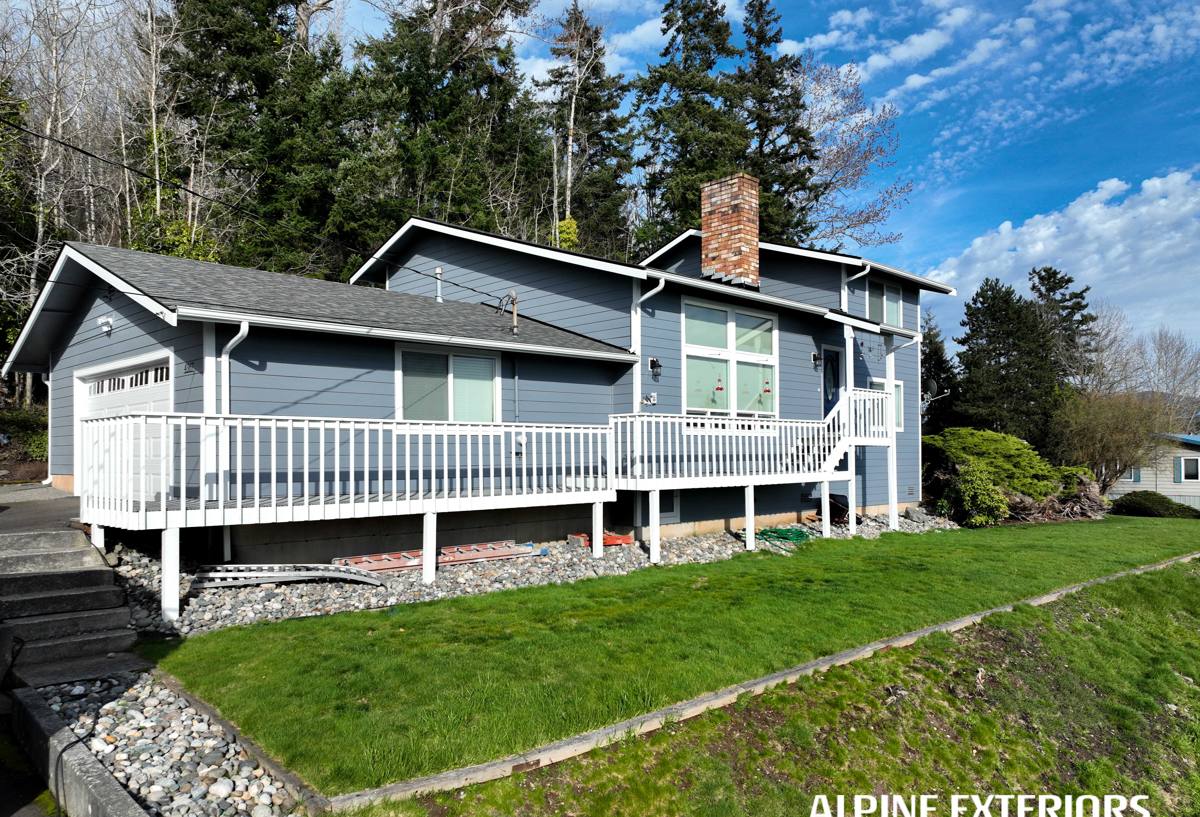
What We Actually See on Downtown Bellingham Roofs
Moss and Organic Growth
Moss is the single most common issue we run into. It's not just cosmetic — moss holds moisture directly against the shingle surface, and over a wet Bellingham winter that moisture works its way under shingle edges, lifts them slightly, and creates a path for water to get underneath. Left long enough, moss growth accelerates granule loss on asphalt shingles and can rot the sheathing beneath them.
Flashing Failure
Flashing around chimneys, skylights, roof-to-wall transitions, and vent pipes is where the majority of active leaks actually start — not in the field of the roof itself. Sealant-only "repairs" from a previous owner or a rushed contractor are common here, and they tend to fail within a couple of wet seasons because caulk isn't a substitute for properly lapped metal.
Gutter and Drainage Problems
Downtown lots often have mature trees nearby, and needle and leaf debris builds up fast. When gutters back up during a heavy driving rain, water backs up under the roof edge instead of running off it, which is a very common cause of fascia rot and edge leaks that homeowners initially mistake for a roof-surface problem.
Wind and Salt-Air Wear
Proximity to the bay means fasteners, flashing metal, and vent components corrode faster than they would further inland. We also see more shingle lifting at ridges and edges, where wind gets underneath a tab that wasn't sealed or nailed correctly the first time.
What a Correct Repair Actually Involves
A roof repair that holds up in this climate is rarely just "replace the shingle that's missing." A shingle goes missing for a reason, and if that reason isn't addressed, the replacement shingle fails the same way within a season or two. A repair done right typically means:
- Identifying the actual water path, not just the visible damage — leaks often show up several feet from where the water is entering
- Removing and replacing damaged underlayment, not just surface shingles, if moisture has gotten past the shingle layer
- Re-flashing (not re-caulking) any chimney, vent, or wall transition in the repair area
- Checking and clearing attic or roof ventilation, since trapped moisture from below causes damage that looks identical to a roof leak from above
- Matching shingle type, color, and exposure closely enough that the repair doesn't stand out or create a new weak seam
- Confirming fastener pattern and nailing meets manufacturer specs — under-nailing is a common shortcut that causes repeat wind damage
Skipping any of these steps is how a homeowner ends up paying for the same repair twice.
Repair or Replace? How We Help You Decide
Not every roof problem in downtown Bellingham calls for a full replacement, and not every leak can be permanently solved with a patch. The honest answer depends on the roof's age, how widespread the damage is, and how many prior repairs it's already had. We walk every roof and give a straight answer rather than defaulting to the more expensive option.
| Factor | Usually Points to Repair | Usually Points to Replacement |
|---|---|---|
| Roof age | Under 15 years (asphalt) | Near or past 20-25 years |
| Extent of damage | Localized — one slope, one flashing area | Spread across multiple slopes |
| Repair history | First or second repair in this area | Same spot repaired repeatedly |
| Granule loss / shingle condition | Isolated, surrounding shingles still sound | Widespread granule loss, brittle shingles |
| Decking condition | Solid, no soft spots found | Soft, spongy, or visibly rotted decking |
| Moss/moisture history | Recently addressed, roof otherwise healthy | Years of untreated moss and trapped moisture |
When a repair is the right call, we say so — a smaller, correctly done repair is often the more responsible recommendation, and it's the one we make whenever the roof supports it.
Our Process for a Downtown Bellingham Repair
1. On-Site Inspection
We look at the roof from the ground, from the roof surface where it's safe to walk, and from the attic side when accessible, since attic staining and insulation condition often tell us more than the exterior does.
2. Plain-Language Assessment
We explain what's actually causing the problem — not just what's visibly wrong — and what a proper repair involves, including the parts of the job that won't be visible once it's finished.
3. Written Scope and Estimate
You get a clear scope of work and a price before anything happens, including what materials will be used and why they're a match for the existing roof.
4. The Repair Itself
Work is done to manufacturer specifications, not shortcuts — correct flashing laps, correct fastening, correct underlayment integration with the surrounding roof.
5. Cleanup and Walkthrough
We clear debris and old material from the site and walk the finished repair with you so you know exactly what was done and where.
Materials: What We Use and Why
For most downtown Bellingham repairs, we match existing asphalt composition shingles from manufacturers with algae-resistant granule technology, since airborne moisture and shade from mature trees both encourage growth. On roofs with a history of heavy moss, we'll sometimes recommend upgrading the repaired section's granule type even if the rest of the roof is standard, since it's a small cost difference that meaningfully slows regrowth in the repaired area.
We use metal flashing rather than sealant-dependent patches wherever water crosses a plane change — chimneys, walls, valleys, and vent boots. Sealant has its place as a secondary seal, but it degrades faster than metal in salt air and shouldn't be doing the primary work of keeping water out. This is a standard we hold to regardless of what a prior repair on the home looked like, because it's the difference between a repair that lasts five years and one that lasts fifteen.
Seasonal Maintenance That Actually Extends Roof Life
Given how much of the year Whatcom County spends wet, the roofs that last longest downtown are the ones that get looked at before problems show up as leaks. A short seasonal checklist goes a long way:
- Clear gutters and downspouts at least twice a year, more often under mature trees
- Have visible moss growth treated before it spreads across a full slope
- Check attic ventilation isn't blocked by insulation, especially after any attic work
- Look for lifted or missing shingles after major wind events
- Have flashing around chimneys and skylights inspected every few years, since it fails quietly
- Address small leaks immediately — a stain the size of a coin today is cheaper to fix than the rot it becomes in two winters
Why It Matters That We Already Work in This Neighborhood
Roof repair advice that works for a dry-climate roof doesn't automatically translate to a roof that sits a few blocks from Bellingham Bay and deals with driving rain and a long moss season every year. A crew that already works downtown Bellingham knows which flashing details tend to fail first in this specific exposure, which shingle lines actually hold up against local moss pressure, and how tree cover and lot layout in this part of town affect drainage. That's the difference between a repair that's technically correct on paper and one that's actually built for the conditions the roof will face.
We're based nearby in Fairhaven, so getting a crew out to look at a downtown roof, price the work honestly, and follow up if anything needs adjustment isn't a logistical hurdle — it's just how we operate in our own area.
If you've got a leak, a stretch of moss you're not sure about, or a roof that's simply due for a look, we're happy to come take a look and give you a straight, no-pressure estimate using the form below.