 Fairhaven Siding
 Building Decks for Downtown Bellingham's Conditions
Downtown Bellingham sits close enough to Bellingham Bay that salt-laden air is a real factor in how outdoor structures age, not just a talking point. Add in Whatcom County's driving rains off the water and a moss season that can run from fall well into spring, and you have a climate that is genuinely tougher on decks than most catalog installation guides assume. A deck built here needs to shed water fast, resist corrosion on every piece of exposed metal, and stay usable even when the boards are wet more days than they're dry.
We build and repair decks for homes in and around Downtown Bellingham and the Fairhaven area, and the deck problems we get called out for are almost always the same handful of things: fasteners that rusted through in a few years, framing that never had a chance to dry out because it was closed in wrong, and surfaces that turn into a skating rink every winter because nobody planned for moss and algae. A correctly built deck in this neighborhood accounts for all three from day one.
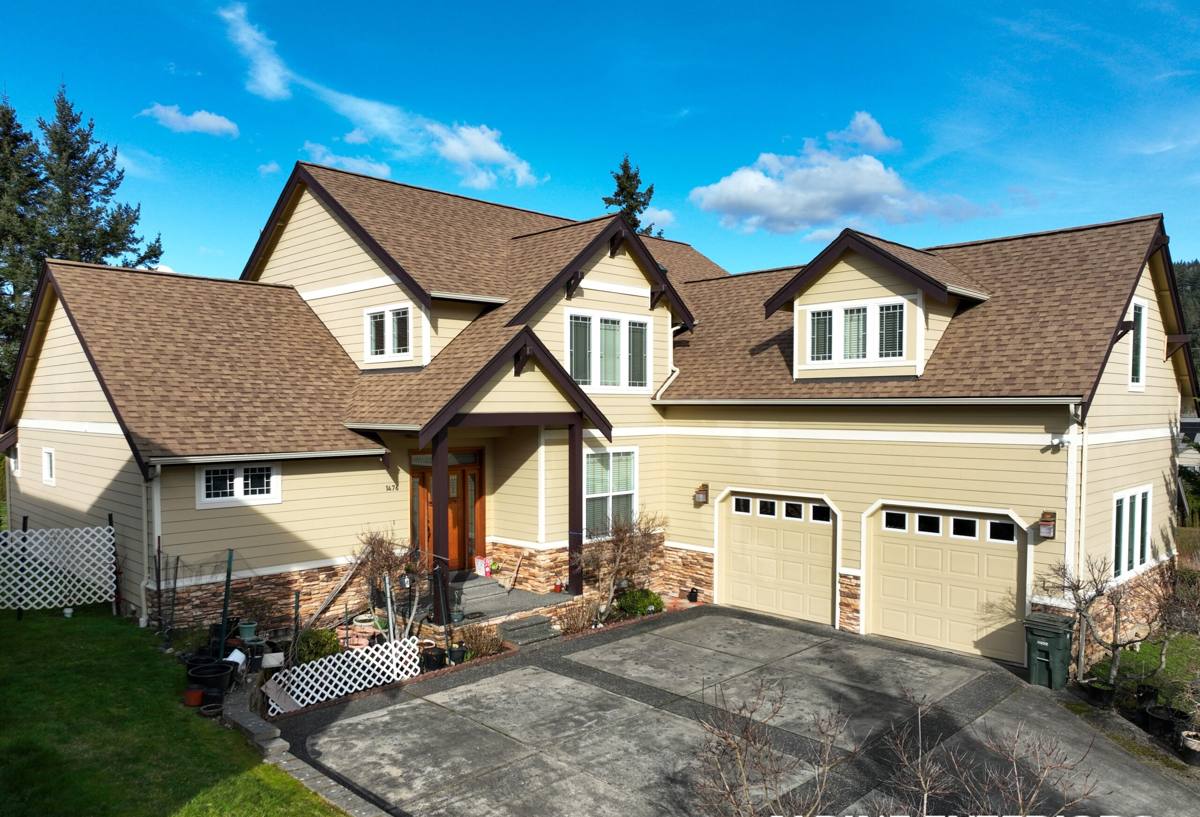
What Downtown Bellingham's Climate Actually Does to a Deck
Salt Air and Metal Fatigue
Proximity to Bellingham Bay means airborne salt settles on everything, including fasteners, brackets, and railing hardware. Standard galvanized screws and joist hangers that would hold up fine fifty miles inland can start showing rust streaks within a couple of seasons this close to the water. Once a fastener corrodes, it loses holding strength long before it looks obviously bad, which is part of what makes this a hidden problem rather than an obvious one.
Driving Rain and Water Management
Rain here doesn't just fall straight down — wind off the water regularly pushes it sideways, which means flashing details, ledger board connections, and gaps between boards all matter more than they would in a drier or calmer climate. A deck that isn't detailed to shed water actively will trap it instead, and trapped water against wood framing is the single biggest driver of premature rot in this region.
The Long Moss Season
Between the shade cover common on older, tree-lined Downtown Bellingham lots and the sheer number of damp days each year, moss and algae growth on deck surfaces is close to unavoidable without some planning. Beyond looking bad, a mossy deck surface is genuinely slick and dangerous, especially on stairs. Material choice, board spacing, and surface texture all affect how much of a problem this becomes.
What a Correctly Built Deck Involves Here
A deck that's going to hold up in this climate is built differently in a few specific ways, not just "built well" in a generic sense.
- Footings sized and set below frost depth, with proper drainage around them so water doesn't pool against the concrete
- Ledger board attachment flashed correctly where the deck meets the house, since this is the single most common failure point on rain-exposed decks
- Stainless steel or coated fasteners rated for coastal/marine exposure, not standard exterior-grade hardware
- Joist framing with adequate airflow underneath so wood can dry out between rain events instead of staying damp
- Board spacing and orientation that lets water drain through rather than sit on the surface
- Railing posts anchored with hardware that won't corrode and loosen over time
- A surface finish or material choice that resists moss and algae buildup, or at least doesn't make it worse
Skipping any one of these doesn't cause an immediate problem — it causes a problem in year three or four, which is exactly why cutting corners on deck framing is so common and so costly to homeowners who don't find out until the damage is already done.
Decking Material Options for This Climate
There's no single "best" decking material for every home — it depends on budget, how much upkeep you're willing to do, and what look you want. Here's how the common options actually compare for a Downtown Bellingham deck.
| Material | Moisture Behavior | Moss Resistance | Maintenance | Typical Lifespan |
|---|---|---|---|---|
| Pressure-treated wood | Absorbs and releases water; needs sealing to manage that cycle | Low — porous surface holds moisture and organic growth | Annual cleaning and periodic sealing/staining | 10-15 years with upkeep |
| Cedar | Naturally moisture-resistant but still an organic material | Moderate — better than treated pine but still needs attention | Regular cleaning, occasional oiling to maintain appearance | 15-20 years with upkeep |
| Composite decking | Doesn't absorb water into the board structure | Higher, but surface film buildup still needs washing | Periodic washing, no sealing or staining required | 25-30 years, varies by brand |
| PVC/capped polymer | Fully sealed surface, essentially no absorption | Highest of common options, easiest to keep clean | Occasional washing | 25+ years |
Composite and capped polymer boards cost more upfront but tend to make the most sense for shaded, damp lots where moss is a constant fight — which describes a fair number of properties in and around Downtown Bellingham. Wood is still a reasonable choice for homeowners who want that specific look and are willing to stay on top of cleaning and sealing on a regular schedule. We'll walk through the real trade-offs for your specific lot rather than push one material across the board.
Railings, Hardware, and the Details That Get Skipped
Railings and hardware take the most direct hit from salt air and rain because they're fully exposed and often made of the thinnest-gauge metal on the whole structure. Standard zinc-coated brackets and screws are a poor match for this environment — we spec stainless steel or marine-grade coated fasteners and hardware on every deck we build here, not as an upgrade option but as the standard. The cost difference over the life of a build is minor compared to what it costs to repair a deck that's failing because a handful of joist hangers rusted out.
Post bases and any hardware in direct contact with the ground or concrete footings get the same treatment, since that's where standing water is most likely to sit against metal for extended periods.
Site Considerations Specific to Downtown Bellingham
Downtown Bellingham has a mix of older homes on established lots, sloped grades in places, and mature tree cover that keeps a lot of yards shaded through much of the year. Each of these affects a deck build differently:
Sloped and Uneven Lots
Sloped ground changes footing depth and post height requirements across the same structure, and it also affects drainage — water needs somewhere to go that isn't back toward the house foundation or a neighboring property.
Mature Shade Trees
Shade keeps decks damp longer after rain, which accelerates both wood decay and moss growth. It's not a reason to avoid a deck build, but it does affect material choice and how much airflow we plan for underneath and around the structure.
Older Homes and Existing Structures
Older homes sometimes have ledger connections, siding, or framing near the attachment point that needs to be assessed and occasionally repaired before a new deck ledger can be properly flashed and secured. We check this during the initial site visit rather than assuming everything behind the siding is in good shape.
Our Process for a Downtown Bellingham Deck Build
- Site visit and assessment — we look at grade, drainage, sun/shade exposure, and the condition of the house wall where the deck will attach
- Design and material selection — sized to your space and budget, with material recommendations based on how much sun or shade the deck will actually get
- Permitting — we handle the permit process with the City of Bellingham where required, so you're not left tracking that down yourself
- Framing and footings — built to code with the drainage and fastener standards described above, not the minimum required to pass inspection
- Decking, railing, and finish work — installed with attention to board spacing and drainage, not just visual fit and finish
- Final walkthrough — we go over the finished deck with you and explain what maintenance it does and doesn't need going forward
Living With a Deck in a Long Moss Season
Even a well-built deck needs some seasonal attention in this climate. The goal of good construction is to reduce how much work that takes, not eliminate it entirely.
- Sweep leaves and debris off the deck surface regularly in fall — trapped organic matter is what moss and algae feed on
- Rinse the surface periodically through the wet months, especially in shaded areas that don't get direct sun to dry them out
- Check railing posts and stair connections once a year for any looseness, which can signal hardware starting to corrode
- Keep gutters and downspouts near the deck clear so runoff isn't dumping extra water onto or near the structure
- Address any soft or discolored boards early — wood that's starting to hold moisture only gets worse, not better, on its own
Why Local Experience Matters for This Job
A deck design that works fine in a dry inland climate can fail early here simply because it wasn't built with salt air, driving rain, and a long moss season in mind. Crews that work Downtown Bellingham and the surrounding area regularly already know which fastener grades hold up, how to detail flashing for wind-driven rain, and which lots need extra attention to drainage or shade. That experience shows up in fewer callbacks and a deck that's still solid well past the point where a poorly built one would need major repairs.
If you're planning a new deck or need to know whether an existing one was built to last in this climate, we're glad to take a look. Reach out for a free, no-pressure estimate using the form below.