 Fairhaven Siding
 Downtown Bellingham's Climate Is Hard on Decks
A deck near Downtown Bellingham lives a different life than one built inland. This part of Whatcom County sits close to Bellingham Bay, which means salt-laden air moving through the neighborhood on a regular basis. Add in the region's long stretch of driving rain each fall and winter, plus a moss season that can run from October through May, and you have three separate forces working against every fastener, board, and joist on your deck at the same time.
None of these forces are dramatic on their own. Salt air doesn't destroy a deck in one storm — it works slowly, accelerating corrosion on fasteners and hardware year after year. Driving rain doesn't rot a joist overnight — it finds the one gap in flashing or the one board that was never properly ventilated and keeps that spot wet long after the rest of the deck has dried out. Moss doesn't collapse a structure — it holds moisture against wood and decking surfaces, keeps things damp, and turns walking surfaces slick. The combined, compounding effect over ten or fifteen years is what actually determines whether a deck needs replacing.
That's the lens we bring to every deck replacement in this neighborhood: not "how do we build a deck," but "how do we build a deck that's still solid and safe after another decade of this specific climate."
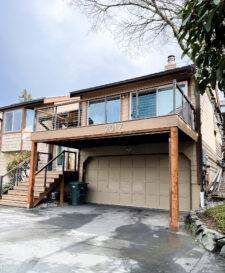
Repair or Replace? Reading the Warning Signs
Not every tired-looking deck needs a full replacement. But there's a point where patching individual boards or re-securing loose railings stops being a real fix and starts being a way to delay a bigger problem. Here's how we tell the difference on a walkthrough.
Signs a Repair Can Still Handle It
- A handful of surface-worn or cupped boards on an otherwise sound frame
- Loose railing brackets or fasteners that have simply backed out over time
- Surface graying or moss buildup with no soft spots underneath
- Isolated fastener corrosion on hardware that's easy to access and swap
Signs You're Looking at a Replacement
- Soft, spongy, or spring-feeling decking across multiple boards, not just one or two
- Rot or soft wood at the ledger board — the beam bolted to the house
- Rust streaking or visibly corroded joist hangers and structural fasteners
- Posts or footings that have shifted, settled, or show rot at ground contact
- A deck that flexes or feels different underfoot than it did a few years ago
The ledger board and the framing underneath are the parts that matter most, because they're the parts you can't see from the surface. A deck can look fine on top and still be failing where it's bolted to the house. That's why we always start with the structure, not the surface, when we're deciding whether a deck can be saved or needs to come out.
What Goes Into a Correct Deck Replacement
A deck replacement isn't just pulling old boards and nailing down new ones. In a climate that stays wet as much of the year as this one does, the parts you never see after the job is done are the parts that determine whether the deck lasts.
Ledger Board and Framing
The ledger board is where most deck failures actually start, because it's bolted directly to the house and sits right where water runs off the roof and siding. We replace it with properly rated lumber, correct fastening spacing, and — critically — flashing that directs water away from the house rather than letting it collect behind the board. This is the single detail that separates a deck that lasts fifteen-plus years from one that starts showing rot at the house connection within five.
Footings and Structural Support
Posts and footings carry the whole structure, and in ground that stays saturated for months at a time, undersized or shallow footings are a common weak point on older decks. We size footings for the actual load and local frost depth, and we make sure post bases keep wood off the ground rather than sitting in standing water.
Flashing and Drainage Details
Every place water can collect — behind the ledger, around posts, under the decking surface — needs a way to shed water rather than trap it. On a rebuild, this is the stage where we're thinking less like carpenters and more like plumbers: every joint gets a path for water to leave, not a place for it to sit.
Choosing Decking Material for Salt Air and Moss
Material choice matters more here than in a drier inland climate, because whatever you put down is going to spend a lot of its life wet, shaded, or both. There's no single "best" material — it's a real trade-off between upfront cost, maintenance commitment, and how the material behaves in this specific climate.
| Material | How It Handles This Climate | Maintenance Commitment |
|---|---|---|
| Pressure-treated wood | Affordable and strong, but needs consistent sealing to resist moisture and moss staining | Annual cleaning and re-sealing to hold up long-term |
| Cedar | Naturally moisture- and insect-resistant, but still needs care to prevent graying and moss buildup | Periodic cleaning and finish maintenance |
| Composite decking | Resists rot and moisture absorption well; moss can still grow on the surface if it stays shaded and damp | Occasional washing; no sealing or staining needed |
| PVC/capped decking | Best moisture resistance of the group; least affected by driving rain and standing moisture | Lowest — mainly periodic washing |
Whichever material a homeowner chooses, the framing underneath gets built to the same standard, because that structure is what actually determines the deck's lifespan. The surface material is largely a decision about look, feel, and how much upkeep you want to take on — not a substitute for correct construction underneath.
Our Deck Replacement Process, Step by Step
Here's what the actual project looks like from first visit to finished deck.
- On-site assessment. We inspect the existing deck's framing, ledger connection, footings, and posts to confirm what's driving the need for replacement — not just what's visible on the surface.
- Scope and material discussion. We walk through decking material options, railing style, and any layout changes, and put together a clear scope before any demolition starts.
- Permitting. Where required, we handle the permit application and coordinate any inspections tied to the project.
- Demolition and disposal. Full removal of the old deck, including hauling away old decking, framing, and hardware.
- Framing and structural work. New ledger board, flashing, footings, posts, and joists, built to current code and sized for the actual load.
- Decking and railings. Installation of the chosen decking material, railing system, and any stairs, with fastening methods matched to the material.
- Final walkthrough. We go over the finished deck together, confirm everything is solid, and answer any maintenance questions before we consider the job done.
Permits, Guardrails, and Local Code
Deck replacement in Whatcom County typically involves a permit, particularly for elevated decks or any structure attached to the house. Most jurisdictions also require guardrails above a certain deck height, specific baluster spacing to prevent falls, and stairs built to defined rise-and-run tolerances. Requirements can vary depending on the specific parcel and deck height, so we confirm the exact rules that apply to your property before finalizing the scope rather than assuming a one-size-fits-all standard. Handling this correctly matters for safety, but it also matters for resale — an unpermitted deck rebuild can become a real headache when a home eventually goes on the market.
Living With a New Deck: Moss and Maintenance
A well-built deck in this climate still needs some ongoing attention — the goal of a correct replacement is to reduce that burden, not eliminate it entirely. Shaded areas, north-facing sections, and spots that don't get much wind or sun will always be more prone to moss and moisture than open, sunny areas of the same deck.
- Sweep debris and standing leaves off the deck regularly, especially in fall
- Rinse or wash the surface periodically to keep moss and algae from establishing
- Check railings and fasteners once a year for looseness or early corrosion
- Keep gutters and downspouts near the deck clear so runoff doesn't pool against it
- Reseal wood decking on the schedule recommended for that specific product
- Watch for soft spots or discoloration at the ledger board connection over time
None of this is heavy lifting, but skipping it is how a well-built deck ends up needing early attention. A few minutes of seasonal upkeep goes a long way toward protecting the structural work underneath.
Cost Factors to Expect
Every deck replacement is priced around the specifics of the project, but a few factors consistently move the number more than others.
| Factor | Why It Affects Cost |
|---|---|
| Deck size and layout | More square footage and more complex shapes mean more material and labor |
| Decking material | Pressure-treated wood costs less upfront than composite or PVC, which cost more but need less maintenance |
| Height and structural complexity | Elevated decks need more substantial framing, footings, and stair work |
| Railing style | Cable, glass, and custom railing systems cost more than standard baluster railings |
| Site access | Difficult access for demolition and material delivery can add labor time |
| Extent of hidden damage | Rot found in the ledger, framing, or footings once the old deck is opened up can add scope |
We give homeowners a real number based on their actual deck and property, not a generic estimate pulled from a national average — those figures rarely reflect what a project in this specific climate and terrain actually requires.
Why Hire a Crew That Already Works Downtown Bellingham
Building a deck that holds up here isn't just a matter of following a generic construction manual. It means knowing how salt air moving off Bellingham Bay affects fastener choice, understanding how much moisture a shaded, moss-prone lot holds onto compared to an open one, and knowing which framing and flashing details actually matter versus which ones are just extra steps. A crew that already works in this neighborhood has seen how decks built to a lower standard fail here — and builds accordingly from the start.
We're based in Fairhaven, working throughout Bellingham and Whatcom County, and Downtown Bellingham is a neighborhood we know well. That familiarity shows up in small decisions throughout a project: where to expect drainage problems, which fastener grades hold up best against the salt air here, and how to frame a deck that's still solid well past the point where a lesser build starts to show its age.
If your deck is showing soft spots, rust streaks, or just isn't the deck you want to trust your family and guests on anymore, we're happy to take a look. Reach out for a free, no-pressure estimate using the form below — we'll walk the deck with you, tell you honestly whether it needs repair or replacement, and lay out what a correct rebuild would involve.