 Fairhaven Siding
 Decks Built for South Hill's Marine Climate
South Hill sits up above Bellingham Bay, which means your deck gets more exposure than a lot of inland builds — more wind, more direct weather off the water, and a longer stretch of damp, shaded months where moss and algae get a foothold. A deck built to a generic spec sheet will hold up for a while almost anywhere. A deck built for this specific hillside, with this specific salt air and rainfall pattern, holds up for decades instead of years. That difference is almost entirely in the material choices and the details you can't see once the project is finished — flashing, fasteners, and framing.
We've built and repaired decks across South Hill and the surrounding Fairhaven area long enough to know which shortcuts show up as problems in year three, and which details are worth the extra time up front. This page covers what that actually looks like: what the climate demands, how a correctly built deck is put together, and what our process looks like from first call to final walkthrough.
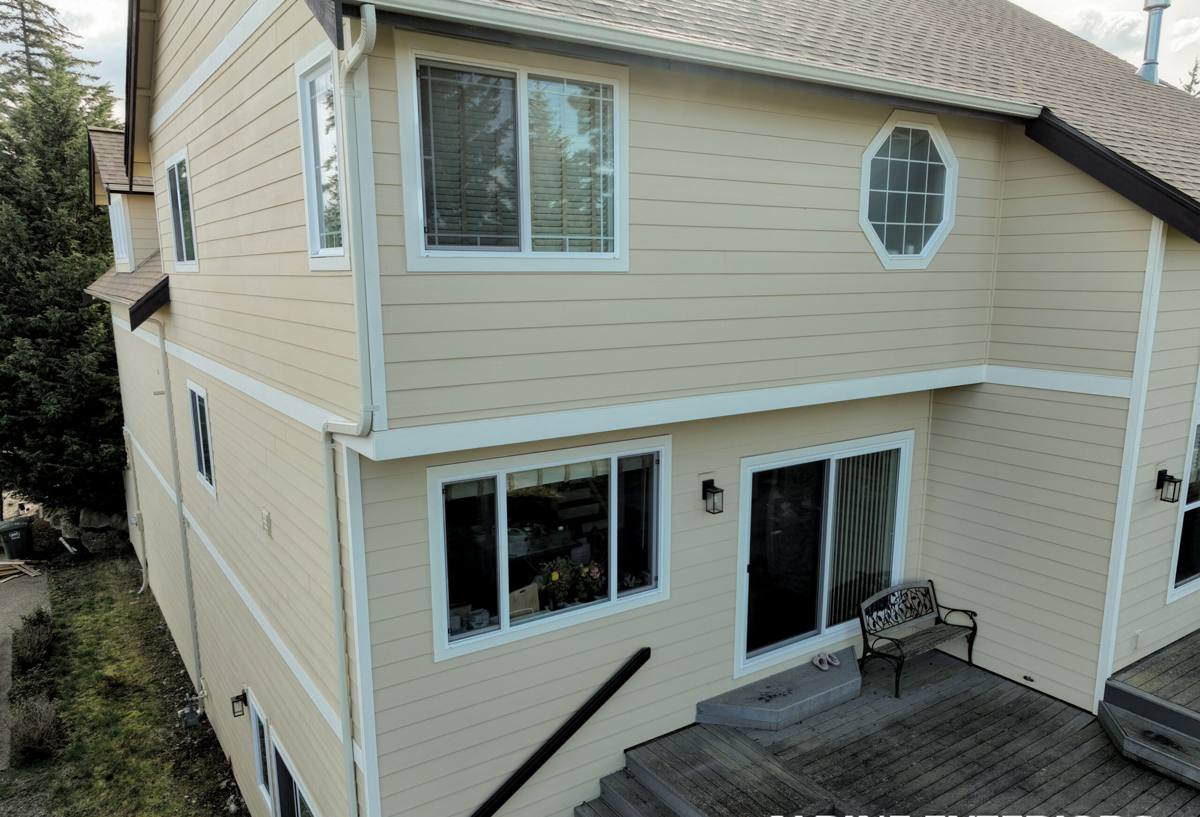
What South Hill's Climate Does to a Deck Over Time
Salt Air and Corrosion
Proximity to Bellingham Bay means airborne salt is a real factor in South Hill, even a few blocks up from the water. Salt air accelerates corrosion in metal fasteners, brackets, and hardware — the parts holding your deck together structurally. Standard hardware store screws and joist hangers that would be fine forty miles inland can start rusting and staining within a couple of seasons here. Once fasteners corrode, they lose holding strength long before the wood around them shows any obvious damage, which is exactly why so many deck failures happen quietly, from the inside out.
Driving Rain and Water Intrusion
Whatcom County's rain doesn't just fall straight down — wind off the water pushes it sideways into ledger boards, stair stringers, and anywhere decking meets the house. Any gap in flashing or any fastener without a sealed washer becomes a slow leak point. Over a few wet seasons, that shows up as soft framing, staining on siding below the deck, or rot around the ledger connection — one of the most safety-critical parts of any deck.
Moss, Algae, and Shade
South Hill's tree cover and the region's long gray season create ideal conditions for moss and algae on horizontal wood surfaces. Beyond looking bad, moss holds moisture against the decking, which speeds up rot in wood and can stain composite boards if it's left to build up. Deck boards that don't get much direct sun need either a material choice or a spacing and drainage detail that accounts for that reality — not an afterthought fix after the moss has already taken hold.
Choosing the Right Decking Material
There's no single "best" decking material — there's the right material for your budget, your sun exposure, and how much upkeep you actually want to do. Here's how the common options compare for a South Hill setting specifically.
| Material | Moisture & Moss Resistance | Maintenance | Typical Lifespan |
|---|---|---|---|
| Pressure-treated lumber | Good if sealed regularly; end grain and cut edges are vulnerable | Annual cleaning and re-sealing recommended | 15-25 years with upkeep |
| Cedar | Naturally rot- and insect-resistant; still needs finish maintenance in shade | Periodic staining/sealing to hold color and resist moss | 20-25 years with upkeep |
| Composite decking | Very good; doesn't absorb water or rot, though moss can still grow on the surface film | Occasional washing; no staining or sealing | 25-30+ years, per manufacturer warranty |
| PVC/capped polymer | Excellent; fully resists moisture absorption | Lowest maintenance of the group; occasional cleaning | 25-30+ years, per manufacturer warranty |
For shaded, moss-prone areas of South Hill, we generally steer homeowners toward composite or capped polymer boards because the reduced maintenance burden matters more once trees are blocking direct sun for most of the day. For sunnier, more exposed lots, a well-maintained cedar or treated wood deck is a perfectly reasonable choice and costs less up front — as long as you're realistic about the sealing schedule that keeps it that way.
What a Correctly Built Deck Actually Involves
Footings and Framing
Everything starts below the surface. Footings need to be sized and set to local frost depth and soil conditions, and framing needs joist spacing appropriate to the decking material you've chosen — composite and PVC boards typically require tighter joist spacing than solid wood to avoid flexing or long-term sagging. Skipping this step to save lumber is one of the most common corners cut on lower-cost deck jobs, and it's invisible until the deck starts to feel spongy underfoot.
Ledger Board Attachment and Flashing
The ledger board — where the deck attaches to your house — carries a large share of the structural load and is the single most common point of failure on older or poorly built decks. It needs proper flashing that directs water away from the house framing, correct structural fasteners (not just deck screws), and in many cases metal ledger connectors for lateral load. Given South Hill's exposure to driving rain, we treat ledger flashing as non-negotiable, not an upsell.
Fasteners and Hardware
Given the salt air, we use corrosion-resistant, coated or stainless-rated fasteners and joist hangers rated for exterior and coastal-adjacent use, not the standard interior-grade hardware that's cheaper but starts staining and weakening within a few seasons here. This one line-item decision is one of the biggest factors in how long a deck's structure actually lasts.
Railings, Stairs, and Code
Railing height, baluster spacing, and stair geometry are governed by building code for good reason — these are the parts of a deck most directly tied to safety. We build to current Whatcom County permitting requirements, not to whatever the previous deck happened to have.
Our Process, Start to Finish
- On-site consultation. We walk your South Hill property, assess sun exposure, drainage, existing structure (if it's a rebuild), and talk through how you actually plan to use the space.
- Design and material selection. We help you weigh material trade-offs against your budget and maintenance appetite, and give you a clear, honest quote — no vague allowances.
- Permitting. We handle the permit application and inspections required for the scope of work, so you're not navigating that alone.
- Construction. Footings, framing, flashing, decking, and railings, built in that order with each stage set up to protect the next from water intrusion.
- Final walkthrough. We go over the finished deck with you, including what maintenance (if any) it needs and on what schedule.
Deck Maintenance Checklist for South Hill Homes
Whatever material you choose, a little seasonal attention goes a long way in this climate. A basic routine:
- Sweep debris and standing leaves off the deck surface regularly, especially in fall
- Rinse or lightly scrub moss and algae buildup before it stains or gets slick — a real slip hazard on stairs and ramps
- Check that gaps between boards stay clear so water can drain instead of pooling
- Inspect the ledger board area and any visible flashing once a year for staining or soft spots
- Reseal or restain wood decking on the schedule recommended for the specific product you have
- Check railings and stair connections for looseness, particularly after winter storms
Repairs and Rebuilds: When to Fix vs. Replace
Not every aging deck needs to be torn out. If the framing and ledger connection are sound and the problems are limited to surface decking, railings, or stairs, targeted repair is often the more cost-effective route. If we find soft or rotted framing, corroded structural hardware, or a ledger board that was never properly flashed, that's a safety issue, not a cosmetic one — and it usually makes more sense to rebuild that section correctly than to keep patching around a compromised structure. We'll always tell you honestly which situation you're in before recommending a scope of work.
Why Hire a Crew That Already Works in South Hill
A deck built by someone unfamiliar with this hillside's exposure and drainage patterns is a deck built on generic assumptions. Crews who work South Hill regularly already know where water tends to collect, how much sun a given lot section actually gets through the year, and which fastener and flashing details hold up against this specific coastline's weather instead of failing early. That local pattern recognition is the difference between a deck that needs major work in five years and one that's still solid in twenty-five.
If you're planning a new deck or dealing with an aging one in South Hill, we're happy to take a look and give you a straightforward, no-pressure estimate — just fill out the form below.