 Fairhaven Siding
 Why Window Installation in South Hill Is Different
South Hill sits close enough to the water and to the tree cover common throughout Fairhaven and the rest of Whatcom County that windows here take a different kind of beating than they would somewhere drier and more sheltered. Salt-laden air off the bay speeds up corrosion on hardware and unprotected trim. Driving rain, pushed sideways during fall and winter storms, finds every gap around a window opening that wasn't sealed correctly the first time. And a long moss season — the stretch of wet, shaded months when moisture sits on north-facing walls and rooflines — keeps siding and window trim damp far longer than it would in a milder climate.
A window installed correctly for these conditions holds up for decades. One installed with shortcuts — caulk substituted for proper flashing, no sill pan, insufficient shimming, fasteners that don't match the framing — starts showing damage within a few seasons: soft trim, fogged glass, drafts, and water stains creeping down the wall below the frame.
Salt Air and Metal Fatigue
Hinges, locks, balances, and screen hardware all corrode faster near the water. On a coastal job we pay attention to hardware finish and frame reinforcement, not just the glass package, because a window that looks fine from across the room can have hardware that's already pitting and stiffening underneath.
Driving Rain and Flashing
Wind-driven rain doesn't just fall on a window — it gets forced sideways and upward under trim and siding edges. The only thing standing between that water and your framing is a correctly shingled flashing sequence: house wrap, sill pan, jamb flashing, then head flashing, each layer lapped over the one below it so water is always directed outward, never trapped behind the wall.
Moss Season and Shaded Walls
Homes on shaded lots or with north-facing exposures common in this part of Whatcom County hold onto moisture longer through the wet months. That means wood trim around windows needs either a durable factory finish or a maintenance routine that keeps ahead of it — otherwise you're repainting the same soft trim every year or two instead of solving the underlying moisture problem.
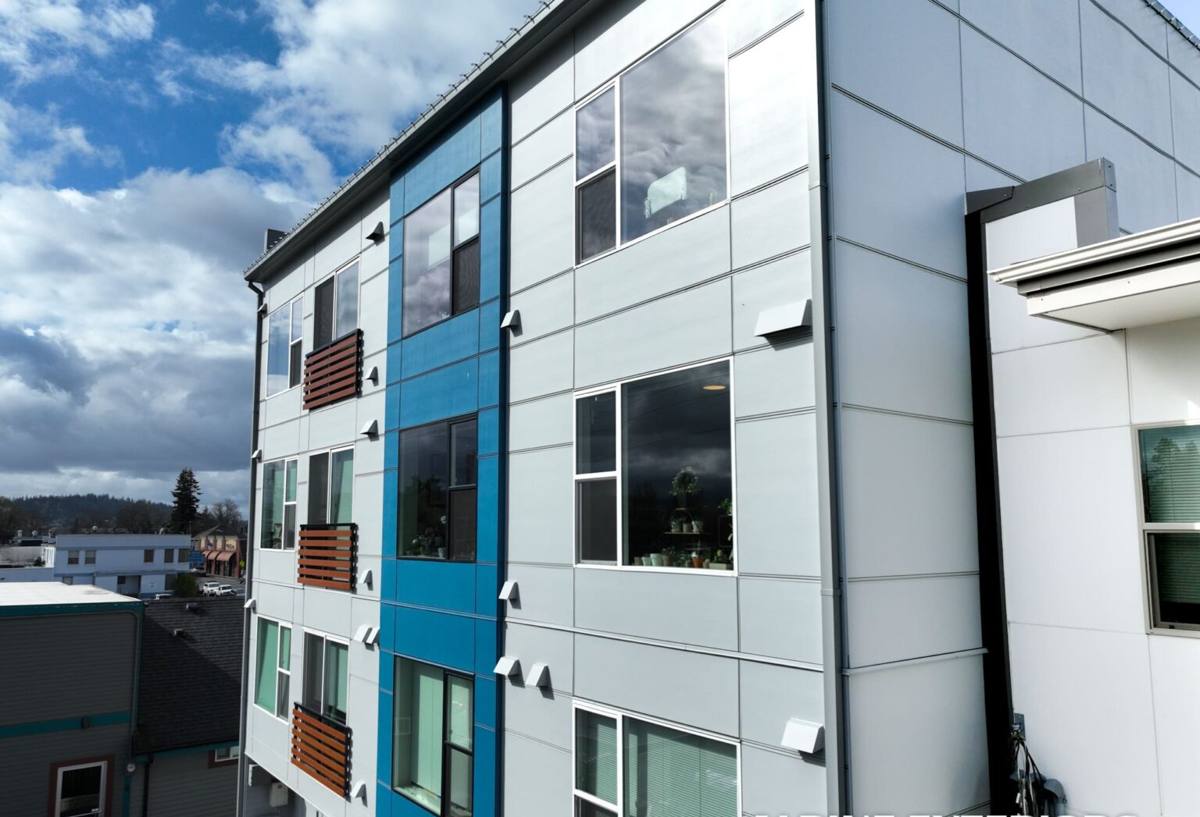
What a Correct Window Installation Actually Involves
Window installation looks simple from the outside — pull the old one out, set the new one in — but most of the work that determines whether a window lasts happens in steps nobody sees once the trim goes back on.
Water Management
Every opening gets a sloped sill pan so any water that does get past the window has somewhere to go besides your wall framing. Flashing tape and house wrap integration matter more here than in a dry climate, because there's simply more water pressing against the building envelope more often.
Air Sealing and Insulation
The gap between the window frame and the rough opening needs to be filled with a low-expansion foam or backer rod and sealant — never packed tight with fiberglass batting alone, and never over-filled with foam that can bow the frame out of square. Done right, this step is what actually stops the drafts homeowners notice, more than the glass itself.
Fastening and Structural Fit
A window has to be shimmed plumb, level, and square before it's fastened, and fastened according to the manufacturer's schedule — not just a screw wherever one seems convenient. An out-of-square window binds, leaks at the corners, and voids the manufacturer's warranty.
Signs Your South Hill Home May Need New Windows
Some of these show up gradually enough that homeowners get used to them before realizing they're a problem. Worth checking for:
- Condensation or fogging between the panes — a sign the seal has failed and can't be repaired, only replaced
- A draft near the frame even when the window is fully closed and locked
- Trim that's soft to the touch, discolored, or showing moss or mold growth
- Windows that are difficult to open, close, or lock properly
- Energy bills climbing without another clear explanation
- Visible daylight or gaps around the frame from inside
- Exterior paint on the trim that keeps failing no matter how often it's touched up
Full-Frame Replacement vs. Insert Replacement
Not every window job needs to go down to the studs. The right approach depends on the condition of the existing frame and sill.
| Approach | Best For | What It Involves | Trade-offs |
|---|---|---|---|
| Insert (pocket) replacement | Sound existing frames with no rot or water damage | New window fits inside the existing frame; exterior trim stays mostly intact | Faster and less disruptive, but any hidden rot or bad flashing stays hidden |
| Full-frame replacement | Frames with rot, water damage, or when siding is already being redone | Old frame removed to the rough opening; new flashing, sill pan, and frame installed from scratch | More labor and cost, but the only way to actually fix water damage rather than seal over it |
We'll tell you honestly which one your windows need after a look at the actual condition of the sill and framing — not just the glass.
How We Approach a Window Installation Project
- On-site assessment of each opening, including probing for hidden rot or water damage around the frame
- Accurate measurement and product selection based on the home's exposure, style, and your budget
- Careful removal of the old window with inspection of the framing underneath
- Sill pan and flashing installation, sequenced to shed water outward at every layer
- Setting the new window plumb, level, and square, then fastening per manufacturer spec
- Air sealing the gap between frame and rough opening without overfilling
- Integrating exterior trim and flashing cleanly with the surrounding siding
- Interior trim finish and a final operational check on every window
- Walkthrough with you and full cleanup before we leave
Choosing Materials and Glass for a Wet, Salt-Exposed Climate
Frame Materials
Vinyl frames are budget-friendly and low-maintenance, and modern formulations handle moisture well, though quality varies a lot between manufacturers. Fiberglass holds up especially well against the temperature swings and moisture cycling common here, with less expansion and contraction over time. Wood-clad windows still have a place where the look matters, but they carry a higher maintenance burden near the coast — the exterior cladding needs to be genuinely weathertight, because bare wood exposed to salt air and driving rain won't hold a finish as long as it would inland. We'll walk you through what each option actually costs to own over time, not just to buy.
Glass Packages
Dual-pane glass with a Low-E coating and argon gas fill is the baseline we recommend for this area — it cuts down on the interior condensation that feeds mold and moss growth around the frame, and it noticeably reduces heat loss through a long, damp winter. Warm-edge spacers between the panes also help; older aluminum spacers conduct cold straight to the glass edge, which is exactly where condensation forms first.
What Affects the Cost of Window Installation
Every home is different, but the same handful of factors drive most of the cost difference between projects:
- Insert replacement versus full-frame replacement (full-frame costs more but fixes underlying issues)
- Window size and how many openings are being replaced at once
- Frame material — vinyl, fiberglass, and wood-clad price differently
- Glass package upgrades like triple-pane or specialty coatings
- How much existing trim, siding, or framing repair is needed before the new window goes in
Costs for a straightforward window swap on a home in good condition typically fall in a broad mid-range per window; full-frame work with rot repair runs higher. We'll give you real numbers for your actual openings, not a guess based on square footage.
Why a Crew That Already Works South Hill Matters
Homes throughout Fairhaven and South Hill vary a lot in age and construction, and older housing stock in particular often has framing and flashing details that don't match what a crew used to newer subdivisions expects to find. A crew that regularly works this neighborhood knows to check for those conditions before they become a surprise mid-project, and knows how the local climate — salt air, driving rain, a long moss season — actually plays out on a wall over several years, not just on installation day. That's the difference between a window installation that looks right when we leave and one that's still performing right in year ten.
If you're weighing whether it's time to replace your windows, or just want a straight answer on what a job at your home would actually involve, we're glad to come take a look. Fill out the form below for a free, no-pressure estimate.