 Fairhaven Siding
 Deck Building in South Hill, Built for the Weather That's Actually Here
South Hill sits close enough to the water that salt air is part of daily life, and far enough into the Pacific Northwest's wet season that a deck spends a good chunk of the year damp, shaded, or both. A deck built to a generic national spec — the kind you'd see in a big-box how-to guide written for a dry climate — will look fine for a year or two and then start showing problems: soft spots near the ledger, black streaking on the boards, fasteners bleeding rust through the finish. Building a deck correctly here means designing around Whatcom County's climate from the first framing decision, not treating weather resistance as a coat of sealer applied after the fact.
This page is specifically about deck building for South Hill homes — new decks, full replacements, and substructure rebuilds. If you're looking for general exterior or siding work, that's handled elsewhere; this is about what a deck in this neighborhood actually needs to hold up.
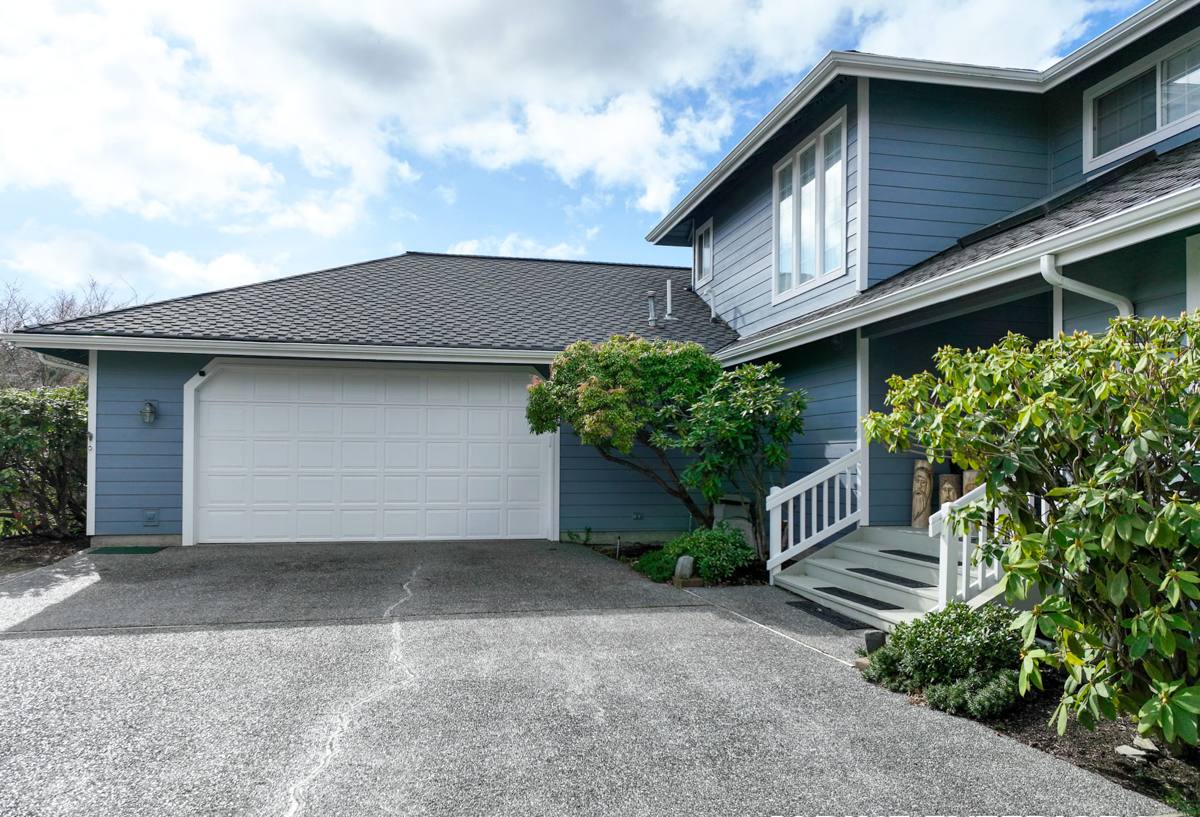
What Salt Air, Driving Rain, and Moss Season Do to a Deck
Three climate factors drive almost every deck problem we see in this area, and they compound each other.
Salt-laden air
Proximity to Bellingham Bay means airborne salt settles on exposed metal and wood surfaces even on homes that aren't waterfront. Salt accelerates corrosion in fasteners, joist hangers, and any exposed hardware, and it also draws moisture into wood grain, keeping boards damp longer after a rain than they would be further inland.
Driving rain and wind-blown water
Rain here often comes at an angle, not straight down. That matters for decks because it pushes water under ledger flashing, into rim joist end grain, and behind any board that isn't gapped and finished on all faces. A deck detailed for vertical rain only will leak at exactly the joints a South Hill homeowner needs sealed.
A long moss and algae season
Shaded, north-facing, and tree-covered lots — common throughout South Hill — stay damp for months at a stretch. Moss and algae aren't just cosmetic; a mossy deck surface holds water against the wood and becomes genuinely slick underfoot, which is a real fall hazard on stairs and landings.
None of this means a deck can't last decades in this neighborhood. It means the build has to account for all three from the start: material selection, drainage detailing, fastener choice, and airflow underneath the structure.
Choosing Decking Material for This Climate
There's no single "best" decking material — there's a best fit for a given budget, sun exposure, and maintenance appetite. Here's how the common options actually perform in a wet, salt-influenced, shaded climate like South Hill's.
| Material | Moisture behavior here | Maintenance | Typical lifespan |
|---|---|---|---|
| Pressure-treated fir/hem-fir | Good if properly sealed and gapped; end grain is the weak point | Re-seal every 1-2 years, more often in full shade | 15-25 years with upkeep |
| Cedar | Naturally rot-resistant, but softens faster in constant shade/moss conditions | Annual cleaning and periodic oil or stain | 15-20 years |
| Composite decking | Doesn't absorb moisture or rot, but can stay slippery longer with moss/algae film if not cleaned | Periodic wash, no sealing or staining | 25-30+ years, manufacturer-warrantied |
| PVC/capped polymer | Fully moisture-sealed surface; best resistance to algae staining | Occasional wash | 25-30+ years, manufacturer-warrantied |
For heavily shaded South Hill lots, we usually steer homeowners toward composite or capped polymer boards for the walking surface, simply because they don't wick moisture the way real wood does in a spot that rarely gets direct sun to dry out. That's a maintenance and moisture-behavior call, not a knock on wood decking — a well-maintained cedar or treated deck on a sunnier lot performs fine. The framing underneath, though, is a different conversation.
Framing material still matters even with composite decking
A composite deck surface is only as good as what's underneath it. We frame with pressure-treated lumber rated for ground contact where it's near grade, and we don't rely on the treatment alone — every cut end, notch, and drilled hole gets field-sealed, because factory treatment doesn't penetrate wood exposed after cutting.
Where Decks Actually Fail: The Substructure
Almost every deck failure we're called out to inspect in this area starts below the visible boards, not on the surface.
- Ledger attachment: The board that bolts the deck to the house is the single most important connection on the whole structure. It needs proper flashing that sheds water away from the house rim joist, not just caulk, which fails long before the deck does.
- Joist hangers and fasteners: In a salt-air environment, standard galvanized hardware corrodes faster than it would inland. We use hardware and fasteners rated for the moisture and salt exposure this area actually sees.
- Post footings: Undersized or shallow footings shift in our wet winters as soil saturates and drains. Footings need to be sized and set to local frost and soil conditions, not the minimum a plan set allows.
- Airflow underneath: A deck built too close to grade, or boxed in without ventilation, traps moisture underneath year-round. That trapped moisture is where rot and mold start, invisible from the top until the damage is advanced.
A deck can have beautiful, expensive decking on top and still fail in five years if any of these four items were cut short.
Our Deck Building Process
Every deck project follows the same sequence, whether it's a full replacement or new construction.
- On-site assessment: We look at drainage, sun/shade exposure, existing structure (if any), and how water currently moves across the lot before designing anything.
- Design and material selection: We walk through decking, railing, and structural options with the actual maintenance level the homeowner wants, weighed against South Hill's climate realities.
- Permitting: We handle the permit application and inspections required for the project — see the section below on what typically triggers a permit.
- Demolition (if replacing): Old decking and framing are removed and the substructure is inspected for hidden rot before anything new goes in.
- Framing: Ledger, footings, posts, beams, and joists are set with attention to flashing, hardware, and ventilation underneath.
- Decking and railing installation: Boards, fascia, and railing are installed per manufacturer spec, including proper gapping for drainage and expansion.
- Final walkthrough: We go over the finished deck with the homeowner, including a maintenance rundown specific to the materials used.
Permits and Code Considerations for Fairhaven Decks
Most deck projects in Whatcom County require a building permit, particularly for decks attached to the house, decks more than 30 inches above grade, or any deck involving structural framing changes. Requirements can vary based on lot, height, and whether the deck is attached or freestanding. We pull the necessary permits and coordinate inspections as part of the project rather than leaving that step to the homeowner, since a deck built without proper permits and inspection can become a real problem at resale.
Guardrails, baluster spacing, and stair rise/run also fall under code, and these aren't areas where it makes sense to cut corners — they're safety items, not aesthetic ones.
Maintaining a Deck Through a South Hill Winter
Even a well-built deck needs seasonal attention in this climate. This is the checklist we give homeowners after a project wraps up:
- Clear leaves and debris from between boards and off ledger flashing before fall rains set in — trapped debris holds moisture against the wood.
- Wash off moss and algae film at least once before winter and once in spring; a soft-bristle brush and a deck-safe cleaner is usually enough, no pressure washer needed on composite or capped boards.
- Check that gutters and downspouts near the deck aren't dumping extra water onto the structure.
- Inspect railing posts and stair connections annually for movement — settling soil and freeze-thaw cycles can loosen hardware over time.
- If it's a wood deck, plan on re-sealing or re-staining on the schedule the product calls for, and don't skip a cycle just because it "still looks fine" — moisture damage often starts before it's visible on the surface.
Why Local Deck-Building Experience Matters in South Hill
A lot of what makes a deck last in this specific area isn't in a general carpentry manual — it's knowing how a particular slope, tree cover, or proximity to the water affects drainage and moss growth on that lot. A crew that already works South Hill has usually already seen how a similar lot behaves through a full wet season, which shows up in decisions like where to add extra ventilation gaps, which side of the deck needs more slope for runoff, or where moss tends to establish first and needs a harder-wearing surface.
It also matters for permitting and inspection — familiarity with how Whatcom County and Fairhaven-area inspections typically go keeps a project moving instead of stalling on avoidable back-and-forth.
Get a Straightforward Estimate
If you're planning a new deck or need to replace one that's showing its age, we're happy to come take a look and give you a clear, honest assessment of what your South Hill property needs — no pressure, no upsell on materials you don't need. Use the form below to request a free estimate.