 Fairhaven Siding
 Siding Installation for South Hill Homes
South Hill sits up above Fairhaven and Bellingham Bay, and that elevation is part of what makes it desirable, and part of what makes siding installation there a more demanding job than it looks from the street. Homes on this hillside get more direct exposure to wind coming off the water, more sun on some faces of the house and more sustained shade on others, and the kind of terrain that changes drainage and water behavior from one property to the next even within a few blocks. We install siding throughout the Fairhaven area, and South Hill is one of the sections where getting the site-specific details right matters as much as the material choice itself.
This page focuses specifically on siding installation for South Hill properties: what the local climate does to a wall over time, what a correctly installed job actually involves, and how our process works from first walk-through to final trim work.
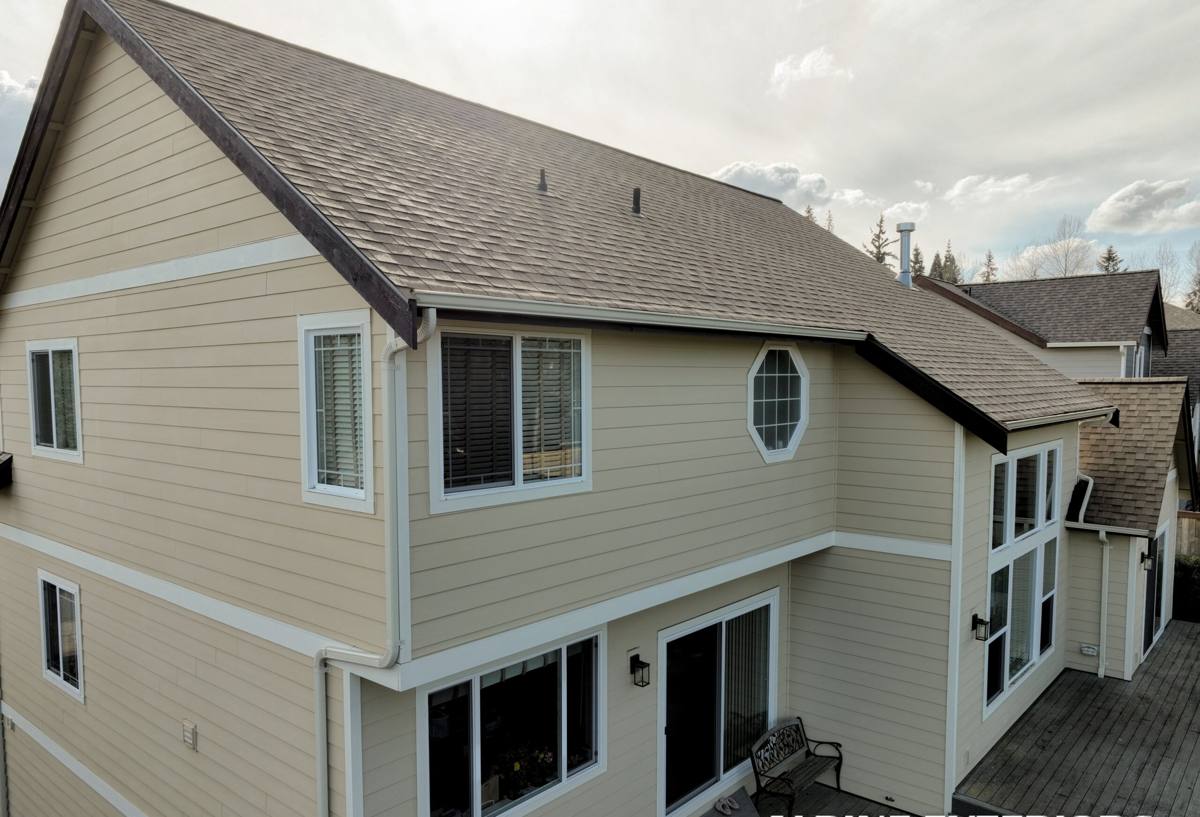
What South Hill's Position Does to a House
Elevation and Wind Exposure
Being higher up the hillside means less shelter from the wind coming off Bellingham Bay than a home sitting closer to sea level or tucked behind other structures. Wind-driven rain hits harder and from more angles on an exposed elevated lot, which pushes water into lap joints, trim seams, and any gap in the water-resistive barrier that a calmer site would never test. Siding installation on South Hill has to account for that wind exposure directly, not treat it as an afterthought once the panels are up.
Salt Air at Elevation
Salt-laden marine air doesn't stay down at the waterline. It drifts and rises, and homes higher on the hill still see a steady background level of salt exposure that slowly works on fasteners, flashing, and any finish that isn't built to resist it. It's a slow process, which is exactly why it's easy to underestimate until fastener heads start bleeding rust or a finish starts chalking years ahead of schedule.
Sun and Shade Extremes on the Same House
Hillside lots often produce sharper contrasts between a home's sun-exposed side and its shaded side than flatter properties do. One wall bakes and fades under more direct sun while another, often tucked against the slope or under tree cover, stays damp and shaded for extended stretches. That split matters for siding installation, because it means different walls on the same house can need different attention to moisture management, ventilation, and even finish selection over time.
A Long Moss Season
Between the marine moisture and the shaded pockets common on hillside lots, moss and mildew have a long growing window in this part of Whatcom County, often running most of the year on north-facing or tree-shaded walls. Porous or moisture-retentive siding materials give moss something to hold onto, and once it establishes itself, it keeps a wall damp longer, which compounds the underlying moisture problem instead of just sitting on the surface.
Why Siding Installation Quality Matters More on a Hillside
A flat, sheltered lot forgives small installation mistakes more easily than an exposed hillside lot does. On South Hill, a slightly short flashing lap, a fastener driven at the wrong depth, or house wrap that wasn't sealed at every seam is more likely to actually get tested by wind-driven rain, and more likely to fail when it is. That's not a reason to avoid siding a hillside home. It's a reason to be precise about how it's done, since the margin for error is smaller here than it is on a more sheltered property.
Drainage adds another layer. Water moving down a slope during a heavy storm behaves differently than water on flat ground, and how a house's grading, gutters, and downspouts handle that flow affects how much water ends up working against the base of the siding. A correct siding installation accounts for what's happening at grade, not just what's happening on the wall itself.
Why We Only Install James Hardie Fiber Cement
We install James Hardie fiber cement siding, and we don't install anything else. No LP SmartSide, no vinyl, no Cemplank, no Allura, no primed spruce, no cedar. That's a professional standard, not a lack of options, and it comes directly from what we've seen on tear-offs and repair calls on hillside and coastal properties like the ones on South Hill.
- Non-combustible core: Fiber cement doesn't feed a fire the way wood-based siding can, which matters for household safety and can factor into insurance considerations.
- Factory-applied ColorPlus finish: The color coat cures under controlled factory conditions rather than being brushed on at the job site, which gives it meaningfully better resistance to fading, chalking, and moisture intrusion over years of wind and sun exposure.
- Climate-engineered HZ product lines: Hardie's HZ5 formulation is built for regions with sustained moisture and freeze-thaw cycling, a closer match to a Whatcom County hillside than a generic national spec sheet.
- Dimensional stability: Fiber cement doesn't swell, cup, or warp with repeated wet-season moisture cycles the way engineered wood products can.
- Strong transferable warranty: Provided the installation follows Hardie's spec, the warranty coverage is one of the more substantial in the industry.
These are legitimate products in the hands of other contractors, and we're not claiming otherwise. We made a professional call that on exposed, wind-driven, salt-air terrain like South Hill, standing fully behind one system we understand completely serves homeowners better than offering a lower-cost option that quietly shifts maintenance and moisture risk onto them a decade or two down the road.
What the Alternatives Trade Off Here
LP SmartSide is an engineered wood product with a resin-treated strand core, and it can hold up reasonably in drier, more sheltered climates. On an exposed hillside with this much sustained wind-driven moisture, engineered wood is more sensitive to swelling and damage at cut edges and fastener penetrations than fiber cement is. Vinyl is affordable and low-maintenance in the right setting, but it can warp under direct sun, go brittle in a cold snap, and trap moisture behind the panel if the house wrap and flashing underneath weren't installed with real care, a detail that's easy to miss and hard to catch once the wall is closed up. Cedar and primed spruce are genuinely attractive materials, but they need ongoing painting or sealing to keep water out, and on a wind-exposed hillside lot that maintenance schedule tends to slip faster than homeowners expect, which shortens the material's real-world life well below its rated potential.
How a Correct South Hill Siding Installation Works
Site Walk and Wall-by-Wall Assessment
Before any material goes on order, we walk the property and look at each elevation separately rather than treating the house as one uniform surface. Wind exposure, sun and shade patterns, existing moisture damage, and drainage at grade can all differ from one side of a South Hill home to another, and that assessment drives decisions on flashing detail, fastening, and clearance for each wall.
Tear-Off and Substrate Check
Where existing siding is coming off, tear-off is also when hidden problems surface. Years of trapped moisture behind failing siding can rot sheathing and framing before there's any sign of it from outside, and that's especially true on hillside properties where water has been working against a wall from a specific wind direction for years. We check the substrate before anything new goes up, not after.
Water-Resistive Barrier and Flashing
House wrap and flashing aren't separate steps done around the siding installation, they're the system that actually keeps water out, with the siding as the outer layer. Every seam in the water-resistive barrier gets properly lapped and sealed, and every window, door, and penetration gets flashed so water is directed out and down, not trapped behind the cladding. On an exposed hillside lot, this step carries more weight than it would on a sheltered site, because it's the layer that has to perform when wind-driven rain actually gets past the siding face.
Fastening and Clearance
James Hardie specifies fastener type, spacing, and placement for a reason, and those specs exist to keep panels secure under wind load and moisture cycling over decades, not just for the first few years. We also hold correct clearance from grade, roofline, and hardscape, since tight clearances are one of the most common reasons otherwise good siding starts failing early from ground-level moisture.
Trim, Joints, and Final Detailing
Joints get lapped and sealed correctly, trim is fitted and fastened to shed water rather than collect it, and touch-up work matches the factory ColorPlus finish so the house reads as one consistent system rather than a patchwork of visible seams. This is the stage where a rushed installation shows itself years later, and it's the stage we spend the most deliberate time on.
| Installation Factor | What It Affects | Why It Matters on South Hill |
|---|---|---|
| Wall-by-wall wind and sun assessment | Flashing detail and finish decisions per elevation | Hillside lots often see sharper exposure differences between walls than flat properties |
| Tear-off vs. overlay | Labor scope and hidden damage discovery | Years of wind-driven moisture can damage sheathing before it's visible from outside |
| Drainage and grading at the base of the wall | Long-term moisture exposure at lower courses | Slope terrain moves water differently than flat ground during heavy rain |
| Site access and staging | Labor time and equipment setup | Elevated and sloped lots can add scaffolding or staging complexity |
| Trim and joint detailing | Long-term water intrusion risk at seams | Wind-driven rain on an exposed hillside tests every seam more than a sheltered site would |
Repair Versus Full Replacement
Not every siding problem on a South Hill home means a full tear-off. Isolated impact damage, a section that's failed around a window, or trim that's worked loose can often be repaired and matched into existing Hardie siding without redoing the whole house. But when moisture has been tracking behind the wall assembly for a while, or the existing material is an older product that's simply reached the end of its service life, patching it usually just delays a larger project and lets hidden damage keep spreading. We'll give you a straight assessment of which situation you're actually dealing with before recommending either path.
Signs a South Hill Home Needs New Siding
- Moss or dark staining that returns quickly after cleaning, especially on shaded or north-facing walls
- Soft or spongy siding, particularly near the base of the wall or around window and door trim
- Peeling, bubbling, or chalking paint on siding boards or trim
- Cracked, chipped, or missing siding sections after wind events
- Visible gaps at seams, corners, or trim joints where wind-driven rain can track in
- Rust staining around fasteners or flashing, a common early sign of sustained salt air exposure
- Noticeably different wear patterns between a home's sun-exposed and shaded walls
- Rising heating bills that may point to a wall assembly that's no longer sealing properly
What to Check Before Hiring a Crew for This Job
- Confirm an active Washington state contractor license and current insurance
- Ask exactly which siding brand and product line they install, and why
- Ask how they handle hidden substrate damage discovered during tear-off
- Ask how they'll adjust flashing and fastening for wind-exposed or hillside walls specifically
- Get a written scope that spells out flashing and house wrap details, not just "new siding installed"
- Ask whether the crew doing the work has installed siding on other South Hill or Fairhaven properties before
Why a Crew That Already Works South Hill Matters
A crew that regularly installs siding on this hillside knows how wind actually moves across a South Hill lot in a real storm, which walls stay damp longest through the winter, and where extra flashing attention pays off before a callback ever happens, not just how a product performs on a spec sheet. That kind of working knowledge doesn't come from a training manual, it comes from doing this specific job on this specific terrain repeatedly. Fairhaven and South Hill share the same coastal Whatcom County climate, but the elevation, wind exposure, and drainage patterns on the hill are their own variable, and a crew with real experience here accounts for that instead of applying a one-size-fits-all approach borrowed from flatter ground.
If you're considering new siding for a South Hill home, we're glad to walk the property, look at each wall's specific exposure, and give you a straight answer about what it actually needs. Reach out using the form below to schedule a free, no-pressure estimate.