 Fairhaven Siding
 South Hill Roofs Work Harder Than Most
South Hill sits close enough to the water that its roofs deal with a different mix of stress than homes further inland. Salt-laden air off Bellingham Bay, long stretches of driving rain, and a moss season that seems to run most of the year all add up. An asphalt shingle roof that would coast through two easy decades in a dry climate has to earn every one of those years here. That doesn't mean asphalt shingles are the wrong choice for South Hill — they're still one of the most practical, cost-effective roofing systems available. It means the installation, the materials, and the maintenance plan all need to account for Whatcom County's specific weather, not a generic national average.
This page covers what we look at, what we install, and how we work when a South Hill homeowner calls us about a shingle roof — whether that's a full replacement, a repair, or just a second opinion on something a home inspector flagged.
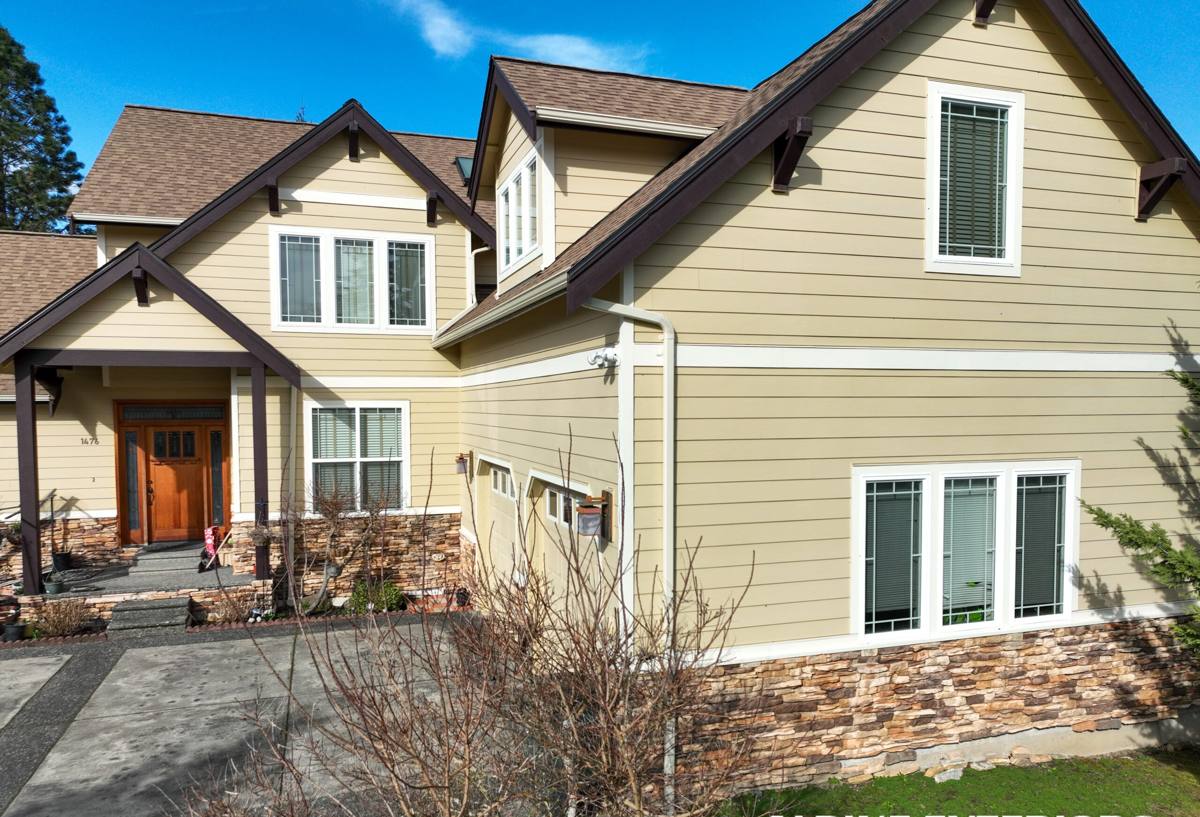
What Salt Air, Rain, and Moss Actually Do to a Roof
Moss and Organic Growth
Whatcom County's mild, wet winters and shaded lots are close to ideal growing conditions for moss and algae. On a roof, moss isn't just cosmetic. Its root structure works into the texture of the shingle and lifts granules, and a thick mat holds water against the roof deck long after the rain has stopped. Left alone through a few moss seasons, that moisture retention shortens the life of the shingle and, eventually, the plywood underneath it.
Salt Air and Metal Components
A shingle field itself is fairly resistant to salt air, but the metal components of a roof — flashing, drip edge, vent stacks, fasteners — are not. Standard galvanized fasteners and lower-grade flashing corrode faster this close to the water. Once flashing starts to pit or a fastener head rusts through, you get small leaks at exactly the places a roof is supposed to be sealed tightest: chimneys, valleys, and roof-to-wall transitions.
Driving Rain and Wind-Driven Water
South Hill gets its share of storms where rain doesn't just fall straight down — it drives sideways under gusts coming off the water. That kind of wind-driven rain finds gaps that vertical rain never would: under shingle tabs with weak sealant bond, at nail heads that sit slightly high, along ridge caps that weren't lapped correctly. A roof built for a calmer climate can pass years of ordinary rain and still leak the first time a real coastal windstorm hits it broadside.
What a Correctly Installed Asphalt Shingle Roof Includes
"Correct" for a South Hill roof means a few specific things beyond just nailing shingles to a deck:
- Ice-and-water or high-quality synthetic underlayment at eaves, valleys, and around every penetration — not just felt paper across the whole field
- Balanced attic ventilation (intake at the eaves, exhaust at the ridge) so moisture from inside the house doesn't condense against the underside of the deck
- Corrosion-resistant flashing and fasteners sized and finished for a coastal climate, not the cheapest code-minimum option
- Proper nailing pattern and placement — high nails or the wrong nail count are two of the most common causes of early wind and rain damage we find on tear-offs
- Starter strip and ridge cap product matched to the field shingle, installed to the manufacturer's wind-rated pattern, not a generalized shortcut
Skipping any one of those doesn't usually show up as a problem in year one. It shows up in year six or eight, as a leak that's expensive to trace because the water is entering somewhere other than where it's showing up inside.
Choosing the Right Shingle for a South Hill Home
Not every asphalt shingle is built the same way, and the differences matter more in a coastal, moss-prone area than they would somewhere dry. Here's how the common tiers stack up for this specific climate:
| Shingle Type | Wind Resistance | Moss/Algae Resistance | Best Fit for South Hill |
|---|---|---|---|
| 3-tab (economy) | Lower rated, more prone to lifting in gusts | Standard granules only, no algae protection | Budget-limited projects on well-ventilated, sun-exposed roofs |
| Architectural / laminate | Higher wind rating, heavier and more wind-resistant by design | Usually available with algae-resistant (AR) granules | The standard recommendation for most South Hill homes |
| Premium / designer | Highest wind ratings in the asphalt category | AR granules standard, often a longer algae warranty | Shaded lots, homes with a heavy moss history, or where appearance matters more |
For most South Hill homes, we recommend an architectural shingle with algae-resistant granules as the baseline, not an upgrade. The AR treatment doesn't make moss impossible, but it measurably slows the staining and growth that this climate accelerates, and the heavier laminate construction holds up better in wind-driven rain than a 3-tab.
Signs Your South Hill Roof Needs a Closer Look
Most shingle roof failures give warning signs well before they turn into an interior leak. Worth checking for, or asking us to check for:
- Granules collecting in gutters or at downspout splash points
- Dark streaking or thick moss growth, especially on the north-facing or shaded slopes
- Shingle tabs that look curled, cupped, or lifted at the edges
- Rust staining below vent stacks, chimney flashing, or nail heads
- Sagging or soft-feeling spots when walked (we check this, not the homeowner)
- Daylight or water stains visible in the attic along the roof deck or rafters
- Missing or torn shingles after a windstorm, even just one or two
- A roof approaching 15–20 years old that hasn't had any inspection in that time
Any one of these on its own isn't necessarily an emergency. Several together, or any sign paired with an actual interior leak, means it's time for an inspection rather than a wait-and-see approach.
Repair or Replace? What We Actually Weigh
We don't default to recommending a full replacement just because a roof has a problem. The decision usually comes down to a few honest questions:
How old is the roofing system relative to its expected lifespan? A five-year-old roof with storm damage to one slope is a repair. A roof already past its practical service life with the same symptoms is a replacement conversation.
Is the damage isolated or systemic? A cracked flashing detail at one chimney is a repair. Granule loss and curling across the whole field points to a shingle that's failing on its own timeline, not a localized problem.
What's happening at the deck level? Surface damage with a dry, sound deck underneath is a repair. Soft or delaminated sheathing found during a repair changes the scope, because there's no point putting new shingles over a deck that won't hold them.
We'll walk the roof, tell you honestly which category it falls into, and explain why — not just quote a number.
Our Process for South Hill Roofing Jobs
- Inspection and assessment. We walk the roof (weather permitting) and check the attic from inside, looking at ventilation, moisture staining, and deck condition, not just the shingle surface.
- Honest scope and estimate. You get a written explanation of what we found, what we recommend, and why — including if the honest answer is "this doesn't need full replacement yet."
- Material selection. We help you weigh shingle tier, color, and warranty against your budget and how long you plan to be in the home.
- Tear-off and deck check. Old material comes off down to the deck so we can actually see what's underneath — sheathing repairs get identified and priced before, not discovered mid-install.
- Underlayment, flashing, and ventilation install. This is the part of the job nobody sees once it's finished, and where most future leaks are prevented or created.
- Shingle installation to manufacturer wind-rated specs. Proper nail pattern, starter course, and ridge cap detail — the parts that determine how the roof performs in the next real storm, not just how it looks the day we leave.
- Final walkthrough and cleanup. We review the finished roof with you, cover warranty paperwork, and make sure the yard and gutters are clear of debris and nails.
Why a Crew That Already Works South Hill Matters
A roofer who mainly works drier, inland climates can still install a technically correct roof and still get the details wrong for this area — because the failure points that matter in Whatcom County aren't the same ones that matter elsewhere. A crew that regularly works South Hill and the surrounding Fairhaven area already knows which slopes tend to hold moss the longest, how much attic ventilation a typical local home actually needs, and which flashing and fastener grades hold up against salt air instead of just meeting minimum code. That local pattern recognition is the difference between a roof that looks right on installation day and one that's still performing correctly in year twelve.
There's also a practical side to being local: when a windstorm rolls through and a tarp or emergency repair is needed, a crew based nearby can respond faster than one dispatching from out of the area.
Keeping a New Roof Performing Through Moss Season
A correctly installed shingle roof still benefits from basic upkeep in this climate. We recommend:
- Keeping overhanging branches trimmed back so shaded areas of the roof get more sun and airflow
- Clearing gutters and valleys of debris before the fall rains settle in, so water has a clear path off the roof
- Having moss physically removed rather than just chemically treated on roofs with heavy buildup, since dead moss still holds moisture against the shingle
- Scheduling a walk-through inspection every few years, or after any major windstorm, rather than waiting for an interior leak to prompt the call
None of this is complicated or expensive, but skipping it in a climate like South Hill's tends to shave years off a roof that would otherwise perform closer to its full rated lifespan.
If you're dealing with a roof that's showing its age, recovering from storm damage, or you just want an honest read on how much life is left in it, we're happy to take a look. The estimate is free, there's no pressure attached to it, and you'll get a straight answer either way — simply fill out the form below to get started.