 Fairhaven Siding
 Windows Built for South Hill's Particular Climate
South Hill sits above the water with a front-row view of Bellingham Bay and the Fairhaven waterfront — which is exactly why its windows take more abuse than windows a few miles inland. The same elevation and exposure that make the views worth having also mean more wind-driven rain hitting the glass and frames directly, more salt-laden air moving through on a west wind, and, thanks to the tree cover common on the hill, long stretches of shade that keep wood and vinyl surfaces damp well after a storm has passed. Standard windows — the kind sold as a one-size-fits-all upgrade — are engineered for average conditions. South Hill isn't average. A window package that performs well in a drier, more sheltered part of Whatcom County can fail early up here: seals that give out sooner, frames that swell and stick, glass that fogs between the panes years before it should.
An energy-efficient window job done right for this neighborhood has to solve two problems at once — keep conditioned air inside the house, and keep Whatcom County's weather from breaking down the window itself. Get either one wrong and you're paying for a repeat job in five to ten years instead of twenty-five.
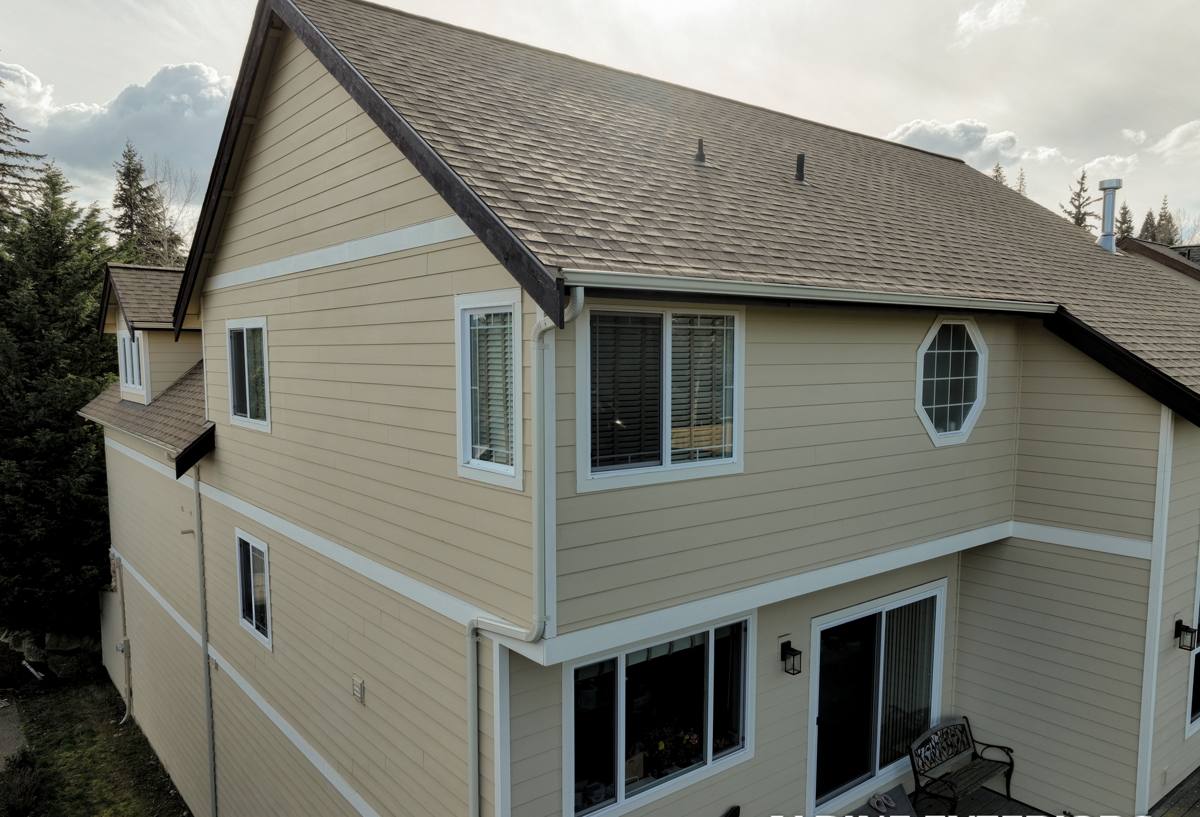
What Whatcom County Weather Does to a Window Over Time
Salt Air and Hardware Corrosion
Windows on or near the water don't just deal with moisture — they deal with airborne salt that settles on metal hardware, weep holes, and fasteners. Over years, unprotected or low-grade hardware corrodes, locks stick or seize, and weep systems that are supposed to drain water back out of the frame clog or rust shut. Once weep holes stop working, water that's supposed to drain away starts pooling inside the frame instead.
Driving Rain and Frame Rot
Rain that comes in sideways off the bay doesn't just hit the glass — it drives against the frame, the trim, and every seam where the window meets the siding. If flashing and sealant weren't installed correctly the first time, water finds its way behind the frame and into the wall cavity. That's slow, hidden damage: rotted sheathing, soft framing, and mold growth that often isn't visible until a wall is opened up for an unrelated repair.
Moss, Shade, and Trapped Moisture
Whatcom County's long wet season and the tree cover on much of South Hill mean moss and algae get a real foothold on any surface that stays damp and shaded — including window sills, exterior trim, and the bottom rail of the sash. Beyond the cosmetic issue, moss and organic growth hold moisture against wood and composite surfaces, which accelerates rot and paint failure. A window with a sill designed to shed water quickly, and trim detailing that doesn't trap debris, holds up far better here than a flat, poorly drained profile.
What "Energy-Efficient" Actually Means for a South Hill Home
The Glass Package
Efficiency starts with the glass. Dual-pane units with a low-E coating and argon gas fill are the baseline for this climate — they cut heat loss in winter and reduce solar heat gain in the summer months when South Hill gets direct afternoon sun. Look at the U-factor (how well the window resists heat flow — lower is better) and the SHGC, or solar heat gain coefficient, on the NFRC label rather than trusting marketing language alone. For a home with mixed sun and shade exposure, we generally recommend a moderate SHGC rather than an extreme rating built for a much sunnier climate.
Frame Material
The frame matters as much as the glass, especially given the moisture load up here. Frame choice affects how the window handles expansion, contraction, and water exposure over decades — covered in the comparison below.
Installation and Flashing
The best glass and frame on the market will still fail early if the installation is wrong. Proper flashing integration with the existing siding or house wrap, correctly pitched sills, and sealant applied in the right places (and left out of the wrong ones, so water can still drain) matter more to long-term performance than any spec on the label. This is the step where most window failures we're called to diagnose actually originate — not the product, the install.
Comparing Frame Materials for a South Hill Exposure
There's no single "best" frame material for every home — it depends on your home's exposure, existing trim style, and budget. Here's how the common options hold up under Fairhaven's salt air, rain, and moss conditions:
| Frame Material | Moisture & Salt Air Performance | Maintenance | Typical Lifespan |
|---|---|---|---|
| Vinyl | Won't rot or corrode; performs well in wet, salty air | Low — occasional cleaning | 20–30 years |
| Fiberglass | Excellent — very stable in temperature swings and moisture, resists warping | Low | 30-plus years |
| Aluminum | Prone to corrosion near salt air unless heavily coated; conducts cold | Moderate | 20–25 years |
| Wood (unclad) | Attractive but vulnerable to rot and moss growth without diligent upkeep | High — regular painting/sealing | Varies widely with maintenance |
| Wood-clad | Good — cladding shields wood core from direct moisture exposure | Moderate | 25–30 years |
For most South Hill homes dealing with regular salt air and driving rain, we steer customers toward vinyl or fiberglass for the performance-to-maintenance ratio. Where a home's character calls for a wood look, wood-clad frames let you keep that appearance without accepting the maintenance burden of unclad wood exposed to this much weather.
How We Approach a South Hill Window Job
- On-site assessment. We look at each window's current condition, exposure direction, existing flashing, and any signs of hidden water intrusion before recommending anything.
- Honest full-frame vs. insert conversation. If the existing frame and flashing are sound, a quality insert replacement can be the right call. If there's rot, failed flashing, or water damage behind the trim, we recommend full-frame replacement so the problem actually gets fixed rather than covered up.
- Product selection matched to exposure. A window on the exposed, rain-facing side of the house may get a different glass or frame recommendation than one on a sheltered wall.
- Correct flashing and sealant detailing. This is where we integrate the new window with your existing siding or house wrap so water sheds away from the wall, not into it.
- Final check and cleanup. We verify operation, weathertightness, and site cleanup before calling the job done.
Signs Your South Hill Home's Windows Are Underperforming
Not sure whether it's time to look at replacement? These are the signals we hear about most often from homeowners on the hill:
- Visible fog or moisture between the panes of double-pane glass (a failed seal)
- Windows that stick, won't latch fully, or feel loose in the frame
- Cold drafts near the window edges even when it's fully closed
- Moss, algae, or dark staining building up on sills or bottom trim
- Soft or discolored wood trim around the window frame
- Noticeably higher heating bills compared to similar-sized homes nearby
- Condensation forming on interior glass or sills during cold, wet stretches
What Actually Drives Cost on a Window Project
Every South Hill home is different, so we won't quote a number without seeing the job — but these are the main factors that move the price up or down:
| Factor | Why It Matters |
|---|---|
| Insert vs. full-frame replacement | Full-frame costs more but is necessary when there's rot or flashing failure behind the trim |
| Frame material | Fiberglass generally costs more upfront than vinyl but needs less long-term maintenance |
| Number and size of openings | Larger or custom-shaped windows cost more to manufacture and install |
| Exposure and access | Second-story or hard-to-access windows on a sloped lot add labor time |
| Existing trim and siding condition | Deteriorated trim or siding around the opening may need repair as part of the job |
Why It Matters That We Already Work in This Neighborhood
A crew that installs windows all over Western Washington without a particular focus on this area will treat a South Hill job like any other. A crew that regularly works in Fairhaven and on South Hill already understands how the local exposure, elevation, and tree cover change what a window needs to hold up — and we adjust the glass package, frame material, and flashing approach accordingly instead of defaulting to whatever's standard everywhere else. We're also easy to reach if a question comes up after the install, without a long drive or a call center in between.
If your South Hill home's windows are drafty, foggy, sticking, or just older than they should be, we're happy to take a look and talk through honest options — no pressure, no upsell. Reach out using the form below for a free estimate.