 Fairhaven Siding
 South Hill's Siding Problem Isn't Like Everyone Else's
South Hill sits up above the water with the kind of exposure that makes siding decisions harder than they look from the ground. Homes here catch salt-laden air off the bay, take driving rain straight off Puget Sound weather systems, and sit under tree cover long enough each year that moss gets a real foothold on north- and west-facing walls. That combination — salt, wind-driven moisture, and shade-fed moss growth — is a tougher test than most siding products were designed for, and it's why so many South Hill homes show siding failure years before homeowners expected it.
This page is about one thing: what it actually takes to put fiber cement siding on a South Hill home correctly, and why the climate up here changes the job compared to a flatter, more sheltered lot elsewhere in Whatcom County.
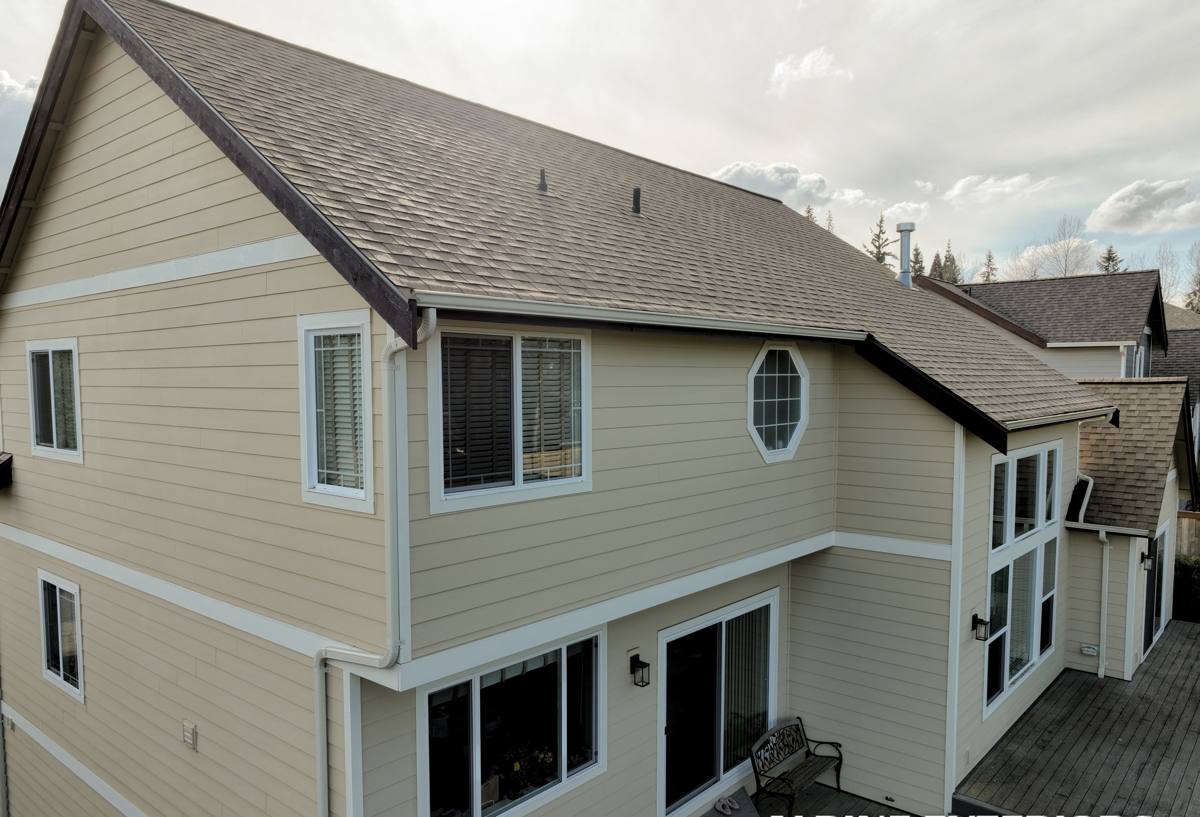
What Salt Air, Driving Rain, and Moss Season Actually Do
Salt air
Airborne salt is corrosive to metal fasteners, flashing, and trim, and it's abrasive to painted and coated surfaces over time. Siding systems that rely on unprotected steel fasteners or thin factory coatings tend to show rust streaking, chalking, and finish breakdown faster near the water than they would twenty miles inland. South Hill's elevation and exposure put it squarely in that zone.
Driving rain
Rain that comes in at an angle — which is normal here during fall and winter storm systems — doesn't just wet a wall, it drives moisture up and under laps, trim, and penetrations if the water-resistive barrier and flashing details aren't right. A siding product can be technically "waterproof" and still fail on a home if the assembly behind it wasn't built to shed wind-driven water.
Moss season
Shaded, north-facing walls under tree canopy stay damp longer after every rain event, and that's exactly the environment moss and algae need to establish. Once organic growth gets a grip on a siding surface, it holds moisture against the substrate, which accelerates any rot, delamination, or coating failure that's already starting underneath.
None of these three problems is unique to South Hill. What's unique is having all three stacked on the same lot, which is common on this hillside.
Why Fiber Cement Holds Up Better in This Environment
Fiber cement is cement, sand, and cellulose fiber — it doesn't rot, it isn't a food source for moss and algae the way wood-based products are, and it doesn't corrode. That doesn't mean every fiber cement product performs the same way in a coastal, high-moss environment. We install James Hardie fiber cement specifically, for reasons that matter more here than in a drier, more sheltered part of the state:
- Hardie's HZ5 formulation is engineered for climates with sustained moisture exposure, which fits South Hill's rain and humidity pattern better than a generic, one-size-fits-all fiber cement board.
- ColorPlus factory finish is baked on under controlled conditions, which holds up to salt air and UV exposure better than field-applied paint that's more likely to chalk or peel early near the water.
- The board itself is non-combustible, which matters less for the moss-and-rain conversation but is still part of why we standardized on it.
We don't install LP SmartSide, vinyl, Cemplank, Allura, primed spruce, or cedar. Some of those products perform fine in milder, more sheltered settings. On a South Hill lot with real salt exposure and shaded walls, we've seen enough of the trade-offs — moisture-driven swelling in engineered wood products, seam and fastener issues in vinyl under wind load, coating and warranty gaps in some competing fiber cement lines — that we'd rather not put our name on the install. That's a standard we hold everywhere we work, not a claim about any one product being unsafe.
How the Common Alternatives Compare in This Climate
| Product | Behavior in salt air / driving rain | Behavior in moss-prone shade |
|---|---|---|
| James Hardie fiber cement (HZ5) | Non-combustible, factory finish resists salt-driven fading and chalking | Not a food source for moss; surface still needs periodic cleaning |
| Vinyl siding | Can warp or loosen under sustained wind-driven rain and temperature swings | Moss and algae can grow on the surface; panels trap moisture behind them if flashing is poor |
| Engineered wood (LP SmartSide) | Edge and seam swelling risk if moisture gets behind the coating | Wood-based substrate is more vulnerable if moss holds moisture against it long-term |
| Cedar / primed spruce | Requires ongoing sealing/painting to resist salt and moisture intrusion | Organic material, most susceptible to rot once moss and damp shade take hold |
What a Correct Fiber Cement Job Involves Here
The siding board is only part of the system. On a South Hill home, we pay particular attention to the parts of the installation that determine whether the wall actually stays dry:
Water-resistive barrier and rainscreen
A properly lapped weather-resistive barrier behind the siding, with a drainage gap where the wall assembly calls for it, gives any wind-driven moisture that gets past the siding a way out instead of a place to sit. On shaded, moss-prone walls this drainage detail matters even more, since those walls dry out slower between rain events.
Flashing at every penetration
Windows, doors, hose bibs, light fixtures, deck ledgers — every penetration through the siding is a place water can get behind the wall if it's not flashed correctly. This is the detail that fails most often on cut-rate siding jobs, and it's the one that causes the most expensive damage later.
Fastening and coating to spec
Corrosion-resistant fasteners, correct nailing patterns, and factory-finished cut edges sealed with the right touch-up product all matter more in salt air than they would inland. A fastener that's fine forty miles from the water can start staining and weakening within a few years up here.
Proper clearances
Siding needs clearance from grade, roofing, and decking so it isn't sitting in standing water or trapped moisture — a detail that's easy to get wrong on hillside lots with grade changes, which describes a lot of South Hill.
Our Process for a South Hill Project
- Site walk and exposure assessment. We look at which walls face prevailing wind and rain, which stay shaded and moss-prone, and where the existing siding or trim is already showing salt or moisture damage.
- Tear-off and substrate check. Once the old siding is off, we check the sheathing for hidden rot or moisture damage — common on north-facing walls that have had moss sitting on them for years.
- Barrier and flashing work. This is where most of the long-term performance is decided, and it's not visible once the siding goes up, so we don't rush it.
- Hardie installation to spec. Correct fastening, gapping, and factory-finish detailing, with cut-edge sealing on every field cut.
- Walkthrough. We go over what was done, what to expect from the finish over time, and simple maintenance for your specific exposure.
What Maintenance Looks Like Once It's Installed
Fiber cement is low-maintenance, not no-maintenance — especially in a salt-air, moss-season environment. A short annual routine keeps a correctly installed job performing the way it should:
- Rinse salt residue and grime off exterior walls once or twice a year, especially street-facing and water-facing elevations.
- Soft-wash (not pressure-wash) shaded or north-facing walls if moss or algae starts to show, before it builds up.
- Keep gutters clear so overflow isn't running down the siding face during storm events.
- Check caulking at trim and penetrations every couple of years and touch up any cracked or separated joints.
- Trim back vegetation and tree cover that's keeping a wall shaded and damp longer than necessary.
Cost Factors on a South Hill Job
| Factor | Why it affects the job |
|---|---|
| Existing damage behind old siding | Hillside, shaded walls with moss history sometimes need sheathing repair before new siding goes on |
| Wall exposure and access | Steeper lots and multi-story elevations affect scaffolding and labor time |
| Trim and detail complexity | Homes with more windows, corners, and architectural detail need more flashing and cut-edge work |
| Siding profile and color | ColorPlus finishes and certain profiles carry different material costs than standard options |
We don't publish blanket per-square-foot pricing because these factors genuinely change the number from one South Hill home to the next — but we'll give you a straight, itemized estimate after seeing your specific walls.
Why Local Experience Matters for This Job
A crew that hasn't worked this particular hillside can get the product right and still get the job wrong, because the failure points here aren't generic — they're specific to salt exposure, wind-driven rain angles, and shade patterns that repeat across South Hill lots. A contractor who's already seen how these walls fail knows where to spend extra attention on flashing and drainage before the siding ever goes up, instead of finding out the hard way after a couple of wet winters.
We install James Hardie fiber cement, and only James Hardie fiber cement, because we've seen what holds up in Whatcom County's coastal conditions and what doesn't. That's not a sales position — it's the standard we're willing to put our name behind on every wall we close up.
If your South Hill home's siding is showing early wear, moss buildup, or you're planning ahead for a replacement, we're happy to walk the exterior with you and give you a straightforward, no-pressure estimate — just fill out the form below.