 Fairhaven Siding
 Edgemoor's Setting Is Beautiful — and Hard on Siding
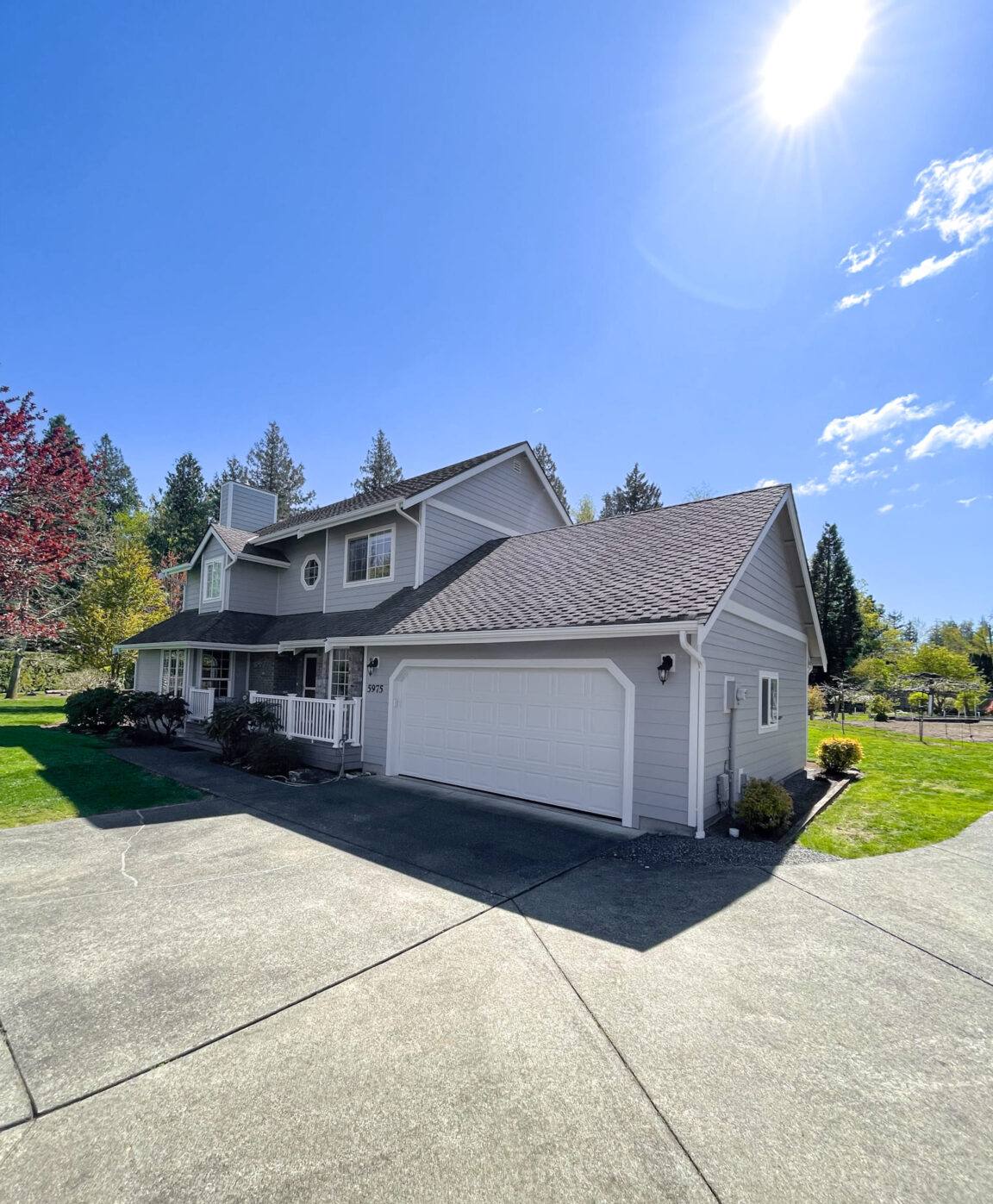
Edgemoor sits on the wooded bluffs above Bellingham Bay, just south of Fairhaven, and that setting is exactly why siding here wears differently than it does a few miles inland. Homes are shaded by mature fir and cedar canopy for much of the year, sit close enough to the water to pick up salt-laden air, and face the same driving, wind-pushed rain that comes off the Sound all winter. Add Whatcom County's long, wet moss season and you get a combination that's tough on almost any exterior cladding.
None of that means siding fails fast in Edgemoor — well-built homes here can look great for decades. But it does mean the margin for error is smaller. A siding system that's marginal on a dry, sunny lot can fail years earlier on a shaded, bay-facing one. If you're planning a siding replacement in this neighborhood, understanding why the local climate matters is the first step to getting it right.
What Salt Air, Rain, and Moss Actually Do to Siding
Salt Air
Bellingham Bay isn't the open ocean, but airborne salt still travels inland on wind and fog, especially on west- and south-facing elevations with a clear line to the water. Over years, salt exposure accelerates corrosion of exposed fasteners, trim flashing, and metal accessories, and it can degrade lower-grade paint finishes faster than manufacturers' published life expectancies assume.
Driving Rain
Storms off the Sound rarely fall straight down — wind pushes rain sideways into walls, corner boards, and window trim. That means the water-resistive barrier, flashing details, and caulking behind the siding matter as much as the siding material itself. A beautiful product installed with sloppy water management will still leak.
Moss and Shade
Tree cover keeps siding damp longer after every rain, which is common throughout Fairhaven but especially pronounced on Edgemoor's wooded lots. Extended moisture contact invites moss and algae growth on textured or porous surfaces, and on wood-based products it can hold water against the substrate long enough to start rot before anyone notices from the ground.
Signs an Edgemoor Home's Siding Needs Replacing, Not Patching
- Soft or spongy spots when you press on the siding, especially near the bottom courses or under windows
- Paint that's bubbling, peeling, or won't hold a fresh coat no matter how well it's prepped
- Visible warping, buckling, or gaps that have opened up between boards or panels
- Persistent moss or dark streaking that comes back within a season of cleaning
- Rising energy bills paired with drafts or cold spots along exterior walls
- Siding that's original to a home 20-plus years old and was a lower-grade material to begin with
Any one of these can sometimes be handled with a repair. Several at once, or damage that traces back to the sheathing underneath, usually means it's time to talk about full replacement rather than another round of patching.
What a Correct Siding Replacement Actually Involves
A siding replacement is really a water-management project with a finish material on the outside. Skipping the parts nobody sees is how homes end up with the same problems five years later, just under new siding.
Tear-Off and Inspection
Once the old siding is off, the sheathing gets inspected for rot, soft spots, or prior water damage — this is the one point in the project where hidden problems are actually visible and fixable. Any damaged sheathing gets replaced before anything else happens.
Water-Resistive Barrier and Flashing
A new weather-resistive barrier goes on correctly lapped, and flashing gets installed at every window, door, deck ledger, and roof-to-wall intersection so water is directed out and down, never trapped behind the cladding. Given how much wind-driven rain this area sees, this step matters more here than in drier inland climates.
Fastening and Clearances
Siding gets fastened to manufacturer spec, with proper clearance from grade, decks, and roof lines so water can't wick up into the material or pool against it. Manufacturer clearance requirements exist for a reason — they're the difference between a warranty that holds up and one that doesn't.
Finish Details
Trim, corners, and caulking are finished so the whole assembly sheds water as a system, not a collection of separately caulked joints that will eventually fail one by one.
Why We Only Install James Hardie Fiber Cement
We install James Hardie fiber cement siding exclusively — not vinyl, not LP SmartSide, not Cemplank, Allura, primed spruce, or cedar. That's a deliberate standard, not a lack of options, and in a climate like Edgemoor's the reasoning holds up especially well.
| Material | How It Handles This Climate | Why We Don't Install It |
|---|---|---|
| Vinyl siding | Sheds rain reasonably well but expands and contracts with temperature swings | Can warp or crack over time, seams rely on lap fit rather than a sealed factory finish, and color is molded-through rather than a protective coating |
| LP SmartSide (engineered wood) | Treated to resist moisture but still wood-based | Wood-based substrates are more sensitive to sustained damp exposure — a real factor under shaded, moss-prone tree canopy |
| Cedar / primed spruce | Natural material, classic look | Requires ongoing refinishing and is the most vulnerable of the group to rot and moss retention in a wet, shaded setting |
| Cemplank / Allura (other fiber cement) | Similar base material to Hardie | We standardized on one manufacturer's engineered product line, factory finish, and warranty structure rather than mixing systems |
| James Hardie fiber cement | Non-combustible, dimensionally stable, factory-baked finish resists fading and moisture intrusion | What we install |
To be fair to the alternatives: vinyl is inexpensive and low-maintenance in mild conditions, engineered wood products have improved their moisture treatments over the years, and cedar has a natural look some homeowners genuinely prefer. Those are real trade-offs, not myths. But on a bay-facing, tree-shaded lot with a long wet season, we've found the long-term maintenance burden and moisture sensitivity of those products outweighs their upfront advantages. James Hardie's fiber cement is non-combustible, holds its shape in temperature and humidity swings, and its ColorPlus factory finish is baked on and warrantied against fading and peeling rather than relying on a field-applied paint job. That combination is why it's the only product we put on homes.
Choosing the Right Hardie Product and Color for a Bay-Facing Home
James Hardie makes climate-engineered HZ5 product for the Pacific Northwest's marine environment, specifically formulated for regions with prolonged moisture exposure like ours. Within that, homeowners choose between lap siding, panel siding, and shingle-style profiles depending on the home's architecture, plus a factory ColorPlus finish in a range of colors that hold up under UV and moisture without needing repainting on the manufacturer's typical timeline. For wooded, shaded lots, darker ColorPlus finishes can make occasional moss or algae growth less visually noticeable between cleanings, though regular gentle washing is still part of ownership on any exterior material in this climate.
Our Process for an Edgemoor Siding Replacement
- Walkthrough and assessment — we look at existing siding, trim, and any visible moisture or moss issues specific to the lot's shade and exposure
- Written estimate — clear scope, product selection, and pricing before any work starts
- Tear-off and sheathing inspection — the point where hidden damage gets found and fixed, not covered up
- Water-resistive barrier and flashing installation — done to spec at every penetration and transition
- James Hardie installation — fastened and cleared to manufacturer spec for our climate
- Final walkthrough — trim, caulking, and finish details reviewed with the homeowner before we call it done
Cost Factors for an Edgemoor Siding Project
Every home is different, but the same variables tend to move the price up or down on most Edgemoor projects:
| Factor | Why It Matters |
|---|---|
| Home size and wall complexity | More corners, gables, and dormers mean more cutting, flashing, and labor |
| Sheathing condition underneath | Rot found during tear-off adds repair work before new siding goes on |
| Access and site conditions | Steep or wooded lots common in Edgemoor can affect staging and scaffolding needs |
| Product profile and finish | Lap, panel, and shingle-style Hardie products carry different material and labor costs |
| Trim and detail work | Window and door trim, corner treatments, and fascia detailing add scope |
We give straightforward, written estimates after an in-person look at the home — not a phone-quoted range that changes once we're on site.
Why a Crew That Already Works Edgemoor Matters
A contractor who's worked this specific stretch of Fairhaven and Edgemoor already knows how the tree cover, bay exposure, and rain patterns on these lots behave — where moss tends to build up fastest, which elevations take the most direct weather, and how to sequence a tear-off around a wet Whatcom County forecast. That local familiarity shows up in the details: flashing that accounts for the actual wind-driven rain direction on a given lot, not a generic install, and a finished job that's built for the conditions it will actually face rather than a textbook average.
If your Edgemoor home's siding is showing its age, we're happy to take a look and give you a straightforward, no-pressure estimate — just fill out the form below.